Millipedes in the House: Why They Come In and How to Stop It
Millipedes in the house almost always come from damp mulch, leaf litter and soil just outside, and most die indoors within two or three days because they dry out. They do not bite, sting or damage the house, its wood or its food. The fix is outdoors: reduce moisture and organic debris at the foundation, seal gaps under doors and along the foundation, and sweep or vacuum up the ones that get in. Indoor spraying does little, because more keep arriving from the breeding site until the weather changes.
A morning with dozens of curled brown millipedes on the garage floor or in the basement is alarming. The reassuring part is that extension entomologists agree on almost everything about them: where they come from, why they die indoors, and why an indoor spray is the wrong tool.
Millipede or centipede: the ten-second test
Most people searching for millipedes have also wondered whether the thing on the floor is a centipede. The difference matters, because one is a slow plant-litter feeder that cannot survive indoors and the other is a fast predator that can.
| Millipede | Centipede | |
|---|---|---|
| Legs per body segment | Two pairs on most segments (UC IPM: two, or four in some) | One pair |
| Body shape | Rounded, cylindrical to slightly flattened | Flattened top to bottom |
| Speed | Slow, legs move in a wave | Fast; the house centipede runs up walls |
| When disturbed | Curls into a coil or a “C” | Runs; UC IPM says centipedes never coil |
| Diet | Decaying leaves, rotting wood, other plant matter | Other invertebrates, including insects and earthworms |
| Defence | No fangs; many species ooze a smelly fluid | Venomous front legs (forcipules); some can bite |
| Indoors | Usually dies within days from drying out | The house centipede is the one species that survives indoors |
| Typical size seen in homes | About 1 in (25 mm) | House centipede about 1 in of body, plus long legs |
The leg count is the reliable field mark. University of Kentucky entomologists note that most millipede species have between 30 and 300 legs, two pairs to a segment, while centipedes have one pair per segment; the house centipede has up to 15 pairs of long, banded legs. Millipedes also have shorter, elbowed antennae. If it is fast, flat and leggy and it ran from you, read our guide to house centipedes instead.
Wireworms, click beetle larvae with only three pairs of legs, and white garden symphylans under a quarter of an inch long are the other common mix-ups. Pill bugs and sowbugs share the damp habitat and roll up too, but are crustaceans; see our guide to woodlice and sowbugs.
Why millipedes come inside
Millipedes live under leaves, stones, boards, mulch, compost and grass clippings, eating rotting plant matter. They end up indoors when something pushes them to move, and there is more than one trigger.
Heavy rain and wet spells
Penn State Extension describes migrations “often associated with cooler weather or following heavy rains”, and the University of Kentucky notes that large congregations on sidewalks, foundations, basements and garages can coincide with heavy rain. Mississippi State’s extension entomologist makes the mechanism plain: millipedes are highly susceptible to drying out, so it is only during wet periods that they can leave their normal habitat and wander. If your problem arrived after a storm, our guide to bugs in the house after rain covers the other species that move at the same time.
Dry spells, too
The same animals also move when their habitat dries out. NC State Extension says millipedes invade buildings “particularly when the weather turns hot and dry”, and Washington State University describes them wandering at night during hot, dry periods in search of dampness. UC IPM reconciles the two: large numbers migrate, often uphill, as their food dwindles or their living places become “either too wet or too dry”. Either extreme can start a movement.
Autumn
Wisconsin’s insect diagnostic lab says millipedes become pests in late summer and fall as well as during wet periods, and that in the fall thousands can move from old fields, vacant grassy areas and leafy woodland edges and accumulate around a home each morning. Arkansas extension also names the fall as the main invasion season.
Climbing walls
Penn State adds a detail worth knowing: millipedes seen climbing trees, fences and buildings to a height of about six feet may be moving as part of mating behaviour rather than seeking shelter. Kentucky entomologists are candid that it is unclear exactly what causes these mass movements, and that if they stay outside there is likely nothing to resolve.
The greenhouse millipede in the South
In much of the southern US the millipede pouring onto carports and patios is the greenhouse millipede, Oxidus gracilis, also called the garden or hothouse millipede. It is not native: Mississippi State and the LSU AgCenter both describe it as an Asian species moved around in potted plants, mulch and gardening soil, and now common throughout the country. NC State identifies the garden millipede as the most common species that invades buildings.
Adults are black to dark brown with pale legs and side flanges, about three quarters of an inch to an inch long (18 to 24 mm). LSU notes they often invade garages and other open structures, appear in sidewalk and driveway cracks, and get into homes under door gaps. During long spells of wet, warm weather, Mississippi State says, homes near good breeding sites can see hundreds or thousands at once.
Mississippi State says spraying carports and entries “does little to reduce their numbers” because more keep wandering up from the breeding site, and LSU says there is no pesticide protocol for this species and recommends vacuuming them up, alive and dead, then emptying the bag outside to avoid the smell. “Dry weather is the best cure for millipede problems,” the Mississippi State note concludes.
Why they die indoors, and the basement exception
Millipedes need high moisture, and a heated, dry house kills them. Wisconsin puts the timeline at two to three days. Penn State says they “do not live for more than a few days indoors”, which is why it calls treatment inside the home unnecessary. Washington State’s diagnostic clinic notes that the dried-up remains of millipedes are a common submission.
The exception is the damp basement or crawlspace. Arkansas extension notes that in moist basements millipedes can survive longer, and that is where repeated sightings usually come from. Live millipedes in the basement week after week point to humidity, which also suits silverfish, springtails and woodlice. Our guides to bugs in the basement and moisture pests cover the shared fix, and springtails are the other tiny animal that appears in damp basements after rain.
How to get rid of millipedes in the house
Deal with the ones inside mechanically, then fix the outside so fewer arrive.
- Sweep or vacuum them up. UC IPM, Penn State, Wisconsin, NC State and Kentucky all recommend this for millipedes already indoors. A wet/dry vacuum or broom is the right tool for a garage floor or carport.
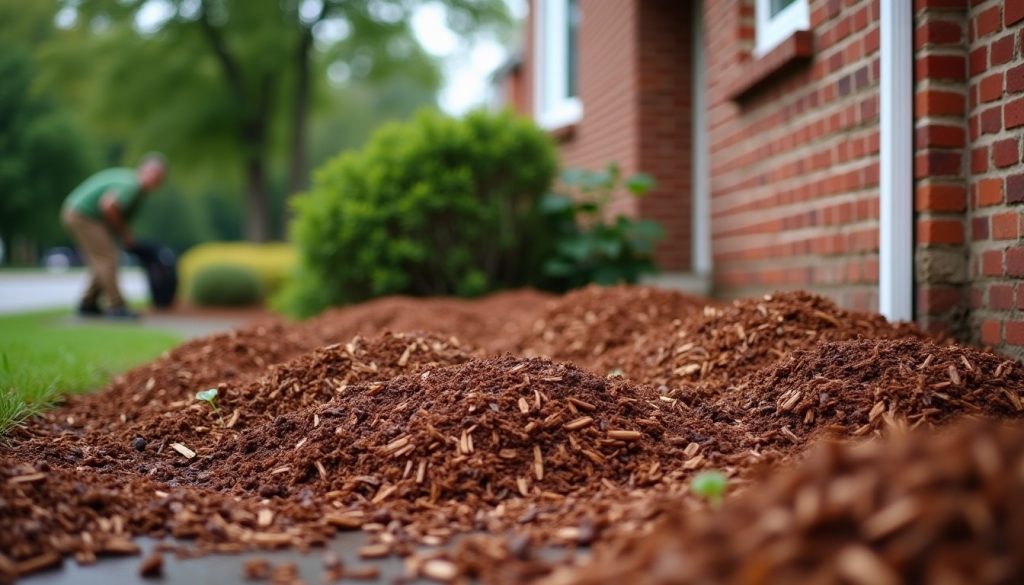
- Pull mulch and debris back from the foundation. NC State suggests keeping mulch 6 to 12 inches from the wall and using a well-draining inorganic mulch such as gravel. Remove grass clippings, leaf piles, boards and stones lying against the house.
- Check under gravel beds. Penn State warns that gravel or mulch laid over plastic sheeting keeps the soil underneath damp and cool, so millipedes thrive there and a surface treatment cannot reach them. Removing the sheeting dries the soil.
- Move water away from the house. Clear gutters and downspouts, add splash blocks or extensions, repair leaking outdoor taps, and stop air conditioner condensate puddling at the foundation. NC State and Kentucky both list these.
- Dethatch and mow the lawn. NC State notes millipedes thrive in the moist, dense thatch of poorly kept turf, and that overwatering adds to the problem.
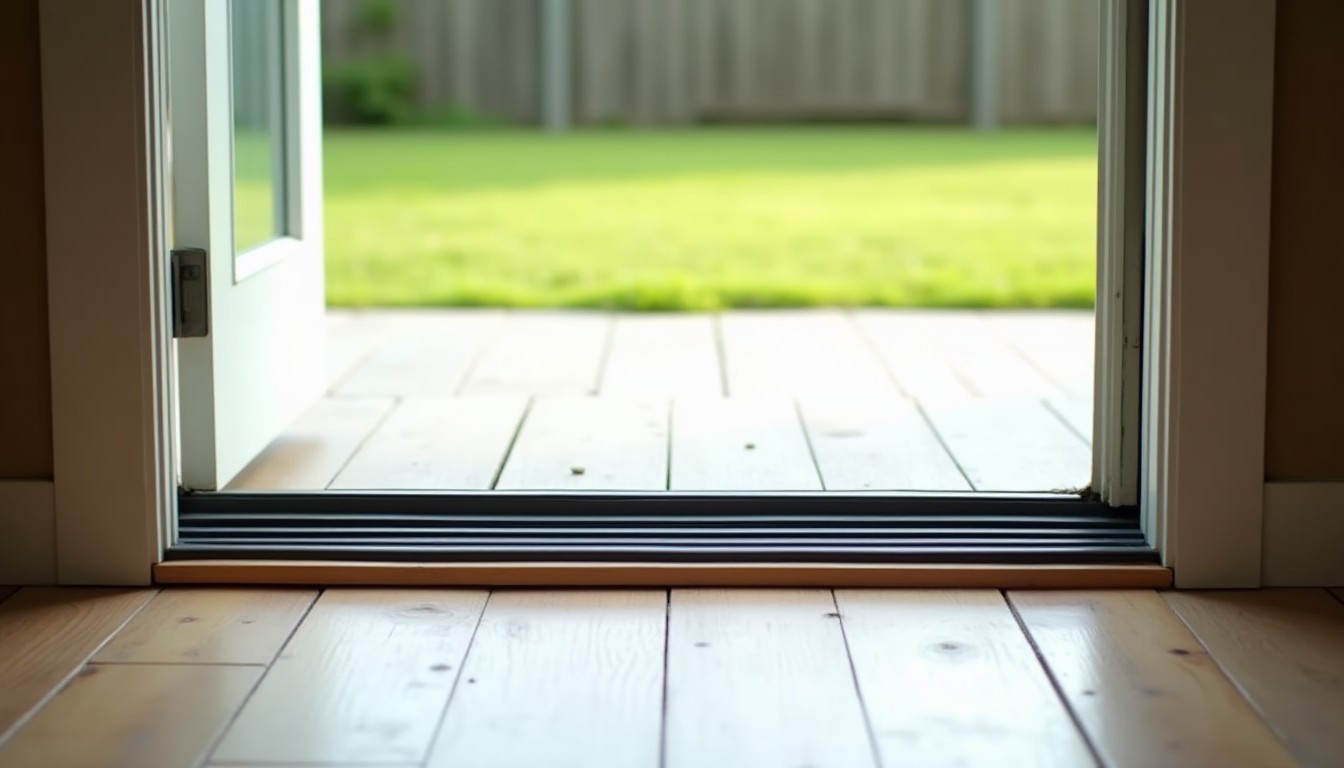
- Seal the way in. Fit door sweeps, caulk the bottom outside edge and sides of thresholds, seal gaps around basement windows and expansion joints where patios meet the foundation, and caulk along the foundation, since Wisconsin notes millipedes often crawl up under siding. Our guide to pest-proofing your home covers materials.
- Dry the basement or crawlspace. Ventilation, a dehumidifier, a sump pump or a polyethylene soil cover in the crawlspace all reduce the damp that lets millipedes survive indoors.
Do insecticides help?
Indoors, mostly not. NC State states plainly that insecticide along baseboards and interior living areas does not really stop millipede invasions, because the millipedes soon die from lack of moisture anyway. UC IPM says pesticide use is “rarely justified” for millipede control.
Outdoors, a perimeter treatment can reduce the number that reach the house during heavy movement, but extension sources set expectations low. NC State says perimeter sprays are “rarely 100% effective”, and Mississippi State says not to expect complete control. Recommended band widths vary widely between sources, from a 2 to 5 foot band along the foundation (NC State) to a 10 to 15 foot strip (Arkansas), and Wisconsin suggests a 5 to 10 foot band at the lawn edge facing the area the millipedes are coming from may work better than one at the wall. If you use a product, use one labelled for millipedes and follow the label, including re-entry once it has dried.
Paying someone rarely makes sense for millipedes alone. It can when invasions repeat every year despite habitat changes, or when the real problem is a wet crawlspace or drainage fault, which is a job for a contractor rather than an insecticide. Our guide to DIY versus professional pest control sets out how to decide.
Are millipedes dangerous?
Not in the way people fear. Millipedes do not bite or sting and, as NC State notes, do not transmit disease or infest food, clothing or sound, dry wood. UC IPM describes them as posing a minimal health hazard.
Their defence is chemical. Many species release a bad-smelling fluid from glands along the body when handled. UC IPM says some species exude a liquid that “can irritate skin or burn the eyes”, and Arkansas extension notes that a few species can squirt it several inches, that it leaves a lingering odour on the hands, and that it can be dangerous to the eyes. Arkansas’s advice is not to handle millipedes and, if you have, to wash your hands with soap and water until the smell has gone.
Some millipedes produce hydrogen cyanide; Kentucky entomologists say the amount is not enough to harm people. The fluid can, however, stain skin. A 2019 review in the dermatology journal Cutis describes “millipede burns”: dark red, blue or black discolouration, most often on the feet and toes, sometimes with pain or burning, which resolves over time. Anyone with fluid in the eyes, or a skin mark that is painful or does not fade, should see a doctor.
What the iNaturalist records show
The Pest Control Brief analysis of iNaturalist research-grade records, pulled October 2026, covers 111,851 US research-grade millipede records and 19,730 house centipede records. The seasonality index shows each group’s share of everything recorded that month, scaled so the yearly average is 100, which removes the summer surge in how many people are out recording.
Millipede sightings are spread across the year more evenly than most invertebrates, with a modest late-spring peak: an index of 128 in May and 126 in June, against a low of 89 in March, November and December. House centipedes climb steadily from 44 in January to 168 in October and November. These are mostly outdoor records of animals people noticed, not counts of indoor invasions, and the short, local autumn movements extension sources describe would be smoothed out in a national monthly average.
Where the data is striking is geography. In Florida, millipedes were the most-recorded taxon on our fixed list of household pests, with 17,342 records, or 157.9 per 10,000 insect records, ahead of carpenter ants and the Asian lady beetle. In Pennsylvania they ranked third at 101.6 per 10,000; in Texas, seventh at 16.5.
Frequently asked questions
Why am I suddenly finding millipedes in my house?
Usually because something outside pushed them to move. Extension sources link mass movements to heavy rain, to hot dry spells that dry out their habitat, and to late summer and autumn. They come from damp mulch, leaf litter, thatch and soil near the foundation and get in under doors, through foundation gaps and basement windows. Most die indoors within two or three days as they dry out.
Are millipedes dangerous?
Millipedes do not bite or sting, and NC State notes they do not transmit disease or damage food, clothing or wood. Many release a smelly defensive fluid that UC IPM says can irritate skin or burn the eyes, and it can stain skin dark red, blue or black for a time. Avoid handling them, wash hands with soap and water if you do, and see a doctor about eye exposure or a painful mark.
What is the difference between a millipede and a centipede?
Count the legs on one body segment. Millipedes have two pairs on most segments, a rounded body, short antennae and a slow, wave-like walk, and they curl up when disturbed. Centipedes have one pair per segment, a flattened body and fast movement, and they never coil. Millipedes eat rotting plant matter; centipedes are predators, and the house centipede is the only one that lives indoors.
How do I get rid of millipedes in my basement?
Vacuum or sweep up the ones you see, then remove the damp that lets them survive. Run a dehumidifier or improve ventilation, fix drainage so gutters and downspouts carry water away, and seal gaps around basement windows and along the bottom of basement walls. Outside, pull mulch and debris back from the foundation. Indoor sprays do little, because new millipedes keep arriving while conditions outside favour them.
Will millipedes take over my house?
Very unlikely. Penn State notes millipedes cannot survive long in the dry air of most buildings, and Wisconsin puts survival indoors at two to three days. A damp basement or crawlspace can keep them alive longer, which is why repeat sightings usually point to a moisture problem. UC IPM notes that invasions are usually over within a few days.
Sources
- University of California Statewide IPM Program, Pest Notes: Centipedes and Millipedes, Publication 7472, K. Windbiel-Rojas, revised September 2019.
- University of Kentucky Department of Entomology, Centipedes and Millipedes in and Around the Home, ENTfact-645, revised December 2024; and Kentucky Critter Files: Kentucky Millipedes.
- Penn State Department of Entomology, Entomological Notes NP-5: Millipedes, S. B. Jacobs, 2002, reviewed 2009.
- University of Wisconsin Garden Facts XHT1108: Millipedes, P. Pellitteri, UW Insect Diagnostic Lab, revised 2016.
- NC State Extension, Millipedes in Turf, R. Brandenburg and T. Billeisen.
- Mississippi State University Extension, Bug’s Eye View Vol. 3 No. 14: Greenhouse Millipede, B. Layton, 2017.
- LSU AgCenter, The Greenhouse Millipede, Oxidus gracilis (Diplopoda: Paradoxosomatidae), P. Shorter Wooden, F. Huval, C. Carlton and G. Reagan.
- University of Arkansas Cooperative Extension Service, Millipede Management for Homeowners, J. D. Hopkins.
- Washington State University Puyallup, PLS-119: Millipedes as a Household Nuisance, A. L. Antonelli and J. R. Glass, 2002.
- Lacy F. A. and Elston D. M., What’s Eating You? Millipede Burns, Cutis 103:195 to 196, 2019.
- The Pest Control Brief analysis of iNaturalist research-grade records, pulled October 2026.