What Attracts Earwigs Into Your Home and Garden

Earwigs are attracted to damp, dark, tight hiding places close to food: deep mulch, leaf litter, boards, stones, pots and dense ground cover, plus outdoor lights at night and the scent of other earwigs. They come into houses when the weather outside turns too dry, hot or cold, according to University of California IPM, and they usually end up in the dampest rooms. Indoors they find little to eat and die, so the population you need to deal with is outside, against the foundation.
That is the short version. The longer version matters because the fixes are different for each attractant, and because two of the most repeated tips online (scents that repel them, and spraying indoors) are not what extension entomologists advise. Our earwigs guide covers identification, the pincers and the ear story; this page is about why they are at your house and how to make it less appealing.
What attracts earwigs, and the fix for each
| Attractant | Why it draws earwigs | What to do |
|---|---|---|
| Deep mulch and leaf litter | Moist organic matter is their main daytime refuge (Virginia Cooperative Extension) | Keep bark mulch to no more than 2 inches deep next to the house (West Virginia University) |
| Boards, stones, pots, firewood | Dark, tight, damp gaps to hide in during the day | Lift firewood off the ground and move it away from the walls; clear old boards and debris |
| Dense ivy, weeds and ground cover | Shade, moisture and food against the foundation | Trim shrubs back; WVU suggests a vegetation-free strip about 2 feet wide if all else fails |
| Damp soil at the foundation | Earwigs require moisture and gather where it collects | Fix gutters and downspouts, regrade low spots, water in the morning |
| White outdoor lights | Earwigs are attracted to lights (NC State Extension) | Switch to yellow bulbs, which UC IPM says are less attractive, and reduce lighting by doors |
| Other earwigs | Their droppings carry an aggregation pheromone that draws more earwigs (UF/IFAS) | Remove clusters and wash the spot with soapy water (Virginia Cooperative Extension) |
| Hot, dry spells | Outdoor refuges dry out and they move toward damp buildings | Seal door thresholds and gaps before the dry season |
| Damp rooms indoors | Bathrooms, kitchens, basements and crawl spaces stay moist | Repair leaks; reduce basement humidity (UNH Extension) |
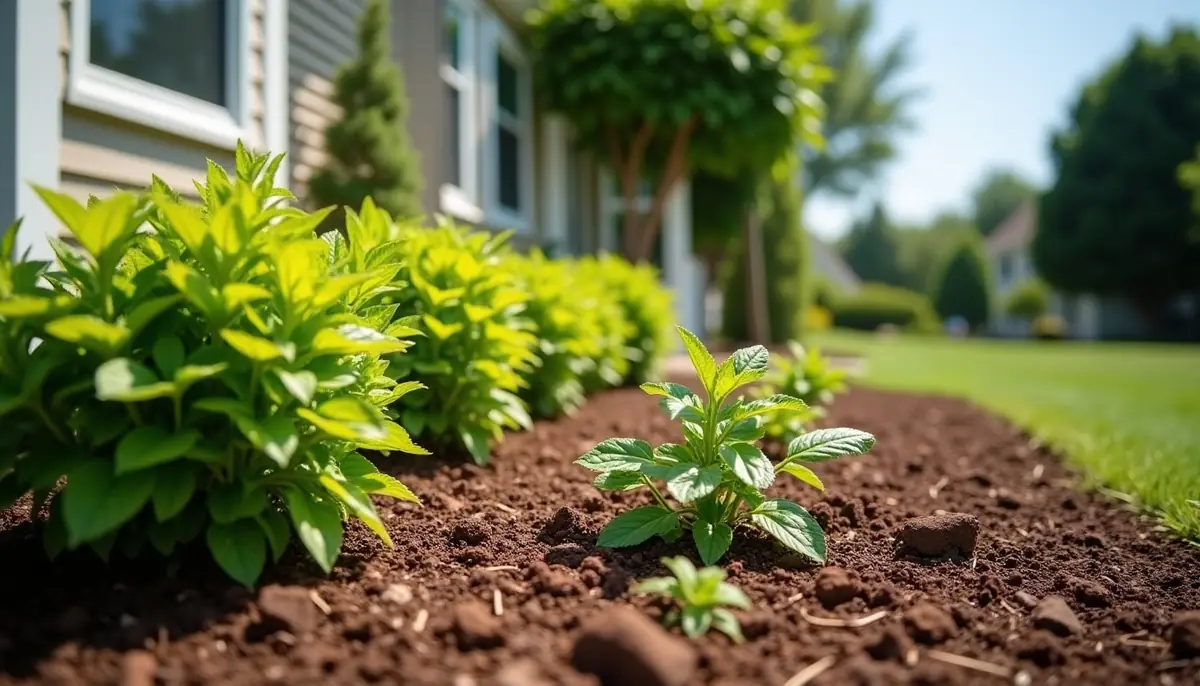
What attracts earwigs to your house
Four things, in rough order of importance.
Moisture and shelter right against the wall
NC State Extension describes earwigs as very attracted to, and dependent on, the moisture found around homes, and lists mulches, compost piles, trash, boards and wood piles as their habitat. University of California IPM says they seek out dark, cool, moist places to hide during the day: under loose clods of soil, boards, or dense growth of vines or weeds.
Lights at night
Earwigs are active at night and are often found around lights, according to NC State, and Virginia Cooperative Extension notes that some species come to lights in large numbers. UC IPM’s practical advice is to replace white outdoor lights with yellow ones, which are less attractive to earwigs.
Other earwigs
This is the attractant almost nobody mentions. University of Florida entomologist John Capinera notes that earwigs produce an aggregation pheromone in their faeces that is attractive to both sexes and to nymphs, and Utah State University adds that chemicals on the earwig’s own body surface play a part too. That is why you find twenty under one flowerpot and none under the next: once a spot is occupied, it becomes more attractive. Virginia Cooperative Extension advises washing any spot where earwigs clustered indoors with soap and water to remove the pheromone.
Weather that turns against them
UC IPM says earwigs might come indoors when conditions outside are too dry, too hot, or too cold, and NC State says that during dry, hot weather they sometimes migrate indoors. Very wet weather is not a friend to them either: Virginia Cooperative Extension notes that heavy rains and rapid temperature changes cause high mortality among eggs and young. Heavy rain can still flush adults out of soaked beds and toward the house, which is the pattern covered in our guide to bugs in the house after rain.
Why do I have earwigs in my house all of a sudden?
Usually because of the season and the weather together: a hot or dry spell arrives just as numbers outdoors are high. Records of the European earwig in our data peak sharply in early summer.
In the US records, the European earwig’s share of everything people photographed was close to twice its yearly average in June (an index of 192) and still well above it in July (154), then fell to 67 in August before a second, smaller rise from September to November. West Virginia University’s fact sheet says infestations inside houses usually occur in late summer or fall, when earwigs shelter in moist, dark cracks and crevices in bathrooms or kitchens. Read together, June is when earwigs are most noticed outdoors, and the autumn shoulder lines up with WVU’s timing for indoor problems.
The life cycle explains the rhythm. Females overwinter in the soil and lay their eggs in a chamber 2 to 3 inches down. UF/IFAS reports that winter eggs in British Columbia took about 56 to 85 days to hatch, followed by four nymph stages lasting roughly two to three and a half weeks each in the field.
Females guard the eggs and the first young, which is unusual among insects. NC State gives 20 to 50 eggs per clutch, UF/IFAS 30 to 60 in the first clutch, with a second clutch about half that size. Utah State reports two or more generations a year in the western US, so in the West the summer surge can repeat.

Why do I have earwigs in my bathroom?
Because the bathroom is usually the dampest room in the house, and earwigs that wander in under a door or through a gap end up where the moisture is. WVU names bathrooms and kitchens specifically, NC State adds damp crawl spaces and basements, and the University of New Hampshire lists wet mops among their indoor hiding spots. A steady stream points to moisture: WVU says a chronic infestation may indicate a drainage problem or moisture leak somewhere in or around the house.
| Where you keep finding them | What it usually points to |
|---|---|
| Bathroom floor or bath | A damp room plus a nearby entry gap; check under the door and around pipe penetrations |
| Kitchen, under the sink | A slow leak or condensation; NC State suggests sticky traps under sinks to monitor |
| Basement or crawl space | High humidity or water seeping in; dehumidify and fix grading |
| Under the front or patio door | Mulch, pots and a light right by the door |
| Among laundry, mops, cut flowers | Carried in from outside or drawn to damp fabric; not a sign of breeding indoors |
Our guide to bugs in the bathroom covers the other damp room regulars (drain flies, silverfish, centipedes) and the humidity levels worth aiming for. Silverfish respond to the same moisture fixes; see what attracts silverfish.
Do earwigs come from mulch?
They do not hatch from the bag, but mulch is their favourite home. Virginia Cooperative Extension says earwigs are most commonly associated with mulch and leaf litter because they prefer moist places with plenty of organic matter, and WVU says bark mulch next to houses often invites large earwig populations. The fix is depth and distance, not removal from the whole garden: WVU’s limit is no more than 2 inches against the house, and NC State suggests a 12 to 18 inch gravel border around the foundation instead.

What are earwigs a sign of?
Damp. They are not a sign of a dirty house, they do not damage wood or fabric, and they do not set up colonies indoors: UC IPM says they eventually die indoors because there is little for them to eat, and Virginia Cooperative Extension says most homes are too dry for them to establish. What they do signal is a moist, sheltered band of soil, mulch or debris against the foundation, and sometimes a leak. Treat them as a moisture indicator.
Where they are, and where they are not
The European earwig is a cool climate insect. UF/IFAS says it occurs south to North Carolina, Arizona and southern California but, preferring temperate climates, is unlikely to become abundant in the southeastern states. Our pull of research-grade records bears that out starkly.
Pennsylvania had 1,233 research-grade European earwig records against 4 in Florida and 1 in Texas. In Pennsylvania it ranks tenth of the household pest groups we track, just behind the blacklegged tick and level with the American dog tick.
Southern homeowners who see pincered insects may be looking at other species, such as the ringlegged earwig that NC State lists alongside the European one, or the striped earwig that UC IPM says comes to lights in southern California and smells disagreeable when crushed.
What is the quickest way to get rid of earwigs?
Indoors, the quickest fix is a vacuum cleaner: Illinois Extension and WVU both advise vacuuming any that get inside. Outdoors, the quickest way to cut numbers is trapping, which exploits the same hiding and clustering habits that bring them to the house.
| Trap | How to set it | Source |
|---|---|---|
| Oil can trap | Low-sided tuna or cat food can with 1/2 inch of oil, sunk so the rim is at soil level; fish oil is very attractive, or vegetable oil with a drop of bacon grease | UC IPM |
| Rolled newspaper | Roll and dampen; set on soil near plants just before dark, shake into soapy water in the morning | UC IPM, Colorado State |
| Corrugated cardboard | Rolled, set at the base of plants or the foundation; also a good monitoring tool | Colorado State, Utah State |
| Bamboo tubes or short hose | Laid on the soil overnight, emptied each morning | UC IPM |
| Baited box | Cardboard box with oatmeal or bran; wheat bran and wheat germ worked in Colorado State trials | NC State, Colorado State |
| Sticky trap | Indoors under sinks, to monitor where they enter | NC State |
UC IPM advises repeating the routine every day and removing refuges such as ivy, weeds, rubbish and leaves at the same time.
What kills earwigs?
- Soapy water for the contents of a trap each morning, per UC IPM.
- Predators. UC IPM says toads, birds and other predators can matter, and chickens and ducks will eat many earwigs. UF/IFAS reports a parasitic fly that parasitised 10 to 50 per cent of earwigs in British Columbia, and notes that bird predation can be significant.
- Spinosad baits. UC IPM rates baits containing spinosad as the most effective, environmentally sound products for gardens. More toxic insecticides such as carbaryl exist but are not usually needed.
- Insecticides indoors? Sources differ. UC IPM says indoor treatments are not recommended because they will do little to prevent invasions. Virginia Cooperative Extension says insecticides used for cockroaches work indoors, and WVU mentions pyrethrin sprays or boric acid in cracks and crevices. Indoors, vacuum and fix the moisture first; any product must be labelled for that use and applied as the label says.
When to call a licensed professional: if earwigs keep pouring in after you have thinned the mulch, cleared the foundation and sealed the doors, a professional can inspect for the moisture source and, where needed, apply a labelled perimeter treatment. Virginia Cooperative Extension describes a perimeter spray 5 to 10 feet out from the foundation.
Should you kill them in the garden?
Often not. UC IPM calls earwigs voracious feeders on aphids and insect eggs, and WVU says much plant damage once blamed on them is now believed to be caused by snails, slugs and cutworms; a night check with a flashlight shows the real culprit. Our garden pest control guide covers those alternatives.
Do earwigs bite, and do they go in your ear?
They pinch rather than bite, and only when handled. UC IPM says earwigs generally do not attack humans, although they are capable of biting if trapped in clothing or sat upon, and Illinois Extension says they are not poisonous. As for ears, the name is old folklore, which our earwigs guide covers: earwigs have no habit of seeking out ears. If a pinch or anything in an ear causes concern, see a doctor.
For the sealing steps that keep earwigs, millipedes and woodlice out, see our guide to pest-proofing your home.
Frequently asked questions
Why shouldn’t you kill earwigs?
Because in gardens they eat aphids and insect eggs. UC IPM describes them as voracious feeders on soft-bodied insects that can exert significant biological control, and Colorado State says they may be considered beneficial. They can damage seedlings, soft fruit and corn silk, but West Virginia University notes that much damage once blamed on earwigs is actually caused by slugs, snails and cutworms. Check plants at night before acting.
What is the quickest way to get rid of earwigs?
Vacuum the ones indoors, then trap outdoors. UC IPM recommends a low tuna or cat food can holding half an inch of fish oil, or vegetable oil with a drop of bacon grease, sunk to soil level, or rolled newspaper and cardboard set out at dusk and emptied into soapy water each morning. Thin mulch to 2 inches against the house and fix damp soil at the same time.
What scent will keep earwigs away?
No scent has good evidence as an earwig repellent; we found no extension guidance or published trial supporting one. Scents that attract them are better documented: fish oil, bacon grease, wheat bran and oatmeal are all used as trap baits. Keeping them away is a matter of conditions: a dry foundation strip, mulch no deeper than 2 inches, yellow outdoor lights and well-fitted door sweeps.
What are earwigs a warning of?
Usually excess moisture. West Virginia University’s fact sheet says that because earwigs prefer moist areas, a chronic infestation may indicate a drainage problem or moisture leak in or around the house. Check gutters and downspouts, soil grading, leaking taps and pipes, and basement humidity. They are not a sign of dirt, they do not damage the structure, and they do not breed inside homes.
Sources
- University of California Statewide IPM Program, Pest Notes: Earwigs, Publication 74102, M.L. Flint, updated 2012.
- NC State Extension, Earwigs, M. Waldvogel, P. Alder and C. Hayes, 2008, reviewed 2023; and Earwigs in the Landscape, J. Baker, 2013, reviewed 2019.
- Virginia Cooperative Extension, Earwigs in Virginia, publication 3101-1527, T.A. Dellinger and E. Day, 2022.
- West Virginia University Extension Service, Earwigs, P.K. Powell.
- Colorado State University Extension, European Earwigs, fact sheet 5.533, W.S. Cranshaw, 2014, reviewed 2025.
- Utah State University Extension, European Earwig, D. Alston and A. Terbeau, 2011.
- University of Florida IFAS, Featured Creatures: European Earwig, Forficula auricularia, EDIS IN875, J.L. Capinera.
- University of Illinois Extension, Earwig.
- University of New Hampshire Extension, Earwigs fact sheet.
- The Pest Control Brief analysis of iNaturalist research-grade records, pulled October 2026.