Do Mouse Repellents Work? Every Type Against the Evidence

No mouse repellent has been shown to keep house mice out of a home for long. The wildlife damage handbook says chemical repellents are seldom practical for mouse infestations, UC IPM says high frequency electronic devices are not effective, and the federal regulator does not review most plant-oil products at all. The best a repellent does is make one small space less attractive for a few days to a few weeks. Sealing gaps over 1/4 inch and trapping are what work.
The scorecard: every common repellent against the evidence
| Repellent | Regulatory status | Best evidence we could find | Verdict |
|---|---|---|---|
| Peppermint oil, sprays and soaked cotton | Peppermint oil is a listed minimum risk ingredient, so products can be sold without EPA registration (40 CFR 152.25(f)) | ICWDM: little information is available on how well mint oil works against mice; no field trial in a house | Short-lived at best |
| Other essential oil sprays (clove, cinnamon, garlic) | Also on the minimum risk list; EPA says it generally does not review these products or their labels | Laboratory avoidance only; nothing tested in occupied homes | Unproven |
| Balsam fir oil pouches | Registered pesticide, 2.0% balsam fir oil, EPA Reg. No. 82016-1 | The label claims up to 30 days indoors; ICWDM says little information is available on effectiveness against mice | Registered, but no independent test |
| Ultrasonic and electronic plug-ins | Not pesticides; the FTC sent warning letters to more than 60 sellers in 2001 | ICWDM: rodents may be repelled from the immediate area for a few days; UC IPM: not effective | Does not work |
| Mothballs (naphthalene or paradichlorobenzene) | Labelled for clothes moths, used in an airtight space such as a sealed container; use against mice is illegal | Oregon State Extension: manufacturers claim effectiveness against moths only; fumes cause headache, nausea and dizziness | Illegal and unsafe |
| Dryer sheets and scented soap | Not pesticides | No published test found | No evidence |
| Cat urine, cat fur odour, fox scent | Predator urine is the active ingredient in some registered garden repellents | Adduci et al. 2021: laboratory mice made fewer visits to cat odours, in a three box test | Brief avoidance, lab only |
| A live cat | Not applicable | ICWDM: cats cannot be depended on to control house mouse populations, but may help prevent reinfestation | Helps after control, not instead of it |
| Castor oil | Listed minimum risk ingredient | Trial data exist for moles, not house mice | Wrong animal |
| Hot pepper and capsaicin | Capsaicin is not on the minimum risk list | No published indoor test against house mice found | Unproven |
| Bitter taste repellent for objects | Registered for repelling mice from trees, poles, fences and garbage | ICWDM: little information available on effectiveness against mice | Narrow, unproven |
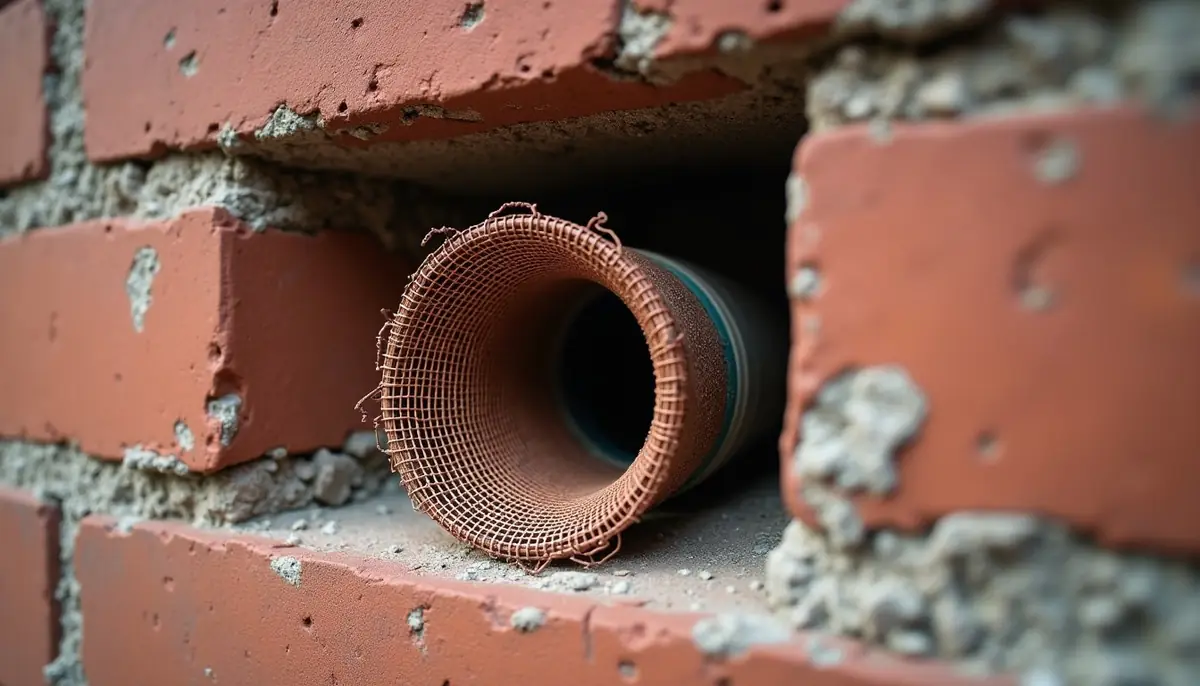
| Steel wool, copper mesh, hardware cloth | Building materials, not repellents | UC IPM and ICWDM: seal openings over 1/4 inch with metal; foam, rubber and plastic get chewed | Works, because it is a barrier |
Compiled by The Pest Control Brief from the Internet Center for Wildlife Damage Management (ICWDM) house mouse and Norway rat control chapters, UC IPM Pest Notes: House Mouse (2025), 40 CFR 152.25, EPA’s minimum risk pesticide pages, the EPA-accepted label for Reg. No. 82016-1, the FTC (2001), Oregon State University Extension PNW 606 and Adduci et al., PLOS ONE (2021).

Repellency against exclusion
A repellent tries to make a place unpleasant. Exclusion makes it unreachable. The difference decides almost everything above. ICWDM’s summary is that rodents find some tastes and odours objectionable, but chemical repellents are seldom practical solutions for mouse infestations. The mouse has warmth, food and a nest to weigh against a smell, and the smell fades while the food does not.
Habituation is the second problem. The FTC’s 2001 warning recorded its earlier complaints that rodents become accustomed to ultrasound and return to their nesting or feeding areas. UC IPM says the same of noise in general: house mice are easily frightened by strange sounds but quickly become accustomed to them. Our longer review of whether ultrasonic pest repellers work covers why the sound also stops at the first wall or cabinet.
Exclusion has no habituation problem: a gap sealed with metal stays sealed. UC IPM puts the standard at every opening larger than 1/4 inch, and warns that plastic screening, rubber, vinyl, expanding foam and wood are ineffective because mice chew through them. Our comparison of steel wool, copper mesh and other gap fillers covers which materials last.
The pouches: what the registered label actually says
Balsam fir oil pouches are the one widely sold mouse repellent that went through full EPA registration, which is why they carry a registration number, 82016-1, while most peppermint products do not. Registration under federal pesticide law is not the same as proof of effect: the EPA’s own registration notice states that registration “is in no way to be construed as an endorsement or recommendation of this product by the Agency.”
The accepted label is specific. Use in non-living areas only: attics, basements, cellars, storage areas, garages, sheds, pantries and barns. Place one pouch per 8 square feet. Replace when the scent fades, about 30 days indoors, or up to 3 months in cold storage. The label example then says 4 pouches for a single car garage, which does not square with its own rate.
At one pouch per 8 square feet, a 240 square foot space (12 by 20 feet, for example) needs 30 pouches, and replacing them every 30 days means 360 a year. Either the rate or the example is wrong, and nobody has published an independent test that would settle which number keeps mice out. Pouches are also the reason many people ask about mice in a car’s engine bay, since the label lists autos and RVs among its enclosed spaces.
Peppermint and the minimum risk shelf
Peppermint oil, clove, cinnamon, garlic and castor oil are all on the minimum risk list in 40 CFR 152.25(f), which lets products made from them skip EPA registration. EPA states that it generally does not review products claiming this exemption and does not review their labels. Our page on whether peppermint oil repels mice goes through the laboratory study behind the peppermint claim and why its effect faded.
The rule also contains an exception people miss: under 40 CFR 152.25(e)(2) the exemption does not apply to cedar oil, or to products that contain it, although three cedarwood oils (China, Texas and Virginia) are listed. A cedar oil mouse spray sold without a registration number is outside the rule as written, and our broader look at what testing shows for natural pest control explains how the exemption works.
Mothballs: the one to stop using
Mothballs contain naphthalene or paradichlorobenzene and are registered pesticides for clothes moths. Oregon State University Extension publication PNW 606 lists mice and rats among the animals people wrongly target with them and says plainly that any such use is illegal, because a registered pesticide may not be used in locations that are not on its label. It names attics, wall voids, crawl spaces and vehicles as places mothballs should not go, and lists headache, nausea, dizziness and difficulty breathing as symptoms of naphthalene exposure.
Will mouse repellent work on rats, squirrels, chipmunks or bats?
- Rats: no better. ICWDM says repellents generally are not effective for control of rats and that ultrasound will not evict rats established in an area. Our guide to what attracts rats to a home and yard covers what to remove instead.
- Chipmunks and squirrels: ICWDM’s chipmunk chapter says predator urine is the active ingredient in products registered for lawns and gardens, that repellents usually do not give a 100 per cent reduction in damage, and that most commercial repellents have not been adequately tested. Our page on chipmunks, groundhogs and ground squirrels covers exclusion around foundations.
- Bats: a mouse product is not labelled for bats. ICWDM says many aromatics and irritants have been tested on bats with very limited efficacy, and calls eviction and exclusion the gold standard; our bat removal cost guide covers the law and the exclusion work.
How long does mouse repellent work?
By the sources: ultrasonic devices, a few days in the immediate area (ICWDM); balsam fir pouches, about 30 days indoors and up to 3 months in cold storage by their label; scent sprays, until the scent fades. No product claims or shows a permanent effect, and a mouse population that is already breeding indoors will not leave because of one. The timing matters too.
US house mouse records in our analysis of iNaturalist data rise from 235 in June to 443 in October, the season UC IPM says outdoor mice frequently enter homes as nights turn colder. Sealing in late summer beats repelling in November; our page on what attracts mice to a house lists the food and shelter to remove at the same time.
Frequently asked questions
Is there a mouse repellent that actually works?
Not one with independent evidence of keeping house mice out of a home. ICWDM says chemical repellents are seldom practical for mouse infestations and that little information exists on mint oil or balsam fir oil products. A registered pouch has a label claim of up to 30 days in non-living areas. Metal exclusion of gaps over 1/4 inch is the only method that does not wear off.
What is the 5 day mouse rule?
An informal rule that trapping can stop after five days without a catch. It does not appear in extension or federal guidance we read. The CDC’s standard is a week: if no rodents are captured for a week and there are no new signs, they are gone. Our checklist for telling if mice are gone covers the signs to recheck.
What is the number one way to get rid of mice?
Snap traps set in numbers, with the gaps sealed at the same time. UC IPM says to use enough traps to make trapping short and decisive and to space them no more than about 10 feet apart where mice are active; ICWDM says no more than 6 feet. Our routine for catching a mouse with snap traps covers bait and placement.
How do Amish keep mice away?
We found no published study of Amish mouse control. The farm methods people usually mean, cats, closed metal grain storage and traps, can be checked against the evidence: ICWDM says cats cannot be depended on to control a house mouse population but may help prevent reinfestation, and UC IPM recommends traps and sealed storage. Our page on which predators eat mice covers how much cats help.
Sources
- Internet Center for Wildlife Damage Management, House Mouse Damage Prevention and Control; Norway Rat Damage Prevention and Control; Chipmunk Damage Prevention and Control; Bat Damage Prevention and Control.
- University of California Statewide IPM Program, Pest Notes: House Mouse, UC ANR Publication 7483 (N. M. Quinn and M. Frye), updated July 2025.
- Code of Federal Regulations, 40 CFR 152.25, Exemptions for pesticides of a character not requiring FIFRA regulation (minimum risk pesticides, table 1).
- US Environmental Protection Agency, Minimum Risk Pesticide Definition and Product Confirmation.
- US Environmental Protection Agency, Notice of Pesticide Registration and accepted label, EPA Reg. No. 82016-1 (balsam fir oil 2.0%), 2007.
- Federal Trade Commission, FTC Warns Manufacturers and Retailers of Ultrasonic Pest-control Devices, 3 May 2001.
- Stone, D. and Stock, T. Mothballs: Proper use and alternative controls for clothes moths, PNW 606, Oregon State University Extension, 2008 (reviewed 2026).
- Adduci, L. B. et al. (2021). Avoidance behaviour in laboratory house mice and Norway rats towards predator odours. PLOS ONE, e0245441.
- Centers for Disease Control and Prevention, How to Trap Up to Remove Rodents.
- The Pest Control Brief analysis of iNaturalist research-grade records, pulled October 2026.