How to Get Rid of Clothes Moths: The Larvae Are the Problem

To get rid of clothes moths, find the larvae and kill them in the fabric: hot wash at 120°F or more for 20 to 30 minutes, freeze sealed items below 0°F for 72 hours, or dry clean, then vacuum the edges where larvae hide. The adults you see do not eat and cause no damage, so swatting them and hanging traps does little on its own. Store the cleaned wool in tight containers and keep monitoring for one full generation, which takes four to six months.
Five-minute check: is it clothes moths at all?
Three household insects eat or live near fabric and food, and each needs a different fix. Settle this first, because a carpet beetle problem treated as a moth problem wastes the money in our moth extermination cost guide, where clothes moth jobs run about $275.
| Webbing clothes moth | Indian meal moth (pantry) | Varied carpet beetle | |
|---|---|---|---|
| Adult size | About 1/4 in (6 mm) long, 1/2 in (13 mm) wingspan | 1/3 to 2/5 in long, about 3/5 in wingspan | About 1/10 in (2.5 mm), a round beetle |
| Adult look | Uniform pale gold, coppery tuft on head | Reddish brown outer two thirds of forewing | Black with an irregular pattern of white, brown and dark yellow scales |
| Where adults turn up | Dark closets; weak flier, avoids light | Kitchen, ceiling corners | Window sills, attracted to sunlight |
| Larva | Creamy white, up to 1/2 in, in silk tubes | About 1/2 in, white with greenish or pinkish hue | Bristly, banded, slightly longer than adult |
| Food | Wool, fur, feathers, especially soiled | Grain, flour, dried fruit, nuts | Wool, silk, leather, fur, feathers |
| Telltale sign | Silk tubes or mats, scattered holes, pellet droppings | Webbing in food packets | Shed bristly skins, damage in one patch, no webbing |
Compiled by The Pest Control Brief from Rutgers FS1182 (2012), Colorado State Extension 5.599, UC IPM Pest Notes 7435, 7436 and 7452.
The quickest separator is the room. Moths in the kitchen are almost always pantry moths, which our guide to which pantry pests chew into sealed packets deals with.
Shed bristly skins and no silk point to carpet beetles, which damage the same fabrics and are treated in the same way but found in different places.
Small moths circling a lamp are usually not clothes moths either: UC IPM calls clothes moths “weak flyers that aren’t attracted to lights”, unlike the outdoor species explained in why moths are attracted to light.

The plan, in order
Step 1: Find every infested item
Pull everything out of the affected closet and drawers. Look under collars, in seams and folds, and on the undersides of rugs for silk tubes, silk mats, grazed fibres, fur clipped at the base and, with the casemaking moth (Tinea pellionella), cigar shaped cases about 3/8 inch long stuck to the fabric. Larvae avoid bright light and drop off fabric when exposed, so check the closet floor too.
Concentrate on soiled wool. Colorado State Extension explains that larvae need B vitamins and salts that thoroughly clean wool lacks, so perspiration and food stains are where attacks focus. Sweaters worn once and put away unwashed are the usual starting point. Check felt piano hammers, brush bristles, wool rugs, taxidermy, feather pillows and stored furs as well; UC IPM lists all of these as food.
Step 2: Kill the larvae and eggs in each item
Choose the method by what the fabric tolerates. Each kills all stages if the conditions are met.
| Method | Conditions in the source | Best for | Source |
|---|---|---|---|
| Hot wash | Water at least 120°F for 20 to 30 minutes | Washable wool blends, blankets | UC IPM 7435 |
| Dry cleaning | Standard dry cleaning | Tailored wool, items that shrink | UC IPM 7435; Rutgers FS1182 |
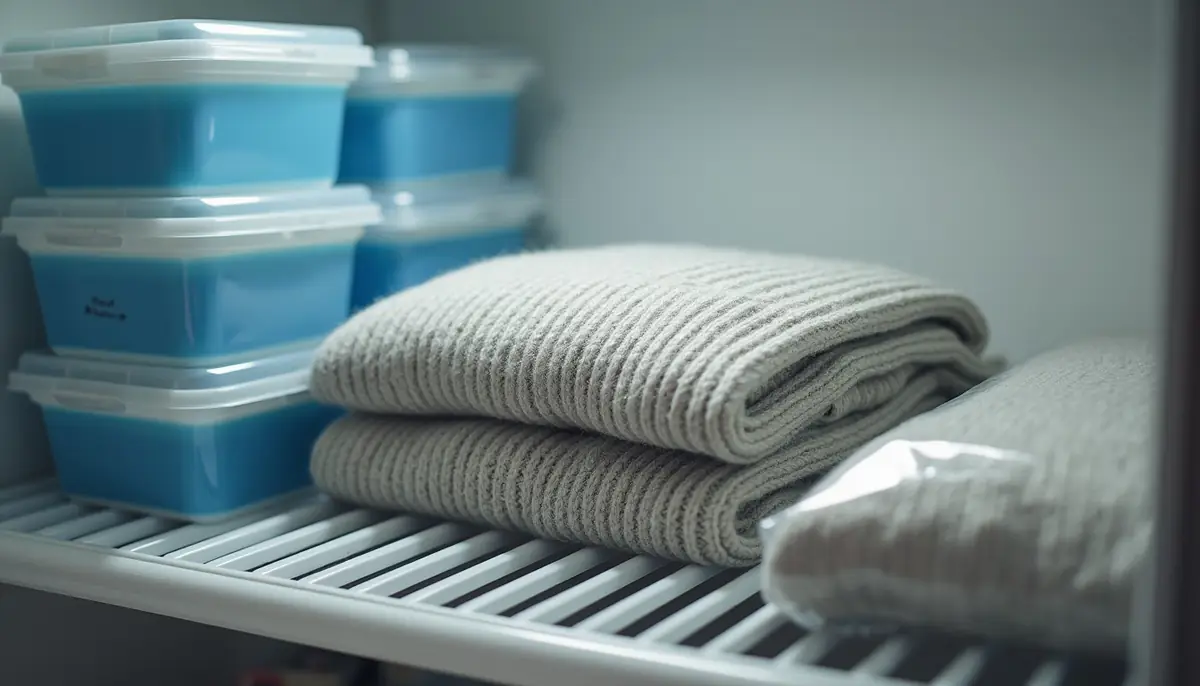
| Freezing | Below 0°F for 72 hours, item warmed to room temperature first | Sweaters, scarves, small rugs | Colorado State 5.599 |
| Freezing, longer | Below 18°F for several days; Rutgers advises two weeks | Home freezers that run warmer | UC IPM 7435; Rutgers FS1182 |
| Heat | Over 120°F for at least 30 minutes; CSU gives 110 to 120°F for 30 minutes or more | Heat tolerant items only | UC IPM 7435; Colorado State 5.599 |
| Brushing and sunlight | Brush outdoors in sun; larvae avoid light and drop off | Coats and furs too large to freeze | Colorado State 5.599 |
Compiled by The Pest Control Brief from UC IPM Pest Notes 7435, Colorado State Extension 5.599 and Rutgers FS1182.
For freezing, the detail most guides skip matters. Colorado State says the change from warm to freezing should be abrupt, because insects cooled slowly develop resistance. Seal items in a freezer bag with the air pressed out, and Rutgers adds that they should warm back up inside the bag so condensation does not form on the fabric.
Step 3: Vacuum where larvae feed undisturbed
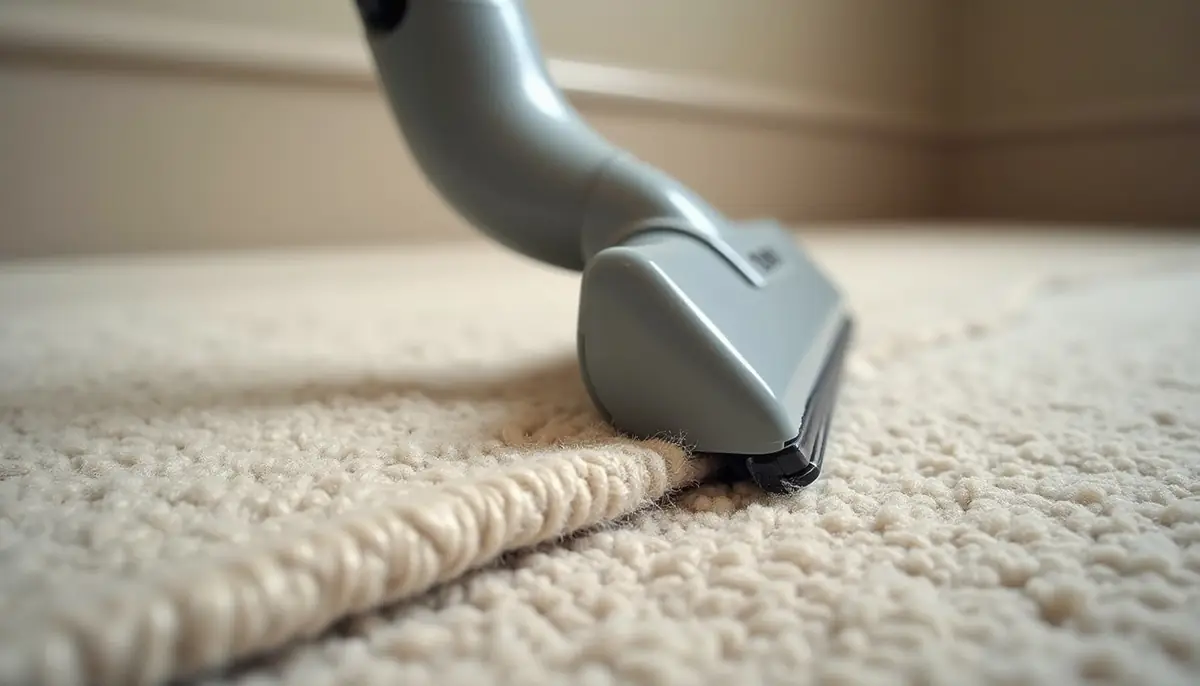
Vacuum carpet edges along skirting boards, under heavy furniture that never moves, inside closet corners and shelf seams, and heating vents. UC IPM notes that larvae “don’t like bright light”, so infestations sit in the darkest, least disturbed places. Empty the bag or canister outdoors straight away. This is also the main preparation a company will ask for, as our guide on how to prepare for a pest control treatment explains. Lint and hair in these places are food too: UF/IFAS EDIS lists lint, dust and materials soiled with oil among what larvae will feed on.
Step 4: Store clean wool so it cannot be reinfested
Colorado State calls tight fitting containers “most useful” against wool pests and notes that the egg laden female rarely flies and mostly walks, so sealed plastic tubs or zip bags stop most new attacks. Check stored wool at least once a year, because insects sealed in with it keep developing. Dry storage helps: the same sheet gives an optimum relative humidity of about 75 per cent and says clothes moths will not survive below 20 to 30 per cent.
Step 5: Use pheromone traps to monitor, not to cure
Pheromone traps catch males only. Rutgers says males are drawn from 16 to 24 feet (4 to 6 m) away. UC IPM says traps help detect an infestation and give some control, but “aren’t enough” alone, and the infested clothing still needs cleaning. Females are not caught, and each lays an average of 40 to 50 eggs according to UC IPM, or 100 to 150 according to UF/IFAS. Use one or two traps per closet, note the count each week, and treat a rising count as a sign that an infested item was missed.
How long does it take to get rid of clothes moths?
The treatment itself takes a weekend. Proving it worked takes months, because the larval stage varies so widely. UC IPM gives 35 days to 2.5 years for larvae, Rutgers about 67 days and up to 29 months, and egg to egg typically four to six months with two generations a year.
So a quiet month is not proof. Keep traps out through one full cycle, roughly six months, before calling it finished. Our guide to little worms found in the house helps if what you find meanwhile is a different larva.
Cedar, lavender, vinegar and mothballs: what the evidence says
- Cedar: Eastern red cedar oil “can kill small larvae, but it doesn’t affect large larvae,” says UC IPM, and Colorado State cites a study finding chests more than three years old “practically useless” for killing larvae. A tight cedar chest works mainly because it is tight.
- Lavender: Colorado State notes that a lavandin oil product was registered in 1997 and is lethal to clothes moths, but its label calls for a closed storage area and cleaned clothing. An open sachet in a closet is not that.
- Vinegar: None of the extension sources we read lists vinegar as a control. Wiping shelves with it cleans them; it does not reach larvae inside wool.
- Mothballs: Paradichlorobenzene and naphthalene work only as fumigants at high concentration in airtight containers. CSU says PDB kills all stages at high concentrations held for 2 to 3 weeks, and it softens some plastics and buttons. Both are toxic to people and pets, and using them in open closets is off label; the fumes and label rules are covered in whether mothballs are dangerous.
- Insecticide sprays: If you use one, choose a product listing clothes moths on its label and follow it exactly. UC IPM warns oil based sprays can stain silk and rayon. Sprays do not replace cleaning the infested item.
When to call a professional
Most clothes moth problems are solved at home, because the work is cleaning and storage; our cost guide puts a one-time moth service at $100 to $200. A professional earns the fee when the source cannot be found, when wall to wall wool carpet is infested, or when valuable textiles or a large collection are involved.
Ask how the quote compares with our carpet beetle treatment costs, $300 to $600 for most homes, since the work overlaps.
If small moths keep appearing in several rooms, our guide to small flying bugs in the house helps confirm what they are first.
Frequently asked questions
How do you get rid of clothes moths permanently?
Kill the larvae in every infested item by hot washing at 120°F or more, freezing below 0°F for 72 hours, or dry cleaning; vacuum dark edges; then store clean wool in sealed containers. Colorado State says tight containers largely exclude moths. Check stored wool yearly, because no treatment leaves lasting protection and new moths can arrive on second hand wool.
Why do I suddenly have clothes moths?
Usually an infested item came in, such as second hand wool, a rug or old furs, or a stored sweater was put away soiled. Colorado State calls it a myth that eggs lie dormant for long periods and suddenly produce an infestation. In a heated home, development is continuous, so a small population can build unnoticed for months before adults appear.
Why shouldn’t you kill moths?
Killing the adults you see does little. Rutgers states adult clothes moths “do not eat and cause no damage”; the larvae do, hidden in the fabric. Most moths flying around lamps are outdoor species, not clothes moths, which UC IPM says are not attracted to light. Spend the effort on finding and treating the larvae instead.
What kills moths instantly on clothes?
Nothing safe acts instantly on the larvae inside fabric. The fastest reliable method in extension guidance is heat: UC IPM gives water at 120°F or more for 20 to 30 minutes, or an oven above 120°F for 30 minutes for items that tolerate it. Freezing needs 72 hours below 0°F. Never spray household insecticide directly on clothing you will wear unless the label allows it.
Do clothes moths eat cotton and synthetics?
Rarely. Colorado State says they do not feed on cotton, silk or synthetic fibres; UC IPM says they eat synthetics or cotton blends only when wool is also present. Holes in a pure cotton or polyester garment usually have another cause, though a stain on any fabric can attract feeding.
Sources
- University of California Statewide IPM Program, Pest Notes: Clothes Moths, UC ANR Publication 7435, updated 2013.
- University of California Statewide IPM Program, Pest Notes: Carpet Beetles, UC ANR Publication 7436, updated 2020.
- University of California Statewide IPM Program, Pest Notes: Pantry Pests, UC ANR Publication 7452, updated 2013.
- Cranshaw WS. Clothes Moths: Identification and Control in the Home. Colorado State University Extension fact sheet 5.599, reviewed 2007.
- Wang C, Hamilton G. Clothes Moths. Rutgers Cooperative Extension Fact Sheet FS1182, 2012.
- University of Florida IFAS Extension, Clothes Moths, EDIS publication IG090.