Mice in the Attic: Signs, Noises and How to Get Them Out
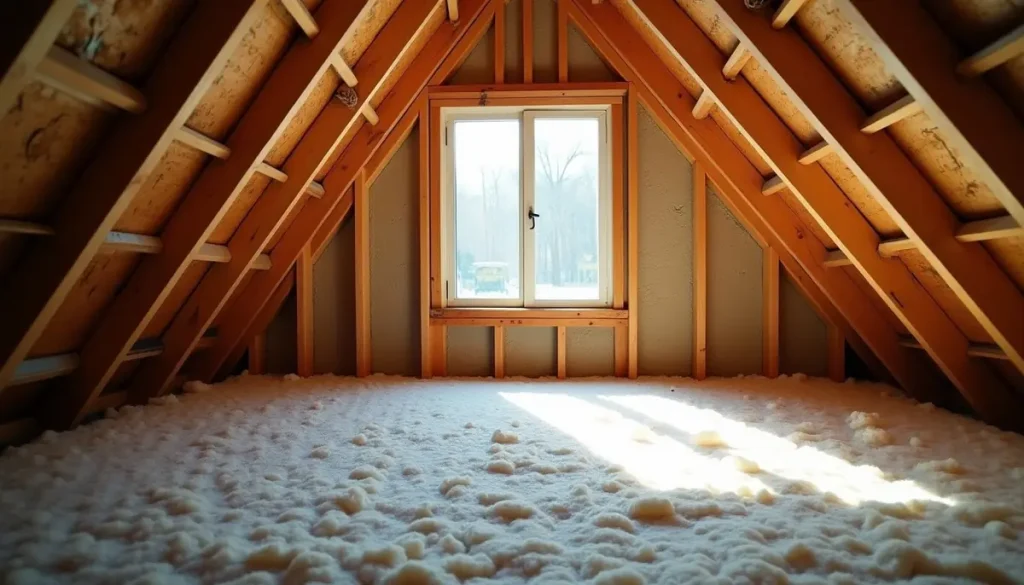
Mice in the attic usually announce themselves with light scratching after dark and pointed droppings about a quarter inch long; get rid of them by trapping along rafters and runways, then sealing every gap over a quarter inch. Noise at dawn and late afternoon points to squirrels instead, and noise at dusk and dawn only points to bats. Clean up wet, never by sweeping, following CDC guidance, and replace insulation only where it is soiled.
Mouse, rat, squirrel or bat: the attic diagnostic table
| Animal | When you hear it | What it sounds like | Droppings | Other giveaway |
|---|---|---|---|---|
| House mouse | Mostly at night; occasionally by day when food is available | Running across ceilings, gnawing, high-pitched squeaks | About 1/4 in (6 mm), pointed ends, scattered | Musky odour; nests of finely shredded fibre |
| Roof rat | Mostly at night; seen on utility lines and fence tops at dusk | Heavier running and gnawing | About 1/2 in (13 mm), pointed ends | Tooth marks about 4 mm wide; shredded insulation |
| Gray or fox squirrel | Just before daylight, several hours into the morning, late afternoon to dusk | Heavier running; churrs and barks | Cylinders or spheres about 1/2 in, rounded ends | Nut shells, leaves and twigs in the attic; chewed soffit or fascia |
| Flying squirrel | Night | Night-time running, easily taken for mice | No measured size published | Colonies of up to 40; Nebraska Extension says its activity is frequently misattributed to mice |
| Bat | Before leaving at dusk and on return at dawn; noisy on hot days | Scratching, crawling, vocalising in one area | Mouse-sized but crumble to powder with shiny insect bits | Rub marks and droppings below a gable or eave gap |
Compiled by The Pest Control Brief from UC IPM, ICWDM, Alabama Extension, Oregon Department of Fish and Wildlife and Nebraska NebGuide G1924.
The crush test settles mouse against bat. ICWDM says bat droppings turn powdery with shiny insect fragments when crushed; mouse droppings are harder and do not powder unless very old. Use a stick or gloved hand, never bare fingers.
Timing settles mouse against squirrel. Alabama Extension says gray squirrels forage from just before daylight for several hours, rest at midday and return in late afternoon. Activity at 2 a.m. is a rodent or a flying squirrel, and a mouse-only plan is wrong for squirrels and bats, which need one-way exclusion timed around their young.
If the table points to squirrels, see squirrels in the attic; for half-inch pointed droppings in a warm state, see roof rats. Our droppings guide has photos.
How do mice get into the attic?
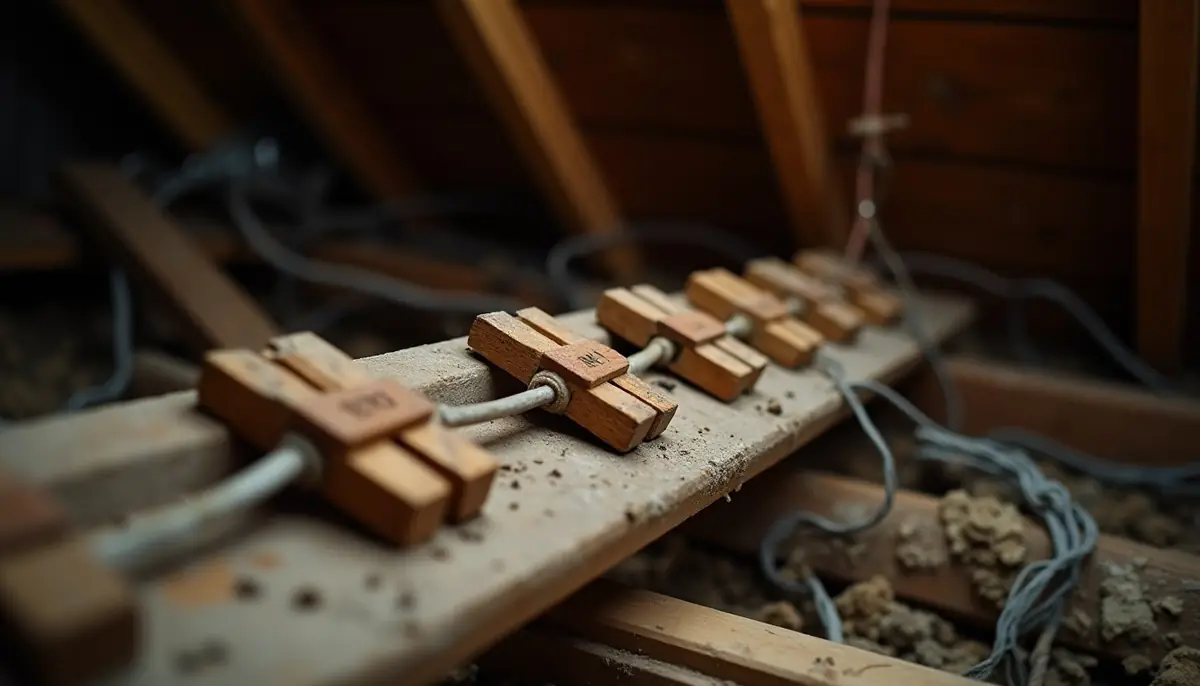
Through any gap of about a quarter inch. UC IPM says house mice squeeze under gaps 1/4 inch tall and through openings 3/8 inch wide, run up any rough vertical surface, run along wire cables and jump 12 inches onto a flat surface.
The usual roofline entries in UC IPM and ICWDM lists:
- Damaged screens on soffit, gable and roof vents
- Gaps where the roof meets a wall, chimney or dormer, and loose flashing
- Openings around cables, pipes and the plumbing vent stack
- Branches within 6 feet of the roof, which UC IPM advises removing
Mice also climb up inside wall voids from a garage or basement, so an attic with a sound roofline can still have them. Our guide to mice in walls covers that route.
Why mice end up in the attic, and why in autumn
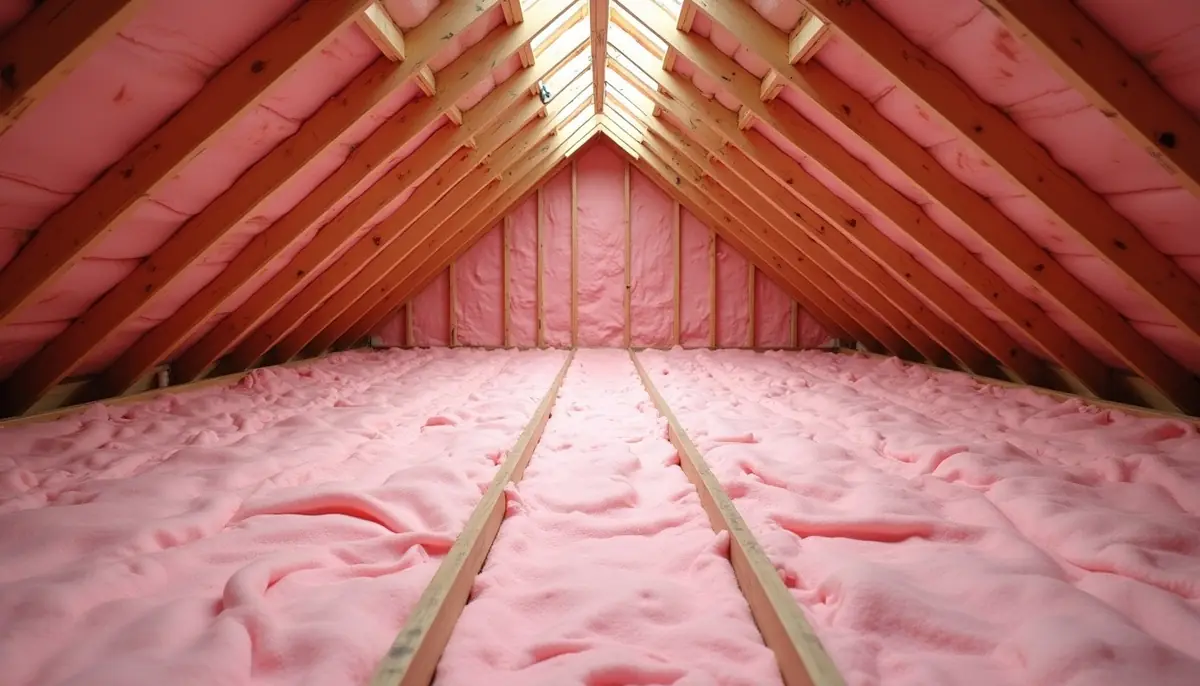
Attics are dry, sheltered and full of nesting fibre. UC IPM says house mice frequently enter homes in autumn when nighttime temperatures become colder, and nest in finely shredded fibrous material, which insulation supplies.
Our analysis of iNaturalist research-grade records shows the same pattern: house mouse records peak at 443 in October against 235 in June, and roof rats peak at 405 in October, while overall recording is falling from its summer high.
Is it common? Yes: ICWDM says mice are more common in homes than rats. Summer attic mice are less typical but not unusual, since UC IPM says house mice with stable food breed year round.
Can mice in the attic get into the house?
Usually yes, and they are probably already feeding there. UC IPM says house mice seldom venture more than 30 feet from their nest and food, eating about 200 small meals a night. Unless birdseed or pet food is stored up there, attic mice are travelling down wall voids, along pipes or past the attic hatch to eat.
How long can mice live in an attic without food? No extension or CDC source we checked publishes a survival time, and the figures online are unsourced. UC IPM does say house mice need no drinking water if food is moist enough and survive on limited food, so starving them out is not a control method.
Can mice in the attic make you sick?
They can, mainly through droppings, urine and nesting material. UC IPM lists leptospirosis, salmonella and lymphocytic choriomeningitis (LCM), and estimates that 5 per cent of US house mice carry and can transmit LCM virus. House mouse urine is also a major allergen; UC IPM links exposure to early onset of asthma in sensitive children.
Hantavirus is narrower than most attic pages suggest: CDC names the deer mouse, not the house mouse, as the main US carrier. Deer mice do use cabins and rural attics, so if unsure, clean up as if it were one; our hantavirus cleanup guide covers symptoms. Anyone unwell after a cleanup should see a doctor and mention the rodents.
What mice do to insulation and wiring
UC IPM describes rodents shredding insulation in walls and ceilings for nests, and Alabama Extension notes that urine and droppings absorbed into boards and insulation cause staining, odour and bacterial growth.
Wiring is the safety issue. UC IPM says house mice gnaw electrical wires and gas lines, and that many fires of unknown origin are believed to be caused by rodents gnawing on wires. Check cable runs for bared copper and have an electrician look at anything chewed.
How do I get rid of mice in my attic?
- Confirm it is mice with the table above. Bats must not be trapped.
- Trap on the runways. Set mouse snap traps along rafters and top plates, beside the entry, at the hatch and on flattened insulation trails. UC IPM advises traps no more than about 10 feet apart, in pairs 1 to 2 inches apart, with a small bait; cotton wool attracts nest-building females.
- Under the insulation, work from boards. Lay plywood across joists and set traps on top of the insulation along visible trails. Wear gloves.
- Skip glue boards and poison up here. UC IPM says adult mice often avoid glue, and that poisoned mice often die inside the structure; under insulation that means a hidden dead mouse smell.
- Seal from outside once catches stop. Close every gap over 1/4 inch with metal; UC IPM says expanding foam, plastic screening, rubber and wood are ineffective against mice. See rodent exclusion materials.
- Seal inside too, around pipes, cables and light fixtures between attic and rooms.
Cleaning up, and whether to replace the insulation
CDC’s steps: ventilate for 30 minutes, wear rubber or plastic gloves, spray droppings and nests with 1.5 cups of bleach per gallon of water (1 part to 9) or a labelled disinfectant, soak 5 minutes, wipe up with paper towels. Never sweep or vacuum. CDC says contaminated exposed insulation goes into plastic bags for removal, and heavy infestations need extra precautions.
| What you find | Reasonable response | Published cost estimate |
|---|---|---|
| A few droppings near one entry | Wet clean under CDC guidance; leave insulation | DIY; traps $3 to $6 each |
| Droppings and trails across part of the attic | Bag and replace only the soiled patches | Removal $1 to $2 per sq ft; removal and replacement $2 to $6 per sq ft |
| Nests, heavy droppings, urine odour across the attic | Professional cleanup, then whole-attic insulation decision | $1,500 to $4,000 cleanup after a large infestation |
| Active mice, any amount | Trapping plus sealing first; insulation last | Attic mouse job $250 to $475 |
Compiled by The Pest Control Brief from CDC guidance and the published estimates (This Old House, Fixr, HomeGuide) on our mouse exterminator cost page. Estimates, not measured prices.
Replace insulation where droppings and urine are concentrated, rarely the whole attic for a small infestation: on 1,000 square feet, full replacement at $2 to $6 per square foot is $2,000 to $6,000, more than the mouse work. Ask quotes to state the square footage. Borate-treated pest control insulation does not exclude rodents.
When the attic is a job for a professional
- Entries on a steep or two-storey roofline.
- Droppings across most of the attic, or a strong urine odour, which CDC treats as a heavy infestation.
- Bats: ICWDM advises against eviction between May 15 and August 15, when flightless young would be trapped inside, and many states protect bats.
- Squirrels with young: Alabama Extension notes juveniles stay in the nest 10 to 12 weeks.
- Mice still caught after the outside has been sealed, which means a missed entry.
Frequently asked questions
How do I know if I have mice in my attic?
Look for pointed droppings about a quarter inch long, flattened trails in insulation, nests of shredded fibre, a musky odour and greasy rub marks on beams or pipes, and listen for scurrying mostly at night. Noise from before daylight into the morning points to squirrels; noise only at dusk and dawn points to bats.
Do mice in the attic leave in summer?
Not reliably. UC IPM says house mice enter homes mostly in autumn as nights turn cold, but with steady food and shelter they breed year round, with a female producing 5 to 10 litters a year. A colony that moved in during October can still be there in July. Quiet in summer more often means fewer mice, not none.
How long can mice live in an attic without food?
No extension or CDC source we found publishes a figure, and the numbers circulating online are unsourced. Mice in an attic are rarely without food anyway: UC IPM says they stay within about 30 feet of their food, eat in around 200 small meals a night, and need no drinking water if food is moist enough, so they are feeding somewhere nearby.
Should I use poison for mice in the attic?
Usually not. UC IPM notes that mice rarely travel more than 30 feet from their nest, so poisoned mice often die inside the structure, and under attic insulation the carcass is hard to find and smells for weeks. Snap traps set along runways, followed by sealing gaps over a quarter inch with metal, avoid that problem.
Sources
- University of California Statewide IPM Program, Pest Notes: House Mouse (Publication 7483, N.M. Quinn).
- University of California Statewide IPM Program, Pest Notes: Rats.
- Internet Center for Wildlife Damage Management, House Mice; Roof Rats; Norway Rats; Bat Damage Identification; Bat Damage Prevention and Control Methods.
- Alabama Cooperative Extension System, Controlling Eastern Gray Squirrel Damage.
- University of Nebraska Lincoln Extension, NebGuide G1924, Control of Tree Squirrel Damage, 2009.
- Oregon Department of Fish and Wildlife, Living with Wildlife: Tree Squirrels, 2026.
- US Centers for Disease Control and Prevention, How to Clean Up After Rodents; About Hantavirus.
- The Pest Control Brief analysis of iNaturalist research-grade records, pulled October 2026.
- Published cost estimates from This Old House, Fixr and HomeGuide, as compiled on The Pest Control Brief mouse exterminator cost page.