Found Baby Mice? Their Age, What to Do, and Whether Mom Returns
If you found baby mice, check their age first: pink and hairless means under about four days old, fully furred with eyes shut means roughly 10 to 13 days, and eyes open means about two weeks or older. NC State Extension says pups are weaned and start leaving the nest at about 3 weeks. A mother mouse usually comes back to a nest left in place; wildlife rehabilitators allow about 12 hours to check. The babies also mean a breeding female lives within about 30 feet, so trapping adults and sealing gaps of a quarter inch or more matters more than the nest itself.
Age key: how old are the baby mice you found?
| Approximate age | What you see | What it means for you |
|---|---|---|
| Birth to 2 to 4 days | Pink, hairless, eyes sealed, ears flat; 0.5 to 1.5 g at birth | Totally dependent on milk; the mother is close by and will come back if the nest is left alone |
| 3 to 5 days | Ear flaps unfold and the first hair appears | Still helpless; a pup outside the nest was probably dragged out on a teat or the nest was disturbed |
| About 10 days | Fully furred, eyes still closed, crawls on its belly | Cannot feed itself; mother still nursing |
| About 14 days | Eyes and ears open, incisors visible | Starting to explore; a single pup on the floor at this age may be wandering, not lost |
| About 18 to 21 days | Looks like a small adult, about 10 to 12 g | Weaned or close to it; leaving the nest and eating solid food |
| 5 to 6 weeks | Adult shape, about half an ounce at full size | Can breed: UC IPM puts house mouse sexual maturity at 5 to 6 weeks |
Compiled by The Pest Control Brief from NC State Extension, The Jackson Laboratory’s Biology of the Laboratory Mouse, the Animal Diversity Web and UC IPM Pest Notes 7483. House mouse timings; individuals vary by a day or two.
Deer mice, the native “field mice” of cabins and sheds, run slower: the Animal Diversity Web gives eye opening at day 15 and weaning between day 25 and day 35.
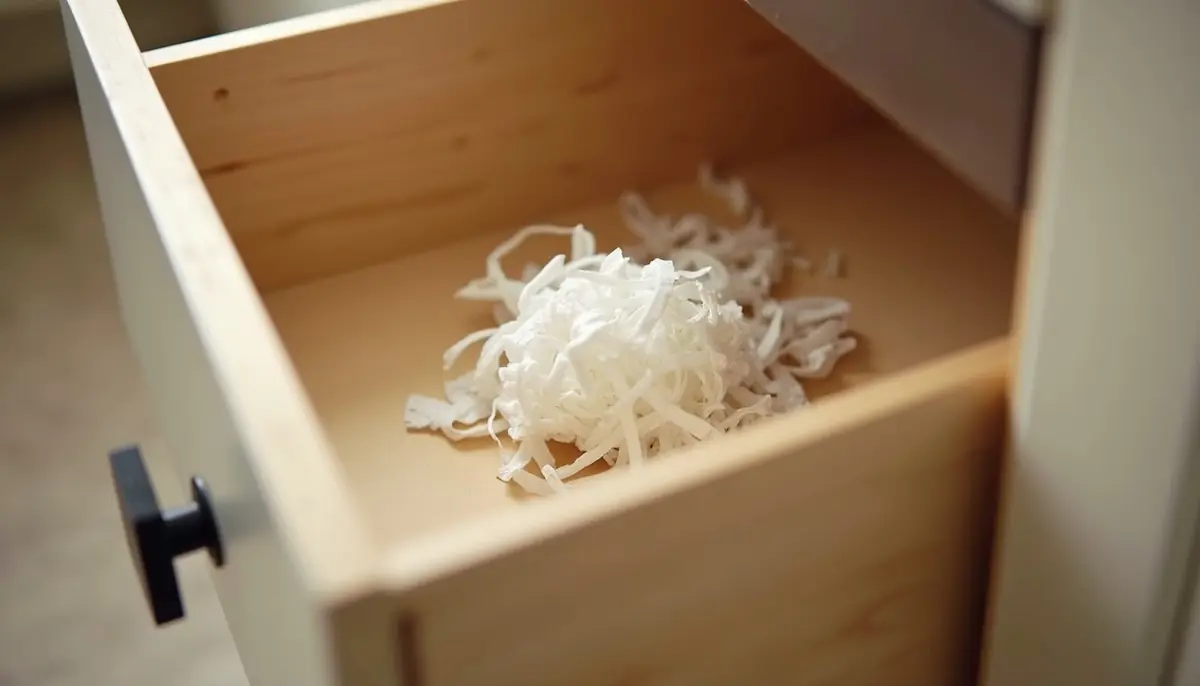
What should I do if I find baby mice?
- A nest of pink or furred pups with eyes shut, inside the house. Leave it for now and step back: the mother is the animal to deal with. Set snap traps along the walls within about 30 feet, which UC IPM gives as the usual limit of a house mouse’s travel from its nest. (trap placement guide).
- One hairless pup alone on a floor or counter. Mothers can carry pups clinging to a teat (the Animal Diversity Web describes this in deer mice), and a pup can drop off on the way. Wearing gloves, put it back on the nest if you can see it, or in a shallow box beside the spot where you found it, and leave the room. Do not feed it: Houston Humane, a Texas wildlife rehabilitation centre, says to give no food or liquids.
- Furred pups with open eyes running about. These are two to three weeks old, close to independence and trappable now.
- A nest in a cabin, shed, camper or closed garage. Assume deer mice and treat the nest as a hantavirus risk. Follow the wet cleanup method in our hantavirus and mouse dropping cleanup guide and do not sweep or vacuum.
Our guide to what a mouse nest looks like covers where nests hide and how to remove one once it is empty.
Will the mother mouse come back for her babies?
Usually, yes, if the nest is still where she left it and the area is quiet. Mouse pups call for her: a 2019 study in PLoS ONE by Peleh and colleagues notes that pups separated from their mother in their first two weeks emit many ultrasonic calls that trigger the mother’s retrieval behaviour. Deer mouse mothers carry young clinging to their teats or one at a time in their mouths, according to the Animal Diversity Web.
Houston Humane’s re-nesting test uses a 12 hour window: put the babies back, cover them, lay a small cross of grass on top, keep pets away and check whether it has moved. For a nest inside a home, the centre suggests moving babies and nest outdoors close to where they were found, then waiting overnight.
Two cautions. The Merck Veterinary Manual notes that female mice may abandon or eat their young, with excessive noise among the causes. And re-nesting a house mouse family against your own wall gives it a route back inside. In California, UC IPM notes it is illegal to relocate live house mice away from the property where they were caught without a permit from the state Department of Fish and Wildlife, and that relocated mice can navigate back to their nest site.
How old are baby mice when they leave the nest?
About three weeks. NC State Extension says pups are weaned and start to leave the nest at approximately 3 weeks, weighing 10 to 12 g. The Animal Diversity Web says young house mice are cared for in their mother’s nest until 21 days old, and the Merck Veterinary Manual gives weaning at 21 to 23 days for pet mice.
That answers how long baby mice stay with their mother: around three weeks for house mice, longer for deer mice, whose average age at independence is 35 days on Animal Diversity Web figures. Breeding speed is covered in our guide to how long mice live.
Can baby mice survive without their mother?
Not before they are weaned, unless a wildlife rehabilitator takes them on. NC State Extension describes newborns as blind and deaf, and pups live on milk until roughly 18 to 21 days. Furred, open-eyed pups eating solid food at about three weeks can usually fend for themselves.
This is the practical problem with trapping a nursing female: pups too young to feed themselves will die in the nest, often inside a wall or cabinet where the smell later gives them away. Our guide to dead mouse smell covers how long that lasts.
Why do baby mice squeak at night?
Most of what newborn pups say you cannot hear. Peleh and colleagues note that mouse ultrasonic calls are above 20 kHz and cannot be detected by human ears; they measured pup calls at 65 to 80 kHz. What you do hear are audible squeaks: NC State Extension says mice make soft chittering and squeaking noises to each other in their nests, and pups make lower-frequency “wriggling calls” that prompt maternal care (Ehret and Bernecker, 1986). Mice are mainly nocturnal, so the noise comes at night. Scratching and squeaking behind a wall points to mice in the walls.
Are baby mice baby rats?
No. House mice (Mus musculus) and rats (Rattus) are separate species, and a mouse never grows into a rat. An adult house mouse weighs about half an ounce, according to UC IPM, while adult Norway rats average 12 to 16 ounces, according to the Internet Center for Wildlife Damage Management. UC IPM notes that young rats have large heads and feet for their bodies, which separates them from mice. Our rat vs mouse guide has the full test.
Do baby mice carry diseases? Handling them safely
Treat pups like adult mice. UC IPM lists leptospirosis, salmonella and lymphocytic choriomeningitis (LCM) among the diseases house mice carry. CDC says people catch LCM from fresh urine, droppings, saliva or nesting material of infected rodents, and that infection in pregnancy can cause miscarriage or birth defects, so anyone pregnant should leave nest handling to someone else. Deer mice are the principal reservoir of Sin Nombre hantavirus, and UC IPM gives a fatality rate of about 36 per cent for the lung disease it causes.
- Wear rubber or plastic gloves; never handle pups bare-handed.
- Open doors and windows for 30 minutes before touching a nest, as CDC advises.
- Soak nest material with 1.5 cups of bleach in a gallon of water, or an EPA-registered disinfectant, for 5 minutes before lifting it.
- Double-bag it, bin it, and wash your hands after removing the gloves.
Symptoms after contact are a question for a doctor; see whether mice are dangerous.
How to get rid of baby mice in the house
House mice are not protected wildlife: the Internet Center for Wildlife Damage Management says they “are not protected by laws and are considered pests.” California classes deer mice as nongame mammals that the owner or tenant may control at any time in any legal manner, according to UC IPM. Elsewhere, check with your state wildlife agency.
- Remove the adults. Snap traps along walls near the nest. UC IPM warns that mice on glue boards and other live traps might not die quickly and will need to be euthanised, and says drowning is not considered humane.
- Deal with the pups humanely. A licensed wildlife rehabilitator or a vet can advise; UC IPM points to the American Veterinary Medical Association euthanasia guidelines.
- Clean the nest wet, using the steps above, once the pups are gone.
- Seal the way in. UC IPM says house mice squeeze under gaps a quarter inch tall and through openings 3/8 inch wide. Use metal or concrete patches; see our guide to rodent exclusion materials.
One litter in a garage drawer is a reasonable DIY job. Pups in more than one place, droppings in several rooms or nests inside walls point to an established group: check our list of signs of mice in the house, and consider a licensed professional who can trap and exclude in one visit.
Frequently asked questions
How many baby mice are in a litter?
Sources disagree. UC IPM and the Animal Diversity Web give about 5 or 6 pups per litter for house mice, with a range of 3 to 12, while NC State Extension and the Merck Veterinary Manual give an average of 10 to 12. Deer mice have smaller litters, typically 3 to 6 according to UC IPM. A female house mouse can have 5 to 10 litters a year.
What are baby mice called?
Baby mice are called pups, the term NC State Extension and laboratory references use. Newborn pups are pink and hairless, weigh 0.5 to 1.5 g, and are born blind and deaf. They grow a full coat in about 10 days and open their eyes at about 14 days, and by about 3 weeks they look like small adults.
Is one baby mouse a sign of a bigger problem?
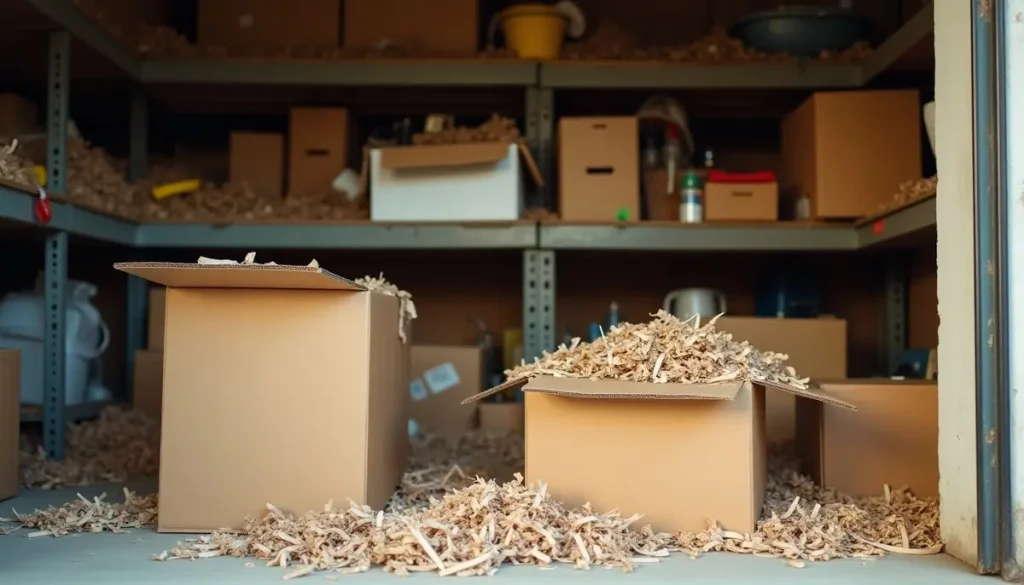
Usually. A pup means a nest and a breeding female, and house mice seldom travel more than 30 feet from their nest, according to UC IPM. Look nearby for shredded paper or insulation, droppings and gnawing. Pups with open eyes found wandering mean the litter is about two weeks old or more and will be breeding at 5 to 6 weeks.
Should I feed a baby mouse I found?
No. Houston Humane, a wildlife rehabilitation centre, says to give an orphaned wild baby no food or liquids. Keep it warm in a box, wear gloves, and either re-nest it so the mother can collect it or contact a licensed wildlife rehabilitator.
Sources
- NC State Extension, Hayes C. and Alder P., Biology and Behavior of Common Structure-Invading Mice.
- The Jackson Laboratory, Biology of the Laboratory Mouse (the “Silver Book”), chapter 4, reproduction and breeding.
- University of Michigan Museum of Zoology, Animal Diversity Web: Mus musculus (house mouse) and Peromyscus maniculatus (deer mouse) species accounts.
- University of California Statewide IPM Program, Pest Notes: House Mouse, Publication 7483.
- University of California Statewide IPM Program, Pest Notes: Deer Mice, Publication 74161.
- University of California Statewide IPM Program, Pest Notes: Rats, Publication 74106.
- Merck Veterinary Manual: Breeding and Reproduction of Mice; Biological Data of Pet Rodents table.
- Peleh T., Eltokhi A., Pitzer C. and colleagues, Longitudinal analysis of ultrasonic vocalizations in mice from infancy to adolescence, PLoS ONE, 2019.
- Ehret G. and Bernecker C., Low-frequency sound communication by mouse pups (Mus musculus): wriggling calls release maternal behaviour, Animal Behaviour, 1986.
- Houston Humane Society Wildlife Center, Found a Rodent?
- Internet Center for Wildlife Damage Management, House Mice and Norway Rats species pages (after Timm and Howard, Prevention and Control of Wildlife Damage, 1994).
- Centers for Disease Control and Prevention, About Hantavirus; About Lymphocytic Choriomeningitis; How to Clean Up After Rodents.