How to Keep Mice Out of a Dryer Vent Without a Fire Risk
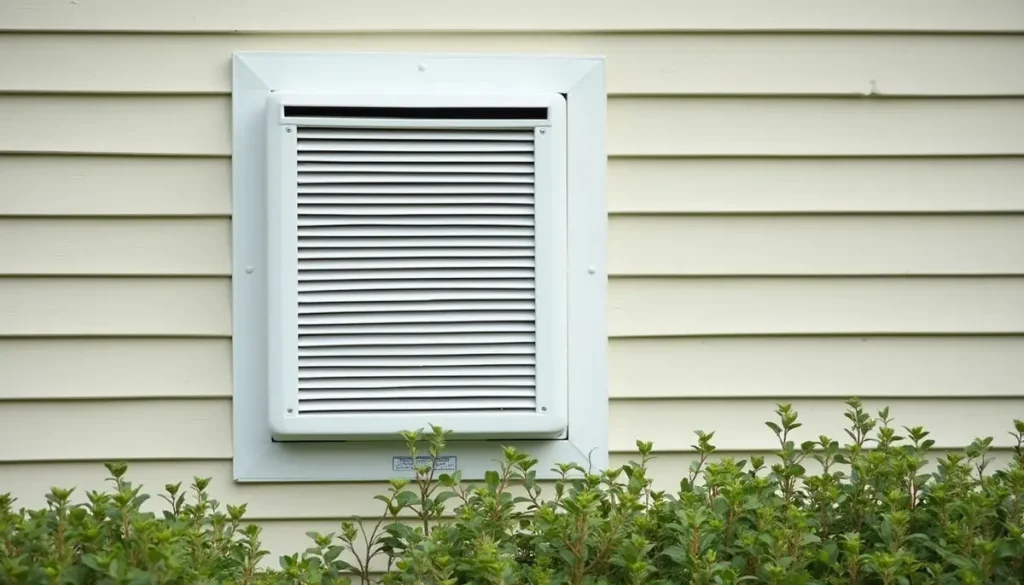
Keep rodents out of a dryer vent with a hood whose damper closes tight when the dryer stops, a clean lint path so it can close, and a metal seal around the duct where it passes through the wall, never a mesh screen. The International Residential Code requires a backdraft damper at the termination and states that screens shall not be installed there, because screens catch lint. Failure to clean is the leading cause of the 2,900 residential dryer fires US fire departments attend each year. A mouse needs a gap only about 1/4 inch tall, so a damper stuck open by lint is an open door.
The common advice, “put a mesh cover on it”, is the one fix the building code rules out. The table rates each method on both counts.
Every dryer vent fix, rated for mice and for fire
| Method | Stops mice? | Fire and code position | Verdict |
|---|---|---|---|
| Wire mesh or hardware cloth over the outlet | Yes, at 1/4 inch mesh | IRC M1502.3 and IMC 504.4: “Screens shall not be installed at the duct termination.” USFA warns screens “can collect lint and clog” the vent | Do not use |
| Louvered or gravity flap hood | Yes, while every flap closes fully | Meets the backdraft damper rule; the US Department of Energy guidance says to cover dryer outlets with “opening gravity louvers” | Good baseline; fails when a flap is cracked, missing or held open by lint |
| Magnetic or spring-assisted damper hood | Yes, holds the flap shut when airflow stops | Still a damper, not a screen; follow the dryer maker’s installation instructions, which M1502.3 makes binding | Best option for homes that keep getting mice |
| “Rodent guard” hoods with bars or a cage | Depends on bar spacing | Whether a guard counts as a screen is a judgement for your local building official, and adopted codes vary by state | Ask the inspector before fitting one |
| Steel wool or foam stuffed into the outlet | Briefly | Blocks the exhaust, the condition USFA links to overheating | Never |
| Sealing the gap around the duct with metal and sealant | Yes, closes the side door most mice use | No conflict | Always do this |
| Replacing plastic or foil flex duct with rigid metal | Removes a chewable section | USFA recommends rigid, non-ribbed metal; IRC M1502.4.1 requires metal duct | Do it if the duct is plastic |
| Repellent pouches, sprays or ultrasonic units | No reliable evidence | Not addressed by the code; UC IPM finds little evidence for sound, magnetic or vibrational devices | Skip |
Why the screen is the wrong answer
IRC section M1502.3 reads: “Exhaust ducts shall terminate on the outside of the building.” It continues: “Exhaust duct terminations shall be equipped with a backdraft damper. Screens shall not be installed at the duct termination.” The International Mechanical Code, section 504.4, uses the same final sentence. Several states adopt the line directly, South Carolina among them in its regulation 8-1232.
One exception sits in section M1502.2: the independent exhaust rule “shall not apply to listed and labeled condensing (ductless) clothes dryers.” A condensing dryer has no outside vent, so replacing an old dryer with one removes this entry point.
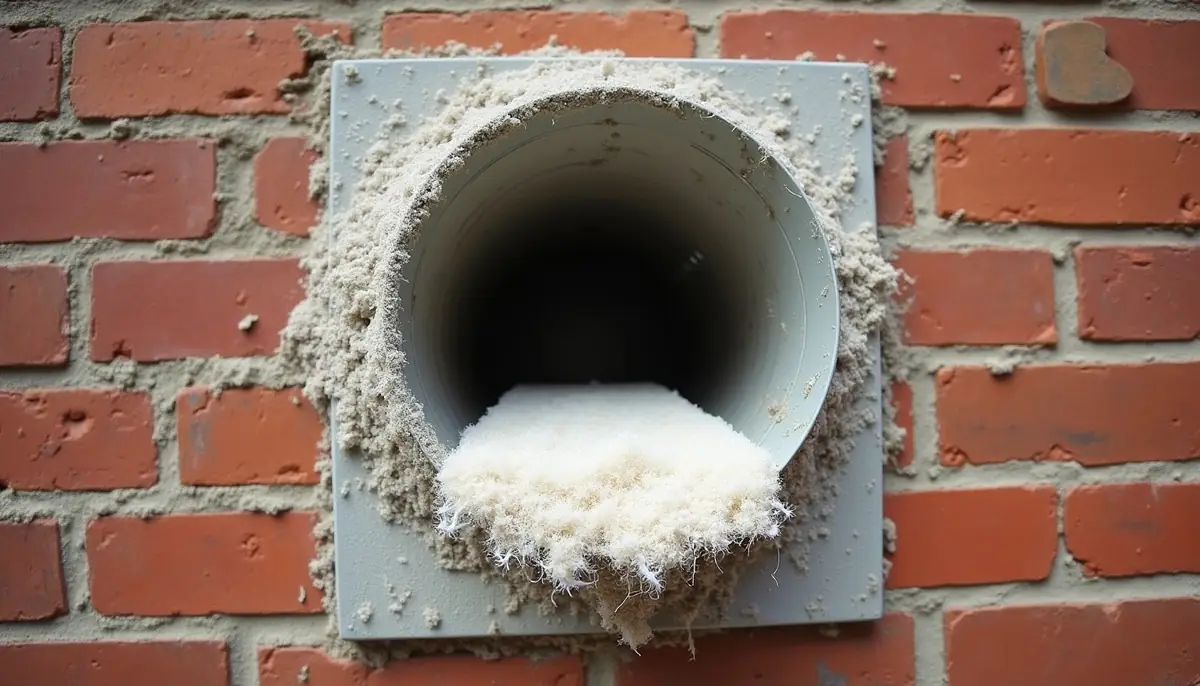
The reason is lint. The US Fire Administration’s report on residential dryer fires (2008 to 2010 data) found failure to clean caused 34 per cent of these fires, and dust, fibre and lint were the first item to ignite in 28 per cent. Its safety list says outside wall dampers “should have a covering that will keep out rain, snow, and dirt. Do not, however, use wire screen or cloth as these can collect lint and clog areas of the dryer vent.” A screen fine enough to stop a house mouse needs openings of 1/4 inch or less, which is exactly the size that traps damp lint.
The standard duct is 4 inches (102 mm) across under IRC M1502.4.1; a mouse passes a gap a sixteenth of that. The code even limits screw tips inside the duct to 1/8 inch, so nothing snags lint.
How mice actually get in
A mouse does not need the vent opening itself. There are three routes.
- The gap around the duct. The hole through siding or brick is often cut wider than the 4 inch duct. UC IPM’s house mouse Pest Note says mice “can squeeze under gaps ¼ inch tall, and through openings 3/8 inch wide,” which a ragged siding cut easily leaves. The measured gaps for each species are in our page on how small a hole a rat or mouse can fit through.
- A flap that does not close. Lint builds on the hinge, a flap cracks in cold weather, or one blade is missing. Any of those leaves an opening well over 1/4 inch.
- A chewed transition duct. Once inside the hood, a mouse can reach the flexible duct behind the dryer. UC IPM lists plastic, rubber, vinyl and foam among materials that are “ineffective for plugging holes used by house mice” because mice gnaw them.
UC IPM notes that outdoor house mice “frequently enter homes in autumn when nighttime temperatures become colder.” The USFA data put dryer fires highest from November to March, peaking in January at about 11 per cent of the year’s total, so mice look for a way in during the months the vent works hardest.
Our analysis of iNaturalist research-grade records agrees. US house mouse records climb from a low of 235 in June to a peak of 443 in October, then stay above the summer level through November. These are sightings people recorded, not counts of infestations, but the October peak matches the autumn move indoors, so check the hood in September.
The fix, step by step
1. Clean before you guard
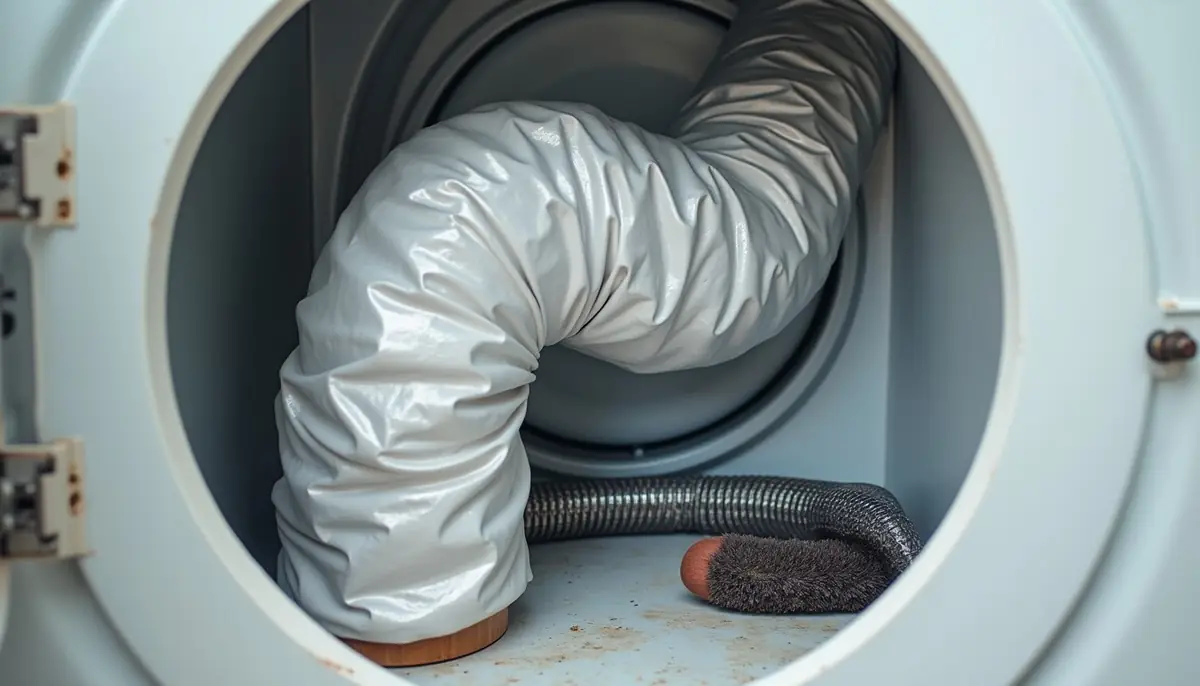
Clear lint from the duct, the hood and the damper hinge. USFA advises cleaning the lint filter before and after every load, scrubbing it with a nylon brush at least every 6 months, and having the vent serviced if clothes take longer than normal to dry. A new damper fitted over a lint-packed duct soon sticks open again.
2. Fit a closing damper hood
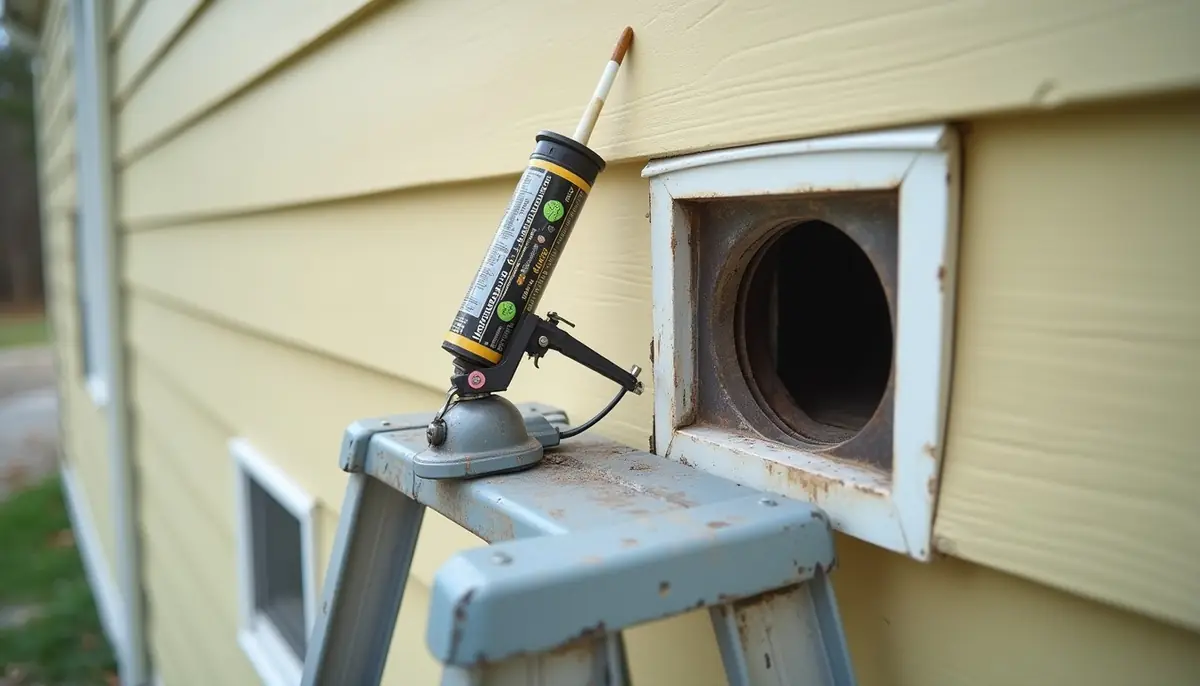
Choose a metal hood whose flap or louvers drop shut on their own, with or without magnets. Run the dryer and watch it from outside: USFA says to “make sure the outdoor vent covering opens when the dryer is operating.” Then switch it off and check that every flap closes flat. If the termination is within 3 feet of a window, door or soffit vent, IRC M1502.3 says it should be moved when the dryer instructions do not say otherwise.
3. Seal around the duct with chew-proof material
Close the gap between the duct and the wall opening, outside and, where reachable, inside. UC IPM says to seal openings around “water pipes, vents, and utility cables with metal or concrete.” In practice that means a sheet-metal collar, or 1/4 inch hardware cloth packed into the void, finished with exterior sealant. Expanding foam on its own is not a barrier; our guide to which rodent exclusion materials actually stop a mouse compares steel wool, copper mesh, sheet metal and concrete by specification.
4. Replace a plastic duct
USFA notes that dryer manufacturers now state in their manuals not to use plastic flexible duct, and recommends rigid, non-ribbed metal. The code caps the duct run at 35 feet, less for each bend.
5. Recheck each autumn
A quick look at the hood each autumn catches a cracked flap. Mice that find one route closed often test another, which is why mice keep coming back after a house has been sealed once and never rechecked.
Signs a mouse is in the vent or behind the dryer
- Shredded paper, insulation or fabric packed into the hood or the transition duct; our description of a mouse nest and where to find one shows what the material looks like.
- Jeans and towels taking much longer to dry, or clothes feeling hotter than usual at the end of the cycle, both of which USFA lists as signs of a clogged exhaust.
- Droppings on top of the dryer, behind it or in the lint screen housing.
- Scratching from the wall behind the laundry at night, the same pattern described in how to tell if mice are in your walls.
A vent is rarely the only entry point, so work through the full room-by-room checklist of signs of mice in the house if you find any of these.
If you find a nest, wet it with disinfectant and wear gloves before removing it, following the CDC method in our mouse dropping and hantavirus cleanup guide. Do not run the dryer until the duct is clear.
Mice already inside the house
Sealing the vent does not remove mice already in. UC IPM says house mice seldom venture more than 30 feet from their nest, so set traps along the laundry room walls about 10 feet apart. The order that works, trapping first and sealing every gap as you go, is laid out in our plan for how to get rid of mice in the house. Call a licensed professional if the duct runs inside a finished wall or ceiling, or if droppings keep appearing after two weeks of trapping.
Frequently asked questions
How to stop mice from coming through a dryer vent?
Clean the lint from the duct and damper, fit a metal hood whose flaps close fully when the dryer stops, and seal the gap around the duct with sheet metal or 1/4 inch hardware cloth and sealant. Do not fit a mesh screen over the outlet: IRC M1502.3 states that screens shall not be installed at the duct termination because they trap lint.
How can I protect my dryer vents from mice?
Protect the vent with a closing damper, not a screen. Louvered, gravity or magnetic damper hoods meet the code’s backdraft damper requirement and block mice when shut. Check each autumn that every flap closes flat, since UC IPM notes mice move indoors as nights turn cold, and replace any plastic transition duct with metal, as USFA recommends.
What repels mice immediately?
Nothing reliably does. UC IPM states there is little evidence that sound, magnetic or vibrational devices drive established mice or rats out of buildings or prevent entry, and mice quickly get used to repeated sounds. Scented products have a weak record too, as our review of whether mouse repellents work shows. Closing gaps over 1/4 inch is what UC IPM calls the most successful and permanent control.
Can a mouse live in a dryer vent?
Yes. A vent offers warmth and soft lint for nesting, and the US Fire Administration notes that nests of small birds and other animals can block dryer exhaust vents, which can cause overheating and fire. A nest in the hood or duct usually shows as packed debris in the outlet or as loads that take longer to dry. Clear it before using the dryer again.
Are rats kept out the same way?
Yes, with the same damper and the same seal. An adult Norway or roof rat needs a gap of about 1/2 inch, twice a mouse’s, so a hood sized to stop mice stops rats too. UC IPM notes rats gnaw plastic, wood and even soft metals such as copper and lead, so seal around the duct with sheet metal or concrete and use a metal hood.
Sources
- International Code Council, International Residential Code 2021, Chapter 15, sections M1502.2, M1502.3, M1502.4.1, M1502.4.2 and M1502.4.6.1.
- International Code Council, International Mechanical Code 2021, section 504.4, Exhaust installation.
- South Carolina Code of Regulations 8-1232, IRC M1502.3 Duct termination.
- US Fire Administration, Topical Fire Report Series Vol. 13 Issue 7, Clothes Dryer Fires in Residential Buildings (2008 to 2010), August 2012.
- University of California Statewide IPM Program, Pest Notes: House Mouse, UC ANR Publication 7483, updated July 2025.
- US Department of Energy, Building America Solution Center (Pacific Northwest National Laboratory), Screens and Other Deterrents for Birds, Rodents, and Other Pests.