How Fast Do Termites Spread? Colonies, Swarms and Neighbours
Termites spread slowly through a house, at the pace a colony grows, and their fastest leaps happen when swarmers fly or people move infested wood. A new subterranean colony may hold only 75 termites after its first year, according to UC IPM, and University of Florida entomologists put Formosan colonies at three to five years before they are big enough to cause severe damage. Spread to a new house usually means a colony that was already foraging in the soil next to it, a swarm flight, or wood carried in by a person.
The three ways termites spread, and how fast each one is
| Kind of spread | What moves | Measured distance or pace | Source |
|---|---|---|---|
| Foraging growth | Workers extend tunnels from an existing colony | Eastern subterranean colonies around North Carolina houses: under 30 linear metres (about 100 ft); Formosan colonies: up to 300 ft in soil | Parman and Vargo 2008; UF/IFAS EENY-121 |
| Swarm flight | Winged reproductives found a new colony | Formosan alates: about 100 m accepted standard, 892 m record across the Mississippi River | Messenger and Mullins 2005 |
| New colony maturing | The founding pair’s offspring | Formosan: 3 to 5 years to cause severe damage and swarm; West Indian drywood: swarmers at about 5 years | UF/IFAS EENY-121 and IN236 |
| Human transport | Infested lumber, railroad ties, furniture, debris | Any distance a truck or ship travels, in a day | Messenger, Su and Scheffrahn 2002; UF/IFAS IN236 |
Compiled by The Pest Control Brief from the named extension publications and journal papers.
Inside one house: how far a colony reaches
The best measurement of foraging around real homes comes from a 2008 study by Parman and Vargo in the Journal of Economic Entomology. They genotyped termites from 20 infested houses in central North Carolina and found that eastern subterranean termite colonies had a maximum linear foraging distance of 26 metres and a maximum foraging area of 174 square metres. In 16 of the 20 houses a single colony was attacking the structure; four houses had two at once.
Twenty-six metres is about 85 feet, so a colony entering at a back porch post can reach a front sill without any new colony forming. What changes over months is how many workers are feeding. How many workers that means is set out in our breakdown of termite colony counts by species.
Formosan termites are the exception. University of Florida entomologists Nan-Yao Su and Rudolf Scheffrahn describe single colonies of several million termites foraging up to 300 feet in soil, against several hundred thousand for native subterranean species. They note that a Formosan termite does not eat more than a native one; the colony simply has more mouths, so damage arrives faster. The feeding rates behind that are covered in how fast termites eat wood, by species.
How fast do termites spread in the house?
In feeding terms, slowly. University of Kentucky entomologists state that termites damage wood slowly and advise homeowners that a delay of a day, a week or a month before treatment usually adds little damage. So collect quotes rather than sign the first contract; our termite treatment cost guide lists the prices by method and the checks to make before signing.
From a swarm to the first damage: the timeline
New colonies take years, and most founding pairs die: UC IPM notes that very few of the reproductives that fly each year ever pair up and establish a colony, and very few of those colonies reach maturity.
| Stage | Formosan subterranean | Native subterranean | West Indian drywood |
|---|---|---|---|
| Swarm and pairing | Dusk flights, April to July | Daytime, spring or fall after rain (California) | Flights April to June, possible any month |
| First eggs | 15 to 30 eggs; hatch in 2 to 4 weeks | No figure in the sources read | Laid in a crack or knot in wood |
| End of year one | Second egg batch 1 to 2 months after the first | Colony may hold only 75 individuals | Small colony inside one piece of wood |
| First soldiers | Not stated | Not stated | 2 to 3 years |
| Big enough to damage and swarm | 3 to 5 years | Colonies take years; “hundreds of thousands” at maturity | About 5 years; colony can exceed 10 years |
Compiled by The Pest Control Brief from UF/IFAS EENY-121 and IN236 and UC IPM Pest Notes 7415.
The practical reading: a swarm near your house this spring is not next spring’s damage, and a colony chewing structural wood was founded years earlier.
Our iNaturalist records show when each group’s founding flights happen. Formosan termite records spike in May, at 7.4 times their usual share of observations, matching UF’s April to July flight window. Drywood termites (Incisitermes) peak in September and October. Native subterranean termites (Reticulitermes) rise in March and April. The full calendar by region is on our termite swarm season page.
Can termites spread from a neighbour’s house?
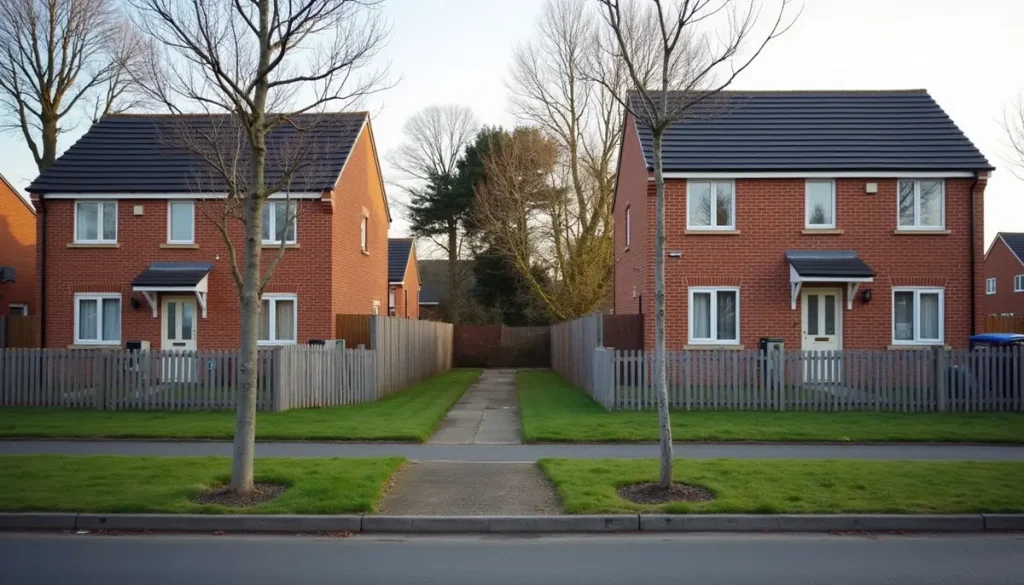
Yes, though usually the colony was never “next door” in the first place: it lives in the shared soil. Parman and Vargo counted an average of 62 colonies per hectare (25 per acre) around infested Raleigh-area homes, with a maximum of 185 per hectare. At that density several colonies forage under most suburban lots, and a property line means nothing to them.
What a neighbour’s infestation tells you is that soil, moisture and wood in your street suit termites, and that an inspection of your own house is worth booking. Infestation pressure also varies by region, which is why building codes split the country into zones; see the termite zone map and what the code requires.
Do termites spread from house to house through swarms?
Swarms can, over longer distances than most people assume. In June 2004 Messenger and Mullins dusted flying Formosan alates with fluorescent powder on the far bank of the Mississippi River and recovered three on streetlight glue boards in the New Orleans French Quarter at 771, 866 and 892 metres. The previous documented maximum was 460 metres (Ikehara 1966), and the accepted dispersal distance about 100 metres. Swarmers that make it are easy to confuse with ants, so check how to tell termite swarmers from flying ants.
Human transport: the fastest spread of all
The documented long jumps were made by people. Formosan termites were first identified in Lake Charles, Louisiana, in 1966 and New Orleans in 1967, probably arriving in cargo after World War II. A 1999 to 2002 Louisiana survey by Messenger, Su and Scheffrahn traced most new localized introductions to churches, parks and campsites where Formosan-infested railroad ties were used for landscaping.
Florida shows the pace. UF records the first Formosan colony at Hallandale in 1980, probably introduced five to ten years earlier; Orlando and Pensacola by 1985; Tampa by 1991; Tallahassee by 2000. More than 25 per cent of Formosan infestations surveyed in urban southeast Florida were aerial colonies with no ground connection, often on flat roofs that pool water; what those carton nests look like is shown in our guide to termite nests by type.
After Hurricanes Katrina and Rita, Louisiana’s commissioner of agriculture imposed a Formosan termite quarantine on 3 October 2005 across 12 parishes, banning movement of untreated wood or cellulose material and architectural salvage such as beams and doors. The LSU AgCenter notes Formosan termites were then found in about half of Louisiana’s parishes.
How fast do termites spread from furniture?
Drywood termites, yes; subterranean termites, rarely. UF entomologists list houses, boats and furniture among the wood the West Indian drywood termite colonizes, and credit its spread along the US Gulf Coast to its habit of infesting wooden articles that people then move. Its colonies live entirely inside wood, need no soil, and UC IPM puts drywood colonies at usually fewer than 1,000 individuals that take years to mature. Subterranean termites depend on soil contact or a steady moisture source, which is why UF ties aerial Formosan colonies to roofs that pool rain water, so furniture is rarely their vehicle. A piece of furniture with drywood termites matters chiefly because, at about five years old, the colony can swarm and seed the house.
Can termites spread through clothes?
No extension source we read reports termites establishing from clothing. The documented carriers are wood and cellulose: lumber, railroad ties, beams, doors, furniture and debris, the same materials Louisiana’s 2005 quarantine covered.
How do you stop termites from spreading?
- Break wood-to-soil contact: UF lists any wood-to-ground contact as an inviting entrance for Formosan termites.
- Do not bring in used railroad ties, salvaged beams or stored lumber from a known termite area without inspecting them.
- Fix leaks and pooled water, including flat-roof drainage, which UF links to aerial Formosan colonies.
- Have the colony treated by a licensed professional: soil termiticide barriers and bait systems for subterranean termites, fumigation or localized treatment for drywood. Our guide to what attracts termites to a house covers the conditions to remove first.
- Treat furniture with drywood signs before moving it; options range from spot treatment to whole-structure tenting and fumigation.
How to tell if a termite infestation is active
UC IPM states that finding live termites foraging within wood is a sure sign of an active infestation, and that mud (shelter) tubes are the most common evidence of subterranean termites. Kentucky advises breaking a tube open and looking for small, creamy-white workers, while warning that an empty tube does not prove the colony has gone, because termites abandon sections while foraging elsewhere. For drywood termites, six-sided fecal pellets are diagnostic, but UC IPM notes pellets alone cannot show whether the colony is still active. Our guide to active versus old termite damage sets out each sign.
Frequently asked questions
How fast can termites infest a house?
An established colony already foraging in your soil can reach wood anywhere across a typical house footprint, because eastern subterranean colonies around North Carolina homes foraged up to 26 metres. A brand new colony founded by a swarm takes years: UF entomologists estimate three to five years before a Formosan colony is big enough to cause severe damage.
What is a termite’s worst enemy?
Ants. A 2007 Purdue study by Buczkowski and Bennett used protein marking to show the woodland ant Aphaenogaster rudis preys on eastern subterranean termites in the field. Swarming is the other great loss: UC IPM notes very few flying reproductives ever found a colony. More is in what a single termite swarmer means.
How do you stop termites from spreading?
Remove wood-to-soil contact and moisture, avoid moving untreated wood out of known termite areas, and have an active colony treated by a licensed professional with a soil barrier, bait system or, for drywood termites, fumigation or localized treatment. Louisiana’s 2005 quarantine used the same logic, banning untreated wood movement from 12 parishes.
How to tell if a termite infestation is active?
Look for live workers in wood or inside a freshly broken mud tube, which UC IPM calls a sure sign of activity. An empty tube or a pile of drywood pellets alone does not settle it, since Kentucky and UC IPM both note colonies abandon tubes and old pellets persist after a colony dies.
Do termites spread quickly?
Not inside a house. Kentucky entomologists say termites damage wood slowly, and new colonies take years to mature. The quick spread is long distance: Formosan swarmers have been recorded flying 892 metres, and infested railroad ties have carried colonies across Louisiana.
Sources
- Parman, V. and Vargo, E.L. Population density, species abundance, and breeding structure of subterranean termite colonies in and around infested houses in central North Carolina. Journal of Economic Entomology 101(4): 1349 to 1359, 2008.
- Messenger, M.T. and Mullins, A.J. New flight distance recorded for Coptotermes formosanus. Florida Entomologist 88(1): 99 to 100, 2005.
- Messenger, M.T., Su, N.Y. and Scheffrahn, R.H. Current distribution of the Formosan subterranean termite and other termite species in Louisiana. Florida Entomologist 85(4): 580 to 587, 2002.
- Su, N.Y. and Scheffrahn, R.H. Formosan Subterranean Termite, Coptotermes formosanus. UF/IFAS Featured Creatures EENY-121, 2000.
- Gordon, J., Scheffrahn, R.H. and Su, N.Y. West Indian Drywood Termite, Cryptotermes brevis. UF/IFAS EDIS IN236 (EENY-79), revised 2025.
- University of California Statewide IPM Program. Pest Notes: Subterranean and Other Termites, Publication 7415, 2014; Pest Notes: Drywood Termites, Publication 7440, 2014.
- University of Kentucky Entomology. Termite Control Tips for Homeowners, ENTFACT-604.
- LSU AgCenter. Quarantine on Wood Cellulose Material After Hurricanes Katrina and Rita (Ring, Henderson, Morgan and Benedict).
- Buczkowski, G. and Bennett, G. Protein marking reveals predation on termites by the woodland ant, Aphaenogaster rudis. Insectes Sociaux 54: 219 to 224, 2007.
- The Pest Control Brief analysis of iNaturalist research-grade records, pulled October 2026 (b19 to b30 files).