Possum in the Attic: Signs, Risks and Safe Removal
A possum in the attic shows itself as slow, heavy walking after dark, an untidy nest of sticks and debris, flattened or soiled insulation and a musky smell, and it almost always came in through an existing gap at the roofline rather than one it tore open. Remove it by confirming it has gone out at night, then fitting a one-way door or sealing the gap. Check for young first, and never seal an animal inside.
Is it a possum? Sign by sign
| Sign | Opossum | Raccoon | Gray squirrel | Rat or mouse |
|---|---|---|---|---|
| When you hear it | Night and low light (UC IPM) | Mostly at night (MDC) | Daytime, early morning and late afternoon (UC IPM) | Mostly at night (UC IPM) |
| What it sounds like | Slow, awkward amble (SUNY ESF); occasional hiss or growl | Heavy; MDC calls raccoons expert climbers | Scurrying and quick runs | Light, fast scratching and gnawing |
| Entry | Uses existing openings; not destructive or strong (ICWDM) | Often creates openings (ICWDM) | Chews into wood and broken vent screens (UC IPM) | Gaps over a quarter inch (UC IPM) |
| Nest | Untidy pile of sticks and whatever is available (UC IPM) | Den site, often with a latrine | Leaf and twig nest | Shredded paper and fibre |
| Winter | Active; does not hibernate (ICWDM) | Dormant or inactive in winter (MDC) | Active year round (UC IPM) | Active year round |
| Young | Carried in the pouch, then on the back | Left in the den | Left in the nest | Left in the nest |
Compiled by The Pest Control Brief from UC IPM Pest Notes 74123, 74122, 74106 and 7483, the Internet Center for Wildlife Damage Management (ICWDM), the Missouri Department of Conservation (MDC) and SUNY ESF.
What does a possum sound like in the attic?
Slow and heavy. SUNY ESF describes the opossum’s normal gait as a slow, awkward amble on the soles of the feet, with the tail swinging side to side, which in an attic comes across as deliberate footsteps and dragging rather than the quick runs of a squirrel. An average adult weighs about 8 pounds according to ESF. When disturbed, ESF records hissing, growling, screeching and clicking. Raccoons are the closest match by weight; our guide to raccoon, squirrel and rat noises on the roof covers how to tell them apart by time and pattern.
Timing matters as much as sound. UC IPM notes that opossums are only active at night and in low-light hours. Footsteps at 10am are a squirrel.
Our page on squirrels in the attic and their two breeding seasons takes over there.
Light scratching that runs all night is more often rodents, which our mouse, rat, squirrel or bat attic diagnostic sorts out.
Can possums get in attics?
Yes. UC IPM lists attics among the places opossums den in towns and suburbs, when accessible, and notes they are well adapted for climbing, with an opposable toe on the hind foot that grips branches. SUNY ESF says they climb trees to find food or escape predators and use the tail for balance. The ICWDM advises stretching an electric wire along wire mesh fences to stop opossums climbing over, which tells you fences are a route too.
What they do not do is tear their way in. The ICWDM puts it plainly: opossums are not destructive or strong, so they typically enter areas that already have an opening, while raccoons often create openings. Look for:
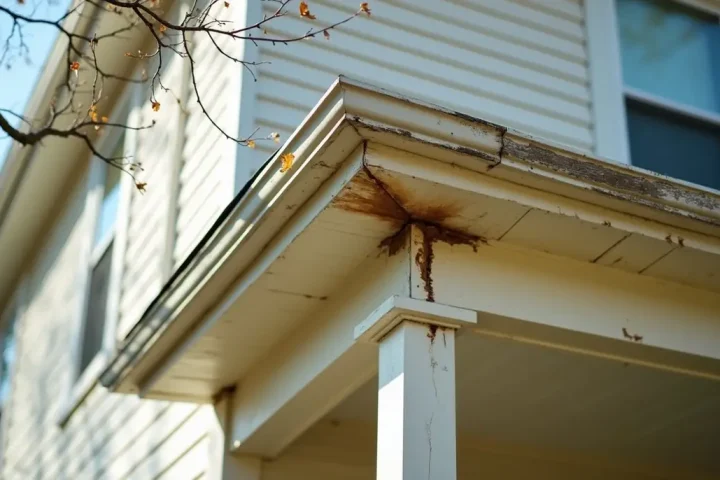
- A gap where a lower roof meets a wall or where the fascia has pulled away at a roof return.
- Broken or missing gable and soffit vent screens.
- Gaps around plumbing vents and chimney chases.
- Overhanging branches and fences that run close to the eaves.
A torn shingle or a ripped-out vent usually points to a raccoon, even if an opossum is now using the hole.
Is a opossum in the attic bad?
It is a nuisance more than a structural threat, but it should not stay. The problems are what it leaves behind:
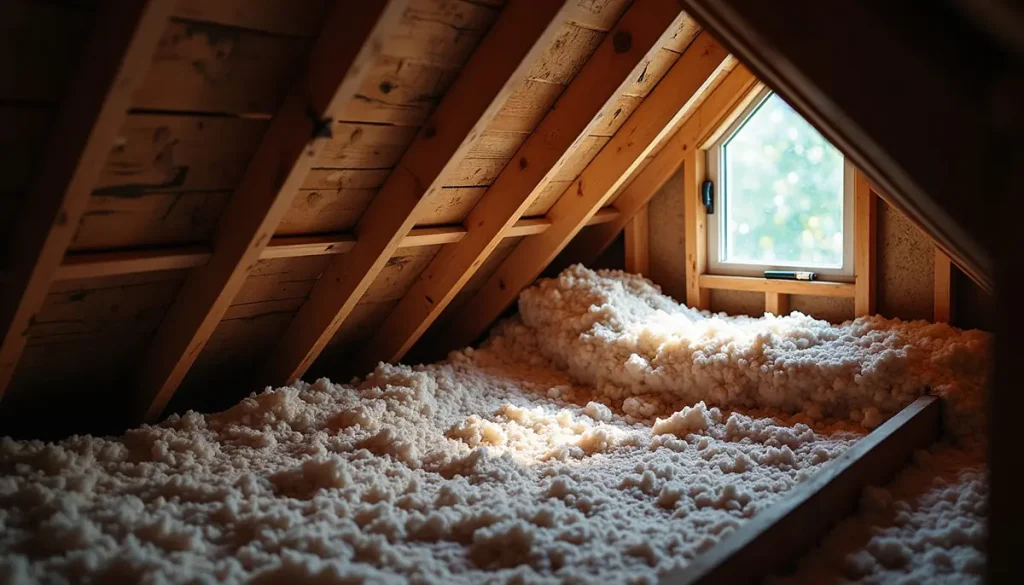
- Insulation. A sleeping opossum flattens insulation, and urine and droppings soil it. UC IPM notes the scat varies so much with diet that there is no average size or shape, so look for concentrated mess near the nest rather than a neat pellet.
- Fleas. UC IPM says opossums host cat and dog fleas, especially in towns, and links them with flea-borne typhus in Orange and Los Angeles Counties. Fleas left behind in an attic hatch on their own schedule, which our page on why fleas come back two weeks after treatment explains.
- Disease. UC IPM lists leptospirosis, tularemia and toxoplasmosis among the diseases opossums carry. Rabies is rare in opossums, and our page on how often possums carry rabies gives the record; any bite or scratch goes to a doctor.
- Smell. ICWDM describes an oily, yellow, skunk-like musk released from the anal glands when an opossum is frightened. A dead animal in the attic smells far worse, and our guide to how long a dead animal smell lasts covers finding the source.
Will a possum eventually leave?
It leaves every night to feed, which is what makes removal easier than with most attic animals. Whether it comes back is the question. SUNY ESF describes the opossum as one of the few mammals without a fixed home range as an adult, setting up temporary dens as it wanders, while UC IPM says opossums stay in an area so long as food, water and shelter are available. An attic is good shelter, so the return trips continue until the hole is closed.
Winter changes the picture. The ICWDM notes opossums do not hibernate but stay in dens for short periods in very cold weather, and SUNY ESF records groups of up to 8 sharing a winter den. A cold snap is when an attic is most likely to hold more than one.
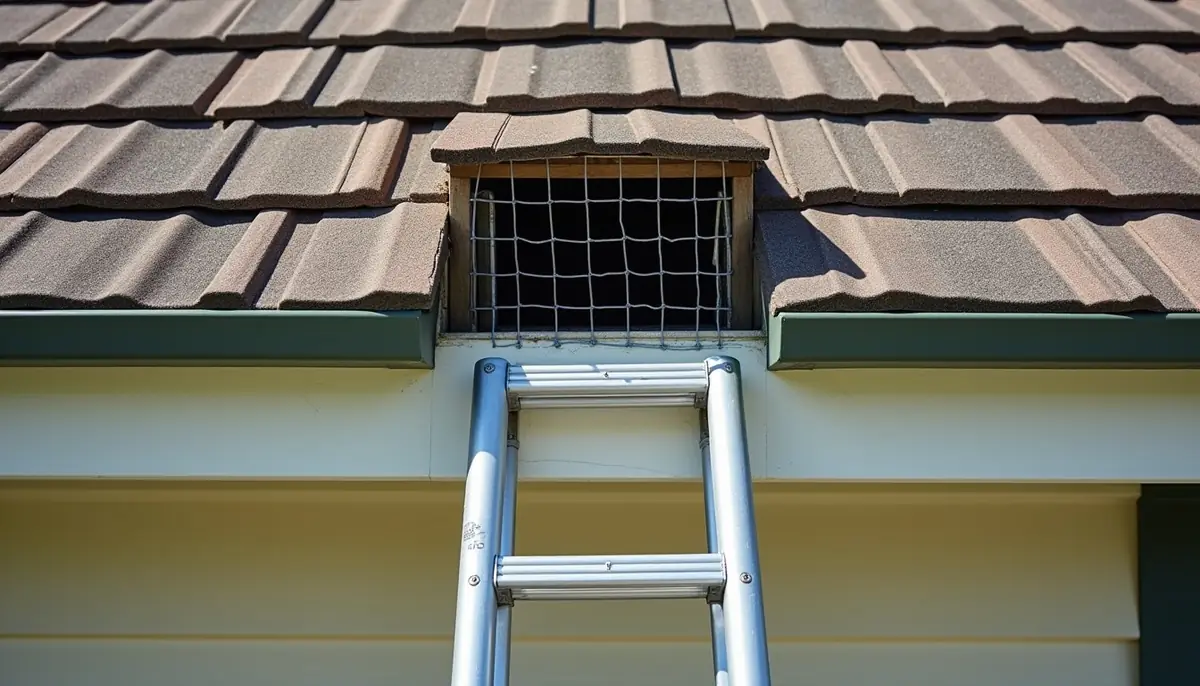
What to do if a possum is in your attic?
- Check for young. The Missouri Department of Conservation says breeding begins in early February, the first litter is weaned in May and a second is usually weaned by the end of September. ICWDM gives 7 to 8 weeks in the pouch and weaning at 96 to 108 days. Pouch young leave with the mother; older young may ride on her back (UC IPM). From spring to early autumn, look for young left behind before you seal.
- Confirm it has gone out. UC IPM describes a thin layer of flour in front of the entrance: footprints heading out the next evening mean the opening can be closed.
- Fit a one-way door if it will not cooperate. ICWDM describes a one-way door about 6 by 6 by 10 inches over the opening once every other gap is sealed.
- Seal with metal. ICWDM recommends 1 by half-inch galvanised hardware cloth for crawl spaces and decks; UC IPM recommends quarter-inch mesh. Either beats the wood or plastic it walked past.
- Remove the reason it came. Bring pet food in by nightfall and fit tight bin lids, as UC IPM advises, and cut back branches that reach the roof.
Skip the home remedies. UC IPM says no chemical repellent offers significant results for opossums and that using mothballs, naphthalene or household ammonia this way is not legal, partly because the fumes can enter the house. Our full plan for getting rid of opossums covers trapping law and repellent claims in more depth.
How to get rid of raccoons and possums in the attic together
Treat the larger animal’s timetable as the limit. MDC notes raccoon breeding begins in February, and raccoon young stay in the den rather than travelling with the mother, so a raccoon in the attic in spring means waiting until the young can follow her, or calling a professional, before any one-way door goes on. Opossums will leave through the same door. Raccoon latrines also need different cleanup, set out in our guide to raccoon latrines and safe cleanup.
Cleanup and what it costs
Wear disposable gloves to remove the nest and droppings, bag them and wash your hands. Replace insulation only where it is heavily soiled; our attic mouse page puts full replacement at $2 to $6 per square foot.
Published estimates on our wildlife removal cost guide put an animal in the attic at $500 to $1,500, an inspection at $100 to $300 (usually credited against the job) and each additional exclusion door at $225 to $400.
An opossum found in the garage instead is a simpler job, covered in our guide to an opossum in the garage.
Frequently asked questions
How long can a possum live in your attic?
As long as the entry stays open and food is nearby. UC IPM says opossums remain in an area so long as food, water and shelter are available, and an opossum leaves the attic each night to forage, so the den can be reused night after night. A female with young stays put longest; MDC gives a first litter weaned in May and a second by late September.
Is there a possum in my attic or a raccoon?
Look at the hole and the season. ICWDM says opossums use existing openings while raccoons often create their own, so torn shingles or ripped vents point to a raccoon. MDC notes raccoons are dormant or inactive in winter while opossums stay active, so steady night walking in January leans towards an opossum.
Can I trap a possum in the attic and release it somewhere else?
Check first, because rules vary by state. In California, UC IPM says relocating wildlife needs written permission from the California Department of Fish and Wildlife. A one-way door at the entry avoids the question, because the opossum leaves on its own nightly trip and simply cannot return.
Do possums climb on roofs?
Yes. UC IPM describes opossums as well adapted for climbing, with an opposable hind toe that grips branches, and SUNY ESF says they climb trees for food and to escape predators. Overhanging branches and fences beside the eaves are the usual routes up.
Sources
- University of California Statewide IPM Program, Pest Notes: Opossum (74123), Tree Squirrels (74122), Rats (74106) and House Mouse (7483).
- Internet Center for Wildlife Damage Management, Opossum Biology, Opossum Damage Identification, and Opossum Damage Prevention and Control Methods.
- SUNY College of Environmental Science and Forestry, Adirondack Ecological Center, Virginia Opossum and Gray Squirrel accounts.
- Missouri Department of Conservation, Field Guide: Virginia Opossum, Raccoon and Southern Flying Squirrel.