How to Get Rid of Bed Bugs: An Evidence-Based Plan
To get rid of bed bugs, confirm the insect, keep sleeping in the same bed, hot-dry all bedding and clothes, encase the mattress and box spring, put interceptor cups under the bed legs, then use professional heat or insecticide with follow-up visits until traps stay empty for a month. Heat works because a University of Minnesota study found no bed bug survived exposure above 50°C (122°F). Bug bombs do not work: an Ohio State study found three shop foggers had little, if any, effect on field bed bugs.
Bed bugs are beaten by a sequence, not a product. UC IPM states that insecticide applications alone will not control an infestation, Purdue describes resistance to most pesticide classes as extraordinary, and every extension plan below combines heat, barriers, monitoring and follow-up. The order matters because the early steps stop the spread that makes later treatment fail.
Step by step: the plan in order
- Confirm it is a bed bug. Adults are about 3/16 of an inch long (Kentucky ENTFACT-636), roughly 5 mm, flat, oval and rusty red. Other small insects are often mistaken for them, so compare your specimen against our bed bug identification guide with every life stage at actual size and keep it in a sealed bag or tape for the inspector.
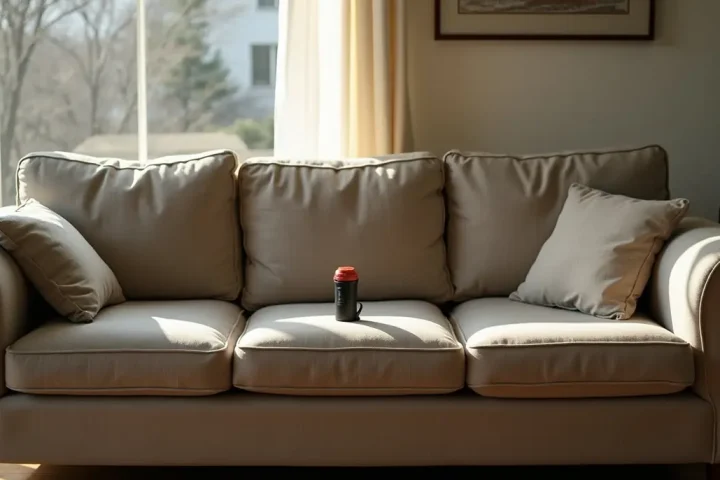
- Do not move to the sofa or another bedroom. The National Pesticide Information Center advises against sleeping in another part of the house because the bugs could follow you and spread the infestation. Staying put keeps the bugs concentrated where treatment and traps will meet them.
- Launder and hot-dry bedding and clothing. UC IPM gives a 120°F wash and at least 10 to 15 minutes in a hot dryer; Purdue says at least 20 minutes on high; NPIC says 30 minutes on high kills all stages including eggs. Thirty minutes on high satisfies every source. Bag clean items in sealed plastic so they are not reinfested.
- Declutter and vacuum. EPA advises vacuuming, sealing the bag tightly and putting it straight into an outdoor bin. Kentucky warns that bed bugs can survive being sucked up, which is why the bag leaves the house.
- Encase the mattress and box spring. Bugs sealed inside eventually die (Kentucky and UC IPM). Purdue says covers must stay on for a minimum of one year. Encasements do not stop bugs crawling onto a bed and biting, so they are one layer, not the cure.
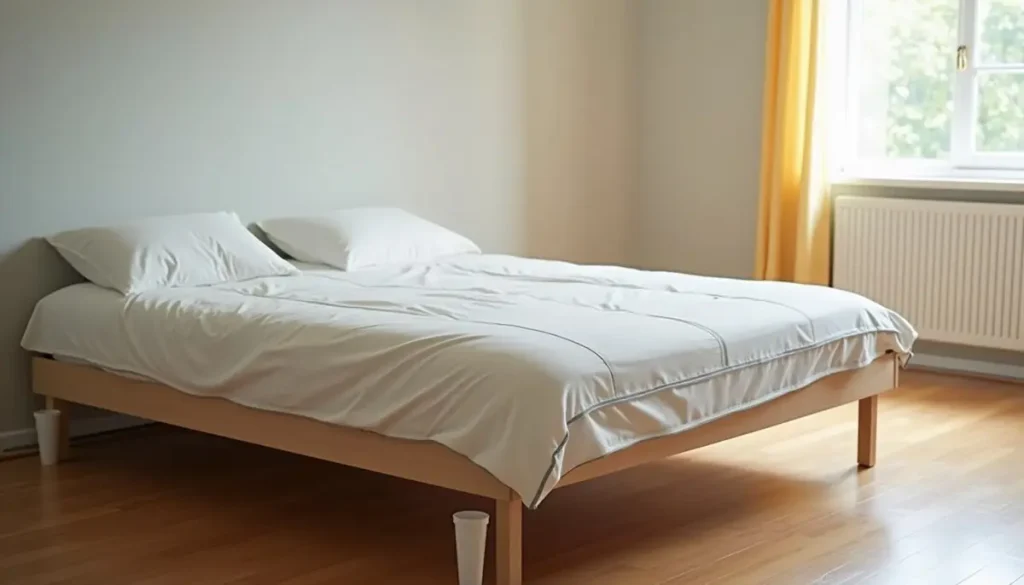
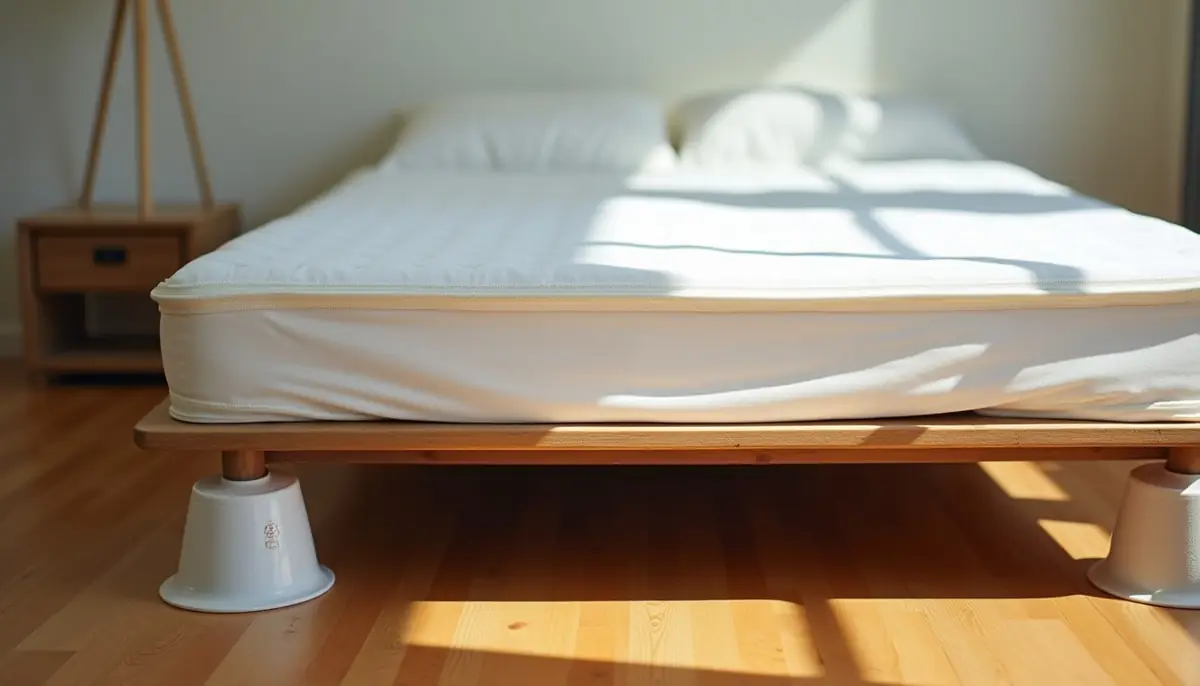
- Fit interceptors under the bed legs. Kentucky notes that a trap under each bed leg creates a barrier that can help reduce bites. UC IPM cites research in which interceptors trapped six times more bed bugs than visual searches found. Rutgers FS1251 suggests 8 to 12 traps for a one-bedroom apartment, checked every 1 to 2 weeks.
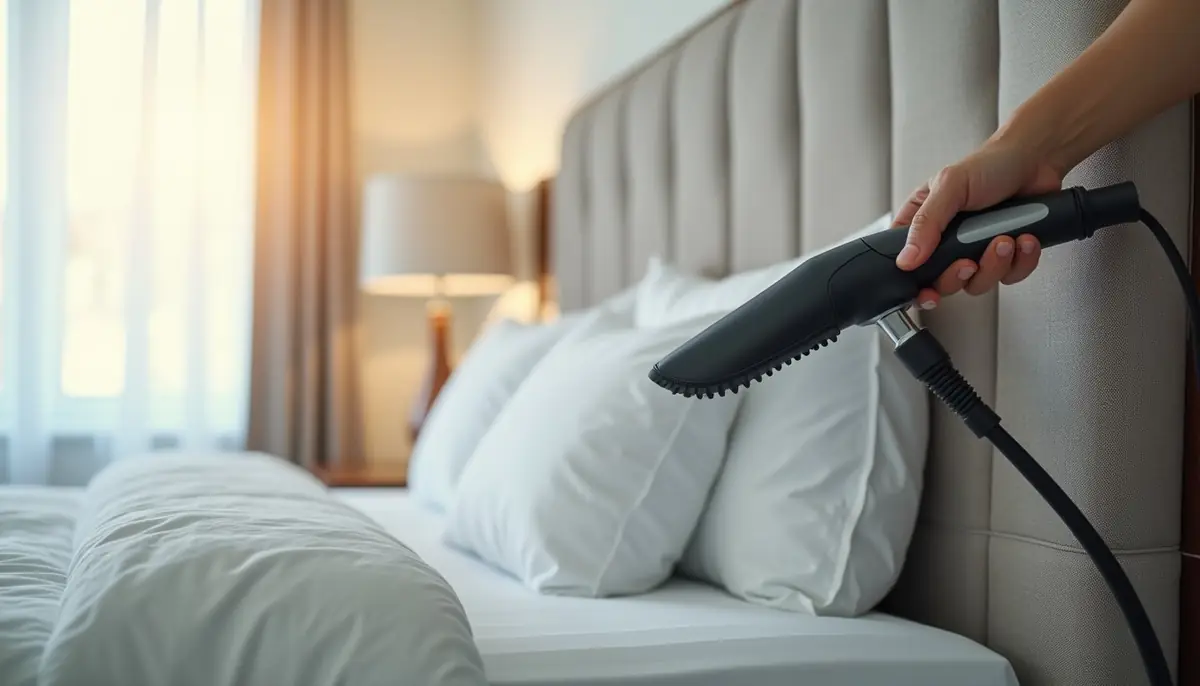
- Steam seams, tufts and cracks. EPA sets a minimum of 130°F at the surface with no forceful airflow, which would blow bugs away; Rutgers notes steam near 212°F kills bed bugs on contact. Move the nozzle slowly. Steam leaves no residue, so it is a contact kill only.
- Dust the voids. UC IPM says diatomaceous earth and silica gel can give long-term control under baseboards and in wall voids where they stay dry; EPA warns they may take several months and that pool or food grade diatomaceous earth should not be used.
- Bring in heat or a licensed insecticide programme. Whole-room heat finishes in a day; insecticide programmes need repeat visits because eggs survive. UC IPM states confirmed infestations should be managed by trained professionals.
- Monitor until a month passes with nothing. Rutgers FS1251 says to stop only after a month with no bed bugs found, and EPA says to keep checking for at least a year.
Before step 1 is finished, check whether one insect means a population. Our guide to finding one bed bug and what it means covers that decision.
The evidence trail of blood and droppings is set out in what bed bug stains look like.
What kills bed bugs, by method
This table is compiled by The Pest Control Brief from University of Minnesota research (Kells and Goblirsch, 2011), UC IPM Pest Note 7454, Purdue, Kentucky ENTFACT-636, EPA, NPIC, Rutgers FS1251 and Ohio State (Jones and Bryant, 2012). The egg column is the one that decides whether a method can finish the job.
| Method | Temperature, time or active ingredient class | Kills eggs? | Limits | Evidence |
|---|---|---|---|---|
| Clothes dryer | High heat, 10 to 30 minutes depending on source | Yes, at 30 minutes on high (NPIC) | Only for washable or dryable items | UC IPM, Purdue, Kentucky, NPIC |
| Whole-room heat (professional) | 140°F for 2 hours or 130°F for 3 hours (UC IPM); lab: no survival above 50°C, 122°F | Yes, if heat reaches every hiding place | No residual; cool spots inside furniture let bugs survive | Kells and Goblirsch 2011; UC IPM 7454 |
| Steam | At least 130°F at the surface (EPA); near 212°F at the nozzle kills on contact (Rutgers) | Yes, on contact | Limited penetration into fabric (Kentucky); no residual | EPA, Rutgers FS1251, UC IPM |
| Freezing | 0°F for 3 days (EPA) or below 0°F for at least 4 days (Purdue) | Yes, when held long enough | Home freezers often run warmer; use a thermometer | EPA, Purdue |
| Mattress and box spring encasements | Sealed covers left on at least one year | Traps them; bugs inside starve | Do not stop bites from bugs elsewhere | Purdue, Kentucky, UC IPM |
| Interceptor cups | Under every bed and sofa leg | No | Detection and barrier, not elimination | UC IPM: six times more bugs than visual search |
| Desiccant dusts (silica gel, diatomaceous earth) | Thin film in voids | No | Slow; EPA says may take several months | UC IPM, EPA |
| Residual insecticides (pyrethroids, chlorfenapyr and others) | Label rate in cracks, seams and voids, never on bedding | Not reliably; hence follow-ups | Widespread resistance; labels set retreatment intervals | Purdue; UC IPM; Kentucky |
| Total-release foggers | Pyrethroid mist | No | Little or no effect on field bugs; fire risk | Jones and Bryant 2012; NPIC; Kentucky |
| Moth balls, rubbing alcohol | Not registered for this use | No significant effect on eggs | Moth balls killed under 50% of adults in a week; alcohol at most 50% | Rutgers FS1251 |
Why heat works, and why it fails at home
Heat is the only method that reliably kills eggs throughout a room in one day, and the threshold is precise. Kells and Goblirsch at the University of Minnesota (Insects, 2011) raised temperatures slowly, as a real heat treatment does, and found the temperature that killed 99 per cent of adults was 48.3°C (about 119°F) and of eggs 54.8°C (about 131°F). Time matters as much as temperature: at 45°C (113°F), killing 99 per cent of adults took 94.8 minutes and of eggs 428.5 minutes, about seven hours. At 48°C (118°F) eggs needed 71.5 minutes. Their recommendation for whole-room work is either 48°C held for 71.5 minutes or heating until at least 50°C is reached everywhere bugs may hide.
That is why EPA warns against trying to cook bed bugs by turning up a thermostat, using a propane space heater or lighting a fireplace: a heated house never brings mattress interiors, wall voids and sofa frames to those temperatures, and the attempt is dangerous. Kentucky describes professional crews heating the air to about 120 to 130°F while monitoring with sensors, and notes that infestations can often be eliminated in one day. The weakness is the flip side: heat leaves no residue, so a bug carried back in the next week starts again, which is why many firms add a residual dust or spray at the perimeter. Our explainer on what professional bed bug treatment involves, visit by visit compares heat and chemical jobs in detail.
Cold is the slower mirror image. Purdue notes bed bugs can tolerate 5°F for short periods, and that freezing items below 0°F for at least four days is impractical for most people, while our page on whether bed bugs die in winter explains why an unheated house rarely gets cold enough.
Laundry: how long in the dryer
Dryer time is the most common practical question, and extension sources do not agree on a single figure. Each source’s longest recommended time is charted below; the longest, NPIC’s 30 minutes on high, is the one to use, and Kentucky adds that items should go in dry so the load heats faster.
Items that cannot be washed or dried, such as shoes, books or toys, can be bagged and frozen at 0°F for three days (EPA), or sealed in bags. EPA says sealed items can stay bagged for up to a year to ensure any bugs inside are dead, a figure tied to how long bed bugs survive without feeding: UC IPM gives 20 to 400 days depending on temperature and humidity, and our page on how long bed bugs live with and without food breaks that down.
What does not work
Bug bombs
Jones and Bryant at Ohio State (Journal of Economic Entomology, 2012) exposed field-collected bed bugs for two hours to the mist from three over-the-counter foggers and recorded little, if any, adverse effect; even a susceptible laboratory strain survived when covered by a thin layer of cloth. They concluded foggers should not be recommended for bed bug control, citing pyrethroid resistance and minimal penetration into harbourage. Rutgers FS1251 adds that nine foggers in a studio apartment posed a high fire and injury risk without eliminating the bugs. Our analysis of illness reports linked to bug bombs shows the human cost in California records.
Home sprays and powders
Kentucky lists bleach, alcohol, cigarette lighters and bug bombs as things that should not be used, because they are ineffective and can cause fires.
Diatomaceous earth kills, but slowly: in a published comparison summarised in our review of what testing shows about diatomaceous earth, silica gel killed half of bed bugs in 20 hours while diatomaceous earth took nearly eight days.
Our scorecard of home remedies for bed bugs and what lab tests found covers vinegar, tea tree oil and the rest.
Throwing out the bed
EPA says furniture that can be safely treated should not be discarded, and Kentucky advises wrapping and marking anything that is thrown out so bugs are not shed on the way and nobody picks it up.
How long it takes to get rid of bed bugs
Plan on two to three months from first treatment to sign-off, longer for heavy or multi-unit infestations. EPA puts the range at weeks to months. This timeline is compiled by The Pest Control Brief from the sources named in each row.
| Stage | Typical timing | Why | Source |
|---|---|---|---|
| Inspection and identification | Day 0; can take several hours | Bed is dismantled and seams checked | Kentucky ENTFACT-636 |
| Heat treatment | One day | Kills all stages where heat reaches | Kentucky ENTFACT-636; UC IPM 7454 |
| Eggs laid before treatment hatch | About 7 to 15 days | About a week (Kentucky) or 10 to 15 days (UC IPM) at room temperature | Kentucky; UC IPM |
| Follow-up inspection | 10 to 21 days after each treatment | Catches hatchlings and missed bugs | Purdue |
| Chemical programme | Usually 2 to 3 visits about two weeks apart | Insecticides do not reliably kill eggs | our week-by-week guide to bed bugs after treatment |
| Sign-off | No bugs found for at least a month | Longer than an egg-to-hatch cycle | Rutgers FS1251 |
| Encasements on | At least one year | Starves any bug sealed inside | Purdue |
| Keep checking | At least a year | Survivors and reintroductions | EPA |
The biology explains the pace. Kentucky says bugs can mature in as little as a month under favourable conditions, and UC IPM gives five weeks to four months from egg to adult, so a population that is half-treated rebuilds quickly; our timeline of how fast bed bugs multiply shows the growth curve.
Can you get rid of bed bugs yourself?
Sometimes, for a small infestation caught early in one bed. UC IPM’s position is that confirmed infestations should be managed by trained professionals, and Kentucky advises hiring one when resources allow while acknowledging that some households must do it themselves with encasements, traps and targeted treatment. The decision usually turns on how far the bugs have spread.
| Situation | Reasonable approach | Reason |
|---|---|---|
| Bugs brought home from travel, none seen in the bed yet | DIY: dry all clothes and bags on high, inspect, set interceptors | Prevention; nothing established |
| A few bugs in one bed, caught early | DIY steps 2 to 8 with close monitoring; call a professional if traps keep catching after two weeks | About 85 per cent of bed bugs are in or near the bed (UC IPM) |
| Bugs in sofas, several rooms or along baseboards | Professional heat or insecticide programme | The 15 per cent away from the bed is where DIY misses |
| Apartment or shared walls | Report to the landlord; professional treatment of adjoining units | Bugs walk to nearby rooms through cracks (NPIC); Rutgers says building-wide problems need a professional |
| Live bugs weeks after professional work | Call the firm back under the agreement | Follow-ups are part of the job (Kentucky, Purdue) |
Counts help with that decision, and our guide to how many bed bugs make an infestation sets out the bands.
Cost is the other driver: the contractor-reported ranges compiled on our bed bug treatment cost page put chemical treatment at $150 to $400 per room and whole-home heat under 2,500 square feet at $3,000 to $6,000. These are published marketplace estimates, not measured prices.
Bed bug work costs more than general pest control because it is labour-heavy, and the Census Bureau figures behind our pest control price benchmarks show payroll taking 36 per cent of industry receipts.
Treatment durability is rarely measured, but New York landlord filings are an exception: in our analysis of 722,000 New York bed bug filings, 15 to 21 per cent of infested units in most boroughs were reported as re-infested in 2025.
Stopping them coming back
Bed bugs are carried in, and our explainer on how bed bugs spread through luggage, furniture and shared walls covers the routes.
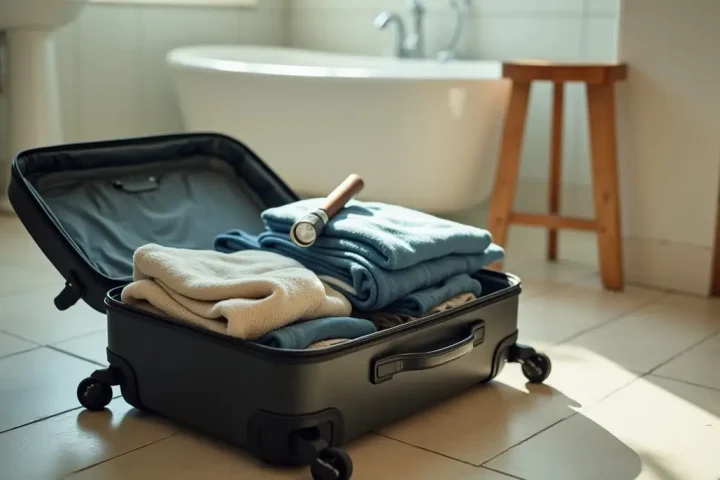
After travel, UC IPM suggests keeping luggage out of the bedroom, for example in a garage or hall closet, and drying clothes on the hottest setting. Check second-hand furniture seams before it comes indoors, keep the interceptors in place for months after treatment, and leave the encasements on for the full year Purdue specifies.
What draws bugs to a sleeper, mainly carbon dioxide and body heat, is covered in our page on what attracts bed bugs; for bites, the CDC or a doctor is the right source, not a pest page.
Every bed bug guide we publish
Identification
- Bed bug identification: every life stage at actual size
- Baby bed bugs: what nymphs look like at each stage
- Can you see bed bugs? Sizes, colours and where to look
- Bugs that look like bed bugs, and bugs in bed that are not
- Bed bug stains: blood spots, faecal spots and what else it could be
Signs and situations
- Found one bed bug: does it mean you have an infestation?
- How many bed bugs is an infestation?
- How to check a hotel room for bed bugs in five minutes
- Bed bugs at work: what employers and employees should do
- Can bed bugs live in cars? How long, and how to get them out
- Can bed bugs live in carpet? Where they really hide
- Can bed bugs live in your hair?
Behaviour and biology
- How bed bugs spread: luggage, furniture and next door
- What attracts bed bugs? Carbon dioxide, heat and clutter
- How fast bed bugs multiply: an infestation growth timeline
- How long bed bugs live, with and without food
- Do bed bugs bite every night? How often they feed
- Can bed bugs bite through clothes? What protects you
- Do bed bugs jump or fly? How they actually get around
- Bed bugs in winter: do they die in the cold?
Control
- Home remedies for bed bugs: what lab tests found
- Bed bug pest control: what professional treatment involves
- Still seeing bed bugs after treatment? A week-by-week guide
Costs and our data
Frequently asked questions
What kills bed bugs instantly?
Direct heat. Rutgers notes that steam near 212°F kills bed bugs on contact, and EPA sets a minimum of 130°F at the surface with no forceful airflow. A clothes dryer on high for 30 minutes kills all stages, including eggs, according to NPIC. Kentucky warns against alcohol, bleach and lighters, which are ineffective and can cause fires.
How do you draw bed bugs out of hiding?
Bed bugs come to carbon dioxide and body heat, so a sleeping person is the strongest lure. Interceptor cups under each bed leg catch bugs travelling to and from the bed, and UC IPM cites research where they trapped six times more bugs than visual searches. EPA warns against raising the thermostat or using space heaters to drive them out.
What will 100% kill bed bugs?
Heat comes closest. In University of Minnesota tests, no bed bug of any stage survived exposure above 50°C (122°F), and the authors recommend heating rooms until every hiding place reaches that temperature or holding 48°C for 71.5 minutes. In a real home, success depends on heat reaching inside furniture and walls, so follow-up monitoring is still needed.
What to do if you’ve slept in a bed with bed bugs?
Keep sleeping in the same bed; NPIC warns that moving to another room can spread the bugs. Put bedding and the clothes you slept in through a hot dryer for 30 minutes, bag clean items, and set interceptor cups under the bed legs. After a hotel stay, dry your clothes on high and keep luggage out of the bedroom. For bites, ask a doctor or see CDC guidance.
Can I get rid of bed bugs myself?
For a small infestation confined to one bed and caught early, sometimes. Encasements, interceptors, hot drying, steam and desiccant dust can work together. UC IPM advises that confirmed infestations be managed by trained professionals, and Rutgers says building-wide problems most likely need one. If traps still catch bugs after two weeks of DIY, call a licensed firm.
Sources
- US Environmental Protection Agency, Do-it-yourself Bed Bug Control.
- University of California Statewide IPM Program, Pest Notes: Bed Bugs, Publication 7454.
- Purdue University Extension Entomology, Bed Bug Control.
- University of Kentucky Entomology, ENTFACT-636, Bed Bugs.
- Rutgers Cooperative Extension, Fact Sheet FS1251, Cost-Effective and Money-Wasting Bed Bug Control Methods, 2019.
- National Pesticide Information Center, Oregon State University, Bed Bugs.
- Kells SA, Goblirsch MJ. Temperature and time requirements for controlling bed bugs (Cimex lectularius) under commercial heat treatment conditions. Insects 2(3):412 to 422, 2011.
- Jones SC, Bryant JL. Ineffectiveness of over-the-counter total-release foggers against the bed bug (Heteroptera: Cimicidae). Journal of Economic Entomology 105(3):957 to 963, 2012.
- The Pest Control Brief analysis of NYC HPD bed bug disclosure filings.