Can You See Bed Bugs? Sizes, Colours and Where to Look
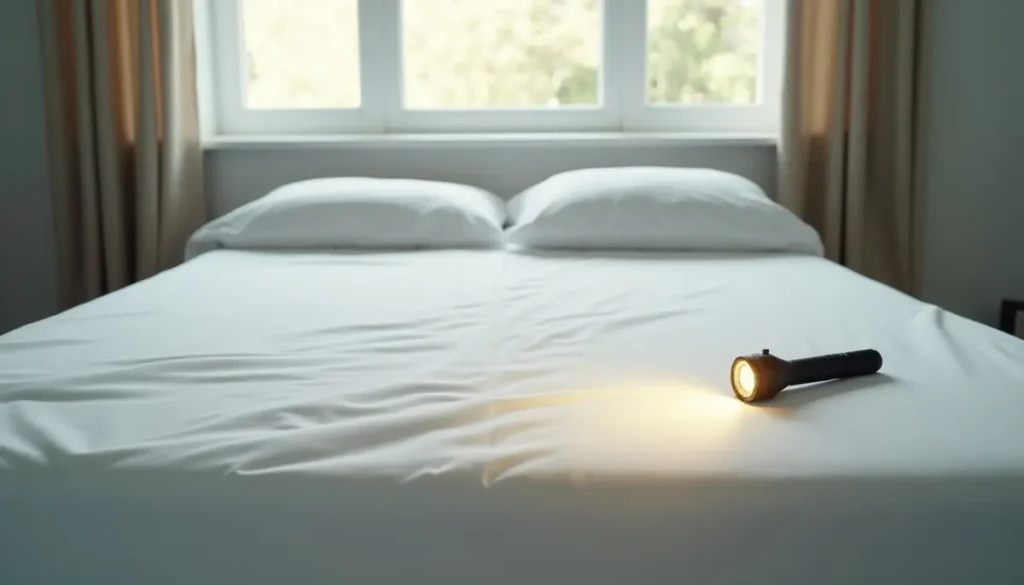
Yes, you can see bed bugs with the naked eye: adults are 5 to 7 mm long, about the size of an apple seed, and every younger stage is visible too, though the smallest are easy to miss. The hard ones are the 1 mm eggs and the 1.5 mm first nymphs, which are pale and translucent until they feed. Most people fail to see them for a different reason: bed bugs spend the day packed into seams and cracks and feed mainly between midnight and 5 am, so you have to go looking with a flashlight rather than wait to spot one.
Visibility depends on the stage and on whether the bug has just fed. Published sizes also differ between EPA, UC IPM and NDSU, so the table shows each.
What each stage looks like to the naked eye
| Stage | Length | Colour when hungry | Colour just after feeding | Can you see it? |
|---|---|---|---|---|
| Egg | About 1 mm (EPA); 1/32 inch (NDSU); 1/20 inch (UC IPM) | Pearl white; an eye spot shows after 5 days | Does not feed | Disputed: NDSU says eggs are visible to the naked eye, UC IPM says seeing them requires a hand lens |
| 1st nymph | About 1.5 mm | Translucent, straw coloured | Bright red | Hard unless it is moving or has recently fed (Virginia Tech) |
| 2nd to 4th nymph | About 2 to 3 mm | Translucent whitish yellow | Red, plump, like a raspberry seed | Yes with a flashlight; hardest against white sheets |
| 5th nymph | About 4.5 mm | Yellowish, darkening | Red | Yes |
| Adult | 5 to 7 mm (EPA); 3/16 inch (Kentucky); 1/4 to 3/8 inch (NDSU) | Brown, flat, oval, like a disc | Swollen, elongated, reddish brown, like a torpedo | Easily, according to Virginia Tech |
Compiled by The Pest Control Brief from US EPA, University of California IPM Pest Note 7454, University of Kentucky ENTFACT-636, North Dakota State University E1538 and Virginia Tech (Dini Miller). Our bed bug identification guide at actual size covers body shape and the other features that confirm the species; this page is about finding them.
EPA’s own wording is the most useful single line here: nymphs that have not recently fed “can be nearly invisible to the naked eye because of coloring and size.” Virginia Tech entomologist Dini Miller adds the flip side: nymphs are easiest to see after a meal, when they plump up and turn brilliant red. A blood meal turns a near-invisible speck into an obvious red dot for a couple of days, which is why people often first notice baby bed bugs at each nymph stage as red specks rather than as insects.
Length alone settles little, because a cat flea (no more than 1/8 inch, about 3.2 mm, per UC IPM) and a varied carpet beetle (about 1/10 inch, 2.5 mm) sit inside the bed bug nymph range. Shape is the faster test: flat and wingless is a bed bug, hard wing covers are a beetle, flattened side to side is a flea. The full list of bugs that look like bed bugs includes the bat bug, the one look-alike that needs a microscope.
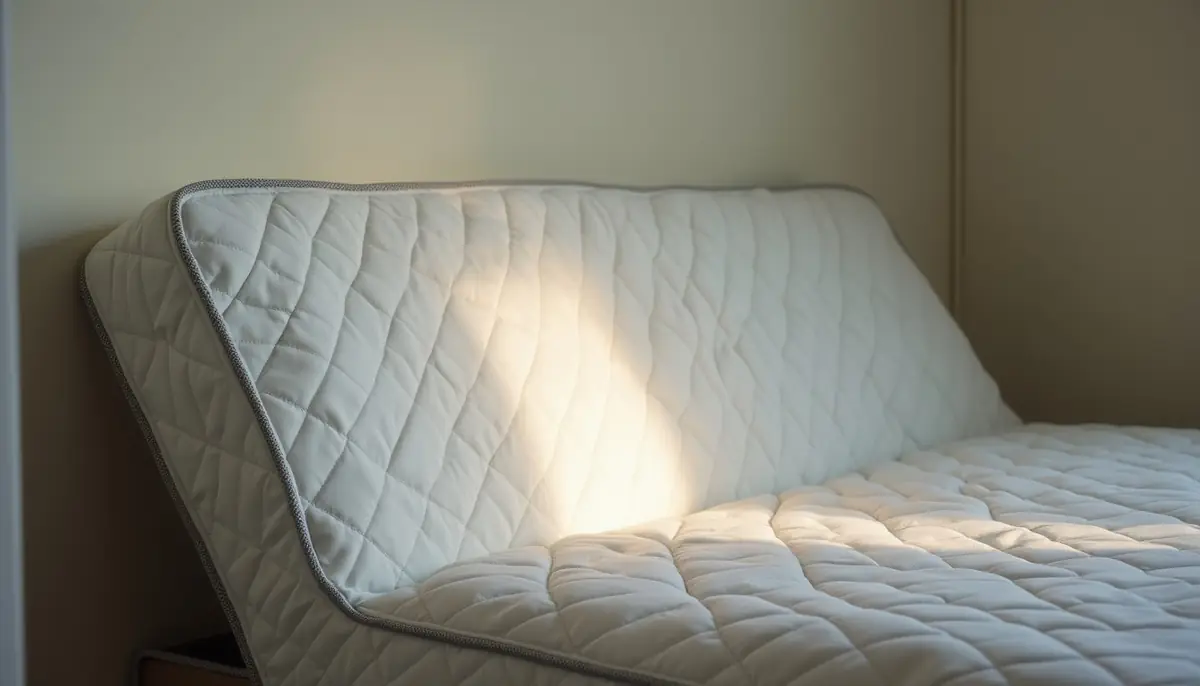
Can you have bedbugs and not see them?
Yes, often for months. Four facts explain it.
- They hide in gaps you cannot see into. EPA’s rule is that a crack that will hold a credit card can hide a bed bug; University of Kentucky entomologists go further and say their flattened bodies fit crevices no wider than a toothpick.
- They feed while you sleep. Virginia Tech puts peak activity between midnight and 5 am. Kentucky adds that bugs shift their feeding to the occupant’s sleep pattern, so a night-shift worker is bitten by day.
- Most of the population is hidden at any moment. Feeding every 3 to 7 days, most are digesting in a crevice on any given day (Virginia Tech).
- Bites do not reliably show up. Kentucky cites studies in infested apartments where about 30 per cent of people did not react even when bitten repeatedly, and UC IPM says skin symptoms should never be used for diagnosis.
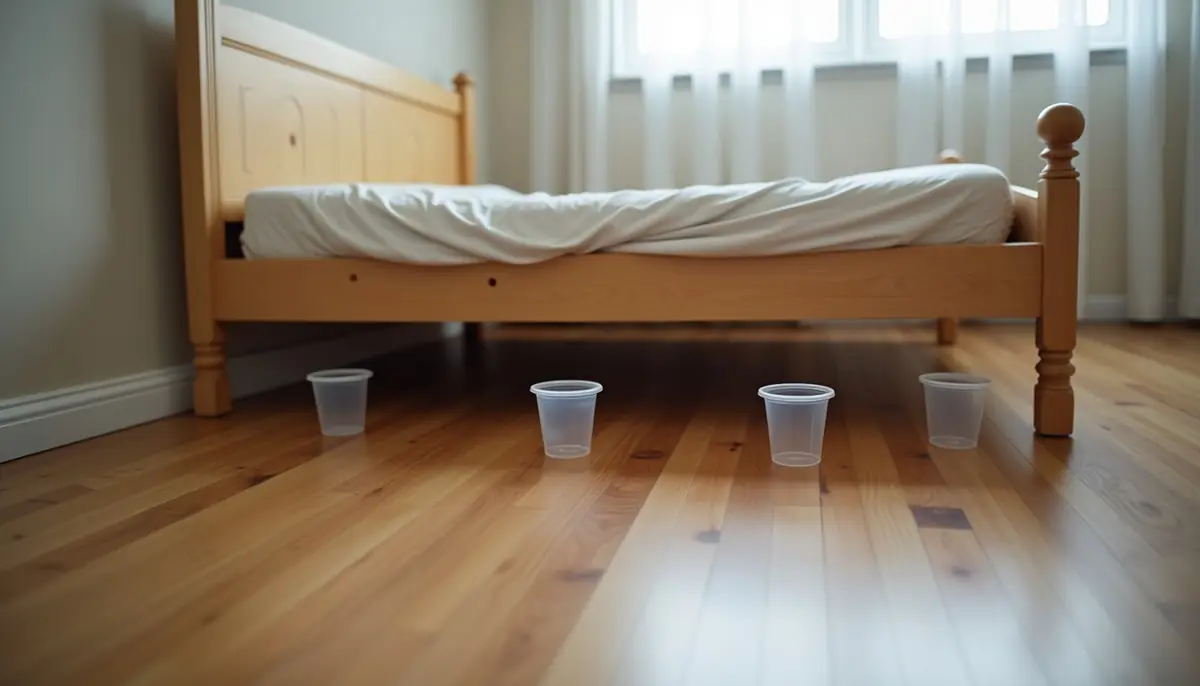
Visual inspection also misses a share of real infestations. Rutgers Cooperative Extension fact sheet FS1251 reports that pitfall traps under furniture legs detected 95 per cent of infestations in a building-wide inspection (Cooper and colleagues, 2015) and states that traps are more effective than visual inspection. Our page on how many bed bugs make an infestation sets those trap counts against what inspectors saw by eye.
Where to look, in this order
Kentucky’s advice is that a thorough inspection means dismantling the bed and standing the parts on edge so both sides of every seam can be checked. A bright flashlight, a hand lens for eggs (UC IPM), and a thin plastic card to probe seams are enough equipment.
- Mattress seams, piping, tufts and the tag, especially at the head end. EPA and Virginia Tech both list these first.
- The box spring: its upper seams, and underneath where the bottom edge rests on the frame. Kentucky says a dust cover may have to come off.
- The bed frame: joints, screw holes and the ends of wooden slats. Kentucky notes bed bugs prefer wood and fabric to metal or plastic.
- Behind the headboard. In hotels, Kentucky says this is often the first place bed bugs become established, which is also the core of our five-minute hotel room check.
- Nightstands, sofas and recliners, particularly any piece someone sleeps on.
- Baseboards, carpet edges, outlets, picture frames and the wall to ceiling junction. EPA and Virginia Tech list these for heavier infestations.
UC IPM says hiding places are typically within 6 feet of where people sleep, and NDSU cites research finding 85 to 90 per cent of bed bugs in the bedroom on the mattress, box spring or within 15 feet of the bed.
Can you see bed bugs with a black light?
Not reliably, as far as the published guidance goes. None of the extension and federal sources we read (EPA, UC IPM, Kentucky, Virginia Tech, Rutgers, NDSU) lists an ultraviolet light as an inspection tool; Kentucky names an ordinary flashlight. We found no peer-reviewed test showing that a black light finds bed bugs or their droppings better than white light, The dark fecal dots that EPA describes as bleeding into fabric like a marker are easy to see in normal light, and our guide to bed bug fecal spots and blood stains shows how to tell them from look-alike marks.
On your skin, on clothes, in the bed
Can you see bed bugs on your skin?
Only briefly. A bed bug feeds for about 3 to 10 minutes (Kentucky) and then crawls back to a crevice; Kentucky stresses that they do not live on or attach to people the way lice or ticks do. The bite is painless, so the bug is rarely seen while it feeds.
Can you see bed bugs on clothes?
Sometimes, because clothing is one of the ways they travel: Kentucky lists clothing, shoes and luggage among the routes into a home. A bug on fabric is usually a hitchhiker, not a resident, and it can be killed in a clothes dryer on medium to high heat for 10 to 20 minutes, which Kentucky says kills all life stages. Whether they bite through fabric is a separate question, answered in can bed bugs bite through clothes.
Can you see bed bugs in your bed during the day?
Rarely on the open sheet, often in the seams. EPA notes that hungry bed bugs will seek a host in full daylight even though they are mainly active at night, and in heavy infestations the seams and tags hold visible clusters of bugs, cast skins and black spots at any hour.
What to do if you see bed bugs
Catch it, do not crush it. EPA advises a zip-top bag or clear tape so the specimen stays identifiable. Then set interceptor cups under the bed legs and check them every 1 to 2 weeks (Rutgers FS1251). Our step by step for what one bed bug does and does not mean covers the eight-week check that settles it. Live bugs plus eggs, cast skins or fecal spots mean a breeding population, which is a job for a licensed professional; Kentucky warns that bleach, alcohol, lighters and foggers are ineffective and can cause fires.
How long will you see bed bugs after treatment?
Some sightings in the first weeks are expected, and eggs are the reason: Virginia Tech found about 60 per cent of eggs hatch at 6 days old and more than 90 per cent by 9 days at room temperature, while UC IPM gives 10 to 15 days. Eggs that survive a spray hatch into pale first nymphs over the following one to two weeks, which is why follow-up visits are normal. Rutgers advises stopping treatment only when traps and visual checks have found no bed bugs for a month. Our week-by-week guide to still seeing bed bugs after treatment covers what each sighting means.
What time of year is worst for bed bugs?
Indoors, bed bugs breed whenever they can feed: UC IPM says there can be up to four generations a year, so there is no true off season. When people photograph and identify them, though, there is a pattern: US research-grade iNaturalist records peak in October (96 records) and May (91), and fall to their lowest in February (47), across 867 records in all. These are records of when people noticed and photographed bed bugs, not a measure of how many homes are infested. Our analysis of whether bed bugs die in winter explains why cold weather outside does not slow an indoor population.
Frequently asked questions
How can I tell if we have bed bugs?
Look for physical evidence rather than bites: live bugs, pale 1 mm eggs, tan cast skins, and black fecal dots that bleed into fabric like a marker, along mattress seams, box spring frames and behind the headboard. EPA calls bites a poor indicator. Interceptor cups under the bed legs, checked every one to two weeks, catch bugs that a visual search misses.
What kills 100% of bed bugs?
No single home method is proven to kill every bug in a dwelling. Heat kills all stages when it reaches them: EPA says bed bugs die at a body temperature of 113°F, and Kentucky says a dryer on medium to high heat for 10 to 20 minutes kills all stages in clothing. Whole homes usually need a professional plan, set out in our guide to how to get rid of bed bugs.
Can you see bed bugs with your eyes?
Yes. Virginia Tech says adults can easily be seen with the naked eye and that all five nymph stages can also be seen, though the first is difficult unless it is moving or has fed. Eggs, about 1 mm, are the borderline case: NDSU calls them visible to the naked eye, while UC IPM recommends a hand lens.
Do bed bugs come out during the day?
Mostly not. Virginia Tech puts their active period between midnight and 5 am, but EPA notes that hungry bed bugs will seek a host in full daylight, and Kentucky says they adjust to when the occupant sleeps. Sleeping with the lights on does not keep hungry bed bugs away, according to Kentucky.
Sources
- US Environmental Protection Agency, How to Find Bed Bugs, and Bed Bugs: Appearance and Life Cycle.
- University of California Statewide IPM Program, Pest Notes: Bed Bugs, Publication 7454.
- University of Kentucky Entomology, ENTFACT-636, Bed Bugs (Michael Potter).
- Virginia Tech and Virginia Department of Agriculture and Consumer Services, How to Identify a Bed Bug Infestation (Dini M. Miller); Virginia Cooperative Extension ENTO-8, Bed Bug Biology and Behavior.
- North Dakota State University Extension, E1538, Taking the Bite Out of Bed Bugs.
- Rutgers Cooperative Extension, FS1251, Cost-Effective and Money-Wasting Bed Bug Control Methods (Changlu Wang and Richard Cooper), citing Cooper, Wang and Singh, Pest Management Science, 2015.
- University of California Statewide IPM Program, Pest Notes: Fleas (7419) and Carpet Beetles (7436), for look-alike sizes.
- The Pest Control Brief analysis of iNaturalist research-grade records, pulled October 2026.