Bed Bug Stains: Blood Spots, Fecal Spots and What Else It Could Be

Bed bug stains are small dark brown to black dots of digested blood that soak into fabric like a marker pen, plus rusty red smears where a fed bug was crushed. They cluster along mattress seams, piping, tags and the box spring, mostly within 6 feet of where someone sleeps. Stains outlast the bugs, so old spotting does not prove a current infestation. Fresh stains usually wash out if you treat them before any heat sets them.
The stain key
| What you see | Colour and shape | Where it sits | Most likely cause |
|---|---|---|---|
| Tiny dots that have bled into the weave | Dark brown to black, sometimes reddish brown or yellowish; round or short streaks, about the size of a printed bullet point | In clusters along seams, piping, tags, box spring joints, behind the headboard | Bed bug excrement (EPA, UC IPM) |
| A single rusty or red smear | Reddish, irregular, larger than a dot | On the sheet or pillowcase where you lay | A bug that had just fed, crushed as you moved (University of Kentucky) |
| Pale husks and pinhead specks | Tan, bug-shaped empty skins; whitish to pale yellow eggs about 1 mm | Deep in seams and crevices beside the spotting | Bed bug shed skins and eggs; these confirm the spots |
| Loose black specks that turn red on wet paper | Pepper-like grains, not soaked in | Pet bedding, where a dog or cat sleeps | Flea dirt (Ohio State) |
| Pepper-like specks away from the bed | Dark specks or smears | Kitchen cabinets, under counters, behind drawers | Cockroach droppings (Kentucky, UC IPM) |
| Hairy cast skins, no dark spotting | Light brown, bristly, 3 to 6 mm | Wool rugs, closets, under furniture | Carpet beetle larvae (Kentucky) |
| A spreading patch, not dots | Irregular, following the outline of a damp area | Where the mattress or wall stayed wet after a leak or spill | Mould, which EPA notes can leave permanent staining |
Compiled by The Pest Control Brief from US EPA, UC IPM Pest Notes 7454 and 7467, University of Kentucky ENTFACT-636, 614 and 601, and Ohio State HYG-2081.
What do bedbug stains look like?
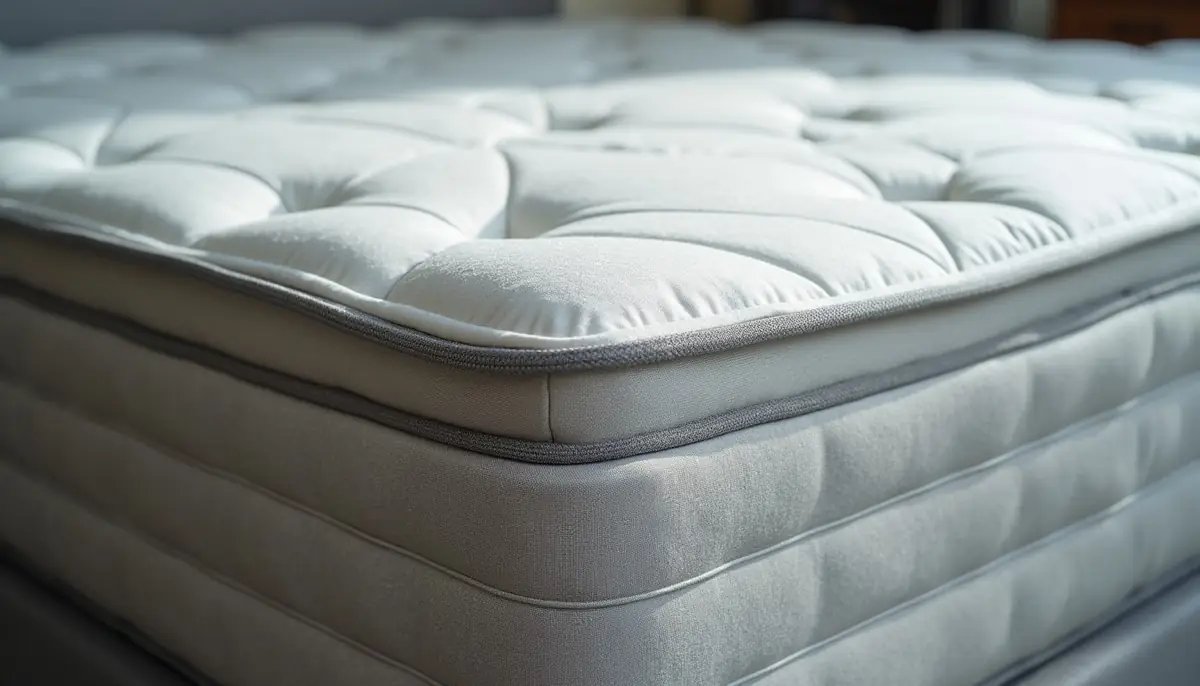
EPA describes the excrement spots as about the size of a printed dot that “may bleed on the fabric like a marker would.” That bleed is the most useful single feature: the spot sits in the fibres rather than on top of them, which is how it differs from loose grit or crumbs. UC IPM Pest Note 7454 adds that the spots are usually reddish brown or dark brown to black, sometimes yellowish, roughly round, sometimes streaked, and can be very small.
University of Kentucky entomologists describe the hiding places themselves as “marked by dark spotting and staining, which is the dried excrement of the bugs.” A heavily used seam can look as if someone dotted it with a fine felt tip. The crushed bug smear is different: EPA and Kentucky both describe it as rusty or reddish, and it is usually a one-off rather than a cluster.
How big are bed bug stains?
Individual fecal spots are pinpoint to roughly the size of a printed full stop. Size helps more with whatever is crawling near the stains, so here are the things most often found on a bed, measured from extension sources.
Why do bed bugs stain sheets?
Two reasons. First, they defecate as they feed: EPA notes that about 20 per cent of the time adults and large nymphs void the remains of earlier blood meals while still feeding, which leaves rusty or tarry spots on the sheet itself. Second, a bug can take up to six times its weight in blood in a feed of 3 to 10 minutes (UC IPM), and a bug that full bursts easily if you roll onto it, leaving a red smear.
The excrement also has a purpose. A 2017 University of Minnesota study found that two compounds in bed bug feces, dimethyl trisulfide and methyldiethanolamine, were enough to make bugs gather. Spotted seams attract more bugs, which is why the stains concentrate in a few places instead of spreading evenly.
What are the first signs of bed bugs on sheets?
Usually a few rusty smears near the pillow end, or a short line of dark dots along the sheet’s edge where it touches the mattress piping. UC IPM says 85 per cent of bed bugs are found in or near the bed, and most hiding places are within 6 feet of where people sleep or rest. Kentucky advises travellers to look along the head of the bed first.
- Strip the bed and check the mattress piping, seams and tags with a torch held low; EPA lists these as the first places bugs hide.
- Lift the mattress and look at the box spring, especially the wooden joints and the fabric underside.
- Check the headboard and bed frame joints, then the bedside table.
- Only then widen to the sofa and baseboards. UC IPM puts the remaining 15 per cent in upholstered furniture, cabinets, baseboards and carpet edges.
To match a live insect or nymph against every stage, use the bed bug identification guide with life stages at actual size.
Telling bed bug spots from the look-alikes
Flea dirt is the closest match in colour, because it is also dried blood. Ohio State’s fact sheet gives the test: wet the black specks, and if they turn red they are flea fecal pellets. Flea dirt is loose and gritty and gathers where pets sleep, while bed bug spots are fixed in the fabric along seams. The wet paper test for flea dirt takes a minute.
Cockroach droppings are the other common confusion. Kentucky’s cockroach fact sheet says the spotting “is similar in appearance to that of bed bugs, but can usually be distinguished by location,” because cockroaches seldom congregate on beds. If the specks are in kitchen cabinets or behind appliances, compare them against our guide to mouse, rat and cockroach droppings.
Carpet beetle larvae leave bristly shed skins but no dark spotting (Kentucky). Other small insects get mistaken for bed bugs too; our list of bugs in bed that are not bed bugs covers them. Mould is the easy one: a patch that spreads from a damp area, not a pattern of discrete dots.

Do old stains mean you still have bed bugs?
No. Spotting does not fade when the bugs die, so a treated mattress or a secondhand one with old spots needs a closer look, not a verdict. The residue itself persists too: in a 2018 NC State study, histamine from bed bug feces stayed at high levels in household dust three months after heat treatment had eradicated the bugs, and a 2023 follow-up found histamine in homes with no active infestation.
What separates a current problem from an old one is live evidence: a bug, a fresh rusty smear on clean sheets, pale unhatched eggs or new shed skins. Put interceptor cups under the bed legs; Kentucky says these traps help show whether an infestation is present or has been eliminated. If what you have is a single insect, read what one bed bug does and does not prove before booking anything.
Do bed bug stains wash out?
Usually yes, if you treat them before heat. Texas A&M AgriLife’s stain guide (L-5199) groups blood with other protein stains and gives the method: work liquid detergent into the stain, rinse and repeat, then wash with an enzyme presoak; if the stain remains, soak the item for one or two days, stirring now and then, and wash again. Its warning is the one that matters here: never dry a stained garment in the dryer, or the stain may become impossible to remove. Time and heat both make stains harder to shift.
That clashes with the advice for killing bugs, which relies on heat, as our review of home remedies that passed lab tests shows: Kentucky recommends washing at 120°F or more, or a dryer on medium to high heat for 10 to 20 minutes. Do it in order:
- Photograph the spots with a date and keep any bug on clear tape, so an inspector has evidence.
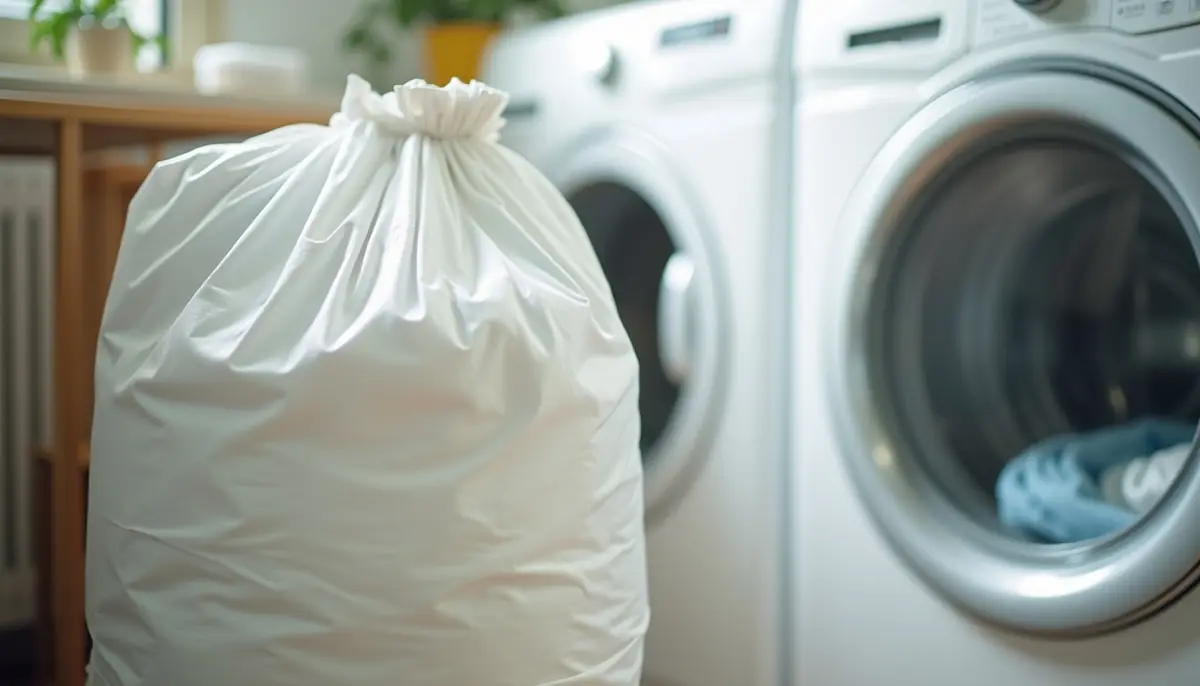
- Bag the bedding before carrying it to the machine, as Kentucky advises, so bugs do not fall off on the way.
- Pretreat and soak the stains with detergent and an enzyme presoak first.
- Then run the hot wash or dryer cycle that kills the bugs.
Stains on a mattress cannot go in the machine. Kentucky says infested mattresses usually need not be discarded and suggests an encasement, which traps any bugs inside and makes new spotting on the cover easy to see.
Should you clean stains before an inspection?
Wash the sheets, but leave mattress seams and the box spring alone until a professional has looked: the spotting shows an inspector where bugs live. Bedding is different, because Kentucky notes it cannot be treated with insecticides and should be hot washed.
What kills 100% of bed bugs?
Heat held long enough, and nothing sold in a spray can. UC IPM gives the commercial standard as at least 140°F for two hours or 130°F for three hours. Eggs are tougher than adults: in University of Minnesota trials, adults died after about 95 minutes at 113°F (45°C), but eggs survived 7 hours at that temperature and needed 71.5 minutes at 118°F (48°C). Cold works only at 0°F (minus 17.8°C) for at least 3.5 days (Olson and colleagues, 2013).
Sprays are weaker because of resistance: a 2010 survey of 110 US bed bug populations found pyrethroid resistance mutations in 88 per cent. Spotting along seams usually means bugs have settled in, which is where professional bed bug treatment earns its price.
Our page on what bed bug treatment costs, heat versus chemical puts chemical work at $150 to $400 per room and whole-home heat at $3,000 to $6,000.
Frequently asked questions
Are bed bug stains permanent?
On washable fabric, usually not, if you pretreat with detergent and an enzyme presoak before any heat. Texas A&M warns that putting a stained item in the dryer can make the stain impossible to remove. On a mattress, spots generally stay, which is why an encasement is the practical fix.
Can one bed bug leave stains?
Yes. EPA notes bugs void earlier blood meals while feeding about 20 per cent of the time, so a single bug can leave a few dark dots, and one crushed bug leaves a rusty smear. A cluster of dots along a seam with shed skins or eggs points to bugs living there. Read how fast bed bugs multiply for why early spots matter.
Do bed bug stains on a pillow mean bed bugs are in the pillow?
Not necessarily. Bed bugs feed and then crawl away to hide, usually in the mattress seams, frame or headboard within a few feet. Kentucky tells travellers to check along the head of the bed first, the same order our guide to checking a hotel bed in five minutes follows.
Are bed bug stains harmful?
Bed bugs have never been shown to transmit human disease (UC IPM). Researchers at NC State have found high histamine levels in dust from infested homes, which they flag as a possible allergy concern. If you have breathing or skin symptoms, ask a doctor; CDC has general bed bug health information.
Sources
- US Environmental Protection Agency, How to Find Bed Bugs (updated 2026).
- US Environmental Protection Agency, Mold Cleanup in Your Home.
- UC IPM, Pest Notes: Bed Bugs, Publication 7454; Pest Notes: Cockroaches, Publication 7467. University of California Agriculture and Natural Resources.
- University of Kentucky Entomology, ENTFACT-636 Bed Bugs (Potter); ENTFACT-614 Cockroach Control Guide; ENTFACT-601 Carpet Beetles.
- Ohio State University Extension, Fleas, HYG-2081.
- Texas A&M AgriLife Extension, Quick Stain Removal Guide: Washable Fabrics, L-5199 (Brown).
- Olson JF, Vers LM, Moon RD, Kells SA. Two compounds in bed bug feces are sufficient to elicit off-host aggregation by bed bugs. Pest Management Science, 2017.
- DeVries ZC, Santangelo RG, Barbarin AM, Schal C. Histamine as an emergent indoor contaminant: accumulation and persistence in bed bug infested homes. PLOS ONE, 2018.
- Gordon JM and others. Spatial distribution of histamine in bed bug-infested homes. Science of the Total Environment, 2023.
- Kells SA, Goblirsch MJ. Temperature and time requirements for controlling bed bugs under commercial heat treatment conditions. Insects, 2011.
- Olson JF, Eaton M, Kells SA, Morin V, Wang C. Cold tolerance of bed bugs and practical recommendations for control. Journal of Economic Entomology, 2013.
- Zhu F and others. Widespread distribution of knockdown resistance mutations in the bed bug populations in the United States. Archives of Insect Biochemistry and Physiology, 2010.