Baby Bed Bugs: What Nymphs Look Like at Each Stage

Baby bed bugs, called nymphs, are 1.5 to 4.5 mm long, translucent whitish yellow when hungry and bright red right after a blood meal, and they bite from the day they hatch. A bed bug passes through five nymph stages, and each one needs a full blood meal before it can moult to the next. At about 79°F a Virginia Tech study timed the whole run from egg to adult at 35 to 40 days. Finding nymphs usually means eggs have hatched nearby, so the bugs are breeding where you found them.
The five nymph stages, side by side
| Stage | Length | Colour | Days in stage at about 79°F | Mean days survived unfed |
|---|---|---|---|---|
| Egg | About 1 mm | Pearl white; red eye spot after about 5 days | 5.4 to 6.3 | Does not feed |
| 1st nymph | About 1.5 mm | Translucent, straw coloured, close to colourless | 4.5 to 8.0 | 13.8 to 36.3 |
| 2nd nymph | About 2 mm | Translucent whitish yellow | 6.0 to 8.2 | 27.8 to 68.3 |
| 3rd nymph | About 2.5 mm | Whitish yellow, darker with each moult | 5.6 to 8.0 | 28.2 to 118.1 |
| 4th nymph | About 3 mm | Whitish yellow, darker with each moult | 5.7 to 7.6 | 33.4 to 124.2 |
| 5th nymph | About 4.5 mm | Still lighter than the adult | 3.3 to 6.7 | 43.7 to 127.9 |
Compiled by The Pest Control Brief. Lengths from US EPA; colours from EPA, University of Kentucky and Virginia Tech; days in stage are the range of mean durations for three strains in Polanco, Brewster and Miller (Insects, 2011), kept at 26.1 to 26.5°C and fed weekly; survival without food is the range of means across four strains in Polanco, Miller and Brewster (Insects, 2011), at the same temperature. Any stage turns red and swollen after it feeds.
The adult that comes out of the fifth moult is 5 to 7 mm, flat and brown, the stage most people picture. Our bed bug identification guide at actual size covers the adult features that confirm the species; this page stays with the young.
Why baby bed bugs look white, then red
A hungry nymph is “almost completely pale white or yellowish,” in the words of Virginia Tech entomologist Dini Miller, writing for the Virginia Department of Agriculture and Consumer Services. Once it feeds, it “plumps up, becomes brilliant red, and looks like a plump raspberry seed.” North Dakota State University Extension describes nymphs the same way: colourless except after feeding. UC IPM adds that nymphs have a thinner outer skeleton and a lighter, yellowish white colour than adults.
So “is a baby bed bug white?” has a two-part answer: white or straw coloured when hungry, red for a while after a meal, and closer to the adult’s brown with each moult. Miller notes that fed adults darken and flatten again over a couple of days as they digest. Some pages claim the swelling after feeding can only be seen under a microscope. Virginia Tech’s description says the opposite, and that the red, swollen look is what makes nymphs easiest to spot.
Can you see baby bed bugs?
Yes, every nymph stage is visible without magnification, but the first stage is difficult. Virginia Tech says first nymphs “are so small that they are difficult to see unless they are moving or have recently fed,” and EPA says unfed nymphs “can be nearly invisible to the naked eye.” On a white sheet a fed nymph shows as a red dot. Our guide to whether you can see bed bugs, stage by stage sets out where to point the flashlight and what the eggs look like.
Five moults, five blood meals: how long each stage lasts
Each nymph needs at least one blood meal before it can shed its skin and move up a stage, so a baby bed bug cannot grow without biting someone. If no host is present, Virginia Tech says the nymph simply stays in its current stage until it feeds or dies.
In the 2011 Virginia Tech life table study, bugs held at about 79°F (26°C) and fed once a week took 34.8 days from egg to adult in a pyrethroid-resistant field strain from Richmond and 40.4 days in two other strains. Each nymph stage lasted roughly 3 to 8 days.
Temperature changes the clock more than anything else. NDSU puts egg to adult at about 21 days at 86°F and 120 days at 65°F, and Virginia Tech says a stage at 50 to 60°F may take two or three days longer than at room temperature. UC IPM gives the fastest development between 70 and 82°F. Egg hatch also varies by source: 6 to 9 days for most eggs at room temperature (Virginia Tech), about a week (Kentucky), 10 to 15 days (UC IPM) and 6 to 17 days depending on temperature (NDSU). How these stages stack into a growing population is modelled in how fast bed bugs multiply.
Do baby bed bugs bite?
Yes. Nymphs feed on blood exactly as adults do, and a first nymph has to find a meal soon after hatching. Kentucky notes that the bite is painless and that bed bugs feed on any skin exposed during sleep, not just the ankles. Reactions vary widely, and about 30 per cent of people in infested apartments did not react at all in the studies Kentucky cites, so a lack of marks does not mean a lack of nymphs. Questions about a reaction belong with a doctor; CDC says bed bugs are not known to spread diseases to people. For how often each bug feeds, see whether bed bugs bite every night.
How long can baby bed bugs survive without feeding?
The youngest survive the shortest time. In Virginia Tech’s starvation study at about 79°F, never-fed first nymphs lived 13.8 to 36.3 days on average depending on strain, while fifth nymphs and adults lasted 41.5 to 142.6 days. Field strains resistant to pyrethroid insecticides died sooner at every stage than laboratory strains. Dini Miller’s Purdue-hosted training slides add that first nymphs need a meal within about 3 days before they start to die, most likely from drying out rather than hunger, which is why many die when an egg is laid too far from a sleeper.
Our page on how long bed bugs live with and without food sets out survival by temperature, and why bagging belongings for a season is an unreliable way to starve them.
What can be mistaken for baby bed bugs?
| Look-alike | Size | How to tell it from a nymph |
|---|---|---|
| Booklouse | About 1/25 inch (1 mm) | Soft, yellowish to buff, found on damp paper and stored food; Clemson says it does not bite people |
| Flea larva | Up to 3/16 inch (4.8 mm) | Wormlike, hairy, no legs (UC IPM); lives in pet bedding and carpet |
| Adult cat flea | No more than 1/8 inch (3.2 mm) | Flattened side to side and jumps; bed bug nymphs are flattened top to bottom and crawl |
| Carpet beetle larva | Up to 5/16 inch for black carpet beetle (UC IPM) | Densely hairy, tan to brown; does not feed on blood |
| Bat bug or swallow bug nymph | Similar to bed bug nymphs | Needs a specialist; NDSU says identifications should be confirmed by an entomologist |
Compiled by The Pest Control Brief from Clemson HGIC, UC IPM Pest Notes 7419 and 7436, and NDSU E1538.
Hairy larvae under the bed are more often carpet beetles, covered in our carpet beetle larvae and rash guide.
The full list of bugs that look like bed bugs adds cockroach nymphs and spider beetles.
What one baby bed bug tells you
A nymph is a stronger signal than a lone adult. An adult can arrive on luggage or furniture; a 1.5 mm first nymph walks only short distances, so finding one usually means an egg hatched close by. Virginia Tech’s research also notes that a single mated female can start an infestation without a male. Our breakdown of how many bed bugs make an infestation explains how professionals read counts and mixed stages.
If the nymph is the only bug you have seen, start with what to do after finding one bed bug.
How to get rid of baby bed bugs
Nothing targets nymphs separately: what kills adults kills nymphs, and the eggs are the stage that survives. Eggs left behind hatch over the following one to two weeks, which is why professional programmes include follow-up visits, described in our guide to what professional bed bug treatment involves. Rutgers Cooperative Extension advises continuing until traps and visual checks have found no bed bugs for a month.
- Heat for fabrics. Kentucky says a dryer on medium to high heat for 10 to 20 minutes kills all life stages, nymphs and eggs included.
- Vacuum the seams. UC IPM says a vacuum can remove bugs and eggs from seams and carpet edges, but one pass rarely gets them all, and Kentucky advises sealing the contents in a bag.
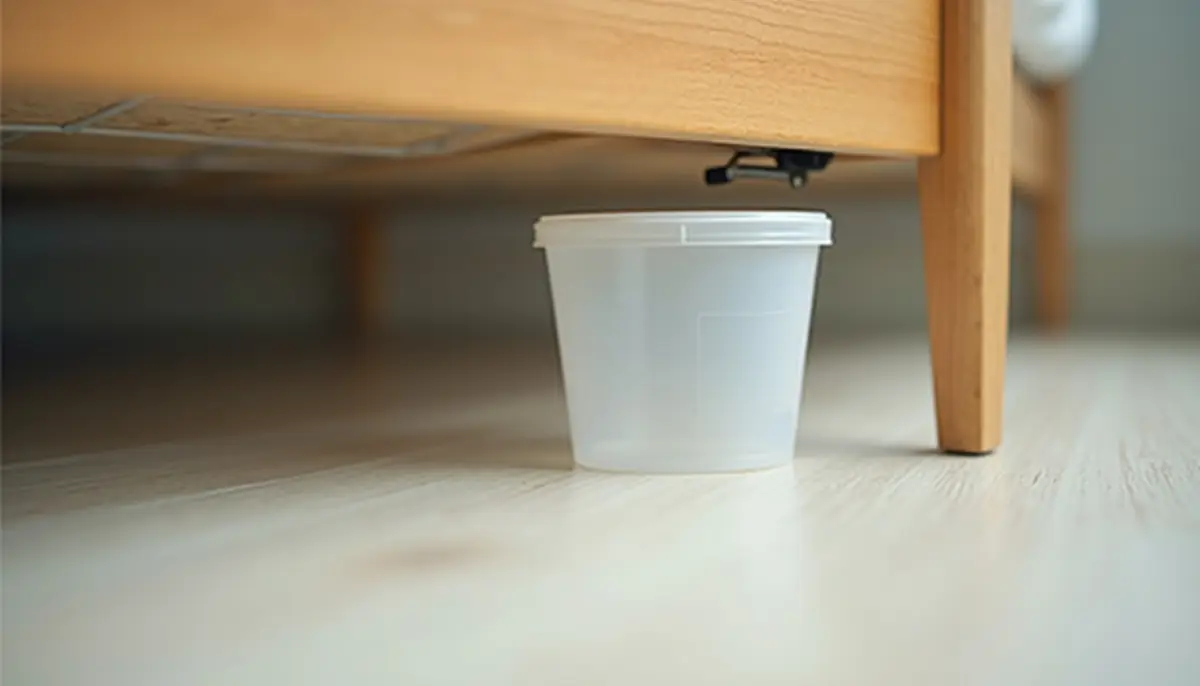
- Interceptor cups under the bed legs catch climbing nymphs and show whether numbers are falling.
- Skip the shortcuts. Rutgers lab tests found rubbing alcohol killed at most 50 per cent of bed bugs sprayed directly, and Kentucky warns foggers are ineffective. Our review of home remedies for bed bugs covers the rest.
Can bedbugs survive a washing machine?
Not a hot wash. Naylor and Boase (Journal of Economic Entomology, 2010) found washing at 60°C (140°F) killed all life stages, as did tumble drying on a hot cycle for at least 30 minutes, while soaking in water for 24 hours killed active bugs but had no effect on eggs. Kentucky and UC IPM give 120°F as a minimum wash temperature, so check the dryer step rather than relying on a cool or warm wash.
Frequently asked questions
What kills 100% of bed bugs?
No single method is guaranteed to reach every bug in a home. Heat comes closest where it reaches: EPA says bed bugs die when their body temperature reaches 113°F, and UC IPM gives 140°F for two hours or 130°F for three for whole-room heat. Eggs hidden in cracks are the usual survivors, so treatment is confirmed with traps over weeks.
Are baby bed bugs white?
Nearly. A hungry nymph is translucent, pale white or straw yellow, which is why it is easy to miss on a light sheet. After a blood meal it turns bright red and swollen, then darkens as it digests, and each later stage is a little browner. Bed bug eggs are pearl white and about 1 mm long.
How long does it take a baby bed bug to become an adult?
About five to six weeks at warm room temperature with regular meals: 34.8 to 40.4 days from egg to adult at about 79°F in a 2011 Virginia Tech study. NDSU gives about 21 days at 86°F and up to 120 days at 65°F, and a nymph that cannot feed does not moult at all.
Do baby bed bugs mean an infestation?
Usually, yes. A 1.5 mm first nymph cannot travel far to find a host (Virginia Tech), so one in your bed generally means eggs hatched nearby. It is still worth confirming the identification, since booklice, flea larvae and carpet beetle larvae are often mistaken for nymphs, and then calling a licensed professional if the identification holds.
Sources
- Polanco, A.M., Brewster, C.C. and Miller, D.M. Population Growth Potential of the Bed Bug, Cimex lectularius L.: A Life Table Analysis. Insects 2 (2011).
- Polanco, A.M., Miller, D.M. and Brewster, C.C. Survivorship During Starvation for Cimex lectularius L. Insects 2 (2011).
- US Environmental Protection Agency, Bed Bugs: Appearance and Life Cycle; How to Find Bed Bugs.
- Virginia Cooperative Extension ENTO-8, Bed Bug Biology and Behavior; Dini M. Miller, How to Identify a Bed Bug Infestation (VDACS); Dini M. Miller, Bed Bug Basics (training slides hosted by Purdue University).
- University of Kentucky Entomology, ENTFACT-636, Bed Bugs (Michael F. Potter).
- University of California Statewide IPM Program, Pest Notes 7454 (Bed Bugs), 7419 (Fleas) and 7436 (Carpet Beetles).
- North Dakota State University Extension, E1538, Taking the Bite Out of Bed Bugs.
- Clemson Cooperative Extension, Home and Garden Information Center, Booklice.
- Rutgers Cooperative Extension, FS1251, Cost-Effective and Money-Wasting Bed Bug Control Methods.
- Naylor, R.A. and Boase, C.J. Practical solutions for treating laundry infested with Cimex lectularius. Journal of Economic Entomology 103(1), 2010.