Can Bed Bugs Live in Cars? How Long, and How to Get Them Out

Yes, bed bugs can live in a car for weeks to months, but a car is a poor home for them, and most car problems are a few hitchhikers rather than a breeding infestation. With nobody sleeping in the vehicle they rarely get a regular meal, so numbers seldom build. A hot car is not a reliable cure: in an Arizona study, cabin air averaged about 116°F after an hour in the sun and only about 101°F in shade, while adult bed bugs need roughly 95 minutes at 113°F to die and eggs survived 7 hours at that temperature. Vacuuming, steaming fabric, heating belongings properly and, for stubborn cases, professional vehicle fumigation are what clear a car.
Bed bugs reach cars the way they reach anywhere: in bags, clothes, bedding and furniture. The real risk is that the car becomes a shuttle between a hotel, a friend’s flat or a secondhand sofa and your bedroom.
Bed bugs in your car: what to do in each situation
| Situation | How likely is a problem? | What to do |
|---|---|---|
| Someone with bed bugs at home rode in your car once | Low. Bed bugs do not live on people, so only a stray bug on clothing or a bag is likely | Vacuum the seat they used and its seams; check that spot again over the next few weeks |
| You moved luggage, bedding or furniture from an infested place | Moderate. Belongings are how bed bugs travel | Bag the items, run fabrics through a hot dryer, then vacuum and inspect the boot and seats |
| You found a live bug, shed skins or dark spots in the car | Real, but usually small | Vacuum, steam fabric seams, and inspect your bedroom, since the car often reflects a home problem |
| Someone sleeps in the vehicle regularly | High. A nightly host lets bed bugs feed and breed | Treat it like a bedroom; a professional treatment is usually needed |
| The car will sit unused for a while | Bugs can outlast weeks of waiting | Do not rely on starving them out; treat first |
The fourth row matters most. University of Kentucky entomologists note that where there are no beds or recurrent sleeping hosts, introductions of a few bed bugs are less likely to multiply. A car you drive and park is in that category. A car someone lives in is not.

How long can bed bugs live in a car?
As long as they would survive anywhere else at that temperature without a meal. University of Kentucky gives about 1 to 4 months without feeding in temperature-controlled buildings, and potentially a year or longer at 55°F or below. A car swings from cold nights to hot afternoons, and no study has measured survival in vehicles specifically.
What the car lacks is the host. A bed bug feeds for about 3 to 10 minutes and then crawls away to digest, and a female needs repeated meals to keep laying eggs. A short commute gives a hungry bug little opportunity, which is why car infestations tend to be small. For survival figures by temperature and life stage, see how long bed bugs live.
Will a hot car kill bed bugs?
Sometimes, in the hottest parts of the car, but not reliably everywhere. It depends on how hot the hiding place gets, and for how long.
The temperatures that kill bed bugs
| Temperature | Time needed | What it kills | Source |
|---|---|---|---|
| 113°F (45°C), held | About 95 minutes | Adults | Kells and Goblirsch, University of Minnesota, 2011 |
| 113°F (45°C), held | Eggs survived 7 hours | Not reliable for eggs | Kells and Goblirsch, 2011 |
| 118°F (48°C), held | About 72 minutes | Eggs | Kells and Goblirsch, 2011 |
| About 119°F (48.3°C) adults, 131°F (54.8°C) eggs | Reached during slow heating | Acute lethal points | Kells and Goblirsch, 2011 |
| At least 120°F wherever bugs may be | At least a day in the sun, for bagged items | All stages, target for DIY heating | University of Kentucky |
| Clothes dryer, medium to high heat | 10 to 20 minutes | All stages in fabric | University of Kentucky |
Virginia Tech gives the thermal death point as 122°F. A few degrees above 113°F matters a great deal, and eggs need more heat than adults.
How hot a parked car really gets
Two studies measured it directly. In a Stanford study of a dark sedan on 16 clear days with outdoor temperatures of 72 to 96°F, the inside rose by about 40°F on average within an hour, with 80 per cent of that rise in the first 30 minutes. Even on the coolest day, the interior reached 117°F. Cracking the windows open made no significant difference.
An Arizona State University study in Tempe in June and July 2014 measured surfaces as well as air, in identical cars parked in the sun and in shade for about an hour.
In full sun, cabin air at about 116°F and seat surfaces at about 123°F are lethal if held long enough. In shade, the cabin averaged about 101°F, which kills nothing. And bugs hide in seams, under seats, under mats and inside stored bags, which heat more slowly. Virginia Tech’s Dini Miller puts it bluntly: as more infested vehicles are fumigated, it has become clear that most automobiles do not get hot enough to kill all of the bed bugs, because some find insulated hiding places.
Can bed bugs live in your car in the summer?
Yes. A sunny afternoon can kill exposed bugs, but each evening the car cools, and a bug tucked into a seat seam may never spend 95 continuous minutes at 113°F. Shade, cloud and short parking spells all work in the bugs’ favour.
Can bed bugs live in a car in the winter?
Usually, yes. A figure that circulates online says bed bugs cannot survive below 46°F; the research does not support it. University of Minnesota and Rutgers researchers estimated that bed bugs can survive temperatures above about 10°F (minus 12°C) even after a week of continuous exposure, and recommend 0°F for at least 3.5 days in a freezer. University of Kentucky says freezing below 32°F works but must be held for one to two weeks. Unless the whole car stays that cold, continuously, for that long, cold slows bed bugs down rather than clearing them.
Can someone give you bed bugs by sitting in your car?
It is possible but uncommon. University of Kentucky notes that bed bugs normally do not reside on or attach to people the way lice or ticks do, and that picking them up by walking into an infested home in the daytime is unlikely. What travels is the odd bug in a coat seam, a bag or a pillow. A friend who rides in your car once is far less risk than a bag of their laundry left on the back seat.
If it happens, vacuum the seat and footwell they used, especially the gap between seat and backrest, and check that spot again over the next few weeks. Our guide to how bed bugs spread covers person-to-person transfer in detail. Rideshare and taxi seats carry the same kind of low risk.
How do you know if bedbugs are in your car?
Look for the same signs you would on a mattress: the bugs themselves, pale shed skins from growing nymphs, tiny whitish eggs, and dark spots or staining from dried excrement. Kentucky notes bed bugs have an affinity for wood and fabric more than metal or plastic, so cloth seats and carpet are where to concentrate.
Where to look in a car
- Seat seams and piping, especially where base meets backrest.
- Under the seats and in seat-back pockets.
- Under floor mats and along carpet edges.
- Child seats, with their deep folds and straps.
- The boot, under the floor panel.
- Bags, blankets and clothes stored in the car, which Virginia Tech singles out as insulated hiding places.
Use a torch and a thin card along seams: Kentucky says bed bugs fit into crevices no wider than a toothpick. For photographs and look-alikes, see our bed bug identification guide.

How to get rid of bed bugs in a car
For a few bugs from a one-off introduction, careful DIY work is usually enough.
- Empty the car. Bag every loose item and put fabrics through a dryer on medium to high heat for 10 to 20 minutes, which Kentucky says kills all life stages.
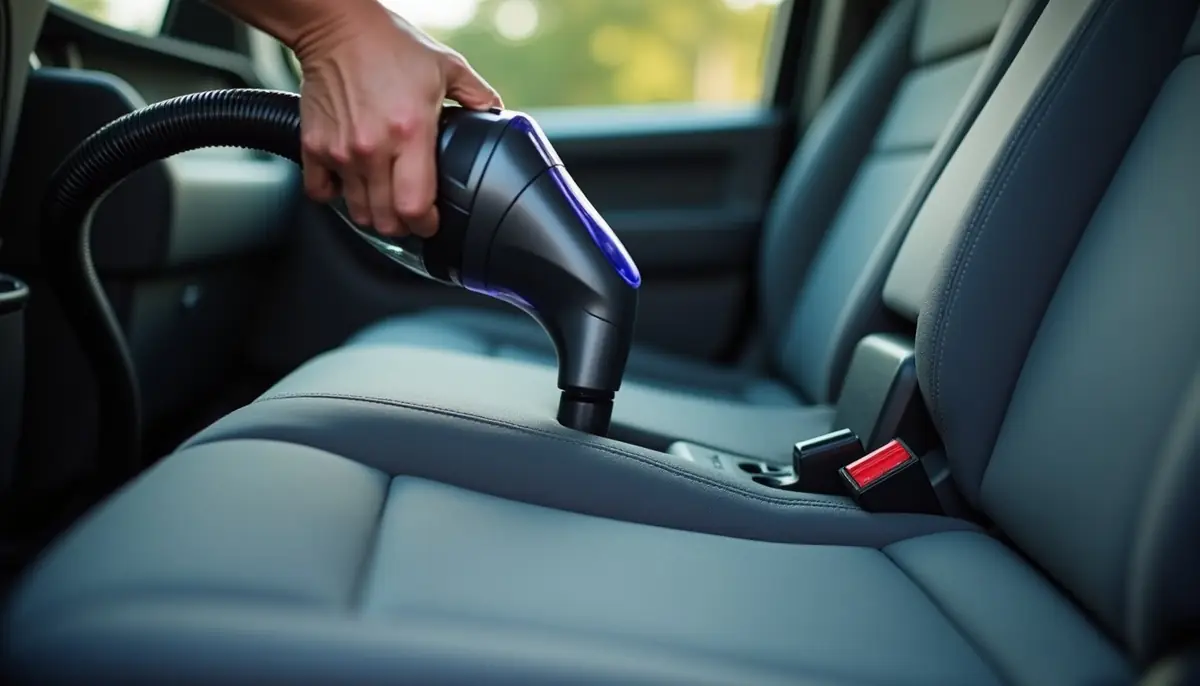
- Vacuum slowly. Kentucky advises scraping the wand along seams, folds and edges, because eggs cling. Bed bugs can survive being vacuumed, so seal the contents in a bag outdoors.
- Steam fabric seats and carpet. In Rutgers tests, consumer steamers killed 100 per cent of bed bugs on a mattress or in cracks, and more than 89 per cent under a fabric cover. Steam leaves no lasting effect on bugs you miss.
- Heat bagged items, not the car itself. Kentucky suggests leaving items that cannot go in a dryer, loosely packed in black bags, for at least a day in a closed vehicle in the sun, checking with a thermometer that 120°F is reached.
- Inspect again after a week or two, and keep checking your bedroom.
What does not work well in a car
Leather is the catch with steam. The same Rutgers study found bed bugs hidden behind a leather cover suffered no significant mortality, whatever the steamer or treatment time. On leather seats, work the seams where they open. Foggers are a poor idea anywhere: Kentucky lists bug bombs among the measures that are ineffective against bed bugs and can cause fires and other dangerous outcomes, and our analysis of fogger illness data shows why. Desiccant dusts are slow: as our review of diatomaceous earth evidence found, it took nearly eight days to kill half the bed bugs in a controlled comparison.
| Method | Kills eggs? | Reaches hidden bugs? | Best use in a car |
|---|---|---|---|
| Vacuuming | Removes some | Only where the wand reaches | First step everywhere |
| Steam | Yes, on contact | Fabric partly; leather no | Cloth seats, carpet, seams |
| Clothes dryer | Yes | Yes, in fabric items | Blankets, clothes, seat covers |
| Parking in the sun | Unreliable | Poorly; insulated spots lag | Bagged items, with a thermometer |
| Desiccant dust | Slow, partial | Where applied | Not a stand-alone fix |
| Professional fumigation | Yes | Yes, cracks and under panels | Persistent or heavy cases |
When to call a professional
Call one if bugs keep turning up after two rounds of vacuuming and steaming, if someone sleeps in the vehicle, or if your home is also infested. Some firms fumigate vehicles. In a 2021 Virginia Tech field trial, sulfuryl fluoride fumigation of minivans killed every insecticide-resistant bed bug, eggs included. Fumigants are restricted to licensed applicators, which our guide to restricted-use pesticides explains. If the home needs treating too, our bed bug treatment cost guide covers what affects the price. Treating the car without the bedroom, or the reverse, can let the bugs travel straight back.
How to prevent bed bugs in your car
- Bag luggage before it goes in the boot and dry clothes on high when you get home; our guide on how to check for bed bugs in a hotel covers the room check.
- Wrap secondhand furniture and soft items in plastic for transport; Kentucky advises avoiding discarded mattresses and sofas altogether.
- Keep clothing piles and blankets out of the car.
- If you carry people or belongings from an infested home, use a washable seat cover and launder it hot afterwards.
Where is the most common place to get bed bugs?
Homes and hotels, by a wide margin. In the National Pest Management Association’s 2018 survey, US pest professionals most often reported treating bed bugs in single-family homes, apartments and hotels. Public transportation was at the bottom of the list. CDC adds that the risk is higher for people who travel frequently and share living and sleeping space where others have slept.
A car is usually where bed bugs pass through, not where they are picked up. If you find them in one, ask where they came from: a bed, sofa or recent trip, and check floors too; see can bed bugs live in carpet.
Our data: bed bugs are recorded every month of the year
Because bed bugs live indoors with people, there is no season when a car or a home is safe. We compared monthly US research-grade iNaturalist records of bed bugs with German cockroaches, another indoor pest. Bed bug records ran from 47 in February to 96 in October, with no month near zero.
These are photographed, identified sightings, not infestation counts, but they make the point: winter is no off season.
Frequently asked questions
How long will bed bugs live in a car?
Weeks to months, depending on temperature. University of Kentucky gives about 1 to 4 months without feeding in temperature-controlled buildings and potentially a year or more at 55°F or below. A car swings between hot and cold, so survival there is unpredictable, but you should not expect bugs to die off in a few days. Because nobody sleeps in most cars, they seldom feed and breed, which keeps numbers low.
Should I park my car in the sun to kill bed bugs?
It helps for bagged belongings, not as the only treatment for the car. Adults need about 95 minutes at 113°F and eggs about 72 minutes at 118°F. Cabin air in a sunny Arizona car averaged about 116°F after an hour, but shaded cars reached only about 101°F, and bugs in seams or under seats stay cooler. Use a thermometer and combine heat with vacuuming and steaming.
Do bed bugs in my car mean my home is infested?
Not necessarily, but check. A bug in the car usually arrived in luggage, clothing or furniture, so its source may be a hotel, a friend’s home or a secondhand item. It may also mean bugs are travelling from your bedroom. Inspect mattress seams, bed frames and sofas for bugs, shed skins and dark spots, and consider interceptor traps under the bed legs.
Can a pest control company treat a car for bed bugs?
Some can, though not all firms offer it. Options include steam, targeted insecticide applications and fumigation. In a 2021 Virginia Tech field trial, sulfuryl fluoride fumigation killed every life stage of insecticide-resistant bed bugs in minivans. Fumigants are restricted to licensed applicators. Ask whether the company treats vehicles and whether it will inspect your home too, since treating one without the other often fails.
Sources
- University of Kentucky Entomology, Potter, Bed Bugs, ENTFACT-636.
- Kells and Goblirsch, Temperature and time requirements for controlling bed bugs (Cimex lectularius) under commercial heat treatment conditions, Insects 2(3), 2011 (University of Minnesota).
- Miller, Bed Bug Action Plan for Migrant Worker Housing, Virginia Tech Department of Entomology, published by the Virginia Department of Agriculture and Consumer Services.
- McLaren, Null and Quinn, Heat stress from enclosed vehicles: moderate ambient temperatures cause significant temperature rise in enclosed vehicles, Pediatrics 116(1), 2005.
- Vanos, Middel, Poletti and Selover, Evaluating the impact of solar radiation on pediatric heat balance within enclosed, hot vehicles, Temperature 5(3), 2018 (Arizona State University).
- Olson, Eaton, Kells, Morin and Wang, Cold tolerance of bed bugs and practical recommendations for control, Journal of Economic Entomology 106(6), 2013.
- Wang, Wang, Wang, Zha, Eiden and Cooper, Efficacy of three different steamers for control of bed bugs, Pest Management Science, 2018 (Rutgers University).
- Todd, Miller and Gordon, Field evaluations of sulfuryl fluoride fumigation for control of the common bed bug using a 1.9x dosage factor in motor vehicles and filled cargo trailers, Journal of Economic Entomology 114(2), 2021.
- US Environmental Protection Agency, Bed bugs: appearance and life cycle.
- Centers for Disease Control and Prevention, About bed bugs.
- National Pest Management Association, 2018 Bugs Without Borders survey.
- The Pest Control Brief, Does diatomaceous earth work? (citing Lilly, Latham, Webb and Doggett, Insects 7(4), 2016).
- The Pest Control Brief analysis of iNaturalist research-grade records, pulled October 2026.