Found Dead Termites? What It Means and What to Check
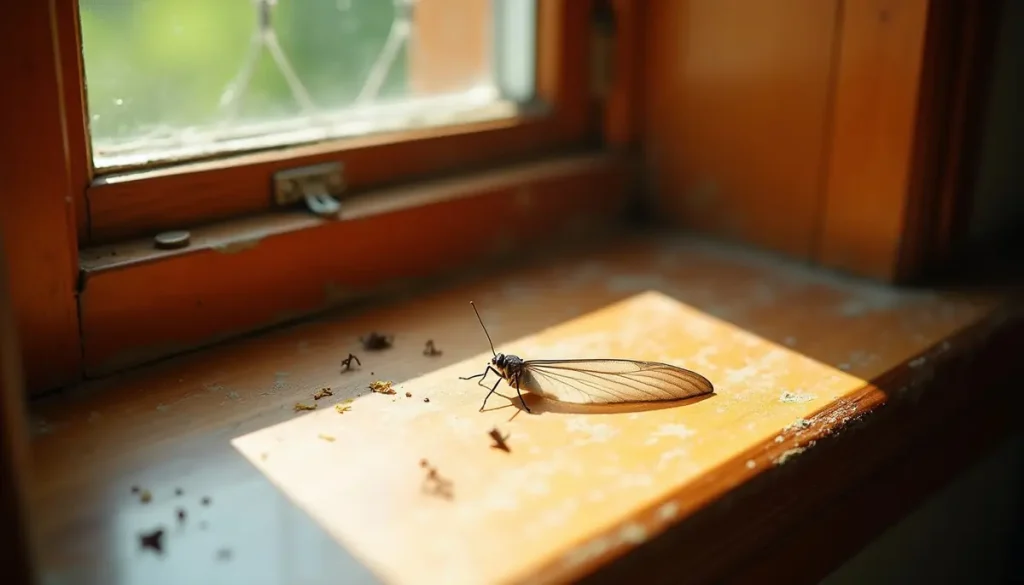
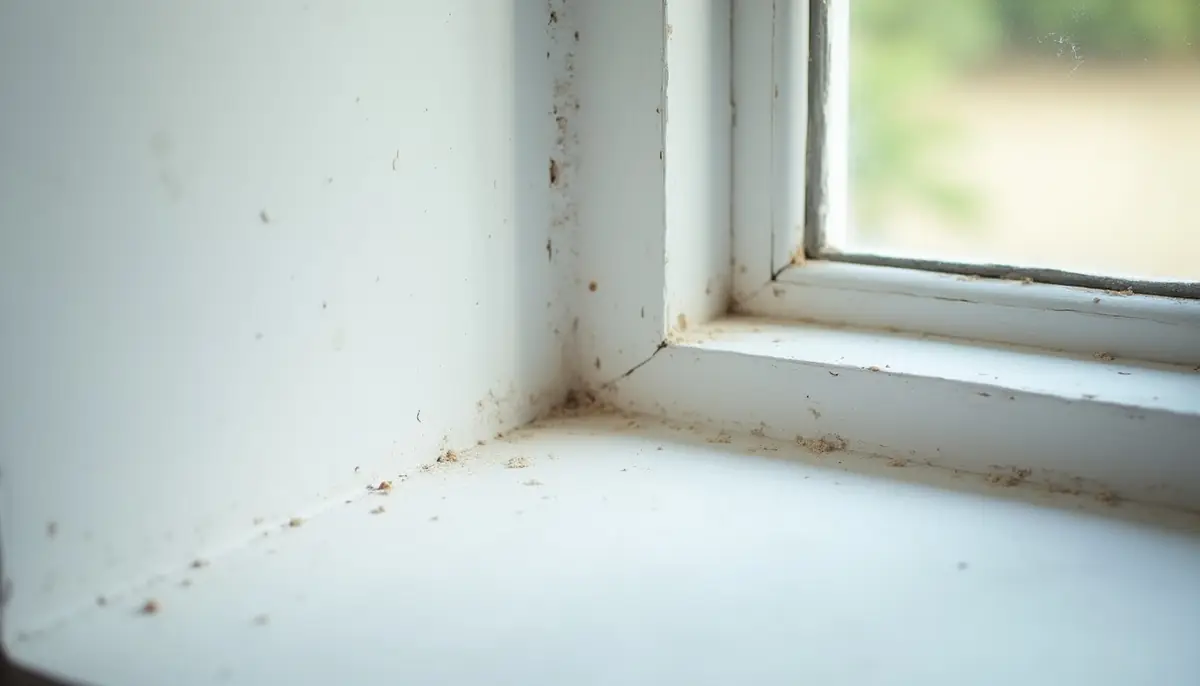
Dead termites in a house are almost always swarmers, the winged reproductives, that emerged indoors, could not get back to moist soil and dried out, usually within a day. A drift of them on a windowsill, in a tub or in a light fixture means a swarm has already happened, and entomologists at NC State Extension read swarmers indoors as a sign the colony is in or under the building. The colony is still alive. Bag a few bodies, then book an inspection rather than spraying.
What dead termites mean, by what you found
| What you found | What it usually means | Next step |
|---|---|---|
| Dark brown or black winged bodies on a sill, in a bathtub or inside a light fitting | Swarmers that emerged inside and died of desiccation (Mississippi State); they are drawn to light, so they collect at windows (NC State) | Bag a few, note the room and date, book an inspection |
| Wings only, all the same length, no bodies | A flight has already taken place; Penn State says shed wings are often the only evidence termites are in a building | Tape the wings to card for identification |
| A few dead Formosan swarmers in a treated house in a heavily infested neighbourhood | Possibly strays that flew in towards lights at night; hundreds is a current problem regardless of treatment history (Mississippi State) | Report it to the firm holding your contract |
| Pale, soft, wingless bodies on a floor near a wall or under a broken mud tube | Workers from a tube or wood that was opened; Penn State says workers are seldom seen otherwise | Check what was disturbed; this is live colony evidence |
| Dead termites near treated soil or a bait station weeks after a job | Kentucky says termites already inside usually die off after a soil treatment because they cannot get back to soil moisture | Keep a record; new swarmers next season need a callback |
| Dead termites around a stump or log 25 feet or more from the house | Termites recycling dead wood, which Mississippi State calls rarely a cause for concern | Check when the house was last treated |
| Dead winged insects with a pinched waist and elbowed antennae | Ants, not termites (Kentucky, NC State) | Use an ant guide instead |
Compiled by The Pest Control Brief from Mississippi State Extension, NC State Extension, Penn State Extension and University of Kentucky ENTFACT-604.
Why termites die in your house
Subterranean termites need soil moisture. Mississippi State’s Bug’s Eye View puts it bluntly: swarmers trapped inside a building die of desiccation, and drywood termites are the exception. University of Kentucky entomologists say swarmers emerging indoors cannot damage wood and live about a day.
Entomologists at NC State say swarmers are attracted to light and die on windowsills and in other open areas, and that you will often find only dead alates or just their wings. Bathrooms collect them too, and our explainer on why termites show up in bathrooms first covers those entry points.
Drywood termites do not need soil. Texas A&M says a drywood swarmer found inside a structure is almost a sure sign the termites are in the structural timbers, so dead drywood swarmers deserve more urgency than the subterranean kind, not less.
What does a dead termite look like?
A dead swarmer is a dark brown to black insect about 6 to 10 mm long including wings, roughly a quarter to three eighths of an inch, with a thick waist and straight, beaded antennae. The wings break off at the base, so many bodies lie wingless beside a scatter of pale, equal-length wings. A dead worker is creamy white and soft, 3 to 6 mm (an eighth to a quarter of an inch) per Penn State.
Size helps separate species. Texas A&M gives 12 to 15 mm for the yellowish-brown Formosan swarmer and about 11 mm and 14 mm for the two western drywood species. Penn State says a winged carpenter ant can reach three quarters of an inch, about 19 mm, so a large dark body with a pinched waist is almost certainly an ant. Our guide to telling termites from flying ants sets out the antenna, waist and wing checks.
One trap: ant queens also remove their wings after mating, which Penn State notes for carpenter ants, so a loose wing tells you more than a wingless body. Termite wings are all the same length; an ant’s front pair is larger (NC State). Photos of every caste are in what each termite caste looks like.
Do dead termites mean infestation?
Usually, if they are swarmers that emerged indoors. Kentucky says winged termites indoors almost always indicate an infestation warranting treatment, and Mississippi State says that by the time swarmers appear the building has been infested for several years by colonies of tens to hundreds of thousands. Clemson is more cautious: a few termites in a house do not mean there is a structural infestation, while large numbers or wings indoors often do.
The quantity matters. Mississippi State’s line for Formosan areas is that a few dozen swarmers in a properly treated building may not mean active infestation, but hundreds is a definite current problem. A single body is a narrower question, which our page on what one termite in the house means sets out with seven extension services’ wording side by side.
How to tell if termites are active or dead
Dead swarmers prove a flight happened, not that the colony is feeding today. Four extension checks separate live activity from old evidence:
- Break a tube. Mississippi State says to break a 1 inch section of mud tube and watch for termites or a repair over the next few days. Rutgers adds that active tubes are darker with moist soil, and NC State says old tubes are dry and crumble easily.
- Scrape a pinhole. A BB-sized spot of dried mud on drywall that a worker comes to investigate, or that is repaired within days, is a sure sign of active infestation (Mississippi State).
- Sweep the pellets. For drywood termites, UC IPM advises cleaning up pellets under a kickout hole and checking a few days later for new ones, while warning that building vibration can also shake a few loose.
- Look at the wood. Damaged timber with dried mud in the galleries but no termites could be old damage from a past infestation (Mississippi State).
Each test is covered with photos in our guide to which signs of termites prove current activity.

Dead termites after treatment
Dead termites in the weeks after a liquid soil treatment are an expected sight. Kentucky explains that a soil barrier stops termites entering and that, in most cases, termites already inside die off as well because they cannot return to the soil for moisture. Bait systems work more slowly: Kentucky describes a gradual decline as foragers share the bait.
New, live swarmers the following spring are a different matter. Kentucky says swarming the year after treatment means the termites found an untreated gap, not that the product wore off. Our page on why termites come back after treatment explains how to report it.
Who pays for the callback depends on the terms of your termite bond or retreatment warranty; Kentucky says firms usually retreat at no additional charge while the annual renewal is maintained.
When dead swarmers turn up
Dead swarmers on a sill are dated evidence. In our analysis of 2,335 research-grade iNaturalist records of native subterranean termites, April is the peak month with 661 records (seasonality index 195), with a second rise in November (207). Formosan records spike in May (519 of 760), and drywood termites peak in September (530 of 1,379).
So dark bodies in March or April point to native subterranean termites, a May night swarm to Formosan termites, and a September flight to drywood termites. Our termite swarm season calendar by species gives regional dates.
How to get rid of dead termites on the floor
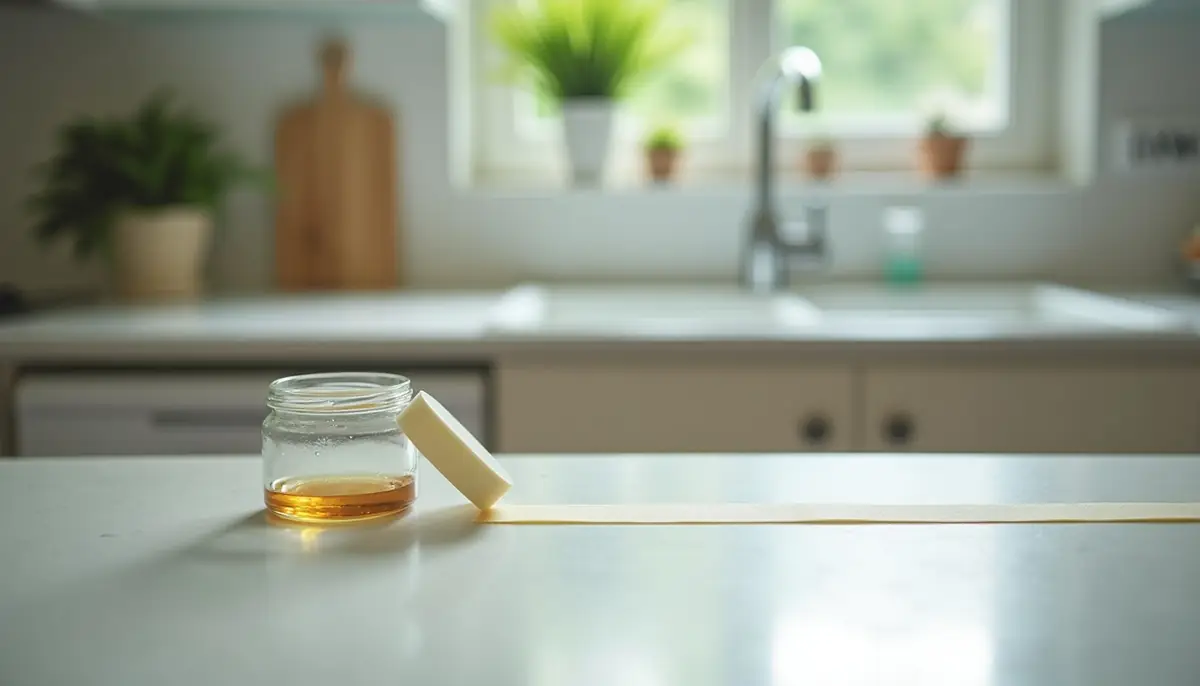
- Keep evidence first. NC State advises collecting some insects or wings for identification. Press clear tape over a few, or drop them in a sealed bag or a small jar of rubbing alcohol.
- Then vacuum. Kentucky says a broom or vacuum is enough for swarmers indoors.
- Skip the spray. Mississippi State says killing swarmers does nothing to solve the problem, because the colony that produced them keeps thriving.
- Note the spot. The window or crack nearest the heaviest drift is where an inspector starts.
Our termite inspection cost guide puts a formal WDI report at $75 to $150, and many firms inspect free where treatment may follow.
If they find a colony, compare quotes against our termite treatment prices by method. Kentucky says an extra day, week or month to decide generally does inconsequential damage.
Termites in a dead tree or stump
Termites in a dead tree away from the house are doing what Mississippi State says they should: breaking down and recycling dead wood. Its guidance for a stump, log or woodpile 25 feet or more from the foundation is not to try to control them before they reach the house, but to make sure the building itself is protected. The nearest thing to getting rid of termites without killing them is to remove wood touching soil near the house and leave distant dead wood alone. Swarmers next to the foundation are different; Kentucky says that means a good chance the home is infested too.
Frequently asked questions
Are dead termites a good sign?
Partly. Dead swarmers indoors mean the flight failed, because Mississippi State says trapped swarmers die of desiccation, but the colony that produced them is still feeding. After a liquid soil treatment, Kentucky says termites already inside usually die off, which is the expected result. Live swarmers the next season mean a gap in the treatment.
Do dead termites smell?
None of the extension or university sources we read, from Kentucky to UC IPM, describes a smell from dead termites. A musty or damp smell near the spot points to moisture, which subterranean termites need and which is worth fixing in its own right. Vacuum the bodies and keep a few for identification.
Why are there dead termites in my bathroom?
Bathrooms are a common place to find them because the plumbing that passes through a slab can leave gaps subterranean termites use, and swarmers that emerge there die in the tub or on the sill. Entomologists at NC State say swarmers found within a home probably mean an infestation in or under it, so bag a few bodies and have the slab and plumbing penetrations inspected.
What is a termite’s worst enemy?
Ants. Texas A&M says most swarmers fall prey to birds, toads, insects and other predators, and University of Hawaii lists ants with geckos, spiders and toads. A 2015 PLoS ONE study in Gabon found termite DNA in the guts of 17.2 per cent of 215 soil ants. Ants are not a control method for a house, though.
Should I spray dead or dying termites?
No. NC State says killing swarmers removes the nuisance but gives no protection from the colony, and Mississippi State says swarmers indoors will die anyway. Spraying also spoils the specimens an inspector needs. Vacuum them after saving a few, and if you see more winged insects, check whether they are flying ants rather than termites.
Sources
- Mississippi State University Extension Service, Signs of Termite Infestation (Blake Layton).
- Mississippi State University Extension Service, Bug’s Eye View, Eastern Subterranean Termite Swarmers, Vol. 5 No. 3, 2019.
- NC State Extension, Termite Swarmers: What Do They Mean for You?; Monitoring and Management of Eastern Subterranean Termites; Biology and Behavior of Eastern Subterranean Termites.
- University of Kentucky Entomology, ENTFACT-604, Termite Control: Answers for Homeowners.
- Penn State Extension, Eastern Subterranean Termites; and Carpenter Ants.
- Texas A&M AgriLife Extension, Urban and Structural Entomology Program, Native Subterranean Termites, Formosan Subterranean Termites and Drywood Termites.
- Clemson Cooperative Extension, Home and Garden Information Center, Termites.
- Rutgers NJAES Cooperative Extension, Fact Sheet FS338, Termite Prevention and Control.
- University of California Statewide IPM Program, Pest Notes: Drywood Termites, Publication 7440.
- University of Hawaii CTAHR, Crop Knowledge Master, Coptotermes formosanus.
- Fayle, T. M., Scholtz, O., Dumbrell, A. J., Russell, S., Segar, S. T. and Eggleton, P. (2015). Detection of mitochondrial COII DNA sequences in ant guts as a method for assessing termite predation by ants. PLoS ONE 10(4): e0122533.
- The Pest Control Brief analysis of iNaturalist research-grade records, pulled October 2026.