Rats in the Backyard: Burrows, Food Sources and What to Fix
Rats in a backyard are there for a reliable nightly supply of food, water and cover, and they stay until you remove it, then trap the rats already living there. Confirm the animal first: a Norway rat burrow is usually 2 to 3 inches across with smooth, packed edges and a worn runway. Then audit the yard, trap in protected stations, and close burrows only once the rats are gone. Burrows under a slab or rats getting into the house are a job for a licensed professional.
One rat at dusk does not prove a colony, but it puts your yard on a rat’s route. UC IPM puts the Norway rat’s nightly foraging range at 100 to 500 feet from the nest, so the burrow can be yours or a neighbour’s.
One rat or a colony? What the yard is telling you
| What you found | What it usually means | Next step |
|---|---|---|
| One rat seen once, no holes or droppings | A rat passing through on its foraging route | Run the yard audit below; check for droppings along fences for a week |
| Holes 2 to 3 in across, smooth edges, packed path leading in | Active Norway rat burrow in your yard | Trap or bait near it; do not fill it yet |
| Hollowed oranges or chewed lemon rinds left on the tree | Roof rat, which climbs rather than burrows | Trap off the ground; thin climbing plants and cut limbs 6 ft from the roof |
| Droppings up to 3/4 in long by the shed, compost or bins | Regular feeding at that spot | Remove the food source there first |
| Holes under the slab, deck footing or along the foundation | Burrowing that can undermine slabs, says UC IPM | Get a licensed inspection |
| Gnawing or droppings in the garage or coop as well | The yard colony is using buildings | Treat the building too, using our guide to stopping rats taking eggs and feed from a chicken coop for poultry |
If the trail leads into the garage, the steps change, and our guide to getting rats out of a garage covers door seals and slab burrows.
Is that hole a rat? A burrow key
Most holes in a lawn are not rats. Entrance size and what surrounds it separate the usual suspects quickly, using figures published by extension services.
| Animal | Entrance | Around the hole |
|---|---|---|
| Norway rat | 2 to 3 in (Nebraska, ICWDM); NYC Health gives 1 to 4 in | Smooth, packed rim; a 2 in wide runway; often a second exit |
| Vole | About 1.5 to 2 in (UC IPM) | Several openings joined by surface runways through grass |
| Eastern chipmunk | About 2 in (Penn State) | No soil at all; it carries the soil away in its cheeks |
| California ground squirrel | About 4 in (UC IPM) | Mound of soil at the entrance |
| Groundhog | 10 to 12 in | Conspicuous apron of soil at the main entrance |
| Mole | No open hole | Raised ridges and conical mounds of pushed-up soil |
Compiled by The Pest Control Brief from UC IPM Pest Notes on voles and ground squirrels, Penn State Extension, Nebraska Extension, ICWDM and the NYC Health Department.
A 2 inch hole is the ambiguous one: rat, vole and chipmunk overlap. A packed runway and droppings point to a rat; a hole with no soil under a stone wall points to a chipmunk, which our guide to reading chipmunk, groundhog and ground squirrel burrows separates further.
Raised ridges with no hole are moles, and the lawn damage pattern in telling mole damage from vole damage settles that one.
To check whether a rat burrow is in use, the paper plug test in our guide to what a rat burrow and nest look like takes a few days and costs nothing. Cobwebs or leaves across the entrance usually mean it is abandoned.
The yard audit: walk it at dusk, zone by zone
UC IPM says rats are mostly active at night, so walk the yard at dusk with a torch and work through each zone. The measurements are the ones extension and health agencies publish; the reasons rats want each feature are set out in full in what attracts rats to a home and yard.
| Zone | Check | Published fix |
|---|---|---|
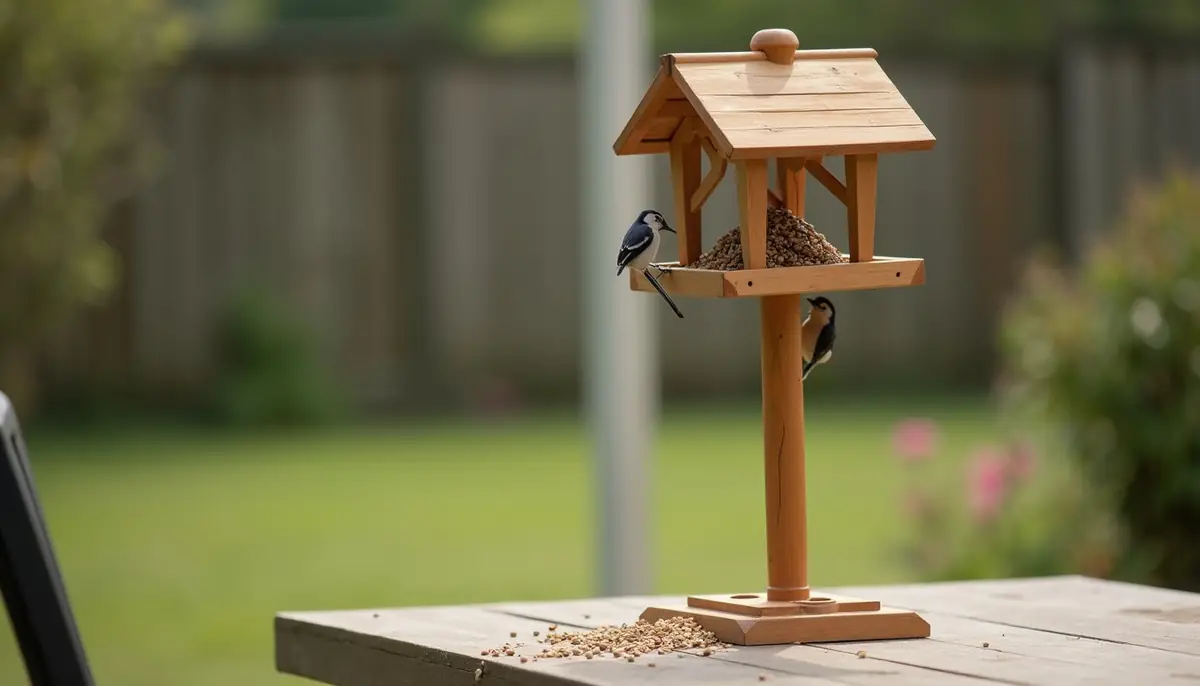
| Bird feeder | Seed spilled on the ground underneath | Fit a baffle (UGA); keep feeders away from the house (CDC); store seed in metal cans |
| Pet area | Food bowls left out overnight; dog droppings | Remove uneaten food (UGA); pick up droppings, since UC IPM says rats will eat faeces |
| Compost | Burrows under or beside the heap | Keep out meat, fish and eggs; use a rigid lidded bin, noting UC IPM’s warning that rats gnaw plastic |
| Fruit and nut trees | Windfalls left for days | Pick up fallen fruit and nuts regularly (Los Angeles County) |
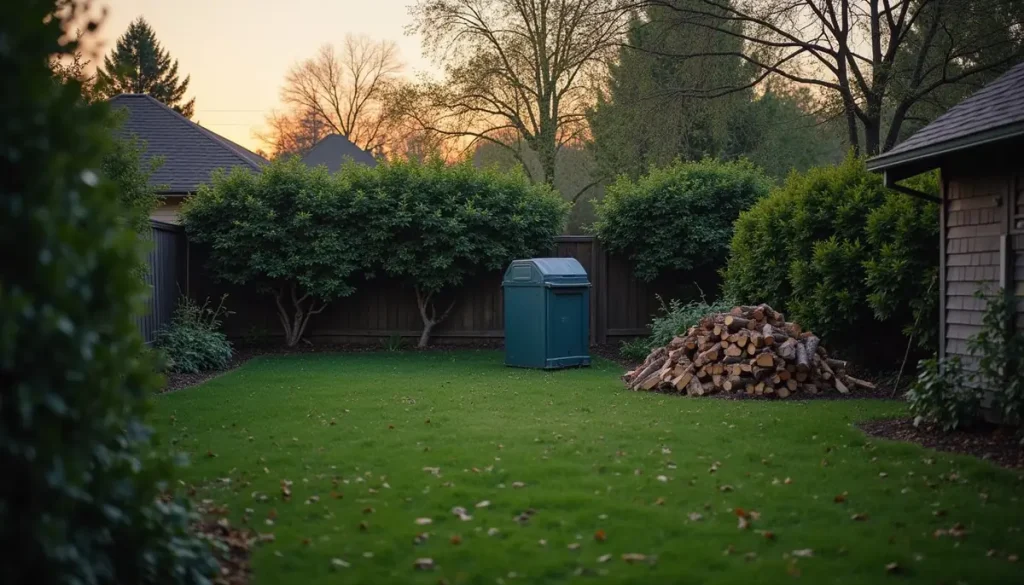
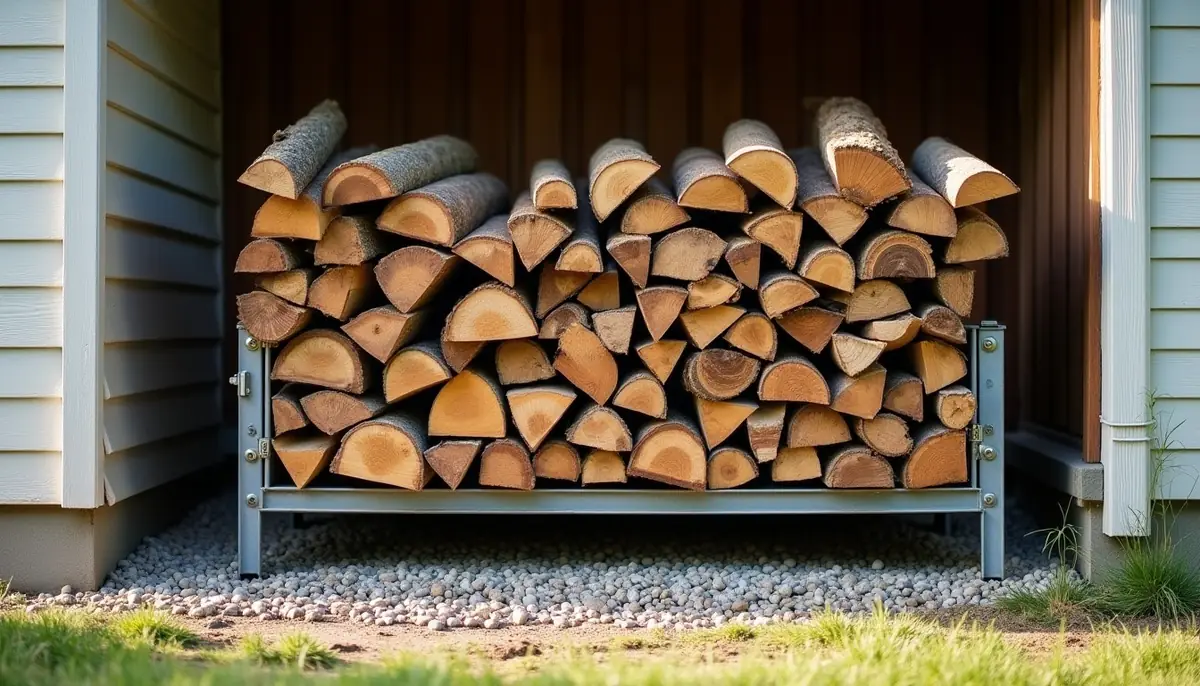
| Woodpile and stored materials | Stacked on the ground or against the house | Raise firewood at least a foot off the ground (UGA); Los Angeles County says 18 in up and 12 in from walls |
| Shrubs, ivy, hedges | Dense, low growth touching the house | Leave at least 2 ft between shrubs and buildings (UC IPM) |
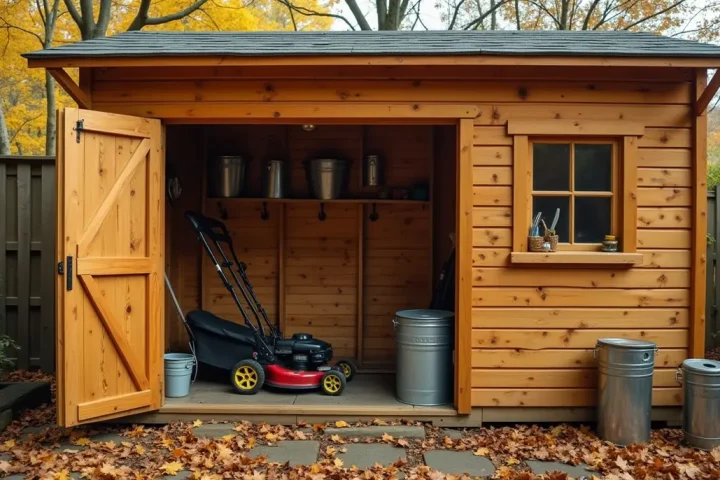
| Shed and deck | Gaps underneath, holes at the base | Clear junk, boards and rock piles (UGA); screen gaps with 1/4 in hardware cloth |
| Foundation | Burrows along the wall | Gravel strip at least 2 ft wide and 6 in deep, stone at least 1 in across (ICWDM) |
| Water | Dripping taps, ponds, pet water, leaking irrigation | Fix leaks; ICWDM notes rats must drink every day |
Bins need tight lids (UGA), but in our analysis of whether trash predicts rats across New York zip codes, persistent dirty conditions tracked rat complaints, while missed collections barely registered. Overflowing bins every week matter; one late pickup does not.
What to do, in order
- Remove food and water the same day. Feeders, pet food and windfalls first.
- Talk to the neighbours. UGA advises coordinating so that treatment happens across properties at the same time, since a 100 to 500 foot range crosses fences.
- Trap the rats already there (method below).
- Close burrows only when activity stops. NYC Health says to fill burrows in soil with sand or gravel and tamp them hard; UGA says a reopened burrow means rats are still active.
- Take the cover away and seal buildings. Seal every gap over a quarter inch with metal, using the materials that hold up in our test of steel wool, copper mesh and other rodent barriers.
How to get rid of rats in a backyard without poison
Snap traps are the main non-poison method, and outdoors the risk is to pets and birds. UC IPM advises setting traps “within boxes or stations, or use a barrier to prevent nontarget interactions,” and notes that trapping at night reduces interactions with birds.
- Prebait. Leave traps baited but unset until the bait has been taken several times (UC IPM). Rats avoid new objects for the first several days and maybe weeks.
- Space them. About 10 to 20 feet apart on runways, along fences and walls, near burrows.
- Use enough. UGA puts it at about a dozen traps for a house; UC IPM says a dozen or more for a heavy infestation.
- Do not half-set. UC IPM warns that a rat that sets off a trap without being caught becomes very difficult to trap again.
The “natural” sprays do not stand up. A garlic spray is one of the current top results for this query, presented as untested; UC IPM says no repellent has solved a rat problem for more than a very short time, and that rats get used to ultrasonic sound.
Should you put rat poison in the yard?
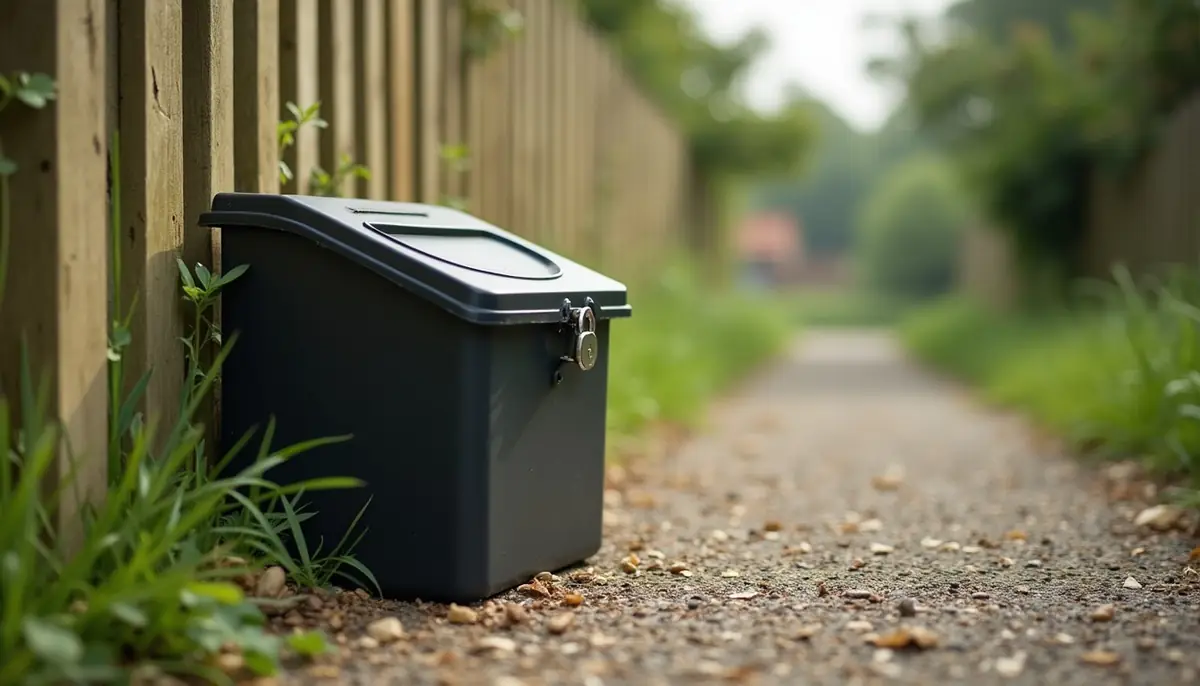
Outdoor baiting carries the most rules and the most collateral damage. UC IPM says tamper-resistant bait stations must be used where children, pets, nontarget mammals or birds may reach the bait, and the EPA restricted retail sale of second-generation anticoagulants in mid-2011. UGA says not to leave bait out longer than 2 to 4 weeks.
California is stricter: UC IPM notes a prohibition on most uses of first and second-generation anticoagulants. AB 1788 took the four second-generation compounds out of most uses from January 2021, and AB 2552 added chlorophacinone and warfarin from 1 January 2025. Our measurement of what California’s rodenticide ban changed shows pest control switched to diphacinone and bromethalin rather than baiting less.
The wildlife cost is measurable. California’s 2022 state testing found residues in 128 of 158 wild animals examined, and 17 of 30 exposed birds were confirmed poisoning cases, figures broken down in our report on anticoagulant rodenticides in California wildlife. UC IPM warns that pets and wildlife can be poisoned by eating rat carcasses. If you keep chickens, dogs or have owls nesting nearby, traps in stations are the safer route.
When rats are recorded through the year
Norway rats are recorded in every month, so there is no season when a backyard is safe to ignore. Our analysis of US iNaturalist research-grade records shows raw sightings rising from 397 in January to 710 in April and peaking at 760 in September, before falling to 444 in December.
These are mostly outdoor sightings, showing when people meet rats rather than how many exist. UGA warns to expect rodents to reinfest buildings in autumn, when they move indoors, so a yard colony found in September is worth dealing with before the weather turns.
When it is a professional job, and the cost
Call a licensed professional when burrows run under a slab or footing, when rats are inside the house, when trapping has not stopped activity after a few weeks, or when baiting would put pets or wildlife at risk. A published estimate for treating burrows in a lawn or garden is $350 to $550 (Fixr), and our guide to what pest control for rats costs lists the full range and which lines a quote should include.
Frequently asked questions
What do you do if you see a rat in your backyard?
Look for proof it lives there: burrows 2 to 3 inches across with packed edges, droppings up to 3/4 inch long, or gnawed fruit. Then remove food the same night (feeders, pet bowls, windfalls), and set rat traps in covered stations along fences, left unset for several days first. Fill burrows only after activity stops.
Should I worry about rats in my backyard?
Yes, enough to act, though not to panic. UC IPM notes rats commonly gnaw car engine wiring, and Norway rats can undermine foundations and slabs by burrowing. One sighting is the cheapest point to fix the yard. Rats indoors or under slabs warrant a licensed inspection.
What does it mean if you see a rat in your backyard?
It means your yard is within a rat’s nightly route, which UC IPM puts at 100 to 500 feet from its nest, so the burrow may be next door. If you also find fresh holes, droppings or gnawed fruit, the rats are living or feeding on your property rather than passing through.
How can I get rid of rats in my backyard?
Remove food and water, trap, then seal and close burrows. Use a dozen or more rat snap traps in protected stations, spaced 10 to 20 feet apart and prebaited for several days. Coordinate with neighbours. Use rodenticide only in tamper-resistant stations exactly as the label says, and not at all where the law restricts it, as in California.
Sources
- University of California Statewide IPM Program, Pest Notes: Rats, Publication 74106.
- University of California Statewide IPM Program, Pest Notes: Voles.
- University of Georgia Extension IPM, Rats and Mice: Get Them Out of Your House and Yard, December 2025.
- Internet Center for Wildlife Damage Management, Norway Rat Damage Prevention and Control Methods (Prevention and Control of Wildlife Damage, University of Nebraska).
- NYC Department of Health and Mental Hygiene, Rat Academy materials and rodent control guidance.
- Penn State Extension, Eastern chipmunk guidance; Nebraska Extension, rodent guidance.
- Los Angeles County Department of Public Health, Are You Attracting Rats and Mice to Your Yard?
- California Department of Pesticide Regulation, notices on AB 1788 (2020) and AB 2552 (2024).
- California Department of Fish and Wildlife, anticoagulant rodenticide testing results, 2022 (via The Pest Control Brief analysis).
- Fixr, rat extermination cost guide (published estimate, via The Pest Control Brief cost guide).
- The Pest Control Brief analysis of iNaturalist research-grade records, pulled October 2026.