What Eats Mice? Predators, and Whether They Control Mice

Mice are eaten by owls, hawks, snakes, foxes, weasels and cats, and small rodents are the main prey of several of them. Red-tailed hawk diets are about 80 to 85 per cent small rodents, and a family of barn owls can kill more than 3,400 rodents a year. None of them reliably clears mice out of a house, though. UC IPM states that dogs and cats seldom control rodent populations, and that predators can simply make mice harder to see.
That gap between “eats mice” and “solves a mouse problem” is the whole story. Below we set out which predators eat mice and how much, what the barn owl and cat research actually measured, why predators fail indoors, and why poisoned mice are a hazard to the very animals people hope will help.
Which animals eat mice, and how much they help
| Predator | Rodents in the diet | Evidence | Will it clear mice from a house? |
|---|---|---|---|
| Barn owl | Almost entirely rodents; mostly gophers and voles in vineyards | Pellet studies in California vineyards | No; hunts open ground, not buildings |
| Great horned owl | Varies with habitat; mainly rodents and insects in fields | Animal Diversity Web | No |
| Red-tailed hawk | About 80 to 85 per cent small rodents | Animal Diversity Web | No |
| Rat snakes | 66 per cent mammals in one diet study | 1963 study of 45 western rat snakes | No; UF says they leave when rodents are removed |
| Red fox | Mice, meadow voles and rabbits are the bulk | NC State Extension | No |
| Weasels | Main prey are small rodents | Animal Diversity Web | No |
| Domestic cat | Kills billions of US mammals a year, most by unowned cats | Loss and colleagues, 2013 | Rarely; may help prevent reinfestation after control |
The pattern holds across species: predators take mice where mice are exposed, in fields, gardens and woodland edges. A house mouse living in a wall void a few feet from your pantry is out of reach of all of them except, occasionally, a cat.
Do owls eat mice?
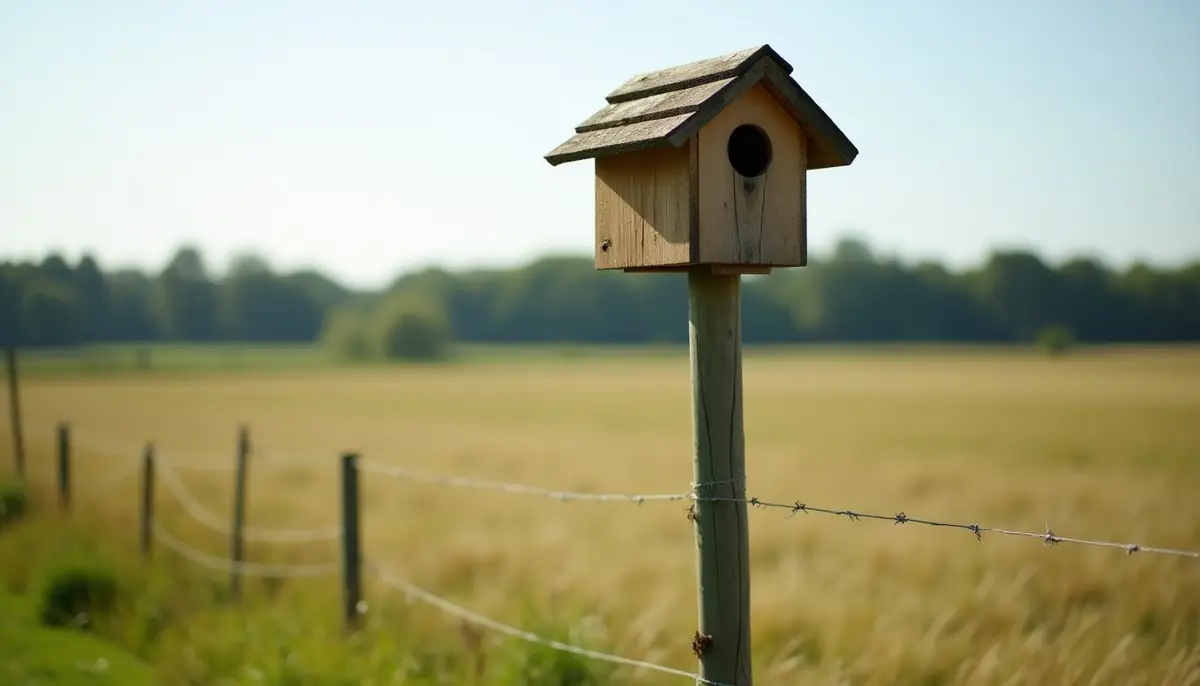
Yes, but in the best-studied US setting, mice are a minor part of the menu. Barn owls are nocturnal and, according to the University of Michigan’s Animal Diversity Web, prefer small mammals such as mice, voles, shrews and rats, hunting alone after sunset and locating prey by sound in complete darkness.
Two studies of barn owls nesting in boxes on California vineyards counted what the owls ate by dissecting pellets, the balls of bone and fur owls cough up:
| Study | Sample | Gophers | Voles | Mice | Rodent result |
|---|---|---|---|---|---|
| Browning and colleagues, vineyard near Sacramento (2016) | 362 skulls from 201 pellets | 70.4% | 26.2% | 1.7% (deer mice) | Gophers declined against a vineyard with no boxes |
| Hansen and Johnson, Napa Valley (2022) | 148 prey items from 67 pellets | 25% | 49% | 10% | Gopher activity fell; mice declined whether or not boxes were present |
The numbers are striking. In the Sacramento study an infrared camera recorded 316 prey deliveries to a nest of three chicks over their first eight weeks, about 105 per chick, and the authors estimated 30,020 rodents taken over three breeding seasons. A UC Cooperative Extension and Cal Poly Humboldt summary for Napa growers says remote video shows a barn owl family can kill over 3,400 rodents a year.
But notice what the owls mostly ate: gophers and voles, the animals that live in open ground. In the Napa study, mice declined over the season on vineyards with and without nest boxes, so the owls could not be credited with that drop. UC IPM’s vole guidance says barn owl boxes have reduced pocket gophers in California vineyards, that it is “yet unproven” whether they reduce voles, and that boxes suit larger open areas such as parks and grasslands rather than home gardens.
Great horned owls are more general. Animal Diversity Web describes a variable diet that depends on what is available: rabbits and voles in older habitats, and mainly rodents and insects in fields and deserts.
Do cats keep mice away?
Sometimes they deter mice, but the evidence says cats rarely remove an established population. The University of Nebraska wildlife damage handbook is explicit: there are few situations in which dogs and cats will kill rodents “sufficiently to control rodent populations,” because mice can find many places to hide and rear their young out of reach. It adds that cats “probably cannot eliminate existing mouse populations,” though they may help prevent reinfestation once mice have been controlled, and that farm cats can do this if there are enough of them and they are fed.
UC IPM adds a twist: the presence of predators can make rodents more cryptic, “giving the false impression that the predators have reduced the population.” That is exactly what researchers at Fordham University recorded when they filmed feral cats around a rat colony at a Brooklyn recycling site.
Over 79 days of video, Parsons and colleagues scored 306 videos of cats and rats sharing the same space. Cats stalked rats 20 times, made three predation attempts and killed two rats. Rats were seen less often on days when more cats were about, but they did not leave; they shifted their movements and the colony persisted. These were large rats, not mice, and the authors note that cats prefer defenceless prey, but the lesson about hiding transfers directly.
Cats are formidable predators of wildlife. Loss, Will and Marra estimated that free-ranging domestic cats in the US kill 6.9 to 20.7 billion mammals a year, with unowned cats responsible for most of that. That is a figure about wildlife outdoors, not about mice in kitchens. UC IPM also warns that food put out for cats or other animals outdoors becomes a continuous food source for rats and mice.

Do snakes, hawks, foxes and weasels control mice?
They eat plenty of rodents but do not control mice in buildings.
- Hawks: Animal Diversity Web puts small rodents at 80 to 85 per cent of the red-tailed hawk diet, mostly taken by hunting from a perch in daylight.
- Snakes: a 1963 study of 45 western rat snakes found mammals made up 66 per cent of the diet, with house mice, white-footed mice and voles among the prey. The University of Florida notes that ratsnakes are often found in attics, garages or sheds when rodents are present, which is why removing rodents is part of our guide on how to keep snakes away.
- Foxes: NC State Extension writes that mice, meadow voles and rabbits form the bulk of the red fox diet.
- Weasels: long-tailed weasels mainly eat small rodents and are slim enough to follow them into their burrows, according to Animal Diversity Web.
UC IPM’s verdict on rats applies to mice as well: predators “cannot significantly control animals that are good colonizers and prolific reproducers.” A house mouse can have 5 to 10 litters a year, so even heavy predation outdoors leaves survivors that refill the gap.
What eats mice at night, during the day, and in the garden
| Setting | Usual predators | Why mice still get into houses |
|---|---|---|
| At night | Barn owls, great horned owls, foxes, cats | Mice are mostly active at night too, but indoors they travel along walls and through voids |
| During the day | Red-tailed hawks and other hawks, snakes in warm weather | Mice mostly rest in nests by day |
| In the garden | Snakes, foxes, weasels, cats, owls at the edges | Weeds, heavy mulch and dense cover shelter small rodents from predators, UC IPM notes |
| In traps | Pets, and any animal that finds a poisoned carcass | A trap or bait station placed carelessly endangers non-target animals |
The Pest Control Brief analysis of iNaturalist research-grade records, pulled October 2026, adds a timing mismatch. The chart below plots raw monthly US record counts, each row scaled to its own peak.
Great horned owl records peak in April (10,005) and rat snake records in May (30,054). House mouse records peak in October (443), just as mice move into buildings. These are sightings people photographed, mostly outdoors, not counts of predation, but the mismatch is real: these predators are most often recorded in spring, while the mice that cause household trouble move indoors in autumn, out of reach of most of them.

Why poisoned mice harm the predators you want
Rodenticides and predators work against each other. UC IPM notes that anticoagulant baits are slow acting, so a dead rodent can contain several lethal doses, and that there is evidence bromethalin can pass up the food chain to predators that eat poisoned house mice.
Our analysis of rodenticide exposure in California wildlife, based on the California Department of Fish and Wildlife’s 2022 testing report, found anticoagulant residues in 30 of 34 tested birds, 88.2 per cent, and confirmed poisoning in 17 of those 30 exposed birds, 56.7 per cent. Other mammals showed similar exposure, 78.9 per cent, but far less confirmed harm. These were animals submitted after death, not a survey of living wildlife, so they show that poisoning happens, not how common it is.
If you rely on owls or hawks around a property, the logic is plain: traps and exclusion do not poison them. If a rodenticide is used, it must be a registered product in a bait station, used exactly as the label directs.
What animal eats mice the most?
There is no single ranking, because no study counts every predator at once. By sheer numbers, free-ranging domestic cats kill the most small mammals in the US, an estimated 6.9 to 20.7 billion a year. For individual wild predators, barn owls stand out: video work in Napa suggests a family can kill more than 3,400 rodents a year, though in California vineyards most of those were gophers and voles rather than mice.
What actually works indoors
- Trap. Snap traps set along walls, close together and in enough numbers, are the standard extension approach; our guide on how to catch a mouse covers placement and bait.
- Seal. House mice squeeze under gaps a quarter of an inch tall, so close openings with the metal and mortar options in our guide to rodent exclusion materials.
- Remove food. Store food, seed and pet food in sealed containers; our guide to what mice eat explains why small crumbs are enough.
- Call a licensed professional when signs appear in several rooms or keep coming back after trapping; mice carry real health risks, set out in are mice dangerous.
Frequently asked questions
What kills mice asap?
Snap traps are the fastest reliable method for most homes. UC IPM advises setting them close to walls where mice travel, spaced no more than about 10 feet apart, using enough traps to make trapping short and decisive. Rodenticides work more slowly and can leave mice dying inside walls. Any bait must be a registered product in a bait station, used as the label directs, and kept away from children, pets and wildlife.
Does 2 mice mean an infestation?
Not necessarily, but treat it as a warning. There is no published rule linking sightings to numbers, and two mice can be a pair able to breed. UC IPM gives 5 to 10 litters a year of about 5 or 6 pups each, with young mature in 5 to 6 weeks. Droppings in two or more rooms or regular noise in walls point to an established population. Our signs of mice guide explains what to look for.
What do mice absolutely hate?
Mice react strongly to predator cues: in laboratory studies a fox odour compound called TMT produces robust freezing in naive mice. That does not mean a scent keeps mice out of a house, and no smell has been shown to. Our review of whether peppermint oil repels mice found the effect fades quickly. Sealing gaps, removing food and trapping remain what extension services recommend.
Will a cat get rid of mice?
Rarely on its own. The Nebraska wildlife damage handbook says cats probably cannot eliminate an existing mouse population, because mice hide and raise young out of reach, though enough well-fed farm cats may help prevent reinfestation once mice are controlled. UC IPM adds that predators can make mice warier and harder to see, which can look like success when the mice are still there.
Do barn owl boxes get rid of mice?
Not in a way the research supports. In a Napa Valley study, mice declined over the owl breeding season on vineyards with and without occupied nest boxes, so the decline could not be credited to owls. Barn owls in California vineyard studies ate mostly gophers and voles. UC IPM says boxes suit large open areas, not home gardens, and they do nothing for mice indoors.
Sources
- University of California Statewide IPM Program, Pest Notes: House Mouse, Publication 7483 (Quinn, 2025).
- University of California Statewide IPM Program, Pest Notes: Rats, Publication 74106, and Pest Notes: Voles (Meadow Mice), Publication 7439.
- Timm, R. M., House Mice, in Prevention and Control of Wildlife Damage, University of Nebraska Cooperative Extension, 1994.
- Browning, M., Cleckler, J., Knott, K. and Johnson, M., Prey consumption by a large aggregation of barn owls in an agricultural setting, Proceedings of the 27th Vertebrate Pest Conference, University of California, Davis, 2016.
- Hansen, A. and Johnson, M., Evaluating the use of barn owl nest boxes for rodent pest control in winegrape vineyards in Napa Valley, Proceedings of the 30th Vertebrate Pest Conference, 2022.
- UC Cooperative Extension Napa County and Cal Poly Humboldt, Barn Owl Research summary for growers.
- Parsons, M. H. and colleagues, Temporal and space-use changes by rats in response to predation by feral cats in an urban ecosystem, Frontiers in Ecology and Evolution, 2018.
- Loss, S. R., Will, T. and Marra, P. P., The impact of free-ranging domestic cats on wildlife of the United States, Nature Communications 4:1396, 2013.
- University of Michigan Museum of Zoology, Animal Diversity Web: Tyto alba, Bubo virginianus, Buteo jamaicensis, Pantherophis obsoletus and Mustela frenata accounts.
- University of Florida IFAS Extension, publication UW260, on Florida snakes around homes.
- NC State Extension, Swain County Center, Red foxes in our area: what to know, 2026.
- Rosen, J. B., Asok, A. and Chakraborty, T., The smell of fear, Frontiers in Neuroscience, 2015.
- California Department of Fish and Wildlife, Wildlife Health Laboratory, 2022 Summary of Pesticide Exposures and Mortalities in Non-Target Wildlife, 2023, via The Pest Control Brief analysis.
- The Pest Control Brief analysis of iNaturalist research-grade records, pulled October 2026.