Tiny White Bugs in the House: Mites, Booklice and the Rest
Most tiny white bugs in a house are booklice, mould or grain mites, springtails, or houseplant pests such as mealybugs and whiteflies, and nearly all of them are a sign of damp rather than dirt. Booklice are pale, wingless insects about 1 mm long (roughly a twenty-fifth of an inch) that look like moving dust on old paper, flour and damp shelves; they do not bite. Mould and grain mites are smaller still, around a third of a millimetre. Springtails jump. Extension entomologists agree that the main fix for the dust-sized ones is drier air, with booklice control best achieved below 50 per cent relative humidity.
Most tiny white bugs are harmless nuisances that tell you something about moisture in the house. The useful questions are where you found them and whether they crawl, jump or fly. Our wider guide to tiny bugs in the house covers every colour.
The tiny white bugs at a glance
| What it is | Size | Where you see it | How it moves | Bites people? | What it tells you |
|---|---|---|---|---|---|
| Booklice (psocids) | About 1 mm | Old books and papers, flour and cereal, kitchen cupboards, new drywall | Crawls; wingless | No | Damp and mould |
| Mould mites | 0.28 to 0.41 mm | Mouldy stored food, pet food, damp surfaces | Slow-moving pale specks | No, but can irritate skin | Too much moisture |
| Grain and flour mites | Dust-sized | Flour, cereal, pet food, a brownish “mite dust” on the surface | Slow crawl | No, but can irritate skin | Old, damp stored food |
| Springtails | Rarely over 5 mm, most far smaller | Plant pots, bathrooms, damp basements | Jump when disturbed | No | Wet soil or damp rooms |
| Mealybugs | 1 to 4 mm | Stems, leaf joints, roots of houseplants | Barely move; look like cotton | No | A plant pest, not a house pest |
| Whiteflies | Up to 1/16 inch (about 1.6 mm) | Undersides of houseplant leaves | Fly up in a cloud | No | A plant pest |
| Freshly moulted cockroach | Any size up to adult | Kitchens, bathrooms, behind appliances | Runs | No | A cockroach population |
| Termite workers | Small, soft, pale | Only inside damaged wood or mud tubes | Crawl | No | A structural problem |
| Head lice eggs (nits) | 0.8 mm | Glued to hair near the scalp | Do not move | Lice do | A head lice case for a doctor or school nurse |
Tiny white bugs that look like moving dust
“White dust that moves” is usually booklice or mites. A magnifying glass separates them, and the treatment for both is the same.
Booklice
Booklice, also called psocids, are not lice at all. Clemson’s Home and Garden Information Center describes them as yellowish to buff coloured, wingless, soft-bodied and about 1/25 inch long, and states plainly that they do not bite people or pets. The UC Davis Bohart Museum describes adults as about 1 mm long, pale and flattened, resembling minute termites.
They feed on mould and on damp, powdered materials. The Bohart note lists flour and other powdered products, even powdered milk, as the stored foods most often infested, and the common name comes from the mildew they graze on the pages of books kept in attics and other rooms without air conditioning. Clemson adds that they are suspected of aggravating asthma, which is a reason to deal with them rather than ignore them.
Mould mites and grain mites
Mites are smaller than booklice and have eight legs rather than six. The University of Florida’s stored product pest collection gives the common mould mite, Tyrophagus putrescentiae, as about 0.28 to 0.41 mm long and translucent, and notes that it develops only where there is moisture or high humidity. The Bohart Museum calls mould mites “generally an indication of too much moisture leading to mold”.
Grain mites behave much the same in a pantry. A University of Nebraska manual on pantry pests describes severe infestations leaving a brownish tinge over the food, called mite dust, which gives off a “minty” odour when the mites are crushed, and a life cycle of only about two weeks at room temperature. Kentucky entomologists add that food and mould mites do not suck blood but can irritate the skin, and appear as tiny, pale, slow-moving specks on dark surfaces.
The same steps clear both: throw out the affected food, vacuum and wash the shelves, let them dry fully, and store new food in sealed containers. The Bohart note suggests that food you want to keep can be freezer-treated for a week or heated to 120°F for 20 minutes. Our pantry pests guide covers the beetles and moths that turn up in the same cupboards.
Why humidity is the real fix
Booklice and mites are moisture indicators first and pests second. Clemson puts the booklouse comfort zone at 75 to 82°F and 75 to 90 per cent relative humidity, and says control is best achieved by reducing indoor humidity below 50 per cent, which prevents most mould growth and directly kills booklice. It also says chemical control of booklice should not be necessary.
The sources do not quite agree on how low you need to go. The Bohart Museum note gives an optimum of 75 to 95 per cent but says psocids can live and reproduce at humidities as low as 40 per cent. So aim below 50 per cent, expect numbers to fall over weeks rather than overnight, and remove the mouldy food, paper or cardboard they feed on.
The new house problem
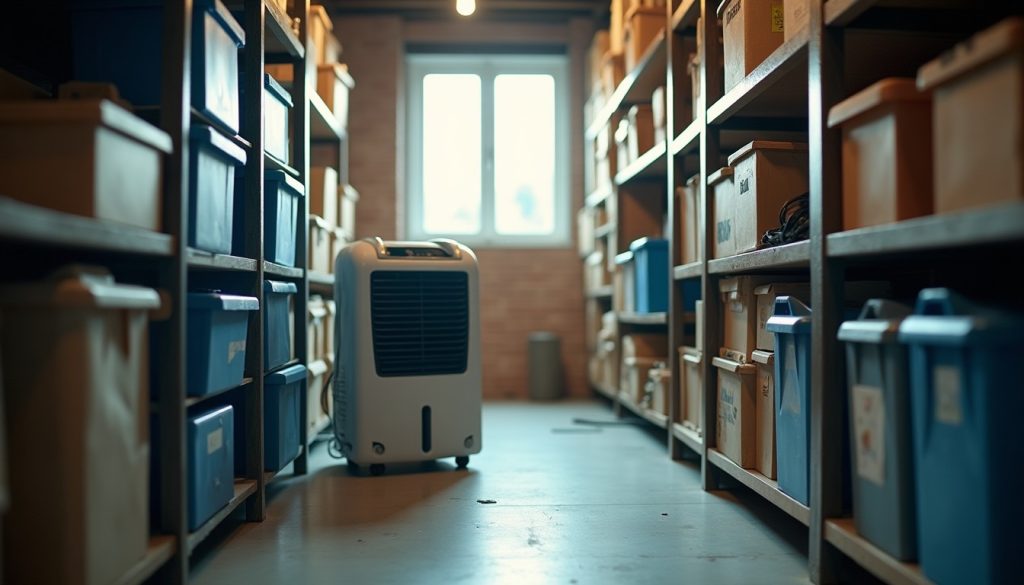
A wave of tiny white bugs in a newly built or renovated home is a recognised pattern. Clemson notes that booklice sometimes build up to large numbers in newly constructed buildings, because freshly applied plaster and drywall can hold enough moisture to support mould growth. Running a dehumidifier through the first season usually ends it as the materials dry. If numbers keep rising, look for a leak or condensation.
A cheap hygrometer tells you whether a room is genuinely damp before you spend money on anything else. The same moisture logic applies to the pests in our guide to silverfish and moisture pests.
Tiny white bugs in plant soil and on houseplants
White bugs in or on a plant pot are almost always one of these, and none is a reason to treat the house.
- Springtails swarm on the soil surface or in the drip saucer and jump when disturbed. Virginia Tech’s insect identification lab describes them as rarely more than 0.2 inch (5 mm) long, often pale brown, grey or cream coloured, and harmless to humans and animals. They live wherever there is enough moisture, including damp basements and bathrooms. Our full guide to springtails explains the jump and how to dry them out.
- Mealybugs are white, wax-covered insects that look like small tufts of cotton on stems and in leaf joints. Iowa State extension gives them as 1 to 4 mm long. UC IPM notes that a few species feed on roots, so white, waxy specks on the roots when you repot can be mealybugs too.
- Whiteflies rise in a small white cloud when you brush the plant. Minnesota extension describes them as up to 1/16 inch long, holding their wings roof-like over the body, and active indoors at any time of year.
- Fungus gnats are not white, but they are the small flies that usually accompany wet potting soil.
Our houseplant pests guide covers the treatment side for each of these, including when to throw a plant out rather than fight it.
White bugs that are only white for a few hours
The “white cockroach”
Albino cockroaches are a myth that keeps returning. UC IPM explains that immediately after moulting, cockroaches are white, and their outer covering darkens as it hardens, usually within hours. A white cockroach is simply a normal one caught at the wrong moment. It does mean cockroaches are breeding close by. Use our cockroach identification guide to work out the species once it darkens. If it turns out to be a German cockroach, that is a job where professional treatment usually pays for itself; see our guide to German cockroach treatment.
Termite workers
Pale, soft-bodied insects found inside damaged wood are a different matter. UC IPM describes worker termites as wingless, soft-bodied and light caramel in colour, and says they are the individuals most often seen when infested wood is examined. You will not normally find them wandering across a floor or a shelf. If you broke into a skirting board or a door frame and found pale, soft insects inside, stop disturbing the wood and book a licensed inspection, because termites are a structural problem and not a DIY job. Our guide to termites versus flying ants covers the swarmers that usually give a colony away.
Tiny white bugs on skin, or white bugs that bite
Very few small animals actually live on people. Texas A&M AgriLife Extension notes that only two kinds of mites live and feed in human skin, the scabies mite and the hair follicle mite, and Kentucky entomologists describe scabies mites as too small to be seen with the naked eye. The visible pale things that genuinely live on people are lice and their eggs. Kentucky describes lice as tiny, whitish grey insects visible under close examination, found on the head and other hairy areas of the body.
CDC parasitology material gives head lice eggs (nits) as 0.8 by 0.3 mm, oval and yellow to white, firmly fixed to the hair rather than lying on the skin. If you are trying to separate lice from the many things mistaken for them, see our guide to bugs that look like lice.
None of the household white bugs in the table above feeds on blood. Booklice do not bite, springtails are harmless, and mould and grain mites can at most irritate the skin of people handling infested materials. Bird and rodent mites can bite, but they are dark specks rather than white ones and come from a nest; our guide to bird mites covers them.
When the sensation continues and nothing is found
Some people feel crawling, biting or itching and see tiny white specks on their skin, yet repeated inspections find no insect. Extension entomologists take this seriously and approach it carefully. Kentucky’s guide to mystery bites lists common non-insect causes, including tiny fragments of paper, fabric or insulation, fibres shed from new or worn carpets and upholstery, and fibreglass from a washer previously used for curtains. A UC IPM Pest Note on the subject says the first person to contact should be your family physician or primary health care provider, because medical professionals are the only people licensed to diagnose the condition.
When the belief of infestation persists despite all evidence, the medical name is delusory parasitosis. Both UC IPM and Kentucky stress that the sensations are real to the sufferer, and Kentucky says such cases lie outside the realm of pest control and should be referred to a dermatologist or mental health professional. Spraying a home will not help, and UC IPM warns that applying harsh compounds to the body can make skin conditions worse.
A quick way to work out which one you have
- Catch one. Tip it into a small jar or pill bottle, which Kentucky entomologists prefer to tape or envelopes because it does not crush the specimen, and look with a phone camera zoomed in or a 10x hand lens.
- Note where it was. Paper and food: booklice or mites. Plant pots: springtails, mealybugs or whiteflies. Hair: lice. Inside wood: termites.
- Watch how it moves. A jump means springtails. Flight means whiteflies or gnats. A six-legged pale insect crawling on paper or food suggests booklice. Barely moving specks suggest mites.
- Check the humidity. If the room is above 50 per cent, fix that first, because it is the cause for most of this list.
- Escalate the right ones. Termites, German cockroaches and persistent bites need a licensed professional or a doctor.
Frequently asked questions
What are the tiny white bugs that look like dust?
Usually booklice or mites. Booklice are pale, wingless insects about 1 mm long that scurry over damp paper, flour and cereal, and they do not bite. Mould and grain mites are smaller, around a third of a millimetre, and appear as slow-moving pale specks, sometimes leaving a brownish dust on stored food. Both are signs of damp, and reducing indoor humidity below 50 per cent is the main fix extension sources recommend.
What are the tiny white bugs in my plant soil?
If they jump, they are springtails, which live in wet potting soil and are harmless to people and pets. If they look like small tufts of cotton on stems or roots, they are mealybugs. If they fly up when you touch the plant, they are whiteflies. Letting the soil dry between waterings deals with springtails; mealybugs and whiteflies are plant pests that need treating on the plant itself.
Do tiny white bugs bite?
The common household ones do not. Clemson extension states booklice do not bite people or pets, springtails are harmless, and Kentucky entomologists note that food and mould mites do not suck blood, though they can irritate the skin of people handling infested food. If you are being bitten, look for a different cause such as fleas, bed bugs or bird mites, and see a doctor if the bites or rash persist.
Why do I have tiny white bugs in my new house?
New plaster and drywall can hold a lot of moisture, which supports mould and the booklice and mites that feed on it. Clemson notes booklice sometimes build up to large numbers in newly constructed buildings. Running heating or air conditioning and a dehumidifier to keep humidity below 50 per cent usually clears them within weeks as the materials dry. Persistent numbers suggest a leak worth tracing.
Sources
- Clemson Cooperative Extension, Home and Garden Information Center, HGIC 2403: Booklice, 2004.
- UC Davis Bohart Museum of Entomology, Information Note 62: Psocids/Booklice, and Information Note 42: Mold Mites.
- University of Florida, UF/IFAS Stored Product Pests collection: Mold mite, Tyrophagus putrescentiae, 2005.
- University of Nebraska-Lincoln Extension, IPM for Fabric and Pantry Pests manual (grain mites), 2012.
- University of Kentucky Entomology, Mystery Bites: Insect and Non-Insect Causes (ENTFACT), revised 2026.
- Virginia Tech Insect Identification Lab, ENTO-538: Springtails.
- Iowa State University Extension, Mealybugs: a Common Houseplant Pest, 2004.
- University of Minnesota Extension, What insect is this? Whiteflies.
- UC Statewide IPM Program, Pest Notes: Mealybugs; Cockroaches; Subterranean and Other Termites; Delusory Parasitosis.
- Texas A&M AgriLife Extension, ENT-3006: Diagnosing Mysterious “Bug Bites”.
- Centers for Disease Control and Prevention, DPDx: Pediculosis.