Rats in the Attic: Signs, Species and Getting Them Out
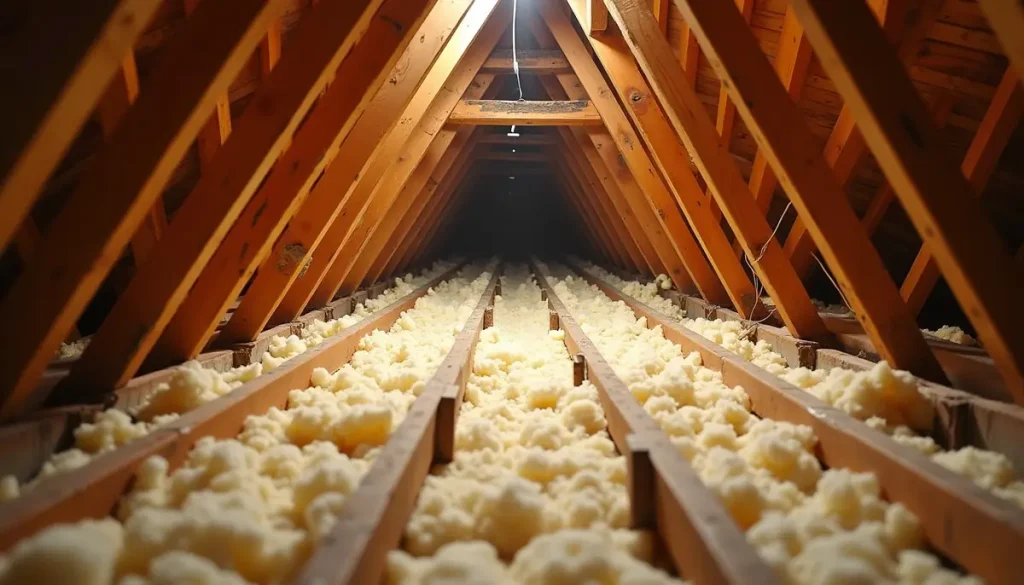
Rats in an attic are usually roof rats, the climbing species that UC IPM says favours attics, wall voids and ceiling voids, and the fix is snap traps on the rafters first, then sealing every opening once the catches stop. Norway rats live lower, in basements and ground floors. Scurrying overhead at night, half-inch pointed droppings and shredded insulation are the signs. Gnawed wiring makes this more than a nuisance, and roof rats are a job many homeowners hand to a professional.
Is it a roof rat, a Norway rat, a squirrel or mice?
| Sign | Roof rat | Norway rat | Gray or fox squirrel | House mouse |
|---|---|---|---|---|
| Where in the house | Attics, wall voids, ceiling voids, cabinets | Basements and ground floors; burrows outside | Attics, entering from the roof | Anywhere, nesting in shredded fibre |
| When you hear it | At night, when the house is quiet | At night, low in walls and floors | By day; ICWDM says only flying squirrels are active at night | Mostly at night |
| Droppings | About 1/2 inch, pointed ends | Up to 3/4 inch, blunt ends, clumped | No size given in the extension sources we read | 1/8 to 1/4 inch, pointed |
| Entry hole | ICWDM: seal anything over 1/2 inch | Young rats fit under a 1/2 inch door gap | About the size of a baseball | Gaps 1/4 inch tall |
Compiled by The Pest Control Brief from UC IPM Pest Notes: Rats (74106) and House Mouse (7483), ICWDM roof rat, Norway rat and tree squirrel chapters, and Nebraska Extension G1105. UC IPM gives roof rats 5 to 10 oz and Norway rats 7 to 18 oz, with the roof rat’s tail longer than its head and body.
- Daytime noise and a baseball-sized hole point to squirrels in the attic and the legal timing for removing them, which run on different rules.
- Light scratching and quarter-inch droppings point to mice in the attic, handled with smaller traps.
- Matching each sound to an animal is covered in what rat noises at night mean and where they come from.
Which rat depends on where you live
Our analysis of US research-grade iNaturalist rat records shows how sharply the species split by state. Roof rats make up 90.3 per cent of rat records in Florida, 86.3 per cent in Texas and 69.9 per cent in California, but none of the 2,503 rat records in New York or the 298 in Pennsylvania. ICWDM gives the same range: the lower half of the East Coast, the Gulf states up into Arkansas and the whole Pacific coast. These are records of rats people noticed, mostly outdoors, not counts of infested attics, but in the Northeast and Midwest an attic rat is more likely a Norway rat that climbed in along pipes or wiring. The full species comparison is in how to tell roof rats from Norway rats.
Why rats end up in attics
Roof rats prefer to nest off the ground, and ICWDM says they rarely dig burrows if elevated sites exist. UC IPM describes them as agile climbers that run along overhead utility lines and fence tops at night, so a roofline with an overhanging tree or a service drop is a direct route up. ICWDM notes that in homes where rats live in the attic and feed outdoors, damage may be limited to torn insulation used for nesting and gnawed electrical wiring.
Common entry points:
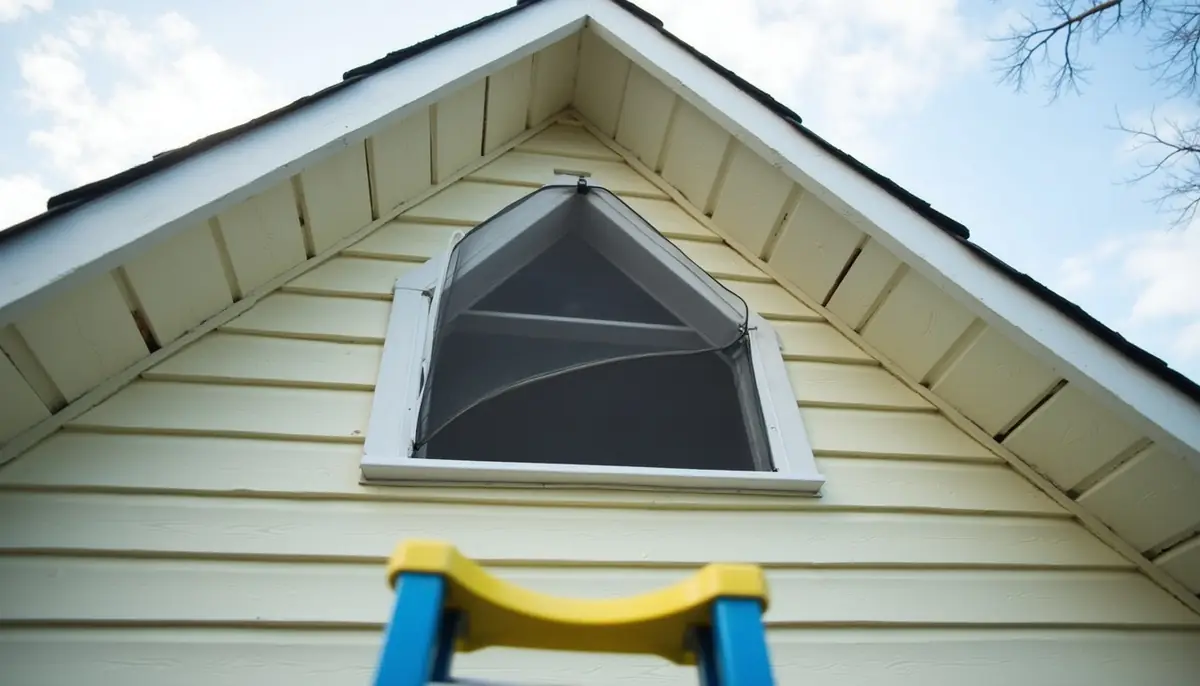
- Gable vents and roof vents with damaged or missing screens
- Gaps where the roof meets the fascia or soffit, and loose roof tiles
- Where utility lines, pipes and cable runs enter the walls
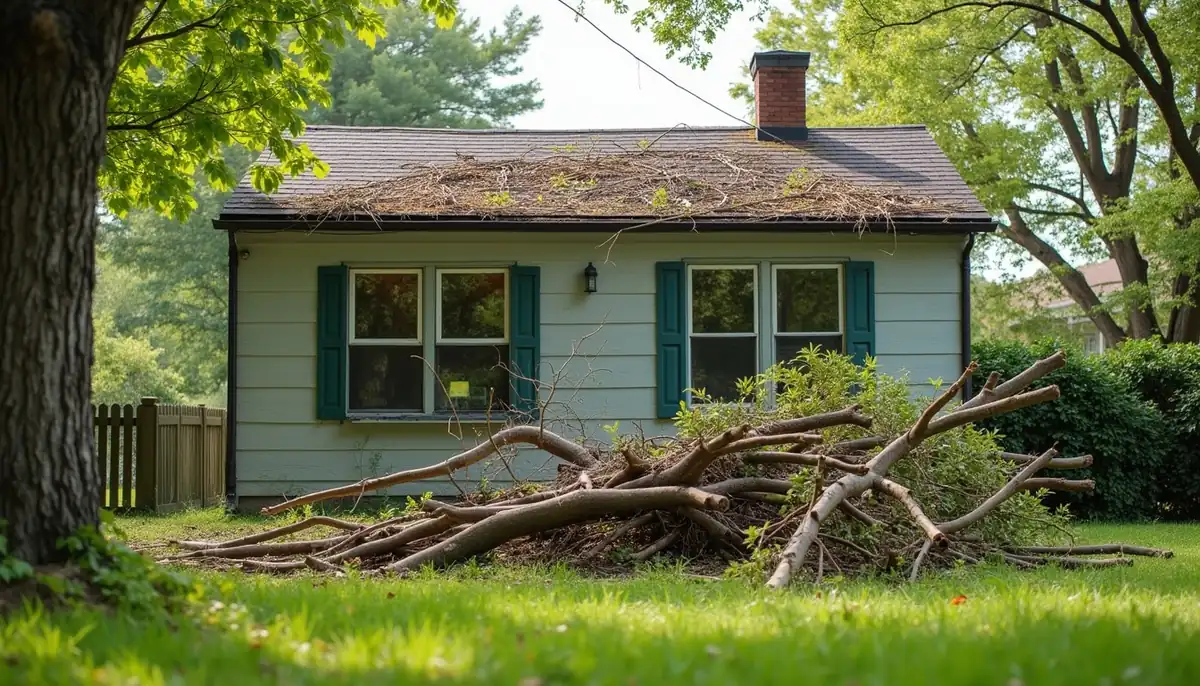
- Overhanging tree limbs and climbing plants that reach the roof
UC IPM says rats of either species, especially young ones, can squeeze beneath a door with only a 1/2 inch gap; our guide to how small a hole a rat can fit through compares the measured gaps.
Do rats leave your attic during the day?
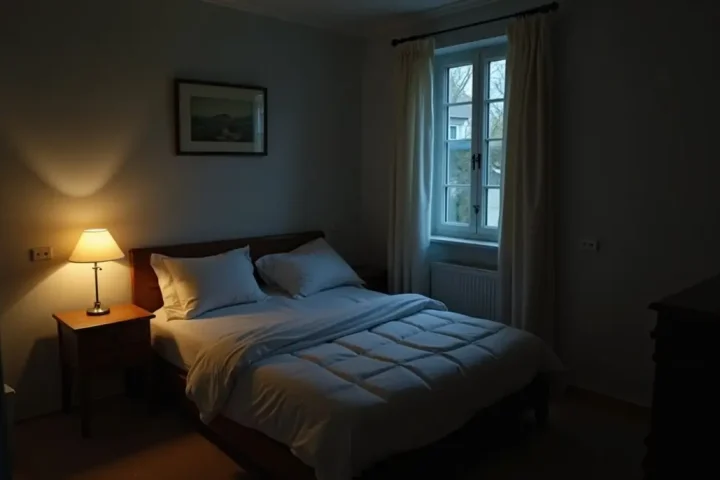
No, it is the other way round. Roof rats rest in the attic by day and go out at night: UC IPM says that when nesting in trees or attics they climb down to the ground to forage, and ICWDM says they will travel 100 to 300 feet for food. That is why the noise is loudest after dark. In our analysis of hour-stamped iNaturalist records, roof rats peak between 3 am and 6 am at 2.95 times their usual share of records, set out in full in when rats are active, hour by hour.
Is it common to have rats in your attic?
In roof rat country, yes. ICWDM says sounds in the attic are often the first indication of roof rats in a residence, heard when everyone is asleep and the house is quiet, and UC IPM says roof rats typically nest in attics, wall voids and ceiling voids. Outside that range, attic rats are less common, and the noise is more often mice or squirrels.
Can rats in the attic get into the house, or make you sick?
They can come down. UC IPM lists cabinets and wall voids alongside attics as roof rat nest sites, and ICWDM says rats living in the attic sometimes get into the kitchen and feed on stored food. ICWDM lists murine typhus, leptospirosis, salmonellosis, rat-bite fever and plague among the diseases roof rats are implicated in, and CDC says rat-bite fever spreads through bites, scratches, or contact with a rodent’s saliva or pee. The practical risk is in handling droppings, nests and dead rats, so clean up with CDC’s wet method: ventilate for 30 minutes, wear rubber or plastic gloves, soak droppings and nesting material with disinfectant or 1 part bleach to 9 parts water for 5 minutes, and never sweep or vacuum dry material. Anyone unwell after rodent contact should see a doctor.
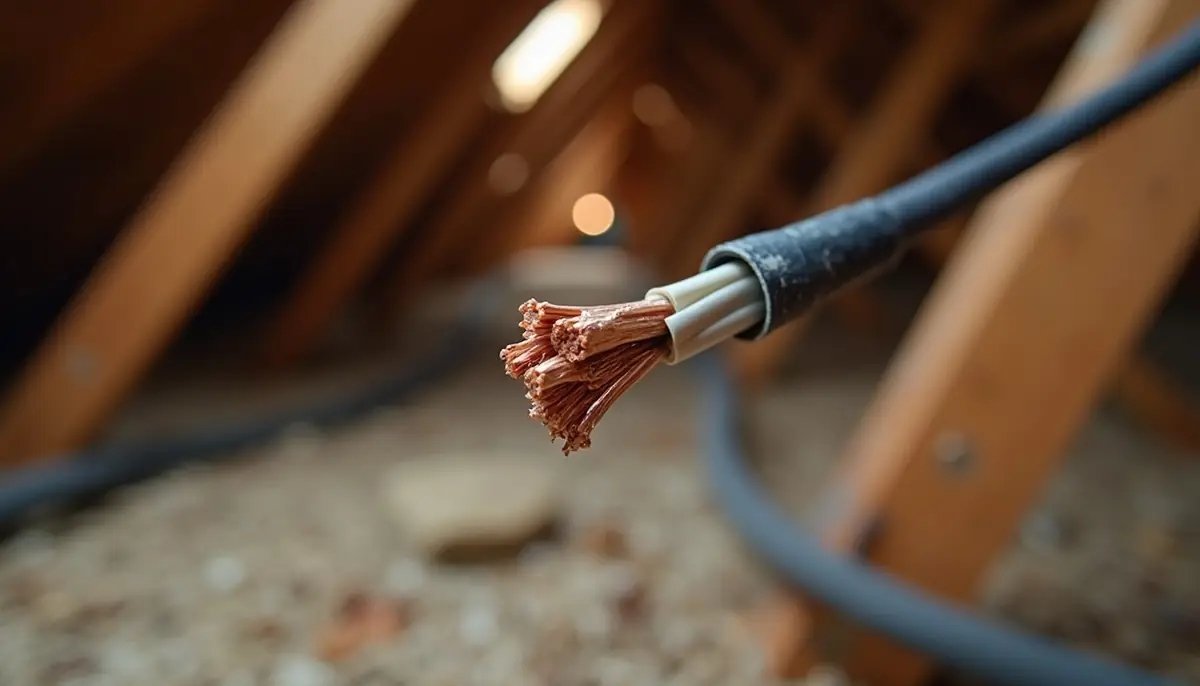
The bigger hazard is the wiring. UC IPM says rats gnaw electrical wires, causing sparks and fires, and may even chew natural gas lines. If you find bare copper in the attic, have an electrician look before you treat it as a pest job only; why rats chew wires and the fire risk explains the teeth behind it.
How do I get rid of rats in my attic?
- Trap first, on the rafters. ICWDM says attic and garage rafters close to the infestation are the best trapping sites in homes, and that traps should sit on beams, pipes and ledges that rats travel; traps may be nailed to beams or wired to pipes. Use rat-sized snap traps: UC IPM spaces them about 10 to 20 feet apart.
- Prebait. Roof rats avoid new objects; ICWDM says it may take several days before they approach a trap. UC IPM suggests leaving traps baited but unset until the bait has been taken several times, and doubling the number of traps if every bait is taken. ICWDM lists raisins, prunes, peanut butter and nutmeats as good baits.
- Skip poison in the attic. ICWDM recommends traps in homes because there is no risk of a rat dying in an inaccessible place and creating an odour problem. Any bait must follow its label; in California, UC IPM says almost all bait used around structures must be in bait stations within 50 feet of a structure.
- Seal once catches stop. ICWDM says to close every roof-line opening over 1/2 inch with concrete mortar, steel wool or metal flashing, and UC IPM advises sealing all holes over 1/4 inch to exclude rats and mice together. Cover vents with 16-gauge or 18-gauge, 1/2 inch galvanized mesh, never chicken wire. UC IPM warns rats chew through plastic, foam, wood and caulk.
- Cut the bridges. UC IPM’s quick tips say to prune limbs within 3 feet of a roof; its detailed text says overhanging limbs within 6 feet should be removed, which also blocks squirrels. Remove vines from walls. Rat guards on utility lines are an option, but ICWDM warns they can fray insulation and cause short circuits, so UC IPM advises calling the utility company.
- Clean up and decide on the insulation once the rats are gone; how much to replace is covered in our guide to attic rodent clean-up for mice, which applies to rats too.
- Confirm. CDC: “If no rodents are captured for a week and there are no new signs of rodents, the rats are gone.” UC IPM notes traps can be left set indefinitely in attics where rats have been a problem.
The house-wide version of this plan, including outdoor food sources, is in how to get rid of rats step by step.
Fast, natural and other shortcuts
There is no fast fix: roof rat neophobia means traps can sit untouched for days. ICWDM’s roof rat chapter is blunt about alternatives: ultrasonic devices have not been proven to control rats, lights and other sounds are of limited value, model owls, snakes and cats are of no value, and no repellents are effective. Cats and barn owls take some roof rats, but ICWDM rates predators of little, if any, value in controlling them. If rats return after a clean-out, the usual causes are listed in why rats keep coming back and the fix for each.
What it costs to have a professional do it
| Job | Published estimate |
|---|---|
| Rat control, typical job | $395 to $1,500 |
| One-visit attic treatment | $300 to $525 (Fixr) |
| Inspection | $75 to $150, often credited against the job |
| Whole-building exclusion | $1,000 to $3,000 |
| Clean-up and sanitising | $200 to $700 minor; $1,500 to $4,000 after a large infestation |
These are contractor-reported estimates, not measured prices, taken from our rat exterminator cost breakdown. Compare quotes line by line, since exclusion and clean-up are often separate.
Frequently asked questions
What should I do if I hear rats in my attic?
Confirm it first: look in daylight for half-inch pointed droppings, flattened runways in the insulation and gnawed wiring. Then set rat snap traps on the rafters near those signs, prebaited and unset for a few nights because roof rats avoid new objects. Check wiring for bare copper, and seal the openings only once the traps stop catching.
How long can rats live in an attic without food?
No extension source we read gives a survival time, and the question rarely arises: attic rats feed elsewhere. ICWDM says roof rats usually need water daily and will travel 100 to 300 feet for food, climbing down from the attic at night to forage. That is why trapping comes before sealing.
Should I seal the holes before or after trapping?
After. Sealing first shuts rats in with the wiring, and UC IPM notes a rat may gnaw a wooden door to enlarge a gap. Trap until catches stop and the CDC test of a week with no captures and no new signs is met, then close every opening over 1/2 inch with metal, mortar or flashing, and the vents with 1/2 inch galvanized mesh, as ICWDM and UC IPM advise.
Is it mice or rats in my attic?
Droppings settle it fastest. Nebraska Extension gives 1/8 to 1/4 inch for house mice; ICWDM gives about 1/2 inch for roof rats and up to 3/4 inch for Norway rats. Mice need gaps only 1/4 inch tall, says UC IPM, so the entry holes alone may not tell you.
Sources
- University of California Statewide IPM Program, Pest Notes: Rats, UC ANR Publication 74106 (N. Quinn, 2024), and Pest Notes: House Mouse, Publication 7483.
- Internet Center for Wildlife Damage Management, Roof Rats (identification, biology, damage identification, prevention and control), based on R. E. Marsh in Prevention and Control of Wildlife Damage (1994).
- Internet Center for Wildlife Damage Management, Norway Rats, and Tree Squirrels (biology and damage identification).
- University of Nebraska-Lincoln Extension, Controlling House Mice, G1105.
- Centers for Disease Control and Prevention, How to Clean Up After Rodents; Trap Up; About Rat-Bite Fever.
- Fixr and other published cost guides, as compiled on The Pest Control Brief rat exterminator cost page.
- The Pest Control Brief analysis of iNaturalist research-grade records, pulled October and November 2026.