Mouse Droppings in Kitchen Drawers: How They Get In and What to Clean
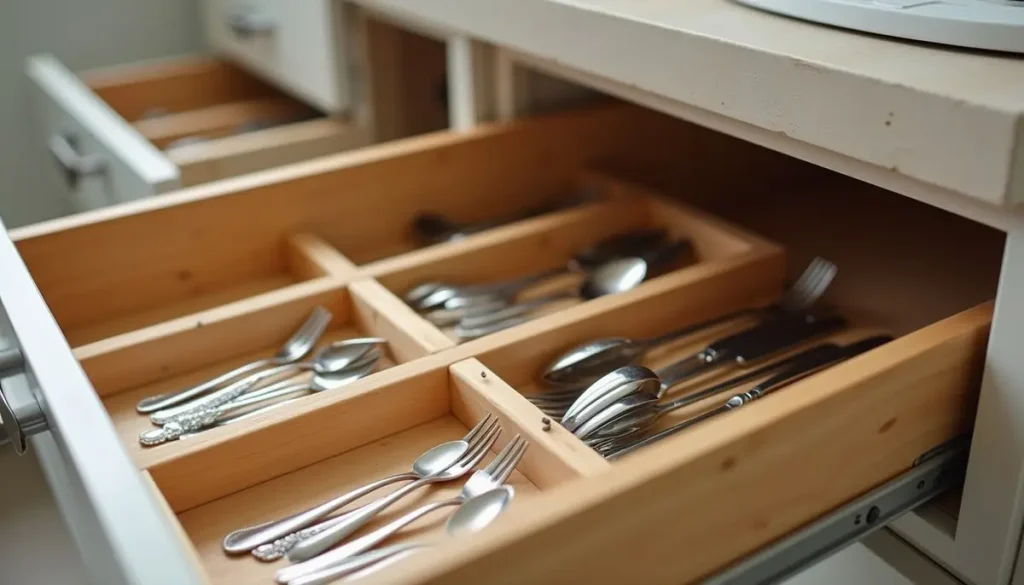
Mouse droppings in a kitchen drawer mean a mouse has been walking through it, almost always from behind, through the open back of the base cabinet or the void under the sink and dishwasher. Do not sweep or vacuum them. Air the kitchen, soak the droppings with disinfectant for 5 minutes, wipe them up wearing gloves, then deal with what was in the drawer: open food goes in the bin, and hard utensils get a hot wash. Trap behind the drawers and seal the route in.
What was in the drawer: keep, wash or discard
| Item | Keep or discard | How to clean |
|---|---|---|
| Food in paper, cardboard or plastic packets | Discard, even if it looks untouched | FDA: “Throw away food products in plastic and paper containers” exposed to rodents |
| Undamaged metal cans and sealed glass jars | Keep | FDA: wash with soap and hot water, rinse, then sanitise by boiling for 2 minutes or soaking 15 minutes in 1 cup of unscented bleach per 5 gallons of water |
| Dented, rusted, swollen or punctured cans; jars with broken seals | Discard | FDA lists all of these as throw-away |
| Metal cutlery, glass, ceramic, hard plastic utensils | Keep | Hot soapy wash or a full dishwasher cycle; sanitise as FDA describes for containers if droppings were on them |
| Wooden spoons and boards with urine staining or gnawing | Discard if stained or gnawed | We found no agency guidance on salvaging wood; binning stained or gnawed pieces is the cautious choice |
| Tea towels, oven gloves, cloth napkins | Keep | CDC: launder in hot water and detergent, then machine dry on high or dry in the sun |
| Recipe cards, manuals, papers | Keep if lightly soiled | UC hantavirus guidance: leave in sunlight for several hours or in a rodent-free indoor area for about 1 week, then wipe with a disinfectant-moistened cloth |
| Drawer liners, paper lining, nest material | Discard | Wet with disinfectant first, then bag |
Compiled by The Pest Control Brief from FDA guidance on food exposed to filth (rats, mice and other rodents), CDC How to Clean Up After Rodents, and the University of California hantavirus fact sheet.
How do I clean a drawer that has mouse droppings?
CDC’s clean-up rules apply to drawers exactly as to floors. Its guidance names cabinets and drawers specifically: “Clean hard surfaces like countertops, cabinets, and drawers with a disinfectant.”
- Air the room. CDC says to open doors and windows for 30 minutes before cleaning and to leave the room while it airs.
- Glove up. Rubber or plastic gloves, per CDC.
- Wet everything first. Spray the droppings, any urine marks and nest material with a disinfectant or a fresh bleach solution of 1.5 cups of household bleach per gallon of water (1 part bleach to 9 parts water). Let it soak for 5 minutes or the time on the disinfectant label.
- Wipe, do not sweep. CDC: “Don’t vacuum or sweep rodent urine, droppings, or nesting materials.” Pick the wet material up with paper towels and bag it.
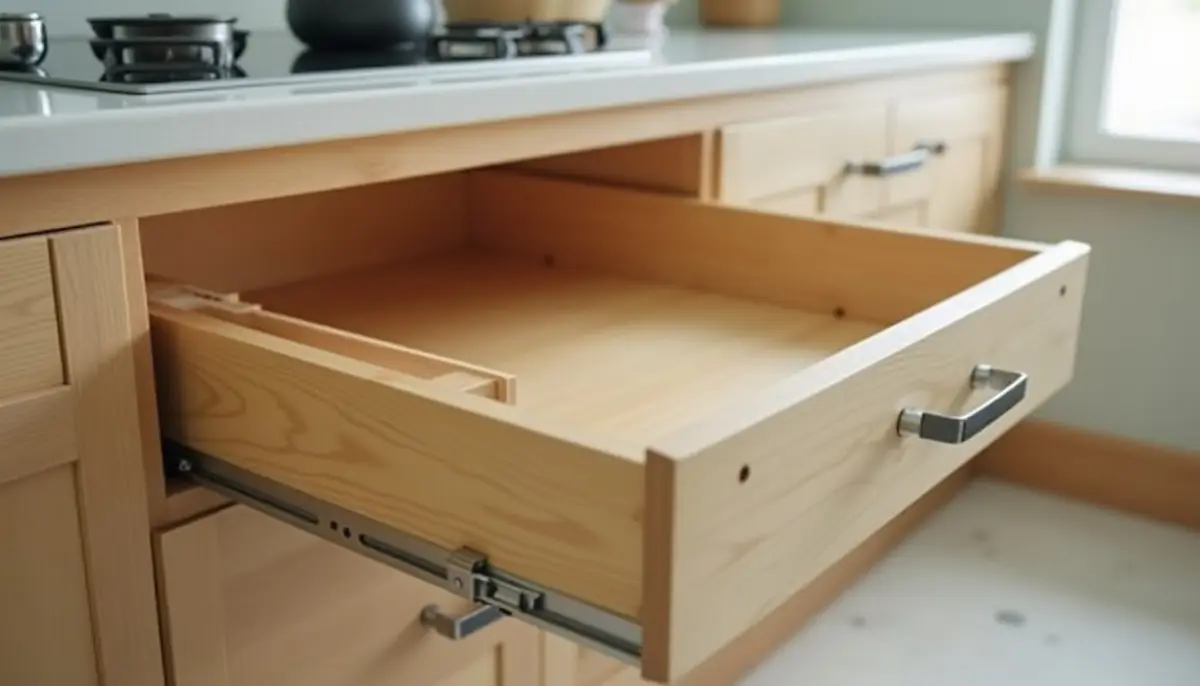
- Pull the drawer right out. Droppings in a drawer usually mean more in the cabinet cavity behind and below it, on the drawer runners and on the cabinet floor. Spray and wipe the cavity the same way.
- Wash the drawer and its contents. Use the table above, then disinfect the drawer box inside and out, including the underside.
The wet method is about dust. CDC’s clinician brief says people can catch hantavirus by breathing in contaminated air when cleaning up after rodents, and by touching contaminated objects and then their nose or mouth. The house mouse is not on CDC’s list of US hantavirus carriers, but the same droppings can carry salmonella and LCM virus, so the protocol applies whoever left them. The full CDC dropping clean-up protocol and when to hire it out covers heavy contamination.
How mice get into kitchen drawers
Very rarely through the front. Behind the front, the drawer box sits in an open cabinet carcass, and many base cabinets have thin or partial backs with gaps where plumbing, gas and electrical lines come through the wall. UC IPM says house mice can squeeze under gaps a quarter of an inch tall and through openings 3/8 inch wide, and Nebraska Extension says they can squeeze through openings slightly larger than 1/4 inch in diameter. A mouse comes out of the wall through a pipe gap and climbs into the back of the drawer. UC IPM describes them as excellent climbers that can run up any rough vertical surface, so the drawer runners are a ladder.
The routes to check, in order:
- Under the sink. Drain and supply lines run through holes often bigger than the pipe, and UC IPM sets 1/4 inch as the gap to seal. That void also connects to the space behind the dishwasher, which is why how mice get into dishwashers and what to clean overlaps with this problem.
- Behind the toe kick. The space under base cabinets is open from one end of a run to the other.
- Behind the cooker. The gas line and cable gaps behind a range lead into the adjacent cabinets; a mouse nesting in the stove drawer is covered in mice in a stove or oven and safe clean-up.
Cutlery drawers sit on the route and collect crumbs in their organisers, and UC IPM says house mice eat up to 20 per cent of their body weight daily in small meals; what mice eat and how little they need explains why crumbs alone can sustain one.
Do mouse droppings mean infestation?
They mean at least one mouse is or was using the drawer, but not necessarily many. Nebraska Extension says house mice deposit approximately 50 to 75 pellets a day as they explore, and that the droppings usually do not collect in piles. A scatter of 20 to 30 droppings across a cutlery tray is therefore consistent with a single mouse on a single night. What tells you more is spread: droppings in several drawers, under the sink and along the back of the worktop point to an established population. Our guide to how many mice count as an infestation sets out the thresholds.
Make sure the droppings are from a mouse. Nebraska Extension says mouse droppings average 1/8 to 1/4 inch long with one or both ends narrowing to a point, and ICWDM says cockroach droppings are 1/8 to 1/4 inch too but show distinct ridges along their length and squared-off ends under a magnifying glass. How to tell mouse, rat and cockroach droppings apart has the size comparison.
Is the mouse still there?
Clean the drawer fully, then check it two or three days later. Any new dropping on a clean surface is current activity. Fresh droppings are black, shiny and soft; old ones turn dull and hard, and how to tell if mouse poop is old or fresh gives the ageing sequence. Season matters too: in our analysis of US research-grade iNaturalist records, house mouse records rise from an index of 40 in June to 203 in November, against a yearly average of 100, matching UC IPM’s account that house mice move indoors in autumn as nights cool. These records show when people notice mice, not indoor infestation rates.
Traps behind the drawers, then seal
- Take out the bottom drawer of the affected run (or the drawer itself) and set two or three snap traps on the cabinet floor behind it, against the back and side panels. UC IPM advises placing traps close to walls so mice pass over the trigger, and spacing them no more than about 10 feet apart. How many mouse traps a kitchen needs works through the count.
- Set more under the sink, check daily, keep traps out of reach of children and pets, and keep loose poison out of food cabinets.
- When catches stop, seal pipe and cable gaps over 1/4 inch with metal: UC IPM says steel wool makes a good temporary plug and that foam, rubber, vinyl and wood are unsuitable on their own. The full sequence is in how to get rid of mice in order of what works.
- Use CDC’s all-clear test: “If no rodents are captured for a week and there are no new signs of rodents, the rats are gone.” The same week applies to mice.
What can I put in my dresser drawers to keep mice out?
Nothing you place inside reliably repels them. ICWDM says no repellents are registered for deer or white-footed mice, and UC IPM says there is little evidence that sound, magnetic or vibrating devices drive house mice out. What works for a bedroom or garage dresser is physical: store clothes in sealed plastic tubs or zipped bags, keep the dresser a few inches off the wall, and check the back panel for gnaw holes. UC IPM says mice nest in finely shredded paper and fibres and suggests searching drawers for nests, so a drawer of soft fabric is exactly what a nesting female looks for.
How long do mouse droppings stay toxic?
The infection risk falls quickly. The University of California hantavirus fact sheet says hantaviruses have been shown to stay viable for 2 to 3 days at normal room temperature, that sunlight shortens this and freezing lengthens it, and that because survival is measured in hours or days, only active infestations of infected rodents are likely to lead to infection. UC IPM notes house mouse urine is a major source of allergens, and the wet clean costs nothing extra, so treat every dropping as if fresh. The other signs of mice around the house help show whether the activity is current.
Frequently asked questions
Can mice get in drawers?
Yes, and almost always from behind. Base cabinets have pipe and cable gaps at the back and open space under the toe kick, and UC IPM says house mice fit under gaps a quarter of an inch tall and climb any rough vertical surface. A mouse walks along the cabinet floor and climbs into the drawer box from the back, which a closed drawer front does nothing to stop.
Do I need to throw away everything in a drawer with mouse droppings?
No. FDA advises discarding food in paper and plastic packaging that rodents have reached, and damaged cans or jars, but undamaged metal cans and sealed jars can be washed and sanitised. Metal, glass and ceramic utensils just need a hot wash. Stained or gnawed wooden items and drawer liners are the things to bin.
Is it safe to use cutlery that had mouse droppings on it?
Yes, once it has been washed. Wear gloves, wet the droppings with disinfectant before wiping them out of the drawer, then run the cutlery through a hot dishwasher cycle or wash it in hot soapy water. FDA’s sanitising options for food containers, 2 minutes in boiling water or 15 minutes in 1 cup of unscented bleach per 5 gallons, add an extra margin.
Why do I find mouse droppings but never see the mouse?
House mice are active mostly at night, says UC IPM, and Nebraska Extension notes they leave the nest up to 40 times a day while seldom going more than 50 feet from shelter and food. A mouse can visit a drawer nightly from a nest in the wall without crossing open floor in daylight.
Sources
- Centers for Disease Control and Prevention, How to Clean Up After Rodents, and Trap Up rodent control guidance.
- Centers for Disease Control and Prevention, Clinician Brief: Hantavirus Pulmonary Syndrome.
- US Food and Drug Administration, How to Handle Food Products that Have Been Exposed to Filth (content current as of August 2024).
- University of California Office of the President, Hantavirus fact sheet.
- University of California Statewide IPM Program, Pest Notes: House Mouse, UC ANR Publication 7483.
- University of Nebraska-Lincoln Extension, Controlling House Mice, G1105.
- Internet Center for Wildlife Damage Management, House Mice, and Deer and White-footed Mouse Damage Prevention and Control Methods.
- The Pest Control Brief analysis of iNaturalist research-grade records, pulled October 2026.