Mouse Trap Not Working? 9 Reasons Mice Avoid It
A mouse trap that is not working is usually in the wrong place, too far from the next trap, overloaded with bait or set too stiff, and the fix is to move traps flush against the wall on the route the droppings mark, space them 6 to 10 feet apart, use a pea-sized dab of bait and set the trigger lightly. Extension guidance from UC IPM and the Internet Center for Wildlife Damage Management covers every one of those points. If nothing is touched after a week of correct placement, suspect a rat, which avoids new objects for days, or competing food.
Start with what the trap is telling you. Each pattern below points to a different cause.
What the trap is telling you
| What you find | Most likely cause | Fix |
|---|---|---|
| Bait gone, trap still set | Too much bait, bait not fixed to the trigger, or trigger set too stiff | Pea-sized dab pressed onto the trigger; set the trigger lighter; use a wide or expanded trigger plate |
| Trap sprung, nothing in it | Mouse came from the side or jumped it | Trigger end against the wall; add a second trap 1 to 2 inches away |
| Bait untouched for days, droppings nearby | Trap off the travel route, too few traps, or better food nearby | Move traps onto the wall line where droppings are; add traps; remove competing food |
| Nothing touched, droppings longer than 1/4 inch | A rat, which avoids new objects | Rat-size traps, baited but unset for several nights |
| Caught a few, then nothing, but signs continue | Remaining mice avoiding used traps, or new mice entering | Clean or replace traps, move them, and seal gaps over 1/4 inch |
| Glue boards catch only small mice | Adults detect and avoid the glue | Switch to snap traps |
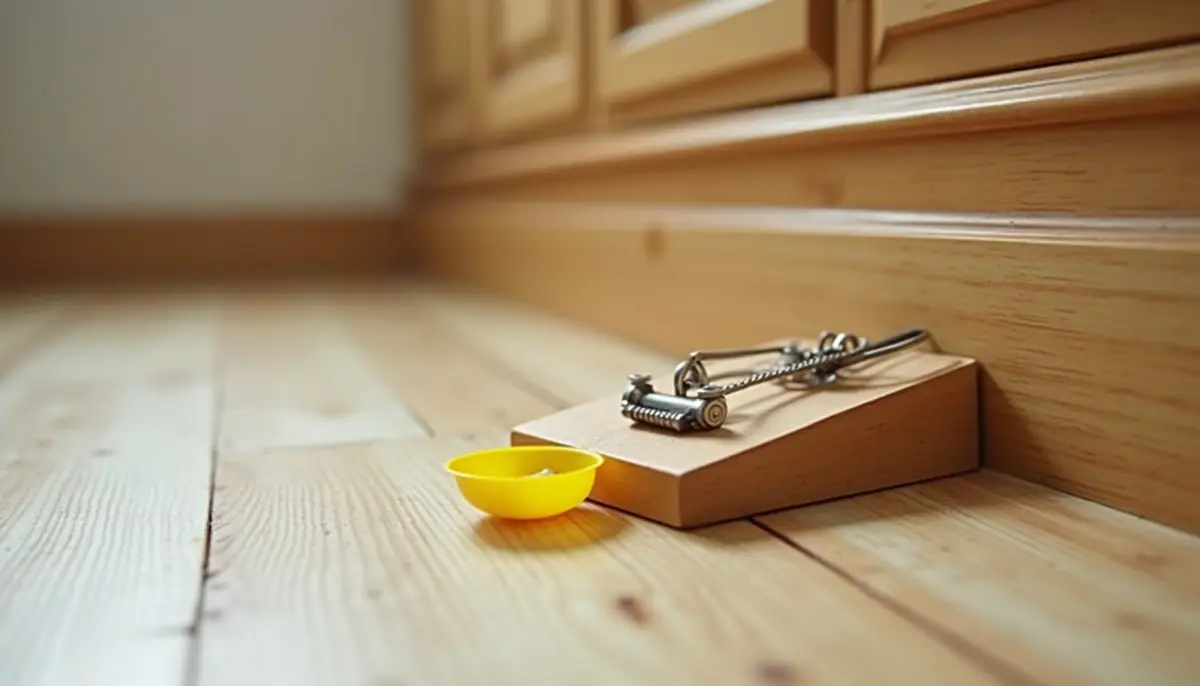
The nine reasons, and the fix for each
1. The trap is not on the run
House mice travel a small area. The ICWDM house mouse chapter says one mouse covers an area averaging 10 to 30 feet in diameter in its daily activity, and UC IPM says they “seldom venture more than 30 feet from their nest sites and food supply.” A trap in the middle of the kitchen floor, or in the room next door, can sit untouched while mice run 6 feet away. Put traps where the droppings are, along walls, behind appliances and in dark corners; our guide to mouse trap placement walks through each spot.
2. The trigger faces the wrong way
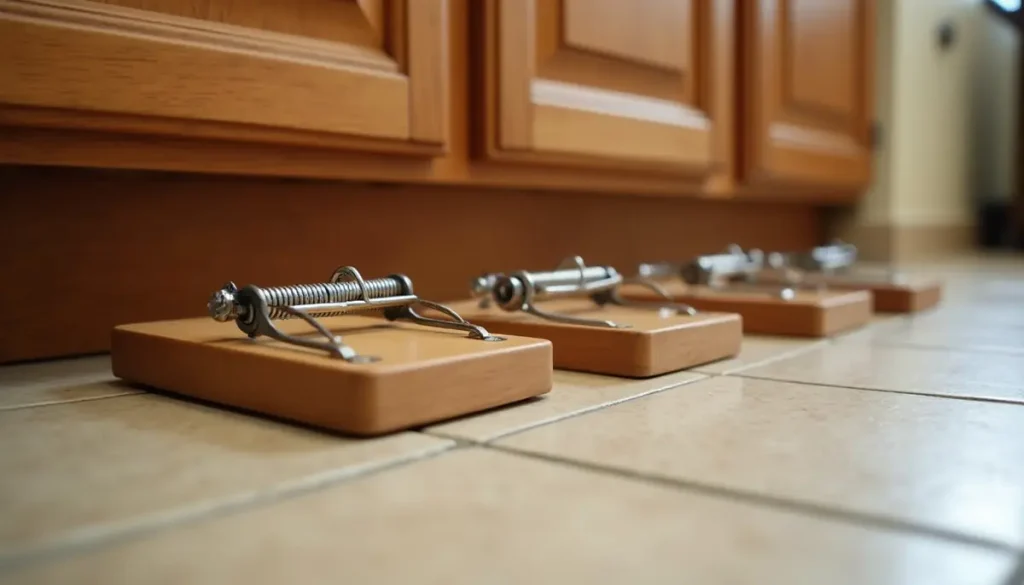
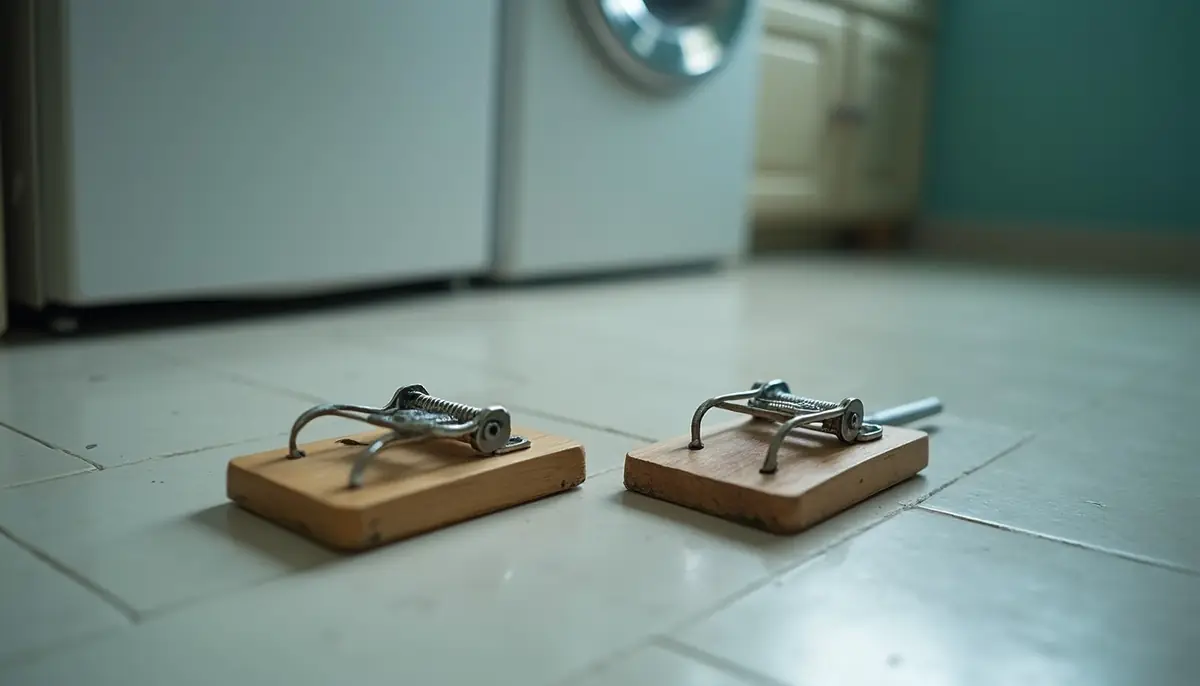
Mice run along walls, touching them. ICWDM advises placing traps so that “when mice follow their natural course of travel, such as close to a wall, they pass directly over the trigger.” Set each trap at right angles to the wall with the trigger end almost touching it, as UC IPM describes for rats. A trap set parallel to the wall works only in pairs, so it catches a mouse approaching from either direction.
3. Too few traps, too far apart
One or two traps rarely work. UC IPM says to “use enough traps to make the trapping period short and decisive” and to space them no more than about 10 feet apart; ICWDM gives 6 feet. UC IPM also suggests pairs set 1 to 2 inches apart for mice that jump obstacles. Our mouse trap calculator by wall length turns those spacings into a count for each room.
4. Too much bait, or bait that lifts off
This is the usual cause of the clean-licked trap. UC IPM warns: “If you use too much, the house mouse may be able to remove it without triggering the trap.” Use a pea-sized amount pressed into the trigger, as UC IPM’s rat note specifies, and tie solid baits on: ICWDM lists peanut butter, marshmallows, hot dog, bacon or nutmeat “tied securely to the trigger,” and notes that “baits that are stale lose their effectiveness.” UC IPM adds that a ball of cotton wool or dental floss works as bait because breeding females are “highly motivated to nest-build.”
5. The trigger is set too stiff, or is too narrow
UC IPM says triggers “should be set lightly so the traps spring easily,” and that mouse traps “with a wide trigger plate have higher catch rates.” ICWDM suggests enlarging a narrow trigger with a square of cardboard, metal or wire screen fitted just inside the wire bar. In rat trials reported by ICWDM, expanded-trigger snap traps had fewer bait losses and almost twice the capture rate of narrow-trigger versions.
6. There is better food nearby
ICWDM says mice “may reject bait simply because it does not taste as good as other available foods,” and that good sanitation increases the effectiveness of traps by reducing competing food. Lidded containers for cereal, pet food and birdseed, and a sweep under the toaster and the stove, make a dab of peanut butter the best meal on the route. Our page on what attracts mice to a house lists the food sources worth closing off first.
7. The trap went off once and taught them
House mice are not very wary. ICWDM’s biology section says they “quickly detect new objects but do not fear them” and almost immediately enter bait stations. Even so, it advises leaving mouse traps baited but unset until bait has been taken once, to reduce the chance of a mouse escaping and becoming trap-shy. If a trap has fired empty, re-bait it, set it lighter and add a second trap beside it.
8. The traps have caught the wrong mouse first
One reason is rarely mentioned. ICWDM notes that “female mice tend to avoid traps that have caught dominant males,” and advises checking the sex of the mice you catch: if catches are not balanced between males and females, “it is likely that you are missing a family unit.” Clean used traps with hot water and a stiff brush, or replace them, and move them a few feet along the run.
9. It is not a mouse, or it is a different mouse
Rats behave very differently. UC IPM says rats “quickly detect and tend to avoid new objects and new foods,” so they “often avoid traps and baits for the first several days (and maybe weeks),” and that a rat which sets off a trap without being caught becomes “very difficult to catch” again. UC IPM also notes rat gnaw marks are about 1/6 inch wide against a mouse’s 1/12 inch. Nebraska Extension puts mouse droppings at 1/8 to 1/4 inch long, so anything bigger points to a rat; check the pellets against our mouse, rat and cockroach droppings guide before buying more mouse traps.
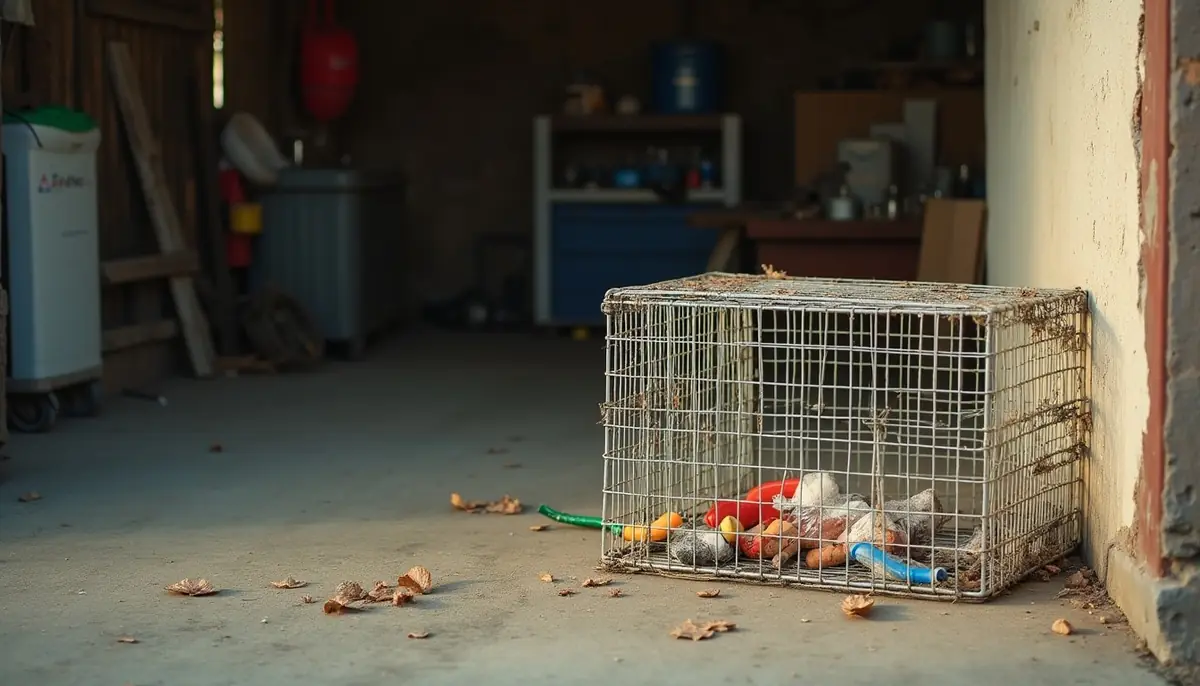
Outdoors and in sheds, the animal may be a deer mouse or a vole, which our page on telling voles from mice covers.
Does human scent stop mice using a trap?
The evidence says no. Several top-ranking pages tell readers to wear gloves so mice will not smell people on the trap. ICWDM’s Norway rat chapter states the opposite for rats: “Odors from humans or dead rats are not known to reduce success of trapping.” We found no extension source that makes the human-scent claim for house mice. The smell that does matter, per ICWDM, is that of the mice already caught, which is why rotating and cleaning traps beats wearing gloves. Wear gloves anyway when you handle dead mice and droppings, and follow the CDC method for cleaning up mouse droppings.
Set at dusk, check at dawn
Our analysis of hour-of-day iNaturalist research-grade records shows when people notice house mice. Against the baseline of all US records, house mouse records run at 2.35 times their expected share between midnight and 3 am, and at 0.70 between 9 am and noon. These are moments people saw and logged a mouse, not a measure of true activity, and our page on whether mice are nocturnal covers the behaviour in detail, but they match Nebraska Extension’s advice that mice are “most active before dawn and after dusk, so check traps in the morning to maximize success.” A trap set in the evening and checked at breakfast has had the whole night to work.
When traps alone will not finish it
Traps remove mice; they do not stop new ones arriving. UC IPM calls exclusion “the most successful and permanent form of house mouse control” and says to close gaps and openings larger than 1/4 inch with metal or concrete, not foam.
The full sequence, trapping and sealing together, is in our plan to get rid of mice for good.
Once catches stop, keep monitoring before you call it done; our checklist on how to tell if mice are gone sets out the tests.
Call a licensed professional if two weeks of correctly placed traps have not slowed the droppings, if signs appear in several rooms or floors, or if the animal turns out to be a rat living in the walls. Our breakdown of what pest control for mice costs shows what a professional trapping programme involves.
Frequently asked questions
What to do if a mouse trap doesn’t work?
Move it before you change anything else. Put it flush against the wall where droppings are, trigger end touching the wall, add a second trap within 1 to 2 inches, and reduce the bait to a pea-sized dab pressed onto the trigger. Set the trigger lightly. If bait is still untouched after several nights, check the droppings: a rat needs different traps and patience.
Why are the mice not getting caught in traps?
Most often the traps sit off the mice’s route, are too far apart, or carry too much bait. House mice cover an area only 10 to 30 feet across, per ICWDM, so a trap 15 feet from the droppings may never be passed. ICWDM also notes that female mice tend to avoid traps that have caught dominant males, so clean or move used traps.
What is the 5 day rule for mice?
It is an online rule of thumb that five days without catches or new droppings means the mice are gone. We have not found it in CDC or extension guidance, and Nebraska Extension notes poisoned mice only begin dying after about five days. Most guidance uses at least a week of no signs; our guide to telling when mice are gone explains the tests.
Why is my mouse not going in the trap?
A mouse that ignores an enclosed or live trap usually has better food nearby or a route that bypasses the trap. ICWDM says mice may reject bait that tastes worse than other available food. Remove crumbs and pet food, put the trap’s entrance against the wall on the run, and try cotton wool as bait, which UC IPM says appeals to females building nests.
Sources
- University of California Statewide IPM Program, Pest Notes: House Mouse, UC ANR Publication 7483, updated July 2025.
- University of California Statewide IPM Program, Pest Notes: Rats, UC ANR Publication 74106, updated June 2025.
- Internet Center for Wildlife Damage Management, House Mouse Biology and House Mouse Damage Prevention and Control Methods.
- Internet Center for Wildlife Damage Management, Norway Rat Damage Prevention and Control Methods.
- Nebraska Extension, G1105 Controlling House Mice, revised March 2012.
- The Pest Control Brief analysis of iNaturalist research-grade records, pulled November 2026.