How to Tell if Mouse Poop Is Old: Fresh vs Old Droppings
Fresh mouse poop is black, glistening and soft like putty; old mouse poop is dry, hard, dull and grey or whitish, and crumbles when pressed. Utah State extension says droppings turn dull within a few days to a week, or a few hours in warm, dry air, and go whitish after a few weeks. The surest test is to clean a spot and check it again: anything new is current activity.
Fresh or old: the identification key
Work down the table with a torch and gloves. One feature can mislead; three that agree are a reliable read.
| Feature | Fresh (hours to a few days) | Old (a week to weeks) | Source |
|---|---|---|---|
| Colour | Black or nearly black | Dull; grey, dusty or whitish | Utah State; UF/IFAS ENY-224 |
| Surface | Glistens, looks wet or shiny | Matte, no shine | Utah State; Washington WDFW |
| Texture when pressed | Soft, putty-like, smears | Hard, dry; crumbles to powder | UF/IFAS ENY-224; Washington WDFW |
| After rain or damp | Stays soft | Can look new again but still crumbles | Utah State; Washington WDFW |
| Where found | On surfaces you cleaned recently | Only in places not cleaned for weeks | CDC; Utah State |
| Company nearby | Fresh gnaw marks, about 1/32 inch wide | Weathered gnawing, dust over everything | Nebraska Extension G1105 |
Compiled by The Pest Control Brief from Utah State University Extension, UF/IFAS ENY-224, Washington Department of Fish and Wildlife, Nebraska Extension G1105 and CDC guidance.
Colour alone is the weakest clue. Nebraska Extension notes droppings are usually black but vary with what the mouse has been eating, so a brown dropping is not necessarily an old one. Texture is the best single clue, and the age test below is better still.
How fast mouse droppings age
Utah State University’s rat and mouse IPM manual gives the clearest timeline from an extension source:
- At first: moist, soft, black or nearly black, and they glisten or look wet.
- After a few days to a week: dry, hard and dull rather than shiny. In warm, dry air the shine can go after only a few hours.
- After a few weeks: mouse droppings become hard, dry, and dull or whitish. Rat droppings at this stage go grey, dusty and crumbly.
Washington’s Department of Fish and Wildlife gives the same sequence for rats: putty consistency when fresh, dry and dull after a few days, grey and crumbling after a few weeks. The practical meaning is that you can separate “this week” from “this season”, but no visual test will tell you whether a dry dropping is three weeks or three years old. In a hot attic, a dropping can look old by the following afternoon.
Does old mouse poop turn white?
It can. Utah State describes old mouse droppings as hard, dry and “dull or whitish”. A whitish, chalky dropping that powders under light pressure is old. A pale dropping that is still soft is not, and may simply reflect diet.
The clean-and-recheck test: the only way to be sure
Every extension source that addresses the question lands on the same method. Utah State advises removing droppings so that fresh droppings are apparent during future inspections, and the CDC states that droppings present after cleaning indicate active rodent presence.
- Clean one defined area safely: a cupboard floor, a section of skirting, the top of a water heater.
- Note the date. Check the same spot each morning for a week.
- Any new dropping on that clean surface is current activity, whatever it looks like.
- A full week with nothing new, plus no catches in traps, is the CDC’s threshold for rodents being gone.
The scale of what you find on the clean patch tells you something too. Nebraska Extension says a house mouse leaves about 50 to 75 droppings a day as it explores, so a handful after a week points to occasional visits, while dozens overnight mean a mouse is living close by. Our page on how many mice make an infestation explains why the count of droppings is a poor guide to the count of mice.
Checking texture safely
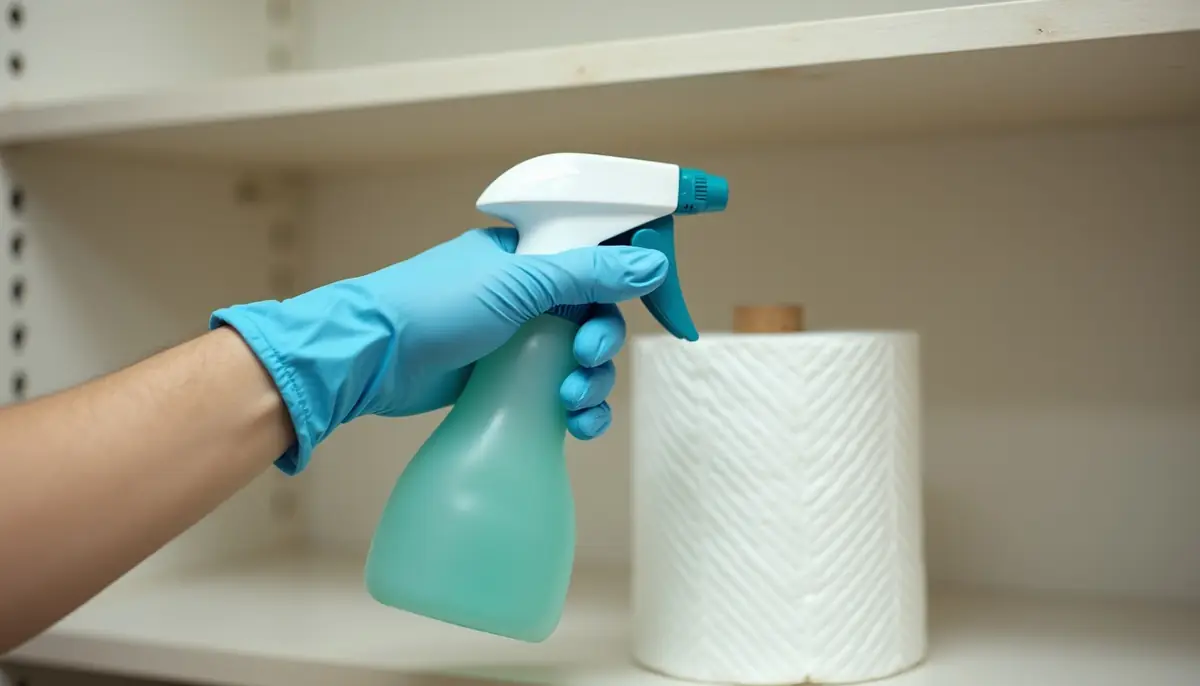
Do not pinch, sweep or vacuum dry droppings to test them. The CDC says not to vacuum or sweep rodent urine, droppings or nesting materials, because dried material can be stirred into the air.
The safe way to do the press test is to fold it into the cleanup. Following the CDC steps, air the room for 30 minutes, then soak the droppings with bleach solution (1.5 cups of household bleach to a gallon of water, or 1 part bleach to 9 parts water) for 5 minutes. Then press each one with the paper towel you are wiping it up with. Utah State notes that moistened old droppings may look new but will still be crumbly rather than soft, so a wetted dropping that collapses into grit is old and one that smears is fresh. The full protocol, including respirators for heavy contamination, is in our CDC hantavirus cleanup guide for mouse droppings.
Mouse poop or something else?
Age only matters once you know it is mouse poop. Length and shape settle most cases.
| Dropping | Length | Shape and tell | Source |
|---|---|---|---|
| House mouse | 1/8 to 1/4 in (3 to 6 mm); Utah State notes some reach 1/2 in | Rod-shaped, one or both ends pointed, smooth sides | Nebraska G1105; Utah State |
| Cockroach | 1/8 to 1/4 in (3 to 6 mm) | Distinct ridges along the length under a magnifier; rodent droppings are smooth | Wildlife damage handbook (Timm 1994); Utah State |
| Roof rat | About 1/2 in (13 mm) | Spindle or capsule shaped, pointed | UF/IFAS ENY-224; Utah State |
| Norway rat | About 3/4 in (19 mm) | Capsule shaped | UF/IFAS ENY-224; Utah State |
| Bat | Often confused with mouse droppings | Crushed, it shows sparkling insect fragments under a hand lens | Utah State |
Compiled by The Pest Control Brief from the sources named in each row.
A 1/4 inch dropping could be a mouse or a young rat, and a long single mouse dropping can overlap a small rat’s. Our rat vs mouse identification guide covers the animal itself.
The droppings identification chart, drawn to scale compares mouse, rat and cockroach side by side. Insect fragments in a dropping point to bats, which bring a different cleanup concern: the CDC links disturbed bat and bird droppings to histoplasmosis.
How long do mouse droppings stay fresh?
From a few hours to about a week. Utah State says droppings lose their shine after a few days to a week, and after only a few hours in warm, dry air. A dropping that is still soft and glistening was almost certainly left within the last day or two, which means a mouse used that route recently.
Is year old mouse poop still toxic?
The infection risk from old droppings is low, but the CDC cleanup steps still apply. A University of California hantavirus fact sheet, drawn from CDC guidance, says the virus has been shown to stay viable for 2 or 3 days at normal room temperature, that sunlight shortens this and freezing lengthens it, and that because survival is measured in hours or days, only active infestations of infected rodents are likely to lead to human infection. The CDC does not list the house mouse among the rodents that carry the hantaviruses behind pulmonary syndrome in North America; deer mice and white-footed mice are on its list. Old droppings and urine also carry allergens: UC IPM notes house mouse urine is a major source of allergens, linked to early onset of asthma in sensitive children. Wet them and wipe them; never sweep them dry.
What is the 5 day mouse rule?
A rule of thumb repeated online: if five days pass with no new droppings or catches, the mice are gone. We could not trace it to the CDC or an extension service. The CDC’s published threshold is longer: a full week with no captures and no new signs. Use the week, on surfaces you have cleaned, and our checklist on how to tell if mice are gone adds the flour-patch test.
Why do I see mouse poop but no mice?
Usually because mice are active when you are asleep. UC IPM says mice are most active at night, and our analysis of 3,650 US iNaturalist house mouse records with a recorded hour shows people record them at more than twice their usual share between midnight and 3 am, and at about 0.7 times it in mid-morning.
Daytime sightings carry their own meaning, set out in our page on what a mouse seen in daylight means. The other explanations for droppings without mice, in rough order of likelihood:
- The droppings are old. Dry, whitish, crumbling droppings in an unopened cupboard can date from a previous occupant. Clean and recheck before assuming anything.
- One mouse makes a lot of mess. At 50 to 75 droppings a day per Nebraska Extension, a single mouse can produce a handful in every drawer it visits.
- They are living in a void. Mice nesting behind cabinets or in wall cavities, where scratching gives them away leave droppings at the exits but are rarely seen.
- The mouse has died. A smell that builds over a few days is the usual sign; our guide to the dead mouse smell and how long it lasts covers finding it.
- It is not mouse poop. Ridged specks in a kitchen cabinet are cockroach droppings, a different problem.
If the recheck shows fresh droppings, the next step is trapping: a full plan to get rid of mice covers trap numbers, sealing and the order to do them in.
Our list of other signs of mice in the house helps confirm activity beyond droppings.
Frequently asked questions
How can you tell if mouse poop is old or new?
New droppings are black, shiny and soft like putty; old ones are dull, hard, grey or whitish and crumble. Utah State extension says they go dull within a few days to a week. The definitive test is to clean the area and check it each day: any dropping that appears on a clean surface is new.
Is hard mouse poop old?
Usually, yes. Washington’s Department of Fish and Wildlife says droppings become dry and hard after a few days. In warm, dry places such as attics, Utah State notes the shine can go within hours, so a hard dropping there may still be recent. Recheck a cleaned patch to be sure.
What does old mouse poop look like?
A grain-of-rice shape about 1/8 to 1/4 inch long, dull rather than shiny, grey, dusty or whitish, and crumbly. UF/IFAS describes old rodent droppings as grey, dusty and crumbling. Dampness can make old droppings look darker again, but they still crumble rather than smear.
Can old droppings mean mice are still there?
Not on their own. Old droppings show mice were present at some point, which is why the CDC treats droppings found after cleaning as the sign of active presence. If nothing new appears on cleaned surfaces for a week and traps stay empty, the droppings are most likely historical.
Should I vacuum old mouse droppings?
No. The CDC says not to vacuum or sweep rodent droppings, urine or nesting material, old or new. Air the room for 30 minutes, soak the droppings with a 1 to 9 bleach solution for 5 minutes, then wipe them up with paper towels and bag them.
Sources
- Utah State University Extension. IPM for Rats and Mice (Structural and Nuisance Pest ID Handbook), 2012.
- Koehler P.G., Kern W.H. Rat and Mouse Control, ENY-224. University of Florida IFAS Extension.
- Washington Department of Fish and Wildlife. Living with Wildlife: Rats.
- Vantassel S.M., Hygnstrom S.E., Ferraro D.M. Controlling House Mice, G1105. University of Nebraska-Lincoln Extension.
- Timm R.M. House Mice. In: Prevention and Control of Wildlife Damage. University of Nebraska Cooperative Extension, 1994.
- University of California Statewide IPM Program. Pest Notes: House Mouse, Publication 7483 (updated July 2025).
- Centers for Disease Control and Prevention. Clean Up After Rodents (Healthy Pets, Healthy People).
- Centers for Disease Control and Prevention. Trap Up: rodent control.
- University of California Office of the President. Hantavirus Pulmonary Syndrome fact sheet (based on CDC guidance).
- The Pest Control Brief analysis of iNaturalist research-grade records, pulled November 2026.