Carpenter Ant Frass: What the Sawdust Pile Tells You
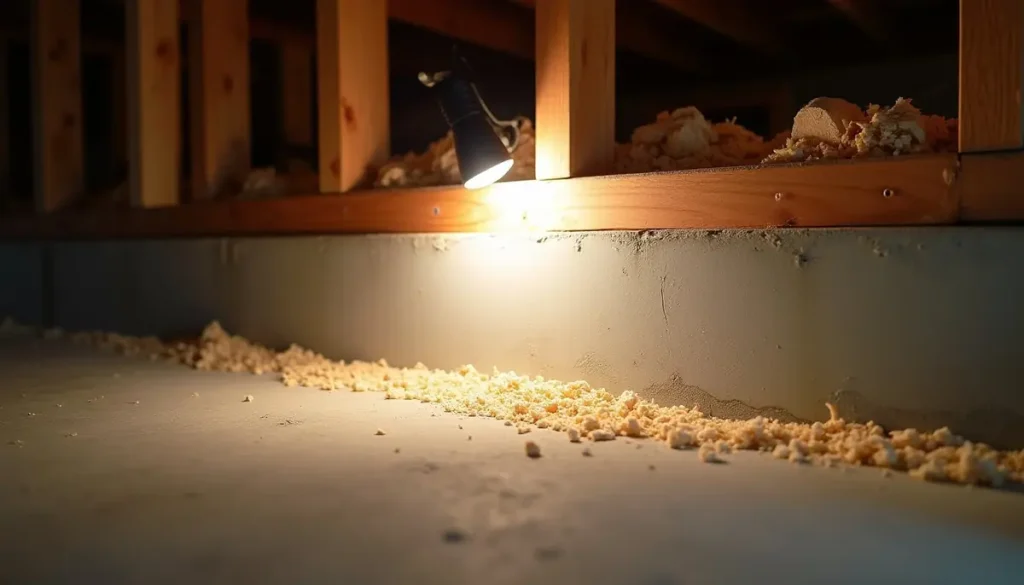
Carpenter ant frass is the coarse, fibrous wood shavings the ants push out of their galleries, mixed with dead ants, insect parts and soil; it is excavated wood, not droppings or eaten wood. It collects as a cone-shaped pile below a slit or hole and marks a nest entrance directly above it. Hard, six-sided, sand-like grains are drywood termite pellets instead, and flour-fine powder points to powderpost beetles.
The pile is the most useful clue a carpenter ant colony leaves, because it is the only sign that points to where the ants live rather than where they forage. Read it before you vacuum it.
Frass identification key: what made the pile?
| What you find | Texture and size | Where it collects | What made it |
|---|---|---|---|
| Coarse shavings with ant legs, heads and wings in it | Fibrous, stringy; shavings look chisel-cut and similar in size under a lens | Cone-shaped pile below a slit or hole in trim, siding, sills, attic or basement | Carpenter ants excavating a nest |
| Hard grains like poppy seeds or sand | Six-sided pellets, about 0.87 to 0.98 mm long | Piles below tiny kick-out holes under 2 mm across | Drywood termites |
| Powder like flour or talc | Feels like flour or fine talc | Small piles under pinhead-size holes in hardwood floors, furniture, panelling | Lyctid powderpost beetles |
| Gritty powder | Feels gritty rubbed between fingers | Below 1/16 to 1/8 inch (1.6 to 3.2 mm) holes, hardwood or softwood | Anobiid powderpost beetles |
| Meal-like powder packed in holes | Coarser than flour, stays in the tunnels | 1/8 to 1/4 inch (3.2 to 6.4 mm) holes, mostly hardwood and bamboo | Bostrichid powderpost beetles |
| Sawdust under a perfectly round hole, with droppings stains below | Coarse sawdust | Below an entrance about 1/2 inch (13 mm) across in wood thicker than 2 inches | Carpenter bees |
| No frass at all, mud inside the wood | Soil packed into galleries | Mud tubes on foundations | Subterranean termites |
Compiled by The Pest Control Brief from University of Nebraska G1738, Penn State Extension (Carpenter Ants; Carpenter Bees), UC IPM Pest Notes 7416 and 7440, UF/IFAS EENY-248 and University of Kentucky ENTFACT-611 and 616.
The split that matters most is fibre against grain. UC IPM puts it in one line: carpenter ant sawdust is fibrous, against the six-sided pellets of drywood termites. Roll a pinch between your fingers: termite pellets stay as hard separate grains; ant frass is soft and fibrous.
Our guide to reading damaged wood by the galleries inside covers the next step once you open the wood.
If winged insects were what sent you looking, the waist, antennae and wings separate them, as set out in how to tell termites from flying ants.
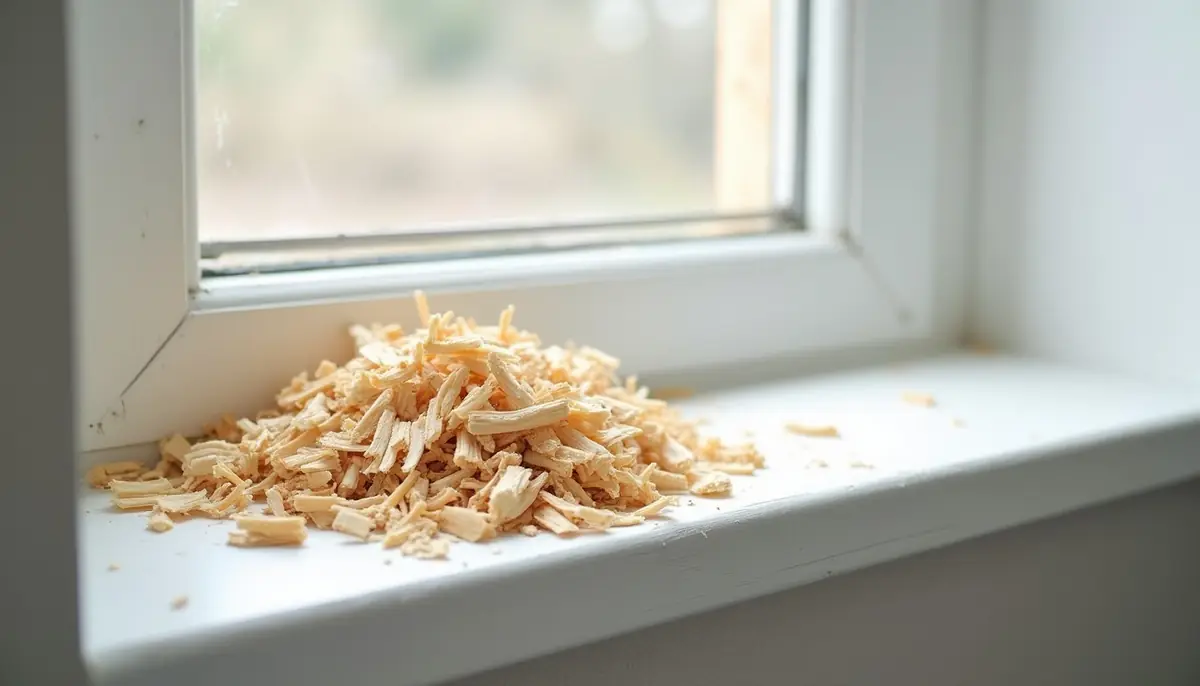
What does carpenter ant frass look like up close?
Nebraska Extension describes a coarse, sawdust-like material pushed from the nest that often builds into a cone-shaped pile just below the entrance hole. Under a magnifying glass, its photograph shows tiny wood shavings all the same size, as if cut by tiny chisels, usually with insect parts mixed in. Besides wood, the pile may hold bits of soil, dead ants, parts of other insects and food remnants. Penn State calls it coarse, stringy wood particles with dead insect parts and other debris.
The insect parts are the giveaway. Carpenter ants, the large black or red and black ants in our guide to ants that get into US homes, eat insects, nectar and honeydew (UC IPM), not wood, so the inedible remains of their prey end up on the same spoil heap. Drywood termite frass is fecal pellets (UC IPM; UF/IFAS), and Penn State notes carpenter ant galleries contain no fecal pellets at all, so a pile with wings, heads or legs in it points to ants.
Carpenter ant frass colour: black, white or tan
None of the extension sources we read defines carpenter ant frass by colour, and for good reason: the shavings are wood, so they take the colour of whatever is being mined, from pale framing timber to darker damp or decayed wood. Dark specks are the other things Nebraska lists in the pile: soil, dead ants and insect parts. Penn State notes the ants also excavate foam insulation board, so a pile of white or pastel crumbs below a wall can be frass too. Colour will not separate ant from termite; texture and contents will.
Does frass mean an infestation?
Fresh frass means active excavation; an old pile only proves there was a nest. The test borrowed from beetle and drywood termite inspection settles it. UC IPM advises cleaning up pellets around a kick-out hole and checking a few days later for new ones, and Kentucky’s powderpost guidance is to sweep up all the powder and recheck. For carpenter ants:
- Photograph the pile with a coin for scale and note the exact spot.
- Vacuum it completely, and tape a sheet of dark paper below the hole.
- Check after three or four days, and again after a week, at night if you can.
New shavings mean ants are still digging there. Two cautions: UC IPM notes that building vibration can shake old drywood pellets loose, and old ant shavings can fall the same way; and outdoor colonies slow sharply in cold months, so a winter clean-and-check can read negative over a live nest. A pile that keeps growing indoors in mid-winter usually means a nest inside the heated structure, as our guide to carpenter ants seen indoors in winter explains.
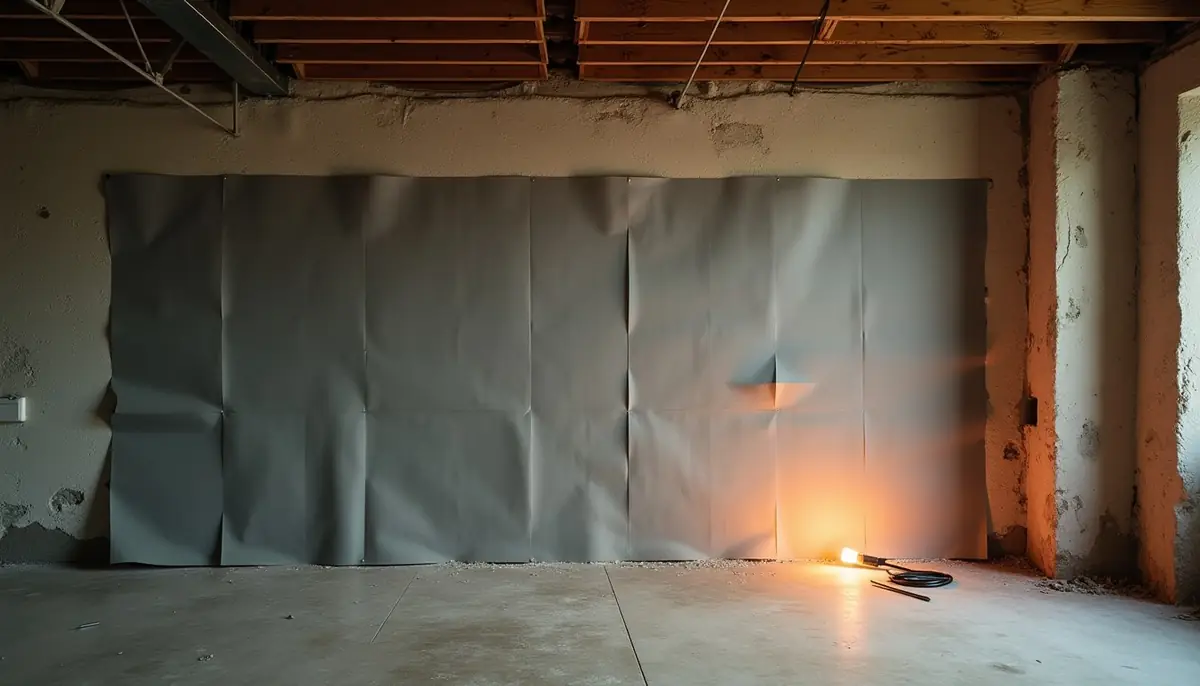
Using the pile to find the nest
Nebraska’s control advice starts here: look for piles of sawdust to locate the entrance, and watch the movement of foraging ants, which are most active at night. Penn State suggests checking basements, attics, garages and the exterior between 10 p.m. and 2 a.m. from May through July, and says satellite colonies can sometimes be found by listening for a rustling in walls with a stethoscope or an inverted glass.
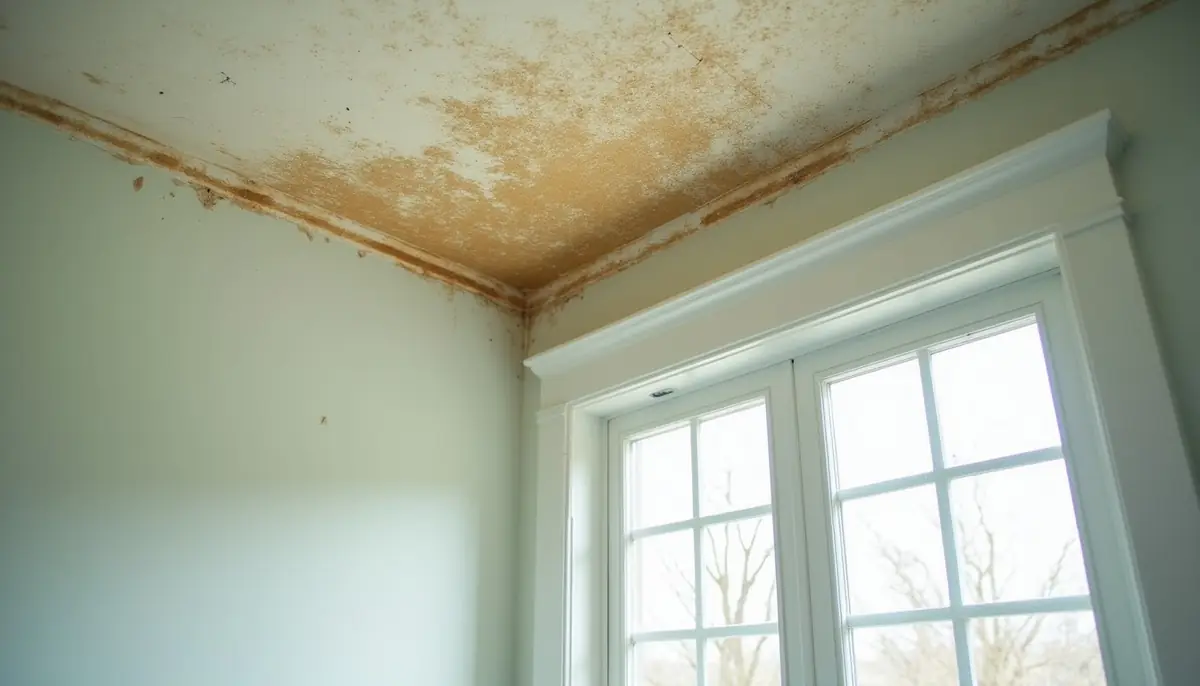
Moisture narrows the search. Penn State says carpenter ants usually will not infest sound wood with a moisture content below 15 per cent, and lists roof and gutter leaks, poor ventilation and condensation from pipes as typical causes. Frass below a window sill, a bathroom wall or a leaking roof valley is pointing at the leak as much as the ants. Nebraska notes the ants also nest in hollow doors and voids left in construction, where the frass may never be seen.
Expect more than one nest. UC IPM says nests built indoors are typically satellites of a parent nest outside in a tree, woodpile or landscaping, and Nebraska that satellites hold workers, larvae and pupae but never eggs, because the queen stays in the parent colony. Treating the nest behind one pile without finding the parent leaves the colony able to return.
Our analysis of iNaturalist records shows when carpenter ants are out and digging: their share of US research-grade observations climbs from an index of 37 in January to 161 in May and 165 in June, then settles near 108 to 116 from July to September. That spring peak is when most fresh frass appears.
How to get rid of carpenter ant frass, and the ants behind it
Vacuuming removes the frass and solves nothing on its own. The order that works:
- Use the pile first. Mark the hole above it; Nebraska describes puffing a labelled insecticide dust directly into the nest through the entrance hole with a hand duster, and our guide to finding and treating a carpenter ant nest sets out the methods, including where the extension services disagree on bait.
- Do not spray the pile or the trail. Nebraska says spraying foraging workers is of limited value because the colony is largely unaffected, and UC IPM that only about 10 per cent of the ants forage at any one time.
- Fix the water. Repair the leak, gutter or condensation source and replace soft, damaged wood.
- Call a licensed professional when the nest is inside a wall you cannot reach, frass keeps returning, or you find several piles. Fipronil perimeter sprays, which UC IPM calls very effective, are restricted to licensed applicators. Prices are compared in our guide to what carpenter ant treatment costs.
Two look-alikes need different trades. Round half-inch holes with coarse sawdust and stains below belong to carpenter bees, covered with the beetles in our guide to carpenter bees and other wood-destroying insects.
Hard pellets mean drywood termites and a licensed termite inspection; our guide to telling active termites from old damage covers what an inspector looks for.
If what you found is small dark pellets on a floor rather than wood debris, compare them with our droppings identification guide for mice, rats and cockroaches.
Frequently asked questions
What does frass from carpenter ants look like?
Coarse, fibrous wood shavings, often in a small cone-shaped pile below a slit or hole in wood. Under a lens Nebraska Extension describes shavings all the same size, as if chisel-cut, usually mixed with dead ants, insect parts and soil. It is soft and stringy, unlike the hard, six-sided pellets of drywood termites, which are about 0.9 to 1 mm long.
Does frass mean an infestation?
Fresh frass means carpenter ants are excavating right there now; an old pile only shows there was a nest. Vacuum the pile, put dark paper below the hole and check again after three or four days and after a week. New shavings confirm activity. In winter the test can read negative over a live outdoor colony, so repeat it in spring.
What to do when you find a carpenter ant frass?
Photograph it, find the hole directly above, and leave the pile until you have marked the spot. Check the area for moisture, since Penn State says carpenter ants rarely infest sound wood under 15 per cent moisture. Then treat the nest through that opening or call a licensed professional, and fix the leak that softened the wood.
What kills carpenter ants immediately?
Nothing kills a colony immediately. A contact spray kills the ants it touches, but UC IPM notes only about 10 per cent of the colony forages at once, and Nebraska says spraying foragers leaves the colony largely unaffected. A labelled dust placed into the nest through the frass hole reaches the colony itself; follow the label and keep it out of reach of children and pets.
Sources
- University of Nebraska Lincoln Extension, NebGuide G1738, Carpenter Ant Management, revised 2019.
- Penn State Extension, Carpenter Ants (Jacobs); Carpenter Bees.
- University of California Statewide IPM Program, Pest Notes: Carpenter Ants, Publication 7416; Pest Notes: Drywood Termites, Publication 7440.
- University of Florida IFAS, Featured Creatures EENY-248, Western Drywood Termite, Incisitermes minor (Cabrera and Scheffrahn).
- University of Kentucky Entomology, ENTFACT-616, Powderpost Beetles; ENTFACT-611, Carpenter Bees.
- The Pest Control Brief analysis of iNaturalist research-grade records, pulled October 2026.