Ants in the Microwave: Why They Go In and How to Clear Them
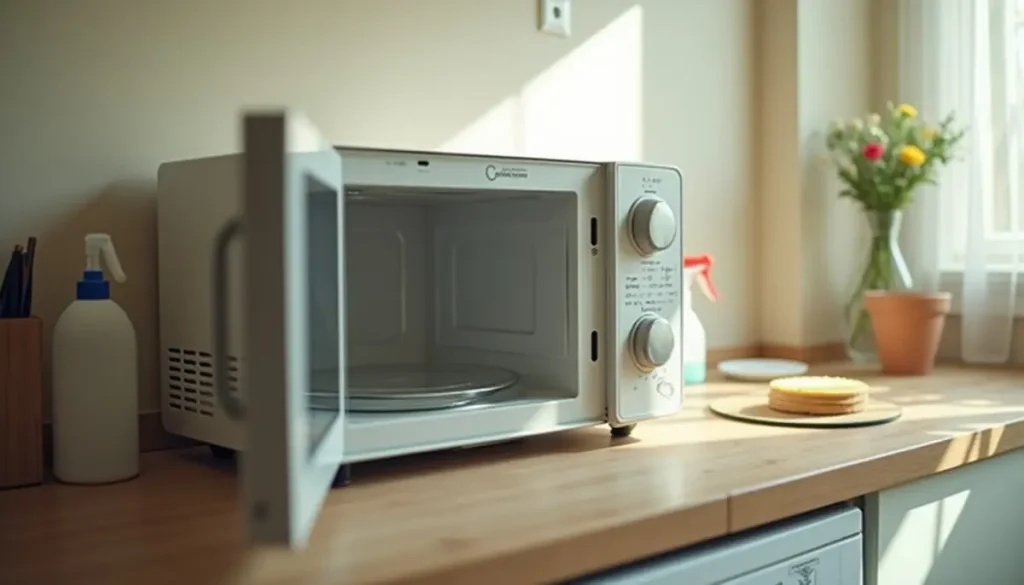
Ants in a microwave are foragers following food spatters and warmth from a trail that starts in a wall, counter gap or window, so cleaning the microwave helps but the fix is baiting that trail outside the appliance. Running the microwave to kill them is unreliable: ants a few millimetres long are tiny next to the 12.2 cm wave that sets the oven’s hot and cold spots, so they are easily missed, and GE warns that running an oven empty risks damage and fire. Unplug, wipe, find the entry point and bait it.
The species matters, because one common kitchen ant gets worse if you spray it. Check this table before you reach for anything.
Which ant is in the microwave, and what to do
| Ant | What it looks like | Where it usually comes from | What works |
|---|---|---|---|
| Pharaoh ant | About 1/16 in (1.6 mm), light yellow to reddish brown | Wall voids, behind baseboards, under floors, light fixtures | Bait designed for this ant; never spray. Ohio State says repellent insecticides can spread colonies through a building |
| Odorous house ant | 1/16 to 1/8 in (2.4 to 3.3 mm), brown to black, rotten smell when crushed | Outdoor nests under rocks and boards, or indoor voids near moisture and warmth | Sweet ant bait on the trail; Penn State says expect two weeks or longer |
| Pavement ant | 2.5 to 4 mm, dark brown to black, fine parallel lines on head and thorax | Under slabs and sidewalks, entering through cracks in slabs and foundation walls | Bait where they forage; look for little soil piles at floor cracks |
| Red imported fire ant (Southern states) | Workers found inside electrical housings and switches | Outdoor colonies drawn to electrical equipment | Treat the outdoor colony; a licensed professional for ants inside wiring |
Dark ants of 2 to 4 mm are usually odorous house ants or pavement ants; tiny pale yellow ants in a heated building suggest pharaoh ants. Our guide to the ant species that get into US homes has a fuller key.
If the ants go for sugar above all, see which ants people call sugar ants covers the small sweet-seeking ones most people mean.
Why are ants coming in my microwave?
Food first. Splashes of sauce, sugar and grease on the ceiling, walls and turntable support are exactly what these ants eat: Penn State says odorous house ants prefer sweets but also take grease and dead insects, and pavement ants readily take sugar, syrups and grease. A scout that finds a spatter lays a trail and others follow it, through the door gap or the vents. Our page on what ants eat and why it changes explains why a colony can switch from sugar to protein through the season.
Warmth is the second draw. Penn State says odorous house ants nest indoors near sources of moisture and warmth, in voids, and a microwave over a range or on a counter by the kettle sits in a warm corner. Some ants are also drawn to electrical equipment itself: Texas A&M AgriLife describes fire ants moving whole colonies into electrical housings for warmth and dry shelter, and foraging workers having an affinity for electrical fields and switching mechanisms, where they chew insulation and cause short circuits. Our page on bugs coming out of electrical outlets covers that problem in detail.
Can ants survive in a microwave?
Often, yes. A microwave oven runs at 2.45 GHz, a wavelength of about 12.2 cm (4.8 in), according to an engineering analysis by COMSOL, and reflections off the metal walls set up a checkered pattern of high and low intensity spots. The FDA explains that microwaves heat food by making the water in it vibrate. An odorous house ant is about 3 mm long, roughly a fortieth of that wavelength, and holds very little water, so it can sit in a low intensity spot or walk out of a hot one. The Naked Scientists science programme gave the same explanation in 2007: an ant in a hot spot can walk somewhere cooler.
How long can an ant survive in a microwave?
No published study gives a time, and we found none for ants in a home oven, so any figure you read online is a guess. Survival depends on where the ant is, whether the turntable carries it through hot spots and what else is in the oven to absorb energy. The physics says some will be missed, and the method is not reliable enough to use.
Why can ants be microwaved without dying?
Three reasons combine: they are much smaller than the spacing of the hot spots, their small bodies absorb little energy, and they move. Food heats because it is large and wet; the FDA notes that in thick foods only the outer layers are heated directly by microwaves.
Are ants safe in a microwave?
The ants are not the danger; the remedy is. GE’s microwave manual says: “Do not operate the oven while empty to avoid damage to the oven and the danger of fire.” Running it empty to cook ants is exactly that. The FDA also says not to use a microwave whose door does not close firmly or is bent, warped or damaged. Ants walking on a turntable are a hygiene problem, not an electrical one, unless they are nesting inside the casing.
How to clear ants from a microwave
- Unplug it. Pull the plug before you wipe inside or move it, so no one starts it while you clean.
- Wipe it out with soapy water. Take out the turntable and its support ring, wash them in the sink, and wipe the ceiling, walls, door and door edge. Vacuum or wipe up live ants.
- Clean the trail outside the microwave. Wipe the counter, the wall behind and the cabinet underneath to remove the scent trail. Vinegar or soapy water does this; our page on whether vinegar kills ants explains why it cleans the trail but never reaches the nest.
- Follow the trail to where it enters. Ohio State’s advice for baiting starts with locating trails and following them to where feeding occurs. Watch where ants come and go: a gap in the caulk where the counter meets the wall, an outlet, a window frame or the gap behind an over-range unit.
- Bait the trail, never the appliance. Put a bait station or bait on the trail near the entry point, out of reach of children and pets and away from food, as the label directs. Workers carry bait back to the nest; Penn State says control may take two weeks or longer, so leave the trail alone while they feed.
- Seal the entry point once activity stops, and keep the microwave wiped after each spill.
Ohio State suggests a simple way to find the hot spot before baiting: put a dab of dilute honey or peanut butter on an index card and see where ants gather. The species-by-species bait choice is in our plan for matching the bait to the ant.
Pharaoh ants: do not spray at all
Pharaoh ant colonies split into new nests, a process called budding. Ohio State Extension’s fact sheet HYG-2136 lists overcrowding, seasonal changes in a building’s heating and cooling, and repellent pesticide applications as triggers, warns that repellent insecticides such as pyrethroids can move colonies through a building, and says total release aerosols do not reach the colonies. It recommends leaving baiting to commercial applicators. Our page on why spraying splits pharaoh ant colonies covers the research.
When ants show up: our data
Sightings of the two common indoor ant groups peak in spring. In The Pest Control Brief analysis of iNaturalist research-grade records, the odorous house ant index sits at 153 from March to May against a yearly average of 100, and records of Monomorium ants, the genus that includes the pharaoh ant, stay at 124 to 132 from March to August. These are mostly outdoor sightings, not indoor infestation counts, but they show when foraging ants are most active and most likely to find a kitchen.
When it is more than a dirty microwave
Call a licensed pest professional if the ants are pharaoh ants, if they keep coming after two to three weeks of baiting, or if they appear to be living inside the casing or control panel. Do not open the microwave casing yourself; have a qualified appliance technician check it.
The same advice applies to other appliances; see insects inside microwaves, TVs and consoles for what works with roaches.
A sudden pile of dead ants near the microwave in the two weeks or more that Penn State says baiting takes is usually a good sign, as explained on our page about finding dead ants in the house.
Frequently asked questions
Why are ants coming in my microwave?
They are following food spatters and the warmth of a counter corner; Penn State says odorous house ants prefer sweets but also take grease and dead insects. A scout finds the spill, lays a scent trail and others follow it through the door gap or vents. The nest is elsewhere, usually in a wall void or outside, so cleaning removes the food but baiting the trail removes the ants.
Are ants safe in a microwave?
Ants walking inside are a hygiene problem: wipe the oven and wash the turntable. The risk is trying to cook them, because GE warns that running a microwave empty can damage the oven and cause a fire. If ants are nesting inside the casing, unplug it and have it checked rather than opening it yourself.
How long can an ant survive in a microwave?
There is no published survival time. Ants are about 2 to 4 mm long, far smaller than the 12.2 cm microwave wavelength and the hot and cold spots it creates, so an ant can sit in or walk to a low intensity spot and be missed. Microwaving is not a reliable way to kill them.
Why can ants be microwaved?
Microwaves heat water inside food, and an ant is tiny and holds little water, so it absorbs little energy. The oven’s standing waves also create hot and cold spots several centimetres apart, and an ant can sit in a cool spot or walk out of a hot one, while a large wet piece of food cannot.
Sources
- Shetlar, D. J., Ohio State University Extension, Pharaoh Ant, Fact Sheet HYG-2136, 2011.
- Penn State Extension, Odorous House Ant.
- Penn State Extension, Pavement Ant.
- Keck, M. and Drees, B. M., Texas Cooperative Extension, Managing Red Imported Fire Ants in Electrical Equipment and Utility Housings, FAPFS011, revised 2007.
- US Food and Drug Administration, Microwave Ovens (radiation-emitting products consumer information).
- COMSOL, Why Does a Microwave Heat Food Unevenly? engineering blog analysis.
- The Naked Scientists, University of Cambridge, Can ants survive a microwave? 14 October 2007.
- GE microwave oven owner’s manual (JE925 series), Important Safety Instructions.
- The Pest Control Brief analysis of iNaturalist research-grade records, pulled October 2026 (b19 to b30 files).