What Do Ants Eat? Sugar, Protein and Why It Changes
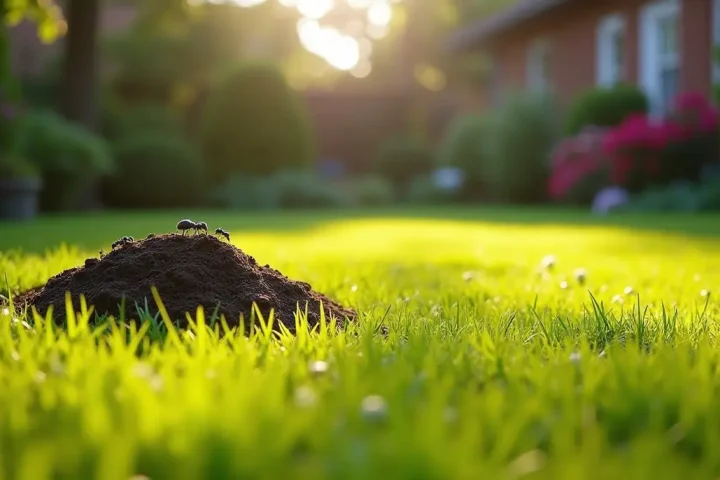
Ants eat sugars for energy and protein for growth: honeydew from aphids, flower nectar, ripe fruit, seeds, fungus they farm, and live or dead insects, with the mix set by the species. Indoors that means sugar, syrup, honey, fruit juice, fats and meat. Adult workers mostly run on sugar, while the larvae need protein, so a colony rearing brood goes looking for protein and grease. Carpenter ants do not eat wood; they only tunnel in it.
This matters because an ant bait is food with a slow poison in it, and a bait the ants will not eat does nothing. Knowing what your ant eats, and what its colony needs this month, decides whether a bait works.
What ants eat, by type of ant
There is no single ant diet. The University of California Statewide IPM Program (UC IPM) says food preferences vary among species but may include fruits, seeds, nuts, fatty substances, dead or live insects, dead animals and sweets.
| Ant | Main foods outdoors | What draws it indoors | Bait it usually takes |
|---|---|---|---|
| Odorous house ant | Honeydew from aphids and scales | Sweets; comes in when rain washes honeydew off plants | Sweet; sometimes protein |
| Argentine ant | Honeydew, ripening fruit, insects | Sweets all year; protein in spring | Sweet; protein in spring |
| Carpenter ant | Honeydew, dead insects, small invertebrates | Sweets, meats, foods with sugar and fat | Sweet liquid; test first |
| Pavement ant | Honeydew, seeds, insects | Sweets, grease, protein | Sweet or protein |
| Pharaoh ant | In cool climates nests indoors in warm, moist wall voids | Fats, proteins, sweets | Fat based plus sweet, combined |
| Thief ant | Nests in soil, under rocks or in decaying wood | Greasy and fatty food, sometimes sweets | Grease or protein; baits often struggle |
| Red imported fire ant | Insects and other invertebrates, honeydew, seeds, plants | Sweets, proteins, oils | Oil based |
| Harvester ants | Seeds, sometimes insects | Rarely come indoors | Bait labelled for harvester ants, outdoors |
| Texas leafcutting ant | Only the fungus it grows on cut leaves | Does not forage indoors | Only products labelled for leafcutting ants |
Diet columns come from UC IPM Pest Notes: Ants (Publication 7411) and its ant identification key, Penn State Extension, the University of Tennessee, the University of Arizona and Texas A&M AgriLife. If you are not sure which ant you have, our ant identification guide works through the waist, size and colour checks first.
What foods do ants like most?
Sugar, by a distance. UC IPM’s Table 1 of common household ants lists sweets as a food for all nine species it covers. Proteins appear for six, and fats or grease for three: pavement, pharaoh and thief ants. Only the thief ant lists sweets as an occasional extra rather than a main food.
That is why any small trailing ant gets called a sugar ant; our guide to sugar ants sorts out which species hide under the nickname. The exceptions are the ones that cause the most frustration: pharaoh and thief ants, which prefer protein or greasy baits year round according to UC IPM, and fire ants, which prefer baits containing oils.
Why the diet changes: sugar for workers, protein for larvae
The single most useful thing to know about ant feeding is that the adults and the young eat differently. A 2009 study by Audrey Dussutour and Stephen Simpson at the University of Sydney, published in Current Biology, set out the principle: carbohydrates are used by the workers and proteins consumed by the larvae. The amount and balance of nutrients collected, they found, depend on whether the colony has larvae. Ants also extracted carbohydrates and ejected protein when they had too much of it, and processing excess protein shortened their life span, an effect greatly reduced when larvae were present to use it.
In fire ants the division goes further. The University of Tennessee states that queens, workers and first to third instar larvae can only consume liquids. Workers strain out solids larger than 0.88 microns, form them into pellets and give them only to fourth instar larvae, which digest them and pass the protein on. A worker carrying a crumb of bait is delivering it, not eating it.
So the same ants can switch between baits by season. UC IPM notes that sweet baits attract Argentine ants throughout the year, while protein baits attract them in spring, when colonies are producing new offspring.
When colonies are hungriest for protein: our data
Our analysis of iNaturalist research-grade records, pulled October 2026, shows when people record ants relative to everything else they photograph. Across all US ants the share peaks in March at an index of 129, against a yearly mean of 100. Odorous house ants hold at 153 from March to May. Carpenter ants climb later and peak in May and June at 161 and 165.
These are records of when people noticed and identified ants, mostly outdoors, not counts of indoor infestations or of brood. But the spring rise matches what extension entomologists describe: colonies foraging hard and rearing their first broods, when protein baits get their best chance.
What do ants eat in the house?
Inside buildings, UC IPM says, household ants feed on sugar, syrup, honey, fruit juice, fats and meat. Penn State adds that carpenter ant workers, which usually emerge at night, will feed on meats and foods containing sugar and fat. In practice the usual targets are:
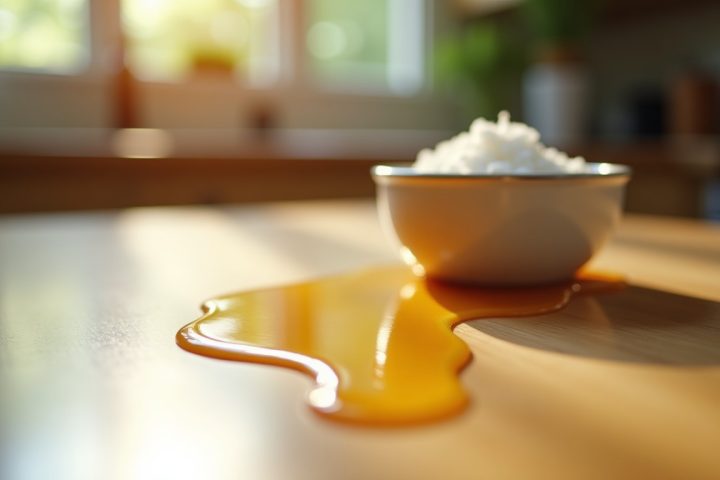
- sticky rings under syrup, honey and jam jars, and spilled soda;
- pet food bowls, especially wet food and greasy kibble;
- fruit bowls and ripe fruit, plus juice spills in the fridge door seal;
- grease films around the stove, toaster and bin;
- dead insects on window sills, which protein feeders will collect.
Weather drives sudden invasions. UC IPM says ants may appear suddenly if other food sources become unavailable, and that odorous house ants invade most often in rainy weather, because their natural food, honeydew, is washed off the plants. Ants around sinks and tubs are often after moisture, which our page on ants in the bathroom covers.
What do ants eat and drink in the garden?
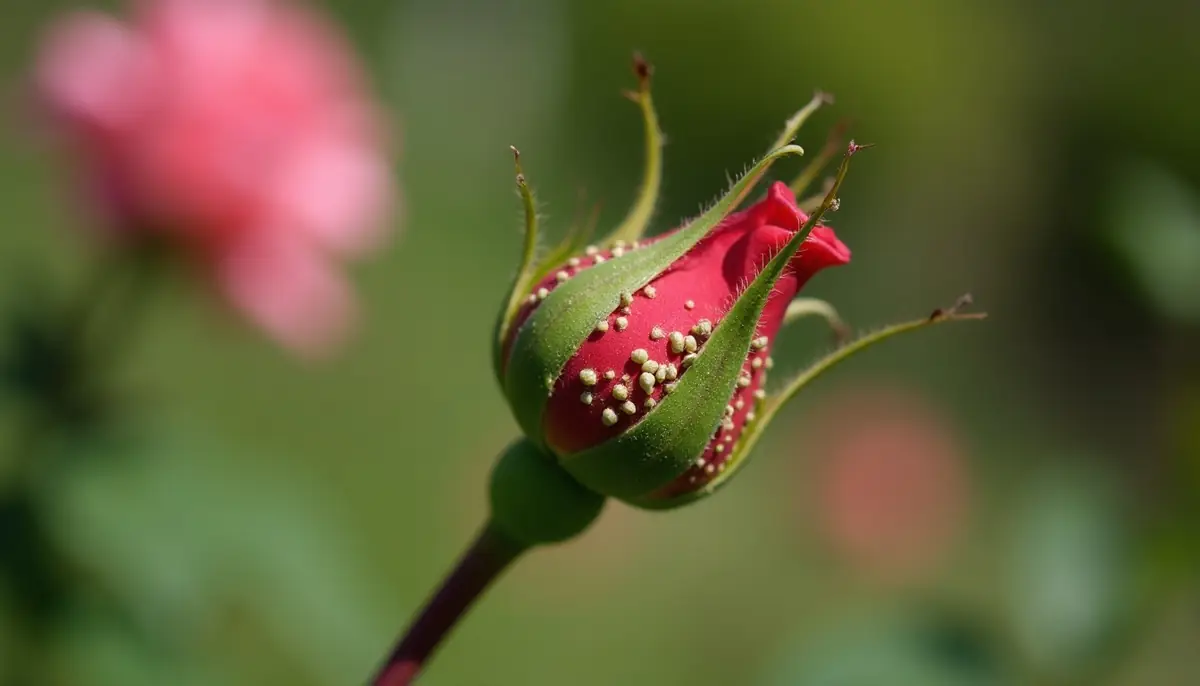
Mostly honeydew, the sugary liquid excrement of sap-feeding insects. UC IPM describes ants that protect and care for honeydew producers such as aphids, soft scales, whiteflies and mealybugs, and notes that outbreaks of scales and aphids often follow, because the ants guard them from their natural enemies.
Our iNaturalist index shows the two do not peak together: ant records peak in early spring, aphid records in August, at 207. The data cannot show cause, but the gap fits the spring habit of trailing indoors to sweets. If ants are farming aphids on your roses or fruit trees, controlling the aphids, as in our guide on how to get rid of aphids, also cuts the ants’ food supply. UC IPM advises managing honeydew producers to avoid high numbers of ants crawling up plants.
What fruits do ants eat?
Mostly fruit that is ripe, split or fallen. UC IPM lists ripening fruit among the preferred foods of Argentine ants, and fruit juice among the foods household ants take indoors. Soft peaches or a cut melon on the counter are an invitation.
Do ants eat other bugs?
Yes, many do, and it is one of the useful things they do. UC IPM notes ants feed on other pests such as fleas, caterpillars and termites, along with dead insects and decomposing tissue from dead animals. For the red imported fire ant, the University of Tennessee states that its main food source is other invertebrates; it also feeds on plants, sap, honeydew and dead animals.
What do carpenter ants eat?
Not wood. Penn State Extension states it directly: because carpenter ants do not consume the wood as food, excavated particles are dumped outside the nest. UC IPM’s key lists their preferred foods as sweets, honeydew and insects and adds, in so many words, that they do not feed on wood. The sawdust-like frass under a window frame is the spoil from tunnelling, not leftovers from a meal.
That affects control. UC IPM’s carpenter ant guidance suggests first attracting the ants to a non-toxic food such as a sugar and milk solution or sliced crickets, then replacing it with several different baits labelled for carpenter ants and letting the ants choose. UC IPM recommends baits for managing satellite colonies; finding the nest is still the main job. Our guide on how to get rid of carpenter ants covers finding it, and whether the damage needs a professional.
What do ants eat in the desert?
Seeds, insects and stored liquid. The University of Arizona’s harvester ant fact sheet says harvester ants forage primarily for seeds but sometimes feed on insects, and typically gather only one seed species until it is gone before moving to another. Seeds and insects are stored in the nest as food for the colony.
The other desert specialists are honeypot ants, including Myrmecocystus species found in New Mexico. A review by Bianca Nogueira and Lily Khadempour describes workers called repletes that store food long term in their crops to support the colony when food is scarce, an adaptation the authors link to desert living.
Ants that farm their food
The Texas leafcutting ant does not eat the leaves it carries. Texas A&M AgriLife explains that the colony grows a fungus on chewed leaf material, and that fungus is the only food source for the entire colony; larvae and adults feed on special fungal structures called gongylidia. That diet sets them apart from every other ant on this page, and any treatment needs a product specifically labelled for leafcutting ants.
Using diet to pick the right bait
Baits work because workers carry food home and share it mouth to mouth with larvae and queens. UC IPM points out that as few as 1 per cent of a colony’s foragers can feed the queens and larvae in the nest, so killing the ants you see does little.
| What you see after a small taste test | What it usually means | What to do |
|---|---|---|
| Ants crowd the sweet bait, ignore the protein one | A sugar-feeding species, or a colony with little brood | Use a slow-acting sweet bait; keep it fresh |
| Ants take the protein or greasy bait, ignore sweets | Pharaoh, thief or fire ants, or a colony rearing brood | Use protein or grease bait; for pharaoh ants, combine fat and sweet |
| Ants switch preference over a few weeks | The colony’s needs changed with the season | Offer both types again and follow the change |
| Ants ignore everything | Better food nearby, or bait gone stale or rancid | Clean up spills and honeydew sources, then refresh bait |
| Large ants, sawdust, rustling in walls | Carpenter ants nesting in damp wood | Find the nest; consider a professional inspection |
UC IPM’s advice is to offer small portions of each bait to see which one the ants prefer before committing, to place baits outdoors where possible so you do not draw more ants inside, and not to spray insecticide while baiting. Bait must be slow acting, and results may take several weeks. Always follow the label. Home remedies that kill a few ants on contact, such as vinegar, do not reach the nest, as our review of the evidence on whether vinegar kills ants explains.
Pharaoh ants, which UC IPM says scatter into new colonies when sprayed, carpenter ants in structural wood, and fire ants near children or pets are usually jobs for a licensed professional; our ant control cost guide shows what that runs.
Where ants are most often recorded
Which ants dominate a region shapes what bait works there. In our iNaturalist data, carpenter ants make up 127.5 records per 10,000 insect records in Florida and 65.9 in Pennsylvania, while red imported fire ants reach 43.0 in Florida and 32.8 in Texas. UC IPM says fire ants prefer oil-based baits, while carpenter ants favour sweets, honeydew and insects.
What do ants eat? The short answer for kids
Ants eat sweet things like the sugary drops aphids leave on plants, nectar and ripe fruit, plus seeds and bugs. Worker ants mostly drink sugary liquids for energy. Baby ants need protein to grow, so workers carry food home and share it. Leafcutter ants even farm their own food, a fungus.
Frequently asked questions
What is an ant’s worst enemy?
Often another animal that eats ants, or another ant. The University of Arizona notes that harvester ants make up as much as 90 per cent of the diet of horned lizards. Competition between ant species matters too: UC IPM says competition from the Argentine ant has slowed the spread of the red imported fire ant in parts of California. For fire ants, parasitic phorid flies are another important enemy, covered in our guide to how long ants live.
Why should you not squish ants?
Because the ants you can see are a small, expendable share of the colony, and squashing them does not reach the queens or brood. UC IPM notes that as few as 1 per cent of a colony’s foragers can feed the whole nest. Those foragers are more useful alive carrying a slow-acting bait back to the colony. Crushed odorous house ants also give off a strong smell that many people find unpleasant.
Can ants hear human voices?
Almost certainly not in any meaningful way. Writing for the Royal Entomological Society in 2026, Professor Stuart Reynolds notes that ants were the first insects found to be insensitive to airborne sounds but able to respond to vibrations in the ground beneath them, and that most entomologists now regard airborne sound as at best a minor part of the ant’s sensory world. Footsteps and tapping carry; talking does not.
Do ants drink water?
Yes. Adult ants take in liquids, and in fire ants the University of Tennessee states that queens, workers and young larvae can only consume liquids. UC IPM notes that ants often enter buildings seeking water as well as food, especially in dry, hot weather. Fixing drips, drying sink areas and emptying pet water bowls overnight can make a kitchen far less attractive.
Why do ants suddenly want protein instead of sugar?
Usually because the colony is raising larvae. Research by Dussutour and Simpson found that worker ants use carbohydrates while larvae consume the protein, and that what a colony collects depends on whether larvae are present. UC IPM notes that Argentine ants take protein baits mainly in spring, when colonies are producing new offspring, then return to sweets.
Sources
- University of California Statewide IPM Program, Pest Notes: Ants, UC ANR Publication 7411, by M.K. Rust and D.H. Choe, UC Riverside.
- University of California Statewide IPM Program, Key to Identifying Common Household Ants: food preference and baiting pages for Argentine, carpenter, odorous house, pavement, pharaoh, thief and red imported fire ants.
- Penn State Extension, Carpenter Ants.
- University of Tennessee, Fire Ant programme, Fire Ant Biology.
- University of Arizona Cooperative Extension, Backyard Gardener #16: Harvester Ants, J. Schalau, 2022.
- Texas A&M AgriLife Extension, Urban and Structural Entomology, Texas Leaf Cutting Ant.
- Dussutour, A. and Simpson, S.J. Communal nutrition in ants. Current Biology 19(9): 740 to 744, 2009.
- Nogueira, B.R. and Khadempour, L. Honeypots: a review of repletism across the ants, as summarised by Myrmecological News, 2026.
- Reynolds, S. The Beat Beneath my Feet: vibrational communication in ants and other insects. Antenna 50(1), Royal Entomological Society, 2026.
- The Pest Control Brief analysis of iNaturalist research-grade records, pulled October 2026.