Bugs Coming Out of Electrical Outlets: What They Are and Why
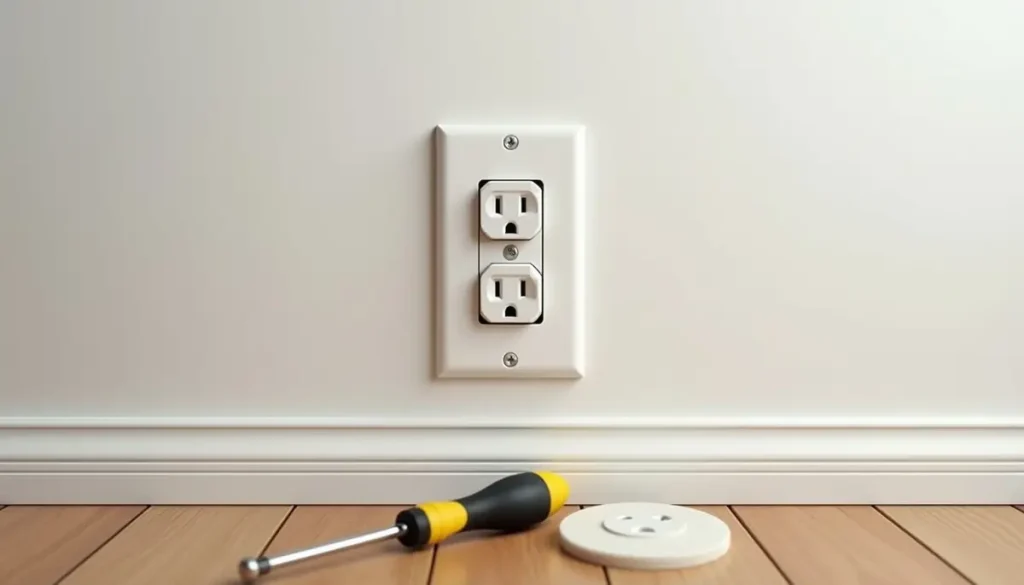
Bugs coming out of an electrical outlet are using the wall void behind it as a highway or a shelter, and in most homes they are ants, German cockroaches, bed bugs or moisture pests such as springtails. The outlet is rarely where they live; it is the nearest opening from a hollow wall that connects to plumbing, wiring runs and the outdoors. Switch off the breaker before removing the cover plate, never spray liquid into the box, identify the insect, then treat and seal at the source.
The fix depends on which insect it is, so match what you saw to the table below; a ruler held against the wall plate settles most cases.
Match the insect to the cause
| What you see at the outlet | Likely insect | Why it is there | What fixes it |
|---|---|---|---|
| Trail of tiny yellowish ants, about 2 mm, kitchen or bathroom | Pharaoh ant | UF/IFAS says workers use wiring or hot water pipes to travel through walls and between floors | Slow baits on every trail; never spray, which splits the colony |
| Reddish ants packed into the box, dead ants inside, often near the floor or an outside wall | Red imported fire ant or tawny crazy ant | Drawn into electrical equipment; electrocuted workers release chemicals that recruit more ants | Treat the outdoor colony; an electrician or licensed pro clears the box |
| Light brown roaches about half an inch long, often at night, kitchen or bathroom walls | German cockroach | Hides in cracks as narrow as 1/16 inch close to food, water and warmth | Gel bait and dust treatment of voids; usually a professional job |
| Flat, oval, apple seed sized reddish bugs at a bedroom outlet, dark spots on the plate | Bed bug | EPA lists electrical receptacles among hiding places in heavily infested rooms | Whole room bed bug treatment, not the outlet alone |
| Swarms of tiny jumping specks, bathroom or basement | Springtail | Following moisture inside a damp wall void | Find and dry the leak |
| Silvery, tapered, fast insects, about half an inch | Silverfish | Damp, undisturbed voids | Reduce humidity; seal gaps |
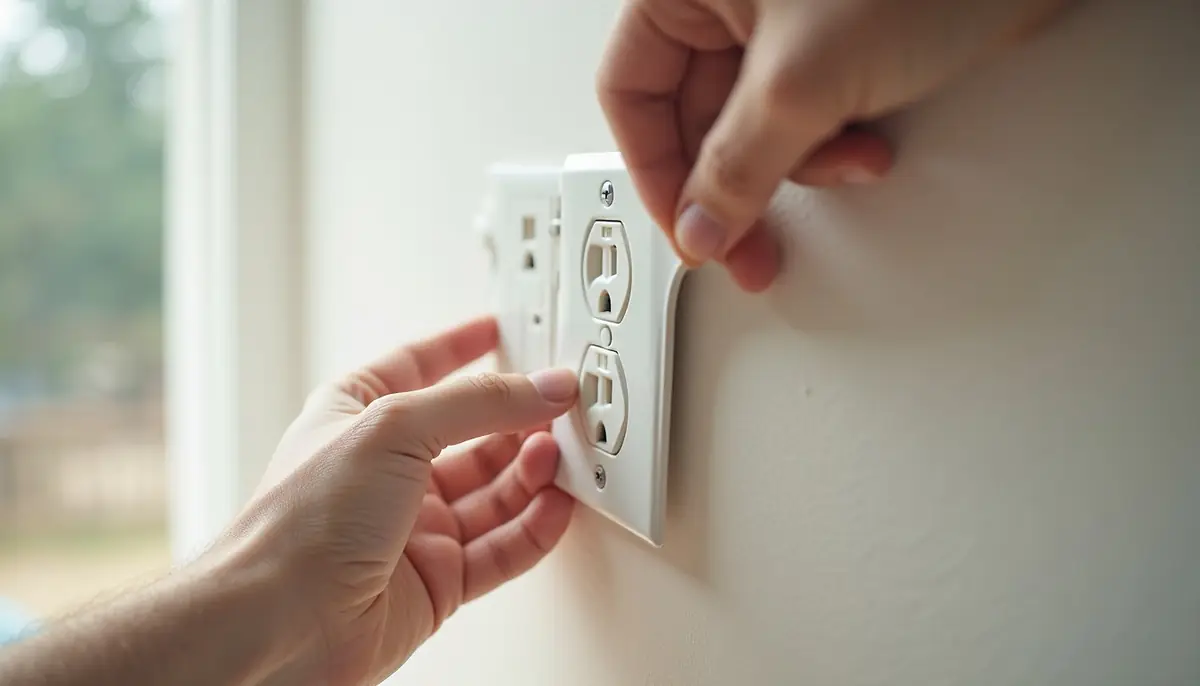
Why are there bugs coming through my electrical outlet?
Because the outlet box is a hole into the hollow wall. The stud bay behind it often runs to the floor, the attic or a plumbing chase. Texas A&M AgriLife notes that ants can enter holes as small as the diameter of a paper clip wire, about 0.5 mm, so the gap around a typical cover plate is wide open to them.
UC IPM’s cockroach Pest Note says adult German cockroaches can hide in a crack 1/16 inch wide and that nymphs use even smaller ones. Outlets on kitchen and bathroom walls share stud bays with pipes and drains, so a roach leaving an outlet beside a sink usually means the colony is in that wall or the cabinet below.
Pharaoh ants are the clearest case of insects using wiring as a road. UF/IFAS Featured Creatures (EENY-290) says workers travel through walls and between floors along wiring and hot water pipes, and that treatment must include walls, ceilings, floor voids and electrical wall outlets. If ants keep appearing from several outlets at once, read why spraying pharaoh ants splits the colony into new nests before reaching for a can.
Ants that are drawn to electricity itself
Some ants are not just passing through. Texas A&M AgriLife’s fact sheet ENTO-020, Managing Red Imported Fire Ants in Electrical Equipment and Utility Housings, describes two problems: whole colonies moving into electrical housings for warmth and dry shelter, and foraging workers with an affinity for electrical fields and switching mechanisms. Carpenter, acrobat and crazy ants show the same pull, it says.
The mechanism has been studied in fire ants. MacKay, Vinson and colleagues reported in Environmental Entomology in 1992 that fire ants were attracted to electric fields in proportion to field strength, for both AC and DC current. A 2002 study in the Journal of Chemical Ecology by Vander Meer, Slowik and Thorvilson added the part that explains packed switches: workers exposed to 120 volt AC released venom alkaloids plus alarm and recruitment pheromones, which drew more workers to the contact. Texas A&M describes the result as switches tightly packed with the bodies of dead, electrocuted ants.
The tawny crazy ant does the same. UF/IFAS publication SP486D says it is attracted to electricity, infests electrical switch boxes and causes shortages and equipment failures. Our guide to tawny and longhorn crazy ants covers how hard they are to suppress. Both species are Gulf and Southeast problems, which our iNaturalist data shows clearly for fire ants:
In those states, ants in an outlet on an exterior wall usually trace back to a yard colony, so the fix is the outdoor two-step fire ant bait method, then an electrician checking the box.
Bed bugs behind the cover plate
Bed bugs do hide in outlets, but it is a late sign. EPA’s guide to finding bed bugs lists electrical receptacles and appliances among the places they are found when a room is heavily infested, alongside drawer joints, curtain folds and loose wallpaper. Adults are about the size of an apple seed, 5 to 7 mm (3/16 to 1/4 inch), per EPA, and they leave dark spots of excrement that bleed like a marker.
If bed bugs are in the receptacle, they are almost certainly in the mattress seams, bed frame and headboard too, so the plan in our evidence-based bed bug treatment guide applies to the whole room.
Is it bad if I have springtails in my house?
Not in themselves. UC IPM Pest Notes publication 74136 says springtails are about 1/16 inch long, do not bite people or pets, do not spread disease and do not damage furnishings. They soon die indoors unless they find moisture, and the same publication lists wall voids among the places they turn up. Springtails at a bathroom outlet therefore point to wet framing or a leak behind the wall, and our page on why springtails appear and vanish within a week explains the drying steps.
Silverfish at an outlet tell the same story: UC IPM describes them as about 1/2 inch long and tied to damp, humid spaces, as set out in our guide to silverfish and other moisture pests.
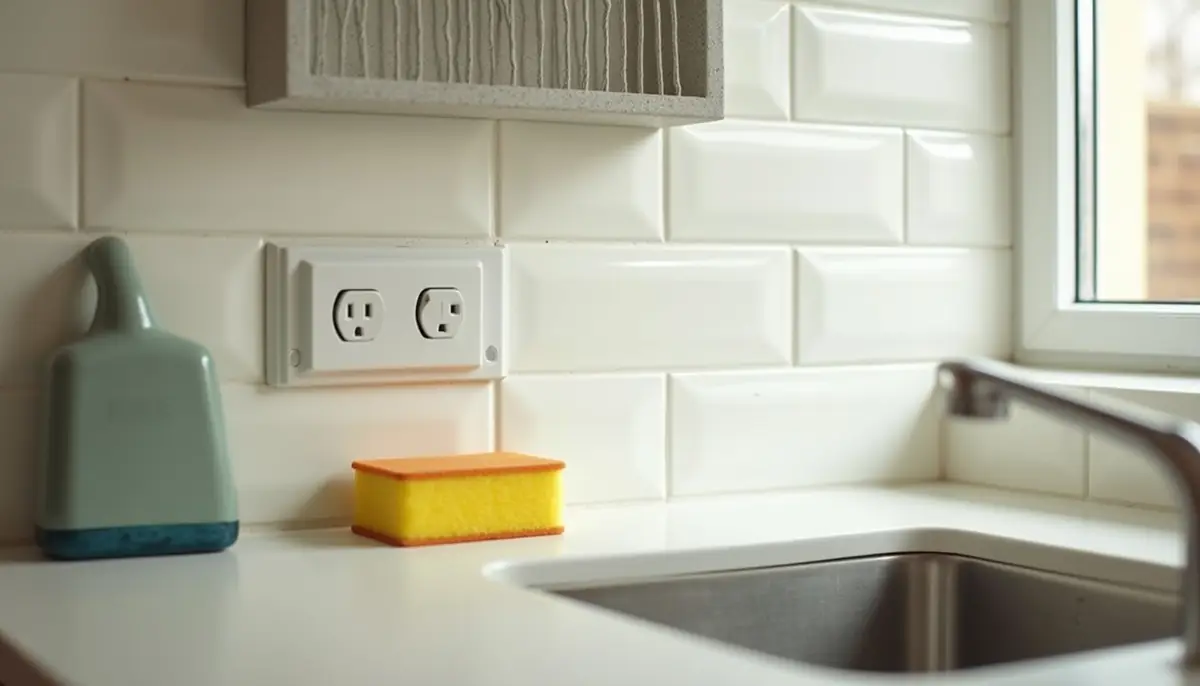
Safety first: what not to do
- Do not spray liquid into the outlet. Texas A&M AgriLife warns against liquid drenches or sprays that can be hazardous around electrical fixtures, and against products that may damage insulation.
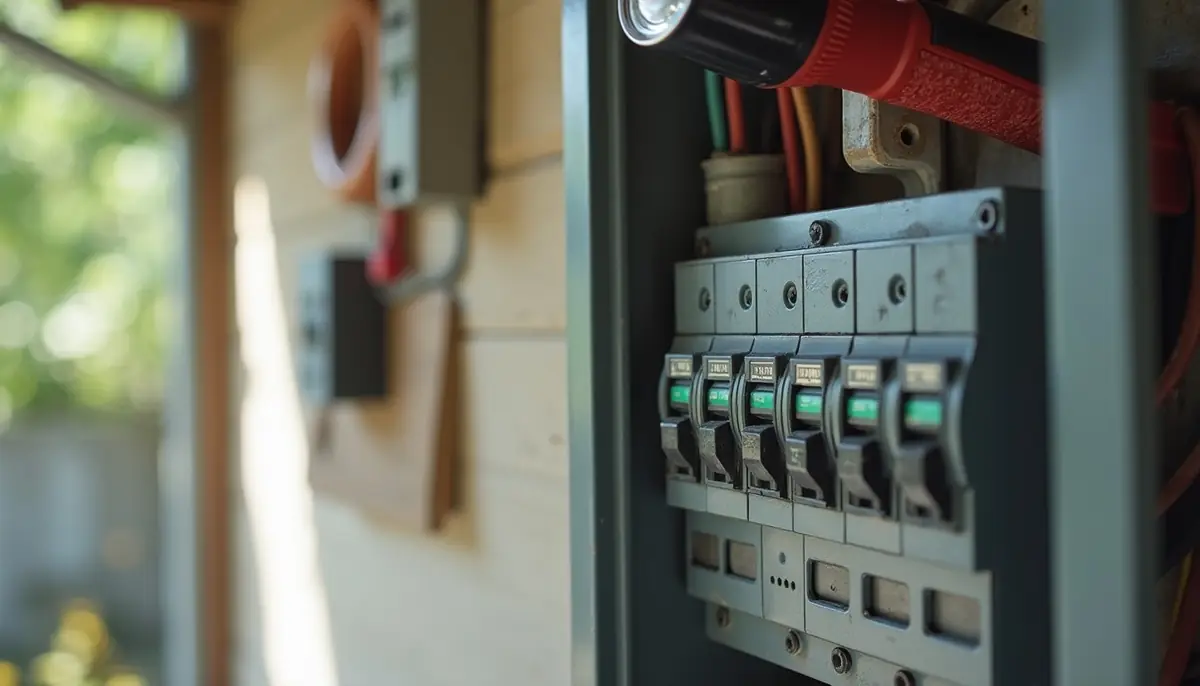
- Turn off the breaker before removing a plate. The same fact sheet says to turn off all electrical service before treating any equipment.
- Do not poke dust or powder into the contact slots. Dust belongs in the void around the box, applied with the power off and following the label.
- Leave infested electrical equipment to the right people. Texas A&M advises letting an electrician or a licensed pest management provider treat it.
What are the signs that an electrical outlet is faulty?
The US Consumer Product Safety Commission’s Guide to Home Wiring Hazards lists the warnings: sparks or flashes, sizzling or buzzing sounds, an odour of hot insulation, and switch plates or outlet covers that are hot, painful to touch or discoloured from heat. It adds that a shock from a metal faceplate or its screws means you should avoid touching the device until a qualified electrician has checked it, and that a hot faceplate indicates a potential fire hazard: stop using that outlet immediately.
Insects add to that risk: Texas A&M documents ants carrying soil into housings, causing corrosion, and chewing insulation, causing short circuits. Where insects have lived in a box for months, have an electrician inspect it once they are gone.
How to get rid of roaches coming from an outlet?
Treat the wall, not the receptacle. German cockroaches at an outlet near a sink or stove are part of a colony living in that wall void, the cabinet below or the appliance beside it. UC IPM calls baits the primary tool, says gels work well in cracks and crevices, and describes dusting the void under appliances and around utility pipe penetrations. Its note that a bait programme may take 7 days or longer is worth remembering before deciding it failed.
Boric acid is the common dust for voids; UC IPM says it is not repellent and keeps working for a long time if it stays dry, as covered in how boric acid works on roaches and where it fails. Any dust goes into the gap around the box with the breaker off, never into the receptacle.
UC IPM also says serious indoor infestations often require professional services, and a German cockroach colony inside walls usually qualifies. The full plan by species is in how to get rid of roaches.
Roaches that colonise the equipment plugged into the outlet are a separate problem: see getting roaches out of TVs, consoles and microwaves.
How to seal electrical outlets from bugs
- Switch off the circuit at the panel and confirm the outlet is dead with a plug-in tester.
- Remove the cover plate and look for droppings, cast skins, dead ants or soil; soil or packed dead ants means an electrician should inspect it.
- Fit a foam outlet gasket behind the cover plate. It closes the gap between the plate and the wall surface, which is the main path into the room.
- Seal pipe penetrations under sinks and holes where cables enter from outside. Ants pass 0.5 mm openings, so no seal is perfect: pair sealing with baiting.
- Bait the trail outside the wall. For ants, match the bait to the species as set out in how to get rid of ants by species.
Frequently asked questions
Can bed bugs live in electrical outlets?
Yes, but only in heavy infestations. EPA lists electrical receptacles among the hiding places found when a room is heavily infested. Bed bugs in an outlet almost always mean they are also in the mattress, bed frame and headboard, so the whole room needs treatment, and any dust behind the cover plate should be applied with the power off.
Why do electrical outlets catch fire?
The CPSC Guide to Home Wiring Hazards links outlet fires to overheating at connections, signalled by hot or discoloured faceplates, buzzing and a smell of hot insulation. Insects add to the risk: Texas A&M reports ants corroding contacts with imported soil and chewing insulation, which can cause short circuits. Stop using a hot outlet and call an electrician.
Can I put boric acid in an electrical outlet?
Not in the receptacle slots. Boric acid dust is labelled for cracks, crevices and voids, so the target is the gap around the outlet box with the breaker off and the cover plate removed, following the label. For roaches or ants living in a wall, a licensed professional can treat the void more completely and safely.
What are the tiny bugs coming out of my bathroom outlet?
Most often pharaoh ants, about 2 mm and yellowish, or springtails, about 1/16 inch and jumping. Pharaoh ants follow wiring and hot water pipes through walls, per UF/IFAS. Springtails follow moisture, so in a bathroom they usually point to a leak or damp framing behind the wall that needs drying.
Sources
- Texas A&M AgriLife Extension, Keck M. and Drees B.M., Managing Red Imported Fire Ants in Electrical Equipment and Utility Housings, ENTO-020, 2014.
- Texas A&M AgriLife Extension, Household Ants, B-6183.
- MacKay W.P., Vinson S.B. and colleagues, Effect of electrical fields on the red imported fire ant (Hymenoptera: Formicidae), Environmental Entomology, 1992.
- Vander Meer R.K., Slowik T.J. and Thorvilson H.G., Semiochemicals released by electrically stimulated red imported fire ants, Solenopsis invicta, Journal of Chemical Ecology 28(12): 2585 to 2600, 2002 (USDA ARS).
- University of Florida IFAS Extension, Tawny Crazy Ant, Nylanderia fulva, SP486D (IN1076).
- University of Florida IFAS, Featured Creatures, Pharaoh Ant, Monomorium pharaonis, EENY-290 (IN533).
- University of California Statewide IPM Program, Pest Notes: Cockroaches, Publication 7467, revised 2019.
- University of California Statewide IPM Program, Pest Notes: Springtails, Publication 74136, revised 2025.
- University of California Statewide IPM Program, Pest Notes: Silverfish and Firebrats.
- US Environmental Protection Agency, How to Find Bed Bugs, and Bed Bugs Appearance and Life Cycle.
- US Consumer Product Safety Commission, CPSC Guide to Home Wiring Hazards, Publication 518.
- The Pest Control Brief analysis of iNaturalist research-grade records, pulled October 2026.