Signs of Termites: Active Infestation or Old Damage?
The signs of termites are swarmers or shed wings indoors, pencil-wide mud tubes, BB-sized mud spots on walls, six-sided pellets below wood, and wood hollowed along the grain with dried mud inside. Only two of those prove termites are active today: live termites, and mud that gets rebuilt after you break it. Everything else can be years old. The checklist below ranks each sign by what it proves, and gives the test that tells active from old.
Mississippi State extension gives the rebuild test in one line: break a 1-inch section of tube and watch whether termites appear or repair it over the next few days. Either result means an active infestation. That test, and three like it, are what separate a reason to book a treatment from a reason to book an inspection.
Every sign, ranked by what it proves
| Sign | Where it shows | Proves activity today? | Check to run |
|---|---|---|---|
| Live workers or soldiers in wood or a tube | Opened wood, broken tube | Yes. UC IPM: “a sure sign of an active infestation” | None needed; keep a sample |
| Swarmers emerging from walls, floors or ceiling | Rooms, windowsills, light fittings | Yes, in most cases. Kentucky: “almost always indicates an infestation” | Note date and time; bag a few |
| BB-sized mud spot (“pinhole”) on drywall | Interior walls, ceilings, trim | Yes, if it is repaired. Mississippi State calls a repaired pinhole “a sure sign” | Scrape, mark, recheck over a few days |
| Mud tube on foundation, pier or pipe | Crawlspace, slab edge, basement wall | Usually. A rebuilt tube proves it; an empty one does not disprove it | Break a 1-inch section, recheck in a few days |
| Six-sided pellets in a pile | Floor, sill, countertop below wood | No. UC IPM: pellets alone cannot show the infestation is current | Sweep up, look for new pellets a few days later |
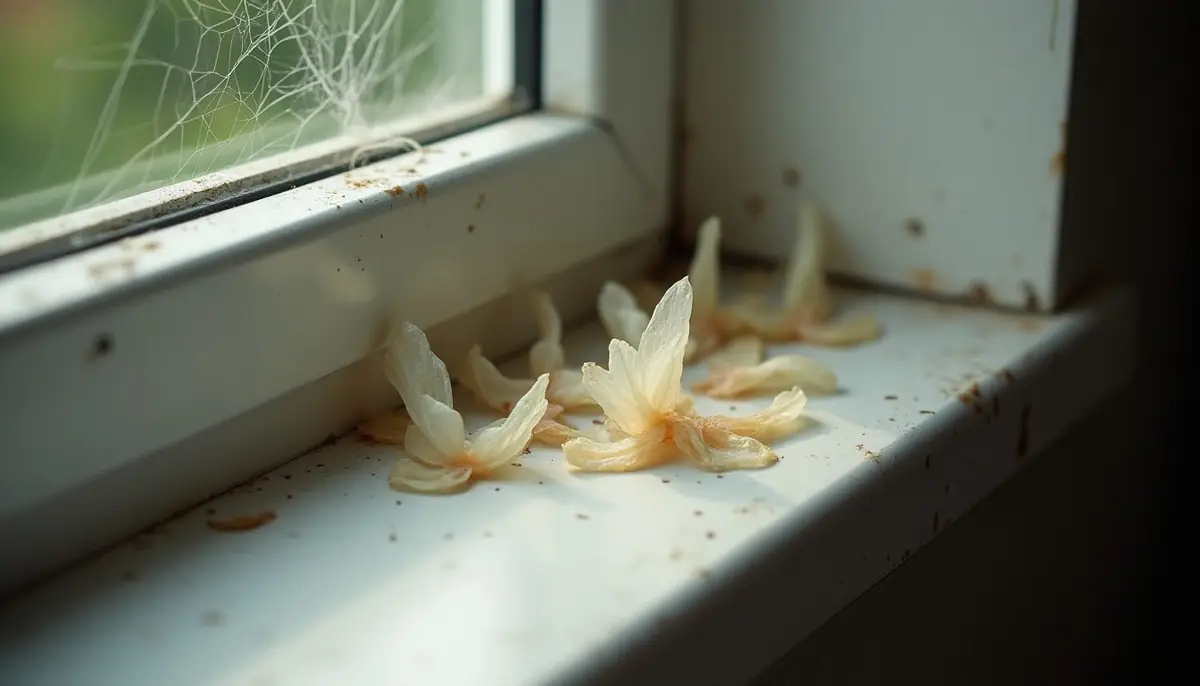
| Shed wings, all the same length | Sills, cobwebs, lamp bases | No. A flight happened; could be this spring or last | Look for tubes and swarmers next season |
| Sunken lines in paint or wallpaper | Drywall, paneling | No. Galleries are there; activity unknown | Professional probe |
| Wood hollowed along the grain, dried mud in galleries | Sills, joists, door frames | No. Mississippi State: could be “old damage” from a controlled infestation | Probe nearby sound wood for live workers |
| Sagging floor, sticking door, broken frame | Anywhere structural | No. Mississippi State notes wood rot can cause the same | Inspection, then structural check |
Compiled by The Pest Control Brief from UC IPM Pest Notes 7415 and 7440, University of Kentucky ENTFACT-604, Mississippi State University Extension and Penn State Extension.
The ranking matters because the most common sign is often the least informative. Penn State says shed wings are very often the only evidence that termites are in a building, yet wings tell you nothing about whether that colony is still feeding. For what each caste looks like close up, see what termites look like.
Active or old damage: four tests that settle it
Break a tube, then wait
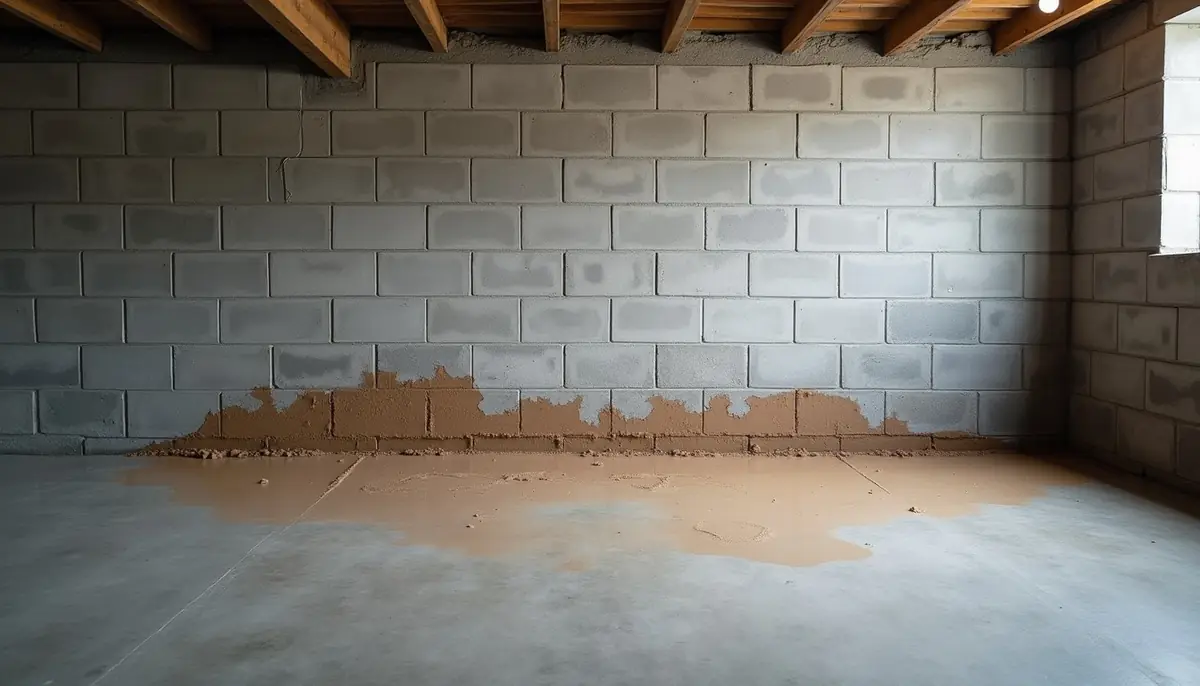
Snap a 1-inch section out of the middle of a tube and leave the rest alone. Mississippi State says that seeing termites, or finding the gap repaired over the next few days, both confirm an active infestation. Kentucky adds the caveat most sites leave out: a vacant tube “does not necessarily mean that the infestation is inactive”, because termites abandon sections of tube while foraging elsewhere in the structure. So a rebuilt tube is a yes, and an empty tube is a maybe, never a no.
Scrape a pinhole
Termites that accidentally cut through to open air promptly plug the hole with mud, because, as Mississippi State puts it, they do not like exposure to the outside airflow. Mississippi State’s method: scrape the BB-sized spot, mark it with a pencil, and check whether it is closed over the next few days. In one of its case photos a worker came to the hole as the homeowner watched.
Sweep the pellets
For drywood termites, UC IPM says it is “not possible to determine, from fecal pellets alone, whether the infestation is currently active.” Clean up the pile under the kickout hole (holes are under 2 mm across) and look again a few days later. New pellets point to activity, with one caution from the same source: building vibration can shake a few old pellets loose, so a fresh heap means more than a scattering.
Probe for live insects
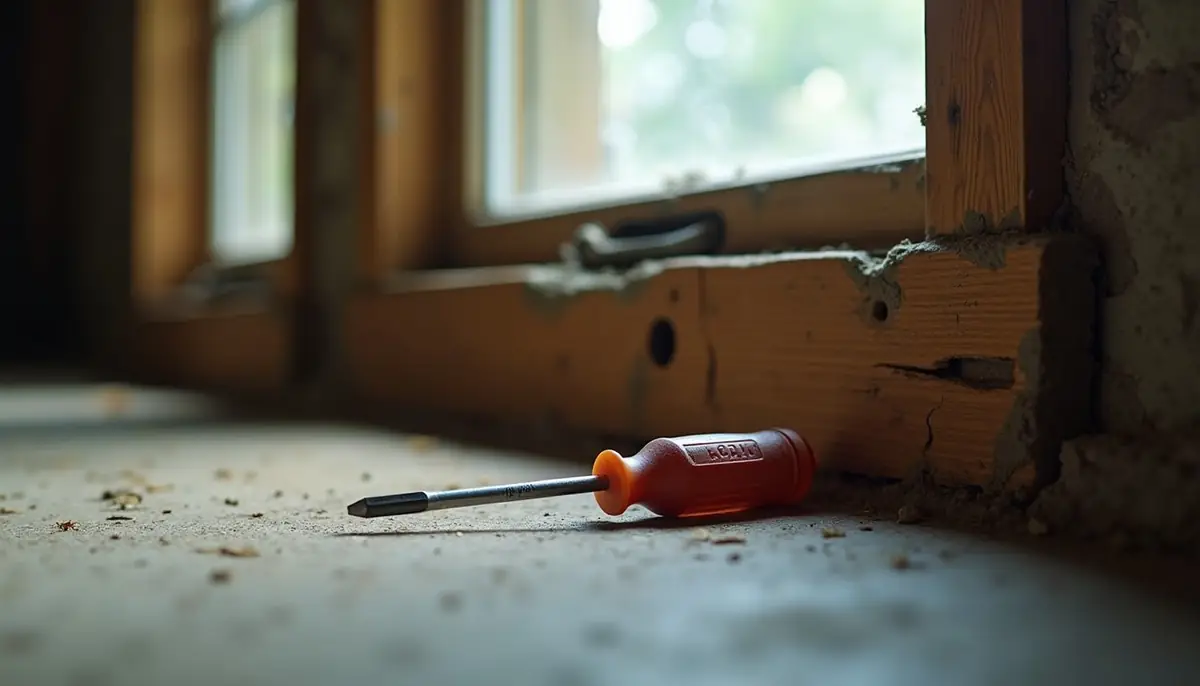
Penn State advises probing suspect woodwork with an awl, ice pick or screwdriver. UC IPM notes that damaged wood is typically thin at the surface and easily punctured. If you open a gallery and find pale, soft workers, the question is answered. If you find only dried mud, Mississippi State says it may be old damage, and termites also leave an area quickly once it is disturbed, so an empty gallery right after demolition proves little.
Telling termite galleries from carpenter ant, beetle or rot damage is a separate skill; our wood damage identification guide covers what is inside each kind of tunnel.
What signs termites leave depends on which termite you have
Three groups account for most US structural infestations, and they leave different evidence in different places.
- Native subterranean termites (Reticulitermes), found in every region: tubes on foundation walls, posts, mudsills and door trim, per Penn State, which says most Pennsylvania infestations sit in the basement and the timbers just above the cellar walls. Look hardest near furnaces, chimneys, water heaters and hot water pipes, which Penn State says termites favour in cold months.
- Formosan subterranean termites, established across the Gulf states and Southeast: tubes high on interior walls, soffits and fascia, tubes through foam insulation, and “swarm castles”, dried mud formations that Mississippi State measured at about 3 inches wide and 1.5 inches proud of the wall. Formosan swarmers fly at night, towards lights.
- Drywood termites (Incisitermes), which UC IPM places along the Pacific coast, into the Central Valley and in the southern California deserts: no tubes at all, because they live inside dry wood. UC IPM says colonies are usually fewer than 1,000 insects and the first clue is often swarmers or pellets.
In Florida our records put the invasive Formosan termite ahead of the native genus, 80 records to 62. In Pennsylvania there are no Formosan records in the household list at all. A tube on a soffit means something different in Tampa than in Pittsburgh.
When the signs show up: early warning by month
Swarmers are the most visible early sign, and each group has its own window. In our data native termite records rise twice, in March and April (index 166 and 195) and again in November (207), Formosan records spike in May (745) and drywood records in September (390). Part of the November rise reflects how little else people photograph that month, so read it as a second window rather than the main one.
A flight inside the house in any of those windows, with doors and windows shut, is the earliest sign most owners get. Our termite swarm season calendar breaks the native termites down species by species, and if the evidence is a single insect, found one termite sets out what each scenario means.
What to do if you see signs of termites
- Do not destroy the evidence. Mississippi State says destroying tubes “will not control the termites”; an inspector needs to see them. Break only the one test section.
- Do not spray swarmers. Mississippi State says killing swarmers “does nothing to solve the problem”; indoor swarmers die anyway. Vacuum them.
- Run the matching test above and photograph the result with the date.
- Check your paperwork. If the house is under a termite contract, call that firm first; see termite bonds and warranties.
- Book an inspection, then take your time over the treatment. Kentucky: “the amount of damage caused by taking an additional day, week, or month to make an informed decision generally is inconsequential.” Penn State puts it the same way: visible damage is usually the result of years of infestation.
A formal wood destroying insect report runs $75 to $150 on our termite inspection cost page, and many firms inspect free when treatment may follow. If activity is confirmed, colony treatment is a professional job: UC IPM says do-it-yourself termite pesticides are “generally not effective”, and Kentucky notes a typical subterranean treatment can use hundreds of gallons of termiticide. Methods and prices are in our termite treatment cost guide.
What an inspection report records, and what it cannot
Most real estate termite reports use the NPMA-33 form, and its layout mirrors the active versus old question. Section II has separate boxes for “live insects” and for “dead insects, insect parts, frass, shelter tubes, exit holes, or staining”, plus a third for visible damage. A tick in the second box without the first is the form’s way of saying “evidence found, activity not seen”.
The limits are printed on the form. It is based on “a careful visual inspection of the readily accessible areas”, is “not to be construed as a guarantee or warranty against latent, concealed, or future infestations”, and is “not a structural damage report”. Section IV lists 24 standard obstructions, from fixed ceilings and insulation to stored items, rigid foam board and synthetic stucco. Read that section first: every box ticked there is a place nobody looked. Mississippi State makes the same point from the other side: a building inspected without finding termites is not necessarily free of them.
Frequently asked questions
What are the early warning signs of termites?
Swarmers or piles of identical shed wings indoors, especially on sills, and pencil-wide mud tubes on the foundation or crawlspace piers. In drywood areas, small piles of six-sided pellets. Penn State notes damage that is already visible usually reflects years of feeding, so these early signs are the ones worth checking for each spring.
What kills termites immediately?
Nothing sold to homeowners reliably ends an infestation. A vacuum disposes of swarmers, but Mississippi State says killing them does nothing to the colony. UC IPM says do-it-yourself termite pesticides are generally not effective, and California has no reliable over-the-counter product. Colonies are treated by licensed firms with soil termiticides, baits, spot treatments or fumigation.
How do you test your house for termites?
Break a 1-inch piece of any mud tube and check for repair over a few days; scrape small mud spots on drywall and see if they are resealed; sweep pellet piles and look for new ones. Probe suspect wood with a screwdriver, as Penn State advises. A licensed inspection covers what you cannot reach, within the limits printed on the report.
What is a termite’s worst enemy?
Ants. A Purdue study in Insectes Sociaux describes ant and termite encounters as “highly antagonistic”, with soft-bodied termites usually losing, and showed woodland ants preying on eastern subterranean termites in the field. The authors note termites stay attractive prey despite their defensive soldier caste. Ants will not, however, clear a colony out of a house.
How often should a house be inspected for termites?
UC IPM suggests inspections every 3 to 5 years to catch infestations before they become damaging. Mississippi State advises annual inspections for buildings in areas known to have Formosan termites, whether or not the building has ever been infested.
Sources
- Mississippi State University Extension Service, Signs of Termite Infestation (Blake Layton).
- University of California Statewide IPM Program, Pest Notes: Subterranean and Other Termites, Publication 7415.
- University of California Statewide IPM Program, Pest Notes: Drywood Termites, Publication 7440.
- University of Kentucky Entomology, ENTFACT-604, Termite Control: Answers for Homeowners.
- Penn State Extension, Eastern Subterranean Termites.
- National Pest Management Association, Form NPMA-33 Wood Destroying Insect Inspection Report (9/01/04), and Suggested Guidelines for Completing the NPMA-33 (rev. 2019).
- Buczkowski, G. and Bennett, G. (2007). Protein marking reveals predation on termites by the woodland ant, Aphaenogaster rudis. Insectes Sociaux 54: 219 to 224.
- The Pest Control Brief analysis of iNaturalist research-grade records, pulled October 2026.