What Does a Termite Nest Look Like? Subterranean, Drywood, Formosan
Most termite nests in the US are never seen: subterranean termites nest in the soil as a scattered network of chambers and tunnels, so what you actually find are pencil-width mud tubes and soil-lined galleries in wood. Formosan termites are the exception that builds a visible nest, a “carton” of soil, chewed wood, saliva and droppings that can fill several cubic feet of a wall void or hollow tree. Drywood termites have no separate nest at all: the colony lives inside the timber it eats, and the clue is piles of tiny six-sided pellets pushed out through holes under 2 mm wide.
That is why searching for a termite nest is usually a dead end. The useful question is which of the three termite types left the evidence in front of you, because that decides what kind of inspection and treatment the house needs.
Termite nests by type at a glance
| Native subterranean | Formosan subterranean | Drywood | |
|---|---|---|---|
| Where the colony lives | In soil, sometimes many feet down (UC IPM) | Underground central nest, plus aerial nests inside buildings and trees (UF/IFAS, Texas A&M) | Entirely inside sound, dry wood, with no soil contact (UF/IFAS) |
| What the nest looks like | No single central nest in older colonies; many scattered nest sites (Mississippi State) | Carton: a blend of soil, wood pulp, saliva and feces filling voids (UF/IFAS) | Chambers and tunnels cut across the grain, smooth and clean (UC IPM, Texas A&M) |
| What you usually see | Mud tubes about the diameter of a pencil; galleries lined with soil (Kentucky) | Mud tubes high on walls and ceilings; dried-mud “swarm castles” (Mississippi State) | Piles of six-sided pellets below kick-out holes (UC IPM) |
| Colony size | About 50,000 to 200,000 or more (Mississippi State); up to 1,000,000 (UF/IFAS) | Often over 1 million (Texas A&M); more than 10 million recorded (LSU AgCenter) | Usually fewer than 1,000 (UC IPM) |
| Where in the US | Throughout the East (UF/IFAS) and in the West (UC IPM) | Southeast, Hawaii, north to Virginia, southern California (UF/IFAS) | Warm southern states and California; in Texas, mostly the Gulf Coast (Texas A&M) |
If you have not yet confirmed the insect itself, our guide to what termites look like covers workers, soldiers and swarmers of each type.
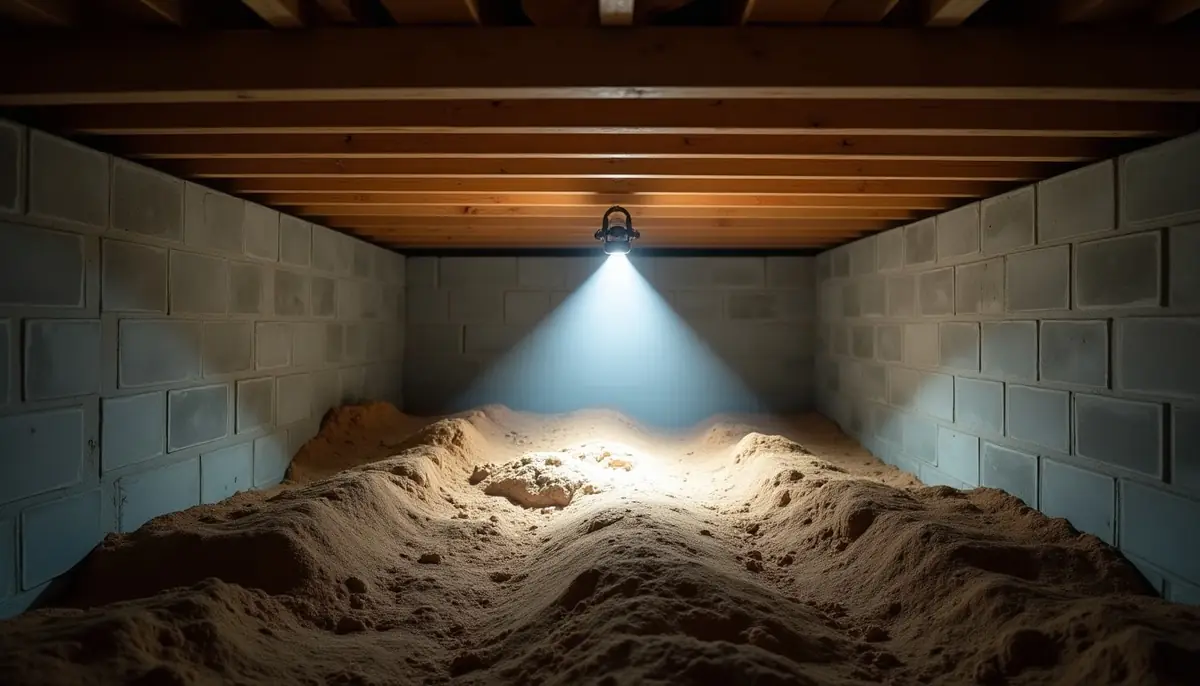
What does a termite nest look like in the ground?
For native subterranean termites there is no mound and usually no single nest to dig up. UC IPM says they live and breed in soil, sometimes many feet below the surface, and Mississippi State says older colonies do not have a single, central nest, but many different “nest sites” where eggs are laid.
Dig into an active area and you see narrow, meandering tunnels in damp soil and buried wood, with pale workers inside. Mississippi State says termites forage mainly in the top 6 to 12 inches of soil, and that an average suburban landscape may hold up to 25 colonies an acre.
Why the nest may not even be on your property
UF/IFAS says an eastern subterranean colony may contain 100,000 to 1,000,000 termites and forage up to 150 feet for food. Kentucky’s extension guide to termite baits notes that, because workers forage such distances, the colony responsible for damage may be in a neighbour’s yard rather than beneath the infested house.
What does a termite nest look like on a house?
On a house, the visible part of a subterranean colony is its plumbing: mud tubes. Kentucky says they are typically about the diameter of a pencil, sometimes thicker, and run over foundation walls between the underground colony and the wood. UC IPM calls them the most commonly seen evidence of subterranean termites, and Texas A&M lists crawl-space piers, utility penetrations, foundation walls and slabs as the places to find them.
An active tube broken open is full of workers and soldiers, Texas A&M notes, but Mississippi State points out that destroying tubes will not control termites, which are still in the ground. Our wood damage identification guide shows how termite tunnels differ from carpenter ant galleries, beetle holes and rot.
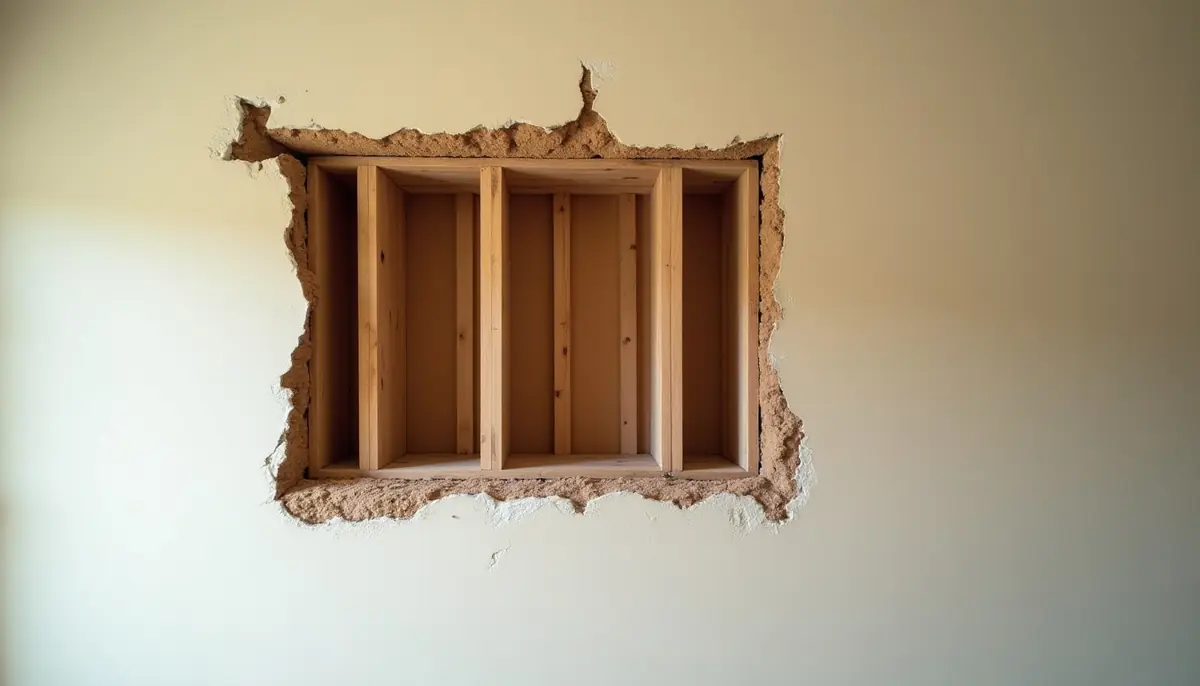
Formosan termite carton nests
Formosan subterranean termites are the one US termite that builds a nest you might actually find. UF/IFAS says they fill voids with carton nest, a blend of soil, wood pulp, termite saliva and termite feces. LSU AgCenter says they build large nests within walls and other enclosed spaces, that these nests serve as reservoirs of moisture, and that once established they are difficult to destroy.
Texas A&M’s extension publication E-367 says carton nests can be as large as several cubic feet, and that nests in buildings usually are not discovered unless the wall coverings are removed. Formosan termites can live for months or even years on the moisture held in the carton while feeding on the building, and if the colony is cut off from its soil nest the aerial nest can survive. UF/IFAS notes they also infest live trees, hollowing out the dead centre and filling it with carton.
What a Formosan nest looks like on a wall
Mississippi State lists the wall signs: mud tubes higher up on walls, ceilings, soffits or fascia usually point to Formosan termites; BB-sized spots of dried mud on interior walls are pinholes the termites have repaired; narrow sunken lines in paint or wallpaper can mean termites are feeding on the paper face of drywall; and odd-shaped dried-mud “swarm castles” appear on walls or ceilings in late spring, built just before a swarm.
Drywood termite nests: the wood is the nest
Drywood termites do not build a nest separate from their food. UF/IFAS says colonies live entirely within sound, dead, dry wood and do not require any contact with the ground; the western drywood termite infests structural timber, furniture and other wooden items. Texas A&M adds roof shingles, eaves and siding.
Inside, the galleries are distinctive. UC IPM says drywood feeding can cut across the grain, leaving a pattern of chambers and tunnels, and Texas A&M describes a smooth, sculptured appearance with no soil. Colonies are small and slow: UC IPM says usually fewer than 1,000 individuals, and UF/IFAS cites a 15-year-old western drywood colony of about 2,600 nymphs and 120 soldiers.
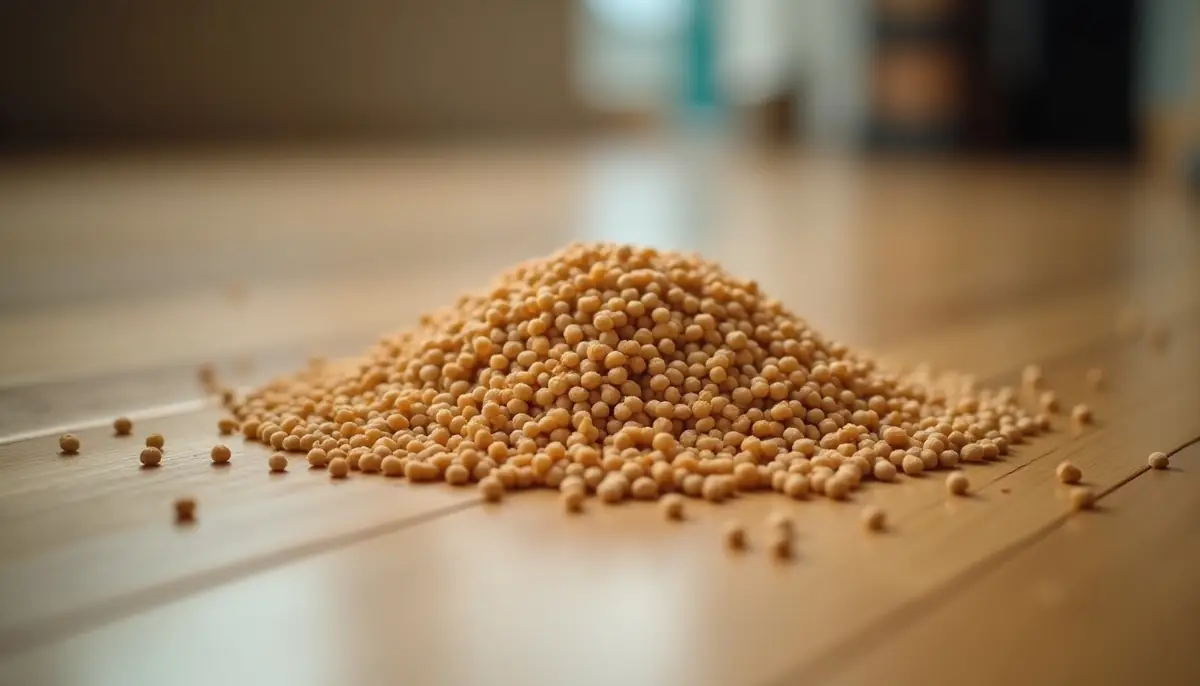
What you see from outside is the waste. UC IPM describes kick-out holes less than 2 mm across, through which termites push fecal pellets with six flattened sides; UF/IFAS measured average western drywood pellets at 0.98 mm long. A small heap of uniform pellets on a sill below wooden trim is the drywood equivalent of a mud tube.
Signs of a termite nest, and what each one means
| What you find | Most likely termite | What it tells you |
|---|---|---|
| Pencil-width mud tubes on foundation, piers or pipes | Native subterranean | An active route from the soil colony to the house; usually a sure sign of infestation (Mississippi State) |
| Tubes high on walls, ceilings or soffits | Formosan | Possibly an aerial nest in the structure (Mississippi State) |
| Carton material in a wall void or hollow tree | Formosan | The nest itself; a professional job |
| Small heaps of six-sided pellets under tiny holes | Drywood | The colony is in that wood, and there may be others nearby (UC IPM) |
| Swarmers or shed wings indoors | Any | Indoors, almost always an infestation that needs treatment (Kentucky) |
| Swarmers from a stump 25 feet or more from the house | Subterranean | Rarely a cause for concern on its own (Mississippi State) |
| Wood hollowed along the grain, lined with dried soil | Subterranean | Termite damage, not rot or ants (Kentucky) |
How to identify a termite nest?
Match the evidence to the type. Soil-lined galleries that follow the grain and mud tubes mean subterranean termites, whose nest is in the ground and will not be found from inside the house. Carton material, or tubes starting high on a wall with no route to the soil, suggest Formosan termites. Clean, smooth galleries and six-sided pellets mean drywood termites, and the nest is the wood itself. If you have winged insects, check them against termites vs flying ants before anything else.
How to find a termite nest, and why you usually do not need to
Homeowners rarely find a subterranean nest, and treatment does not depend on it. Texas A&M says below-ground nests are usually located away from structures and can be difficult to find, and that more often than not the evidence will be mud tubes and foraging tunnels. Soil treatments around and under the structure block termites from reaching it, bait stations are found by foraging workers, and Kentucky notes total colony elimination may not be necessary to protect a structure. What matters is a careful inspection of where termites get in.
UC IPM says a professional inspection is usually required to confirm an infestation and is required before any treatment can be performed. A useful homeowner check covers:
- Foundation walls, slab edges, crawl-space piers and every point where pipes or cables enter, looking for mud tubes.
- Wood in contact with soil: door frames, deck posts, stair stringers, fence lines, woodpiles and stumps.
- Windowsills and light fittings in spring, for swarmers or shed wings.
- Floors and sills below wooden trim, eaves and furniture, for drywood pellets.
- Any damp area: leaking gutters, plumbing leaks and condensation lines, since Texas A&M says aerial carton nests form where moisture is available. Inspectors use moisture meters to find hidden carton nests in walls.
What a professional inspection includes, and what it costs, is set out in termite inspection cost.
What month are termites most active? Our data
You are most likely to see termites when they swarm, which differs by type. The Pest Control Brief analysis of iNaturalist research-grade records, pulled October 2026, shows three calendars. The seasonality index is each group’s share of all US research-grade observations that month, with the yearly average set to 100.
- Formosan termites spike hard in May, at an index of 745, with 519 of the 760 records that month. That matches UF/IFAS, which says they swarm between early April and late June, shortly after sunset, peaking in May.
- Native subterranean termites have two peaks, 195 in April and 207 in November. UC IPM says they swarm in spring or fall on clear days after a soaking rain, and UF/IFAS records some Florida species flying from December to February.
- Drywood termites peak in September, at 390, and stay high in October, at 330. UF/IFAS says western drywood termites swarm from late September through November in southern California, on bright, sunny days.
These are records of people photographing and identifying termites, mostly swarmers, not counts of infestations. Workers feed out of sight all year. Our termite swarm season page has the regional calendar.
Formosan termites rival native ones in Florida and Texas records
In our state pull of household pest records, Florida had more research-grade Formosan records than native subterranean ones; in Texas the two were close; in Pennsylvania Formosan termites did not appear at all.
Texas A&M says Formosan termites have been detected in 31 Texas counties and in all its major metropolitan areas. The broader regional picture, including the building-code termite zones, is in our termite zones map.
What is a termite’s worst enemy?
For termites, ants are among the most persistent predators. Mississippi State says fire ants readily prey on termite swarmers trying to found new colonies, and notes that shelter tubes protect foragers from predators such as fire ants. UC IPM says most swarmers die during the flight from predation by birds, lizards, ants or other insects. Predators do not protect a house from an established colony, however.
What is often mistaken for termites?
Flying ants, more than anything. Kentucky notes that people often confuse winged termites with ants, which tend to swarm at the same time of year, and that termites have straight antennae, a uniformly thick waist and wings of equal size. Carpenter ants also damage wood, but Kentucky notes their damage does not look like termite damage. What genuinely draws termites to a house, and what is myth, is covered in what attracts termites.
Treating the nest: a job for a licensed professional
Termites are a structural problem. Kentucky says ridding a home of termites requires special skills and that do-it-yourself products will seldom eradicate an existing infestation. Subterranean colonies are handled with soil treatments or baits around the structure. Formosan aerial nests, LSU AgCenter says, are difficult to destroy once established. Drywood termites can be treated locally or with whole-structure fumigation, and UC IPM notes that with localised treatments one can never be sure all infestations have been treated, since colony boundaries are uncertain. See termite treatment cost for what each method costs, and termite tenting for the whole-house option. How fast a colony grows is in how long termites live.
Frequently asked questions
What does a termite nest look like inside?
A subterranean nest is a network of small chambers and narrow tunnels in damp soil and buried wood, with no single central chamber in older colonies, according to Mississippi State. A Formosan carton nest is a hardened mass of soil, wood pulp, saliva and droppings that Texas A&M says can reach several cubic feet. A drywood nest is a set of smooth chambers cut across the grain inside the infested timber.
Do termites build mounds in the US?
Not the species that damage US homes. Native subterranean termites nest in soil, sometimes many feet down, in many scattered nest sites. Formosan termites build carton nests inside walls, roofs and trees, and drywood termites live inside wood. What homeowners see are mud tubes, carton or pellets, not a structure above ground.
Do I need to find the termite nest to get rid of termites?
No. Subterranean colonies may be under a neighbour’s yard, Kentucky notes, and soil treatments and baits work by protecting the structure and intercepting foragers rather than by locating the nest. For drywood termites, the colony is in the infested wood. A licensed inspector needs to find where termites enter, not where the queen lives.
Can termites nest inside the walls of a house?
Formosan termites can. Texas A&M says they regularly build aerial nests within the structures they infest, and LSU AgCenter says these nests sit inside walls and other enclosed spaces, holding moisture for the colony. Native subterranean termites usually stay connected to the soil through mud tubes, and drywood colonies live inside the wood of walls, trim and furniture.
Sources
- University of Florida IFAS Extension, EENY-121/IN278, Formosan Subterranean Termite, Coptotermes formosanus (Su, Scheffrahn, Gordon and Chouvenc), 2024.
- University of Florida IFAS Extension, EENY-212/IN369, Native Subterranean Termites: Reticulitermes flavipes, R. virginicus, R. hageni.
- University of Florida IFAS Extension, EENY-248/IN526, Western Drywood Termite, Incisitermes minor (Cabrera and Scheffrahn).
- University of California Statewide IPM Program, Pest Notes: Subterranean and Other Termites, Publication 7415 (Lewis, Haverty and Sutherland), 2014.
- University of California Statewide IPM Program, Pest Notes: Drywood Termites, Publication 7440 (Lewis, Sutherland and Haverty), 2014.
- Mississippi State University Extension, Signs of Termite Infestation; Termite Facts; Termite Biology (eastern subterranean and Formosan termites).
- University of Kentucky Entomology, ENTFACT-604, Termite Control: Answers for Homeowners (Potter), revised 2026.
- University of Kentucky Cooperative Extension, ENT-65, Termite Baits: A Guide for Homeowners (Potter).
- Texas A&M AgriLife Extension, E-367, Formosan Subterranean Termites (Gold, Keck, Brown and Schofield), 2010.
- Texas A&M Urban and Structural Entomology Program, Formosan Subterranean Termites; Native Subterranean Termites; Drywood Termites.
- LSU AgCenter, Supertermites, 2008.
- The Pest Control Brief analysis of iNaturalist research-grade records, pulled October 2026.