How Much Does Termite Treatment Cost? 2026 Prices by Method
Termite treatment costs $275 to $1,600 for most homes. What each method costs, why it is priced per linear foot, and what the warranty is actually worth.
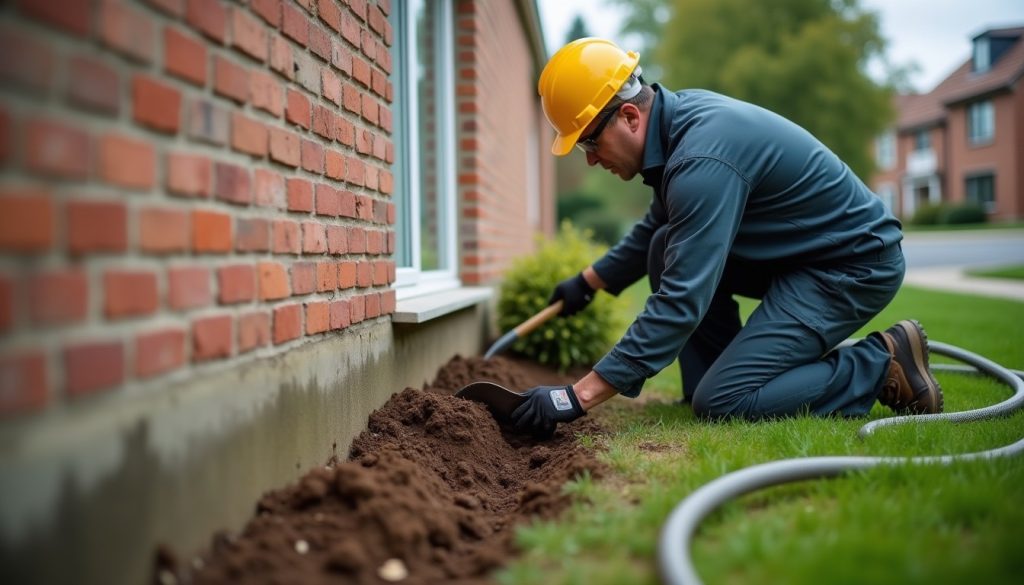
Termite treatment costs $275 to $1,600 for most homes in 2026, with whole-home jobs averaging around $1,500. Liquid soil barriers are priced per linear foot of foundation at $3 to $20, typically $6 to $10. Bait systems run $7 to $12 per linear foot. Whole-structure fumigation costs $1 to $4 per square foot. Annual renewal to keep a warranty active adds $200 to $400.
Where these numbers come from, and how much to trust them. There is no federal price index for pest control. The Bureau of Labor Statistics publishes no Producer Price Index for NAICS 561710 and no Consumer Price Index item covering pest control alone. We checked. Every national termite price you will read, including the ranges above, traces back to contractor surveys run by home services marketplaces that do not publish a sample size or a method. Treat them as a market signal, not a measurement. What we can verify is the cost structure underneath them, and that is what the rest of this page is for.
What termite treatment costs by method in 2026
Termite pricing is set by treatment method and by the measurement that method is billed against. Liquid barriers and bait systems bill per linear foot of foundation perimeter. Fumigation bills per square foot of structure volume. Spot treatments bill per job. Comparing two quotes that use different units is the single most common way homeowners misread a bid.
| Method | Billing unit | Typical range | Whole-home equivalent | Best suited to |
|---|---|---|---|---|
| Spot or localized treatment | Per job | $230 to $950 | Not applicable | A single confirmed gallery, drywood termites in one area |
| Liquid soil barrier | Linear foot of foundation | $3 to $20, usually $6 to $10 | Roughly $800 to $2,500 | Subterranean termites, the most common US species group |
| Bait system | Linear foot of foundation | $7 to $12 | $1,000 to $2,500 | Sites where trenching and drilling are impractical |
| Whole-structure fumigation | Square foot | $1 to $4 | $2,000 to $8,000 | Widespread drywood termite infestation |
| Annual monitoring renewal | Per year | $200 to $400 | Ongoing | Keeping a warranty or bond in force |
Ranges reflect contractor-reported figures compiled by home services marketplaces in 2026. They are not government statistics and they vary with region, foundation type and infestation severity.
Why termite work is priced per linear foot
A liquid barrier is a continuous chemical zone in the soil around your foundation. The applicator trenches, and where there is a slab or attached patio, drills through it at intervals, then injects termiticide to create an unbroken treated band. The cost driver is the distance around the structure, not its floor area, which is why the quote is written per linear foot.
This has a practical consequence most guides miss. Two houses with identical square footage can carry very different termite quotes if one has a long, irregular perimeter with attached hardscape and the other is a simple rectangle. Ask for the linear footage the quote is based on. It is a measurable number, and a company that cannot produce it has not measured your house.
Fumigation is the exception. Tenting fills the entire structure with gas, so the driver is enclosed volume, billed as square footage. That is also why fumigation requires a separate certification. Under federal rules, whole-structure fumigation falls in applicator category (n), non-soil fumigation, while soil treatment falls in category (m). Our guide to the federal licensing framework sets out how those categories work.
The thing you are actually buying is the warranty
For subterranean termite work, the chemical application is not the product. The product is the bond, sometimes called a warranty or a service agreement, under which the company returns if termites come back and, in stronger agreements, pays to repair new damage. That is why the annual renewal exists and why the first year costs more than later years.
Warranties differ enormously and the difference is worth more than a few hundred dollars on the initial price. The questions that separate them:
- Is it retreatment-only or does it include damage repair? Retreatment-only means they come back and spray again. Damage repair means they pay to fix what the termites eat. These are very different obligations and often differ several fold in value.
- Is there a damage repair cap? Many repair warranties cap liability at a stated dollar figure. Ask for the number in writing.
- Does it transfer when you sell? A transferable bond is an asset at closing. A non-transferable one is worth nothing to a buyer.
- What voids it? Common triggers include lapsed renewal payments, moisture conditions the owner did not fix, and any soil disturbance around the treated zone, which can include landscaping and a new deck.
- What is the renewal price escalation? Ask whether the $200 to $400 annual figure is fixed or rises.
Liquid barrier, bait system or fumigation: which applies to your situation
Method is generally determined by termite species and site conditions rather than by preference. Subterranean termites live in soil and enter from below, so they are treated with soil barriers or baits. Drywood termites live inside the wood itself with no soil contact, which is why a soil barrier does nothing for them and fumigation or localized wood treatment is used instead.
| Consideration | Liquid soil barrier | Bait system | Fumigation |
|---|---|---|---|
| Target | Subterranean | Subterranean | Drywood |
| Speed to control | Immediate barrier | Weeks to months, colony elimination | Single treatment, days |
| Disruption to household | Low, trenching and drilling outside | Very low | High, vacate the property, typically 2 to 3 days |
| Ongoing service | Annual inspection | Regular station monitoring | None inherent, no residual protection |
| Applicator category | (m) soil fumigation where applicable | (g) structural | (n) non-soil fumigation |
A point rarely made plainly: fumigation leaves no residual protection. It kills what is in the structure on the day and nothing more. If a company proposes fumigation without also discussing what prevents reinfestation, that is a reasonable thing to question.
What actually moves your quote up or down
Five variables account for most of the spread between quotes on comparable houses. Knowing which apply to you tells you whether a high bid is justified or padded.
- Linear footage and perimeter complexity. The primary driver for barrier and bait work. Attached garages, patios and additions add both distance and drilling.
- Foundation type. A slab requires drilling through concrete. A crawlspace requires working in it. Basements complicate access. Each adds labour hours.
- Species and infestation extent. Confirmed active infestation with structural damage costs more than a preventive treatment on a clean inspection.
- Regional termite pressure. Formosan subterranean termite territory along the Gulf Coast generally carries higher treatment intensity than low-pressure northern markets.
- Local market competition. The one nobody quantifies, covered next.
How local competition changes what you should pay
The number of pest control companies competing for your house varies by a factor of more than five between states, and it directly affects your bargaining position. We built this from Census County Business Patterns data covering all 16,535 US pest control establishments.
| State | Establishments per 100,000 residents | Your position on price |
|---|---|---|
| Florida | 9.85 | Strong. Many competitors, a second quote genuinely moves the price |
| Arizona | 7.45 | Strong |
| South Carolina | 7.43 | Strong |
| Michigan | 2.55 | Limited |
| North Dakota | 1.88 | Weak. Few operators, pushing hard on price rarely helps |
| Minnesota | 1.80 | Weak |
In a dense market, getting three quotes is straightforward and genuinely moves the price. In a thin market, there may be three companies serving your county in total, and aggressive negotiation tends to buy you a less experienced technician rather than a discount. The full state table sits in our Market Density Index.
There is a floor below which a quote should worry you. Across the industry, payroll is 36% of revenue and each employee generates about $139,825 of revenue a year against a median technician wage of $45,250. A bid far under the local market is usually a company running below the productivity its model requires, and the ways to close that gap are shorter visits and less experienced technicians. We set out the full arithmetic in where your pest control money goes.
Before you sign: the checks that take ten minutes
- Get the inspection findings in writing, including species identified, locations of activity and evidence of damage. A quote without findings is a price for unspecified work.
- Confirm the linear footage or square footage the price is calculated from.
- Ask which product will be applied and request the label. Pesticide labels are legal documents and applicators are required to follow them.
- Ask for the re-entry interval, the period before people and pets should return to treated areas. It is on the label and there is a correct answer.
- Read the warranty terms against the five questions above, particularly transferability if you may sell.
- Verify the licence. Ask for the company’s business licence number and the certification number of the applicator attending, then check both with your state pesticide regulatory agency. Our guide to checking a pest control company covers the tiers.
Frequently asked questions
How much does termite treatment cost for an average home?
Most homeowners pay between $275 and $1,600, with whole-home treatments averaging around $1,500 in 2026. Liquid barrier work on a typical house lands near $800 to $2,500 depending on foundation perimeter. These are contractor-reported market ranges compiled by home services marketplaces, not government figures, since no federal price index exists for pest control.
Is termite treatment worth the cost?
It depends on confirmed activity and local termite pressure. Where an inspection finds active subterranean termites, treatment cost is generally far below structural repair cost, and most agreements bundle a warranty covering retreatment. Where there is no evidence of activity, a preventive treatment is a risk management decision rather than a repair, and the value varies considerably by region.
How often do you need termite treatment?
A liquid soil barrier commonly remains effective for roughly five to ten years depending on product, soil conditions and application quality, though warranties usually require an annual inspection and renewal payment of $200 to $400 to stay in force. Bait systems require ongoing station monitoring rather than periodic reapplication.
Why are termite quotes so different between companies?
Usually because they price different things. One may quote a liquid barrier per linear foot while another quotes a bait system or a spot treatment, and warranties differ between retreatment-only and damage repair coverage. Ask each company for the treatment method, the measured footage and the warranty type before comparing the headline numbers.
Does homeowners insurance cover termite damage?
Standard homeowners policies in the United States generally exclude termite damage, on the basis that infestation is considered preventable through maintenance. This is why damage repair warranties from the treating company exist and why their coverage caps matter. Policy terms vary by insurer and state, so check your specific policy wording.
Can I treat termites myself?
Over-the-counter products exist, but subterranean termite control depends on establishing a continuous treated zone around the foundation, which typically requires trenching, slab drilling and volume calculations. Many effective termiticides are also restricted use products requiring applicator certification. Self-treatment additionally forfeits any warranty, which for most homeowners is the main value in the transaction.
Sources
- U.S. Census Bureau, County Business Patterns 2023, NAICS 561710, for establishment counts and market density.
- U.S. Census Bureau, Statistics of U.S. Businesses 2022, NAICS 561710, for receipts and payroll share.
- U.S. Bureau of Labor Statistics, Occupational Employment and Wage Statistics, May 2025, SOC 37-2021, for the median technician wage.
- 40 CFR 171.101, commercial applicator certification categories. ecfr.gov
- Contractor-reported price ranges compiled by HomeGuide, Angi and This Old House, 2026. Sample sizes and methods are not published by those sources.