Flying Ants at Night: Why They Swarm to Lights Indoors

Correction, 14 November 2026. We corrected the timing for southeastern drywood termites: our records run April to August, most in May. The September peak we gave belongs to the western drywood termite.
Flying ants at night are winged queens and males from a mating flight, drawn to your lights after dark, and a handful by a lamp usually came in from outside while dozens from one crack mean a nest indoors. Some carpenter ants fly in the evening or at night; UF/IFAS records Florida carpenter ant flights then from May to November. Check what you caught before anything else: Formosan and some drywood termites also swarm to lights after dark, and they are the costly look-alike.
What you saw tonight, and what it means
| What you saw | When | Most likely insect | What it means |
|---|---|---|---|
| Fewer than 10 winged insects at a lamp or window, elbowed antennae, pinched waist | Warm evening, spring to autumn | Ant swarmers from an outdoor colony, drawn in by light | Usually strays; Iowa State calls fewer than 10 likely accidental invaders |
| Dozens to hundreds coming from one baseboard, outlet or window casing | Any month, especially late winter and early spring | Ants nesting inside the building | A colony in walls, damp wood or under the slab; find it before treating |
| Large black or bicoloured winged ants, up to 3/4 inch, indoors in winter or early spring | January to April | Carpenter ants | UF/IFAS: swarmers emerging indoors in winter or early spring mean an interior nest |
| Yellowish-brown swarmers about 1/2 inch with hairy, equal-length wings, around porch or street lights | Dusk to midnight, April to July, southern states where it is established | Formosan subterranean termite | A mature colony nearby; LSU AgCenter advises professional help if swarmers are many or mud tubes appear |
| Light yellow swarmers about 7/16 inch with clear wings, at lights; tiny six-sided pellets on sills | Night; our records run April to August, most in May | Southeastern drywood termite | Texas A&M: swarmers inside mean a colony almost certainly in the building’s timbers |
| Dark swarmers in daylight, February to May, near a slab or porch | Daytime | Native subterranean termites (Reticulitermes) | Not a night insect; covered in our termite swarm calendar |
Compiled by The Pest Control Brief from UF/IFAS Extension SP486, Iowa State University Extension, LSU AgCenter, Texas A&M AgriLife Extension E-366, Penn State Extension and University of Nebraska Extension G1738.
The ant-or-termite check takes 10 seconds with a phone camera, and our ant identification guide narrows the species after that: ants have elbowed antennae, a narrow waist and front wings longer than the hind wings; termites have straight, beaded antennae, a thick waist and four wings of equal length.
Getting it wrong is expensive in one direction only, which is why our guide to telling termites from flying ants sets out what each means for the house.
Why do flying ants appear at night?
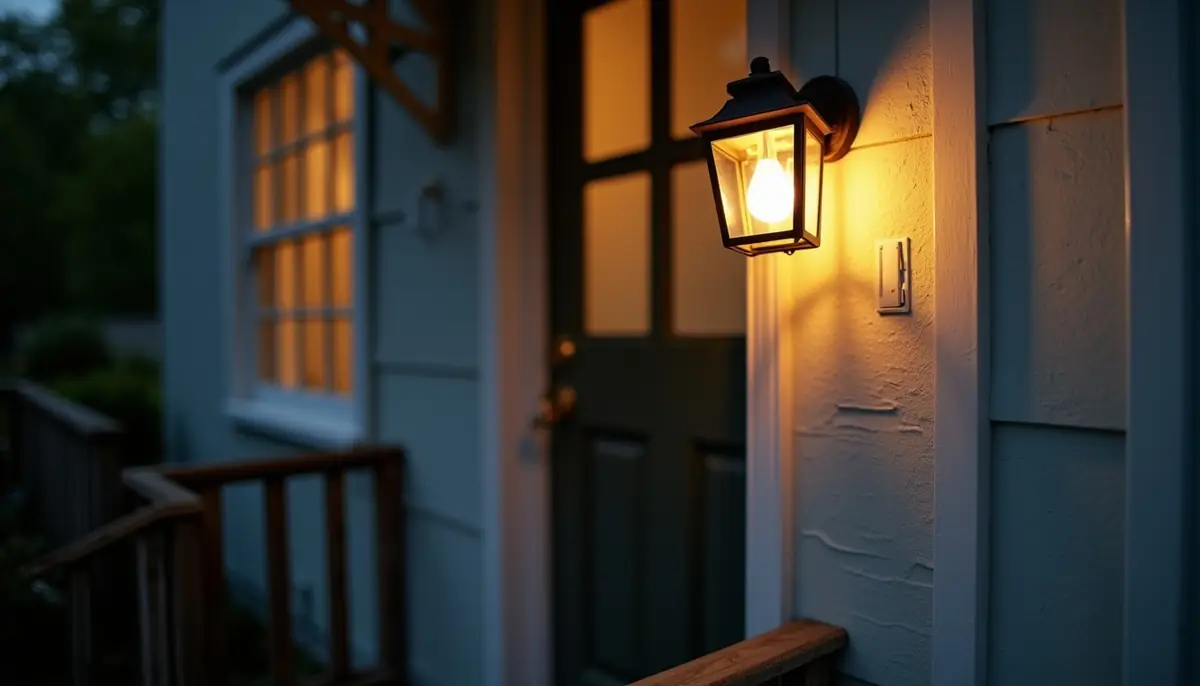
Because some species time their mating flight for evening or night, and flying ants that pass near an artificial light after dark tend to get trapped around it. UF/IFAS states that Florida carpenter ant winged reproductives fly in the evening or night during the rainy season, May through November, and that complaints peak in the April to June swarm season, when winged ants turn up in homes along window ledges and sliding glass doors. Iowa State’s entomologists list attraction to lights at night as one of three reasons swarmers end up indoors, alongside a colony indoors and a colony against the foundation.
Not every flying ant is a night flier. Penn State says black carpenter ants, the common northern species, emerge on warm days in spring and early summer, and Nebraska Extension reports their swarms most often from March to June. Late fliers from a daytime swarm can still reach a porch light after dark.
A 2024 motion-capture study in Nature Communications found that flying insects tilt their backs towards a light source, the reflex that keeps them level under an open sky, and end up circling it, as our piece on why moths and other insects circle lights explains.
Cockroaches, silverfish and earwigs keep night hours for other reasons, covered in why so many bugs come out at night.
The termite that flies at night
The insect most worth ruling out after dark is the Formosan subterranean termite. LSU AgCenter describes its swarms in the evening hours from dusk to midnight, in high humidity, from April to July, with alates 0.5 to 0.6 inch (12 to 15 mm) long and attracted to lights. In Louisiana the peak is usually around Mother’s Day. Native subterranean termites, by contrast, swarm in daylight.
Our iNaturalist data show the split clearly. Of 699 timed US research-grade Formosan termite records from April to June, 81 per cent were photographed between 7 pm and 6 am, with the single busiest hour 9 pm. Native subterranean termite records from March to May were the reverse: 5.5 per cent at night. Florida carpenter ant records from June to August were 33.9 per cent nocturnal, against 16.6 per cent for the black carpenter ant.
Drywood termites add a second night flier. Texas A&M’s E-366 says southeastern drywood termite swarmers, 7/16 inch long and light yellow with clear wings, swarm at night, while the western drywood termite (9/16 inch, dark body) swarms in daytime. Its advice for confirming a drywood problem is to look for bodies and wings in light fixtures, cobwebs and on window sills. In our sample, drywood termite records (genus Incisitermes, dominated by the day-flying western species) were only 13.8 per cent nocturnal, which fits that split. If what you find is a single winged insect, our guide to finding one termite swarmer indoors covers what it can and cannot tell you.
Why are there so many flying ants in my house at night?
Dozens of winged ants indoors usually means they are emerging indoors. Iowa State University’s rule of thumb is that hundreds indoors almost certainly means a colony in the house, in the walls, rotten wood or under the slab. NC State adds that swarmers emerge from around baseboards, window casings and vents, while swarmers on porches, siding or the outside of windows usually come from an outdoor colony nearby.
Season sharpens the reading. Penn State notes that carpenter ant colonies hibernate in winter unless the nest is in a heated part of a building, and that winged ants develop in summer and stay in the nest until the following spring. Swarmers inside in January or February have therefore spent the winter warm, inside your walls. Our guide to flying ants by species and season lists which ants swarm when, and which, like Pharaoh ants, never fly at all.
The calendar of sightings matters as much as the clock. In our iNaturalist season index, Formosan termite records spike in May at 745, more than seven times their usual share; drywood termites peak in September at 390; carpenter ant records run highest from April to June, peaking at 165 in June.
How to get rid of flying ants at night
- Turn the lights off. Switch off outdoor lights and close blinds for the evening. LSU AgCenter gives exactly this advice for termite swarm season, and it stops new arrivals from outside.
- Vacuum the ones you can see. University of Illinois ant researcher Andy Suarez suggests a vacuum cleaner for flying ants around a home, without pesticides. Empty the bag or canister outdoors.
- Keep three specimens first. Tape a few to an index card or drop them in a sealed bag. A pest professional can tell an ant from a termite in seconds, and the species decides the treatment.
- Note where they came from. A crack, outlet or window frame where swarmers keep appearing is the nearest point to the nest.
- Do not spray the swarm. Winged ants are leaving the colony to mate, so killing them does nothing to the nest that produced them. Baits work on the foraging workers instead.
The next morning, check sills and light fixtures for shed wings and dead swarmers; Texas A&M uses the same check for drywood termites. Our page on dead ants in light fixtures and on windowsills explains what each pattern means.
How to get rid of flying ants overnight, naturally
The swarm ends on its own: Penn State describes a brief mating flight after which the male dies and the queen removes her wings. Lights off, a vacuum and a closed door between the room and the rest of the house are enough for one night. They do nothing to the nest, so if swarmers came from inside, the colony is still there in the morning.
What is the best way to get rid of ants and flying ants?
Treat the colony through the workers, not the swarmers. For carpenter ants, Penn State says parent and satellite nests must both be found and eliminated or the ants reappear within days or weeks, and NC State recommends baits along trails rather than indoor sprays, which repel ants and send them elsewhere in the house. Our step-by-step guide on finding and treating a carpenter ant nest covers the order of work.
Termite swarmers are a different job. Swarmers indoors are evidence of a colony that needs a licensed termite professional, alongside the other signs of an active termite infestation.
Our termite swarm season calendar shows which species flies in which month.
What day is flying ant day 2026?
There is no single flying ant day, in 2026 or any year. The phrase comes from the UK, where a Royal Society of Biology citizen-science study gathered over 13,000 winged ant records from 2012 to 2014: 97 per cent fell in July and August, but flights were spread across many days and were not synchronised nationally. Ants flew only above 13°C (55°F) and in light wind. In the US, dozens of species fly on their own calendars, from spring to autumn.
Frequently asked questions
Are flying ants active at night?
Some are. UF/IFAS records Florida carpenter ant swarmers flying in the evening or at night from May to November, and Iowa State notes some species are attracted to lights at night. Others, including the black carpenter ant in the North, swarm on warm days. Flying ants still in the air after dark often end up circling outdoor lights and lit windows.
Why are there so many flying ants in my house at night?
Either lights drew in swarmers from an outdoor flight, or a colony inside is releasing them. Iowa State treats fewer than 10 as likely accidental invaders, while hundreds indoors almost certainly mean a nest in the walls, rotten wood or under the slab. Swarmers emerging indoors in winter or early spring point to an interior carpenter ant nest, according to UF/IFAS.
What kills flying ants immediately?
A vacuum cleaner removes them at once without pesticide, as University of Illinois ant researcher Andy Suarez suggests, and they die soon in any case: males live only briefly after mating. Spraying swarmers kills the ones you hit but leaves the colony that released them untouched.
Do flying ants mean termites?
No, but check. Ants have elbowed antennae, a pinched waist and unequal wings; termites have straight antennae, a thick waist and four equal wings. Formosan termites swarm from dusk to midnight to lights between April and July in the Gulf states, so night swarmers in May in Louisiana or Florida deserve a close look.
Sources
- Vazquez RJ, Koehler PG, Pereira RM, Warner J, Scheffrahn RH. Florida Carpenter Ants, SP486C. UF/IFAS Extension, 2013, revised 2022.
- Iowa State University Extension and Outreach, Yard and Garden: Ant Swarming.
- Penn State Extension. Carpenter Ants.
- University of Nebraska Extension. Carpenter Ants, G1738.
- NC State Extension. Biology and Control of Carpenter Ants.
- LSU AgCenter. Subterranean Termites; and Termites Begin to Swarm, Pointe Coupee Parish extension office.
- Texas A&M AgriLife Extension. Drywood Termites, E-366.
- University of Illinois School of Integrative Biology. Don’t Be Alarmed by Swarms of Flying Ants, 2023.
- Hart AG, Hesselberg T, Nesbit R, Goodenough AE. The spatial distribution and environmental triggers of ant mating flights. Ecography 41(6): 877 to 888, 2018.
- Fabian ST and others. Why flying insects gather at artificial light. Nature Communications, 2024.
- The Pest Control Brief analysis of iNaturalist research-grade records: monthly season index pulled October 2026; hour-of-day sample pulled November 2026.