Rats Under the Bird Feeder: Keep Feeding or Stop?
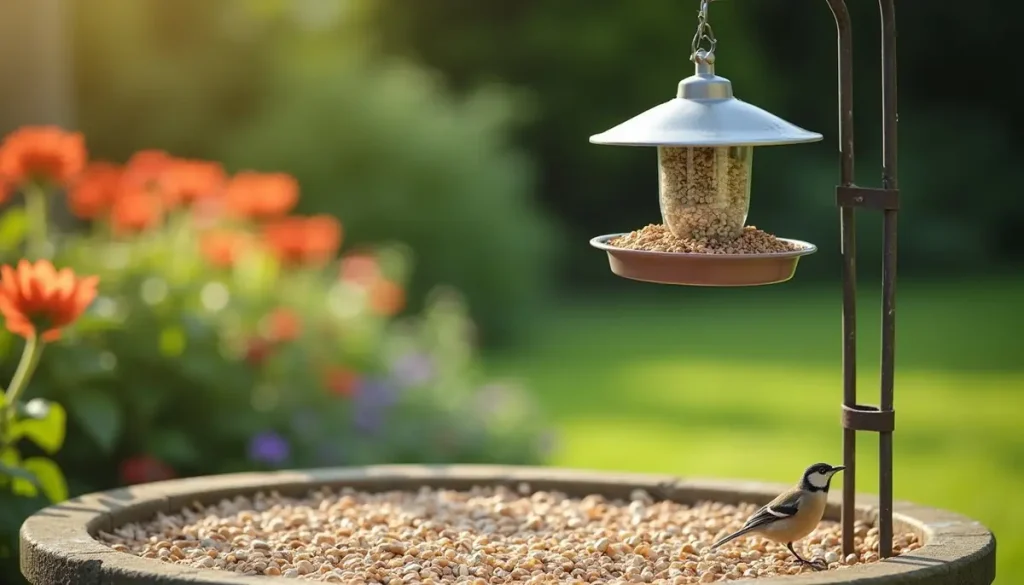
Rats under a bird feeder are eating spilled seed, and if you can find a burrow or runway nearby, stop feeding for two to four weeks while you trap, then restart with a catch tray, no seed left out overnight and the feeder on a baffled pole. Loudoun County’s health department gives the 2 to 4 week pause; Cornell’s Project FeederWatch says “a couple of weeks”. Public Health Seattle and King County says that with an active infestation “you must remove bird seed for trapping and poisoning efforts to be successful.” If you see only husks and no rat signs, a seed and setup change is usually enough.
Keep feeding or stop? Decide from what you see
| What you see under the feeder | Keep feeding? | What to change |
|---|---|---|
| Husks and spilled seed, no droppings, no holes | Yes | Add a catch tray, switch to no-waste seed, store seed in metal |
| A rat seen once, at night | Yes, with changes | Empty the tray every evening; King County says leave no seed in feeders overnight |
| Droppings, a packed runway or a burrow 2 to 3 inches across within the yard | No, pause 2 to 4 weeks | Check the pellets with our rat, mouse and cockroach droppings guide, clear all seed, trap along the runway, then restart |
| You or a contractor are trapping or baiting | No | King County: remove seed or the control will not work |
| The health department has declared a neighbourhood infestation | No, until lifted | Erie County, NY and Monroe County, NY rules require feeding to stop |
| Rats climbing the pole or the feeder itself | Pause, then move it | Feeder 4 feet up and 8 feet from branches and fences, with a baffle |
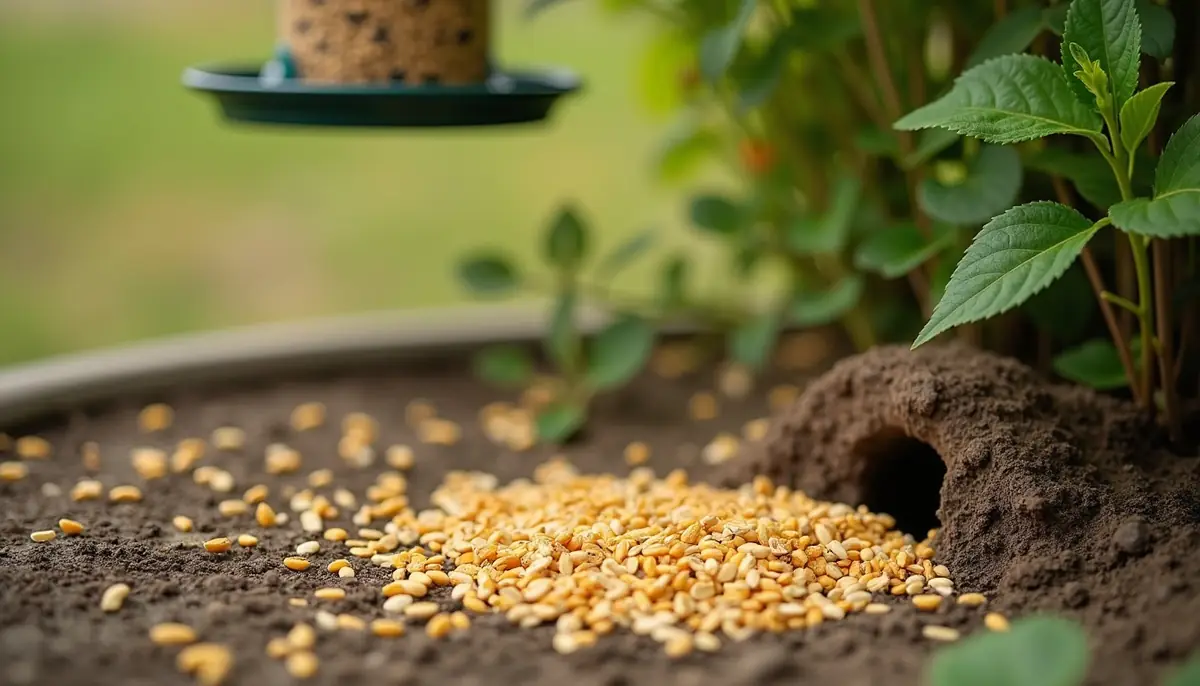
Confirm it is a rat before you act. A Norway rat burrow is a smooth-edged hole about 2 to 3 inches across with a worn path leading to it, and our guide to rats in the backyard and the burrow key shows how it differs from vole, chipmunk and mole holes. Roof rats rarely burrow; UC IPM says they nest in “enclosed and elevated spaces” and climb, so a roof rat at a feeder usually arrives along a fence top or a branch.
Why feeders draw rats
The draw is the seed that falls, not the feeder. FeederWatch puts it plainly: “Rodents are attracted to seeds dropped beneath feeders. Once a population is established, it can be very difficult to discourage.” King County’s 2018 handout, Bird Feeders and Rats, is blunter: “if you feed birds expect to see increased rat numbers around your home,” because seed “easily spills out of feeders onto the ground, and it is impossible to remove all of it.”
The best measured evidence comes from farmland, not gardens, but it is direct. Sánchez-García, Buner and Aebischer filmed 259 grain feeders on three farms in southern England through the winters of 2012 and 2013. Animals other than the birds being fed made 54 per cent of visits and ate 67 per cent of the grain. Brown rats made 17 per cent of all visits, and every one of them was recorded at feeders set along hedgerow cover; none came to the paired feeders placed 40 metres out in open field.
That cover effect is the most useful finding for a garden. A feeder beside a hedge, shed or woodpile gives a rat a sheltered walk to the seed. The same study found rodents took 2 to 4 days to find a feeder after it moved, against 1 to 3 days for songbirds, so a moved feeder buys only a few days on its own. Seed is one of several draws; our page on what attracts rats to a home and yard ranks the others, from bins to dog droppings.
What the authorities actually say
Health departments and bird groups agree more than forum threads suggest. This table, compiled by The Pest Control Brief from the named sources, sets their wording side by side.
| Source | Pause feeding? | Setup rules |
|---|---|---|
| Public Health Seattle and King County, WA (handout, 2018) | Yes, during any trapping or poisoning | Feeders 4 ft off the ground and 8 ft from branches, fences or objects rats jump from; tray and baffle; only a day’s seed; none left overnight; seed stored in metal |
| Loudoun County, VA health department | 2 to 4 weeks if a rodent infestation is reported nearby | “Only use above ground squirrel-proof bird feeders”; store birdseed covered |
| Cornell Lab of Ornithology, Project FeederWatch | “A couple of weeks” so rodents disperse | Large catch tray cleaned or removed each night, or hung off the ground |
| Erie County, NY Sanitary Code, Art. IX s. 1.15(d) | Required if the Commissioner of Health declares the area infested | Feed only in a container that prevents scattering food on the ground |
| Monroe County, NY Department of Public Health | “You must discontinue bird feeding entirely” during a neighbourhood infestation | Prevent scattering of feed onto the ground |
None of these sources says rats leave after a pause by itself, which is one reason rats keep coming back to yards where only the feeder changed. The pause removes the reason to stay and makes traps and bait more attractive than the free seed. UC IPM notes that rats “quickly detect and tend to avoid new objects and new foods,” and the ICWDM Norway rat chapter advises leaving traps baited but unset until bait has been taken at least once. Starting the pause and the pre-baiting on the same day uses the two weeks well.
The setup that lets you keep feeding
Height, distance and a baffle
King County’s figures are the only rodent-specific distances we found from a public agency: feeders “four feet off of the ground and 8 feet out and away from any branches, fences, or other objects that rats may use to jump on to feeders.” Its rodent prevention page adds a rule of thumb: “If a squirrel can reach the bird feeder so can a rat.” A dome or cylinder baffle on the pole below the feeder stops the climb from the ground.
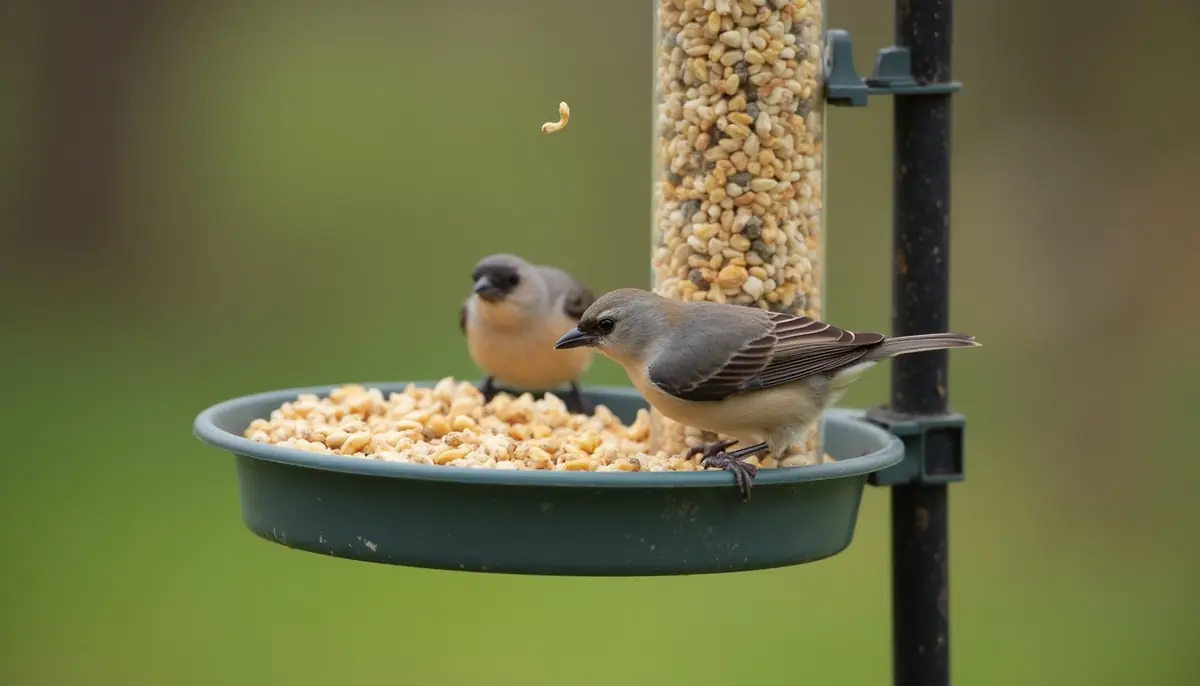
A catch tray, emptied at dusk
FeederWatch warns that “most of the catch trays aren’t big enough to really do the job” and suggests a large tray you can clean out or remove each night. Rats are mostly active at night, as UC IPM notes, and our analysis of when rats are active shows the same pattern in sighting records, so an empty tray at dusk denies them the meal.
Seed that does not end up on the ground
King County says blends with “a lot of filler seeds and grains (millett, milo or sorghum) tend to end up on the ground where it attracts rats.” Hulled sunflower leaves no husks on the ground to clear. Fill feeders with no more than the birds will finish in a day, as King County advises.
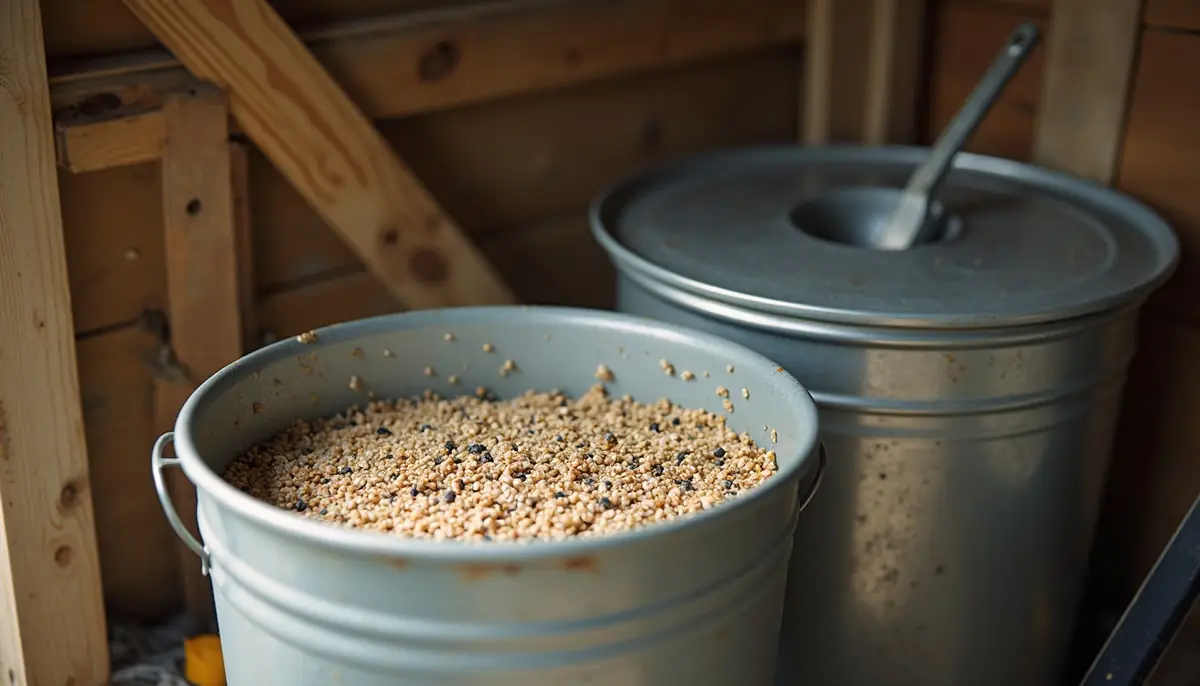
Seed stored in metal
“Rats easily chew through plastic containers,” the King County handout says; store bulk seed, and pet food, in a metal bin with a lid. UC IPM adds that Norway rats gnaw plastic, wood and even soft metals such as copper and lead, so a thin plastic tub in a shed is a feeding station.
Removing the rats already there
The pause and setup changes stop new rats settling, but rats already nesting by the feeder need trapping. Use snap traps in covered stations along fences and the runway, baited but unset for the first few nights, with the full sequence in our step-by-step plan to get rid of rats.
Scratching in a wall, loft or shed at night means the colony has moved into a building; our guide to rat noises at night and where they come from helps place them. Burrows under a slab, deck footing or house foundation, or rats inside the house, are a job for a licensed professional.
If the climbers are roof rats rather than Norway rats, the fix moves upward: UC IPM advises cutting tree limbs back so none sit within 6 feet of the roof, and our page on how to tell roof rats from Norway rats covers the rest.
Mice under the feeder
Mice follow the same rules at a smaller scale. UC IPM says house mice seldom venture more than 30 feet from their nest, so mice at a feeder are usually living in a shed, woodpile or wall close by; the fixes are the same tray, seed and storage changes. In rural and semi-rural yards the mouse may be a deer mouse, which can carry hantavirus, so dampen droppings under the feeder with disinfectant rather than sweeping them, following our CDC-based mouse dropping cleanup method.
Rats are recorded in every month
There is no season when a feeder is safe to leave messy. Our analysis of iNaturalist research-grade records shows US Norway rat records ranging from 397 in January to 760 in September, and roof rat records from 238 in February to 405 in October. These are sightings people recorded, not population counts, but neither species disappears in winter, when bird feeding is at its peak.
Frequently asked questions
What can I put in my bird feeder to keep rats away?
Seed that leaves little on the ground: hulled sunflower rather than mixes with millet, milo or sorghum, which King County says end up on the ground. Hot pepper seed has one published trial, a 2000 Cornell study, which found it cut squirrel feeding but did not deter eastern chipmunks; it has not been tested on rats.
What keeps rats away permanently?
Nothing works permanently on its own. Rats stay where food, water and cover last, so the lasting fix is removing all three, trapping the rats already present and sealing gaps of 1/2 inch or more in buildings, the size UC IPM says rats pass. Repellent smells and sound devices have little evidence behind them, as our review of which smells rats are said to hate shows.
What do rats hate most at night?
Open ground. In the 2015 study of 259 feeders in southern England, every brown rat visit was at feeders beside hedgerow cover and none at feeders 40 metres into the open. Moving a feeder away from hedges, sheds and woodpiles, and keeping the area beneath it bare and empty of seed after dark, works with that instinct rather than against it.
What attracts rats the most?
A reliable nightly food supply close to cover. King County lists garbage, tree fruit, pet food, compost food waste, grass seed, chicken feed and bird seed as common backyard foods, and notes rats “will return often” for bird seed. Water and shelter, such as woodpiles and dense ivy, keep them nearby once they have found the food.
Will rats leave the garden after I stop feeding the birds?
Some disperse, which is why FeederWatch and Loudoun County advise a pause of two to four weeks, but an established colony usually finds other food nearby. ICWDM puts a Norway rat’s daily range at about 100 to 150 feet across, so pair the pause with trapping rather than waiting for the rats to leave.
Sources
- Public Health Seattle and King County, Bird Feeders and Rats: What You Need to Know, October 2018; and Preventing rodents and keeping them away.
- Loudoun County, Virginia, Rodents, Pests and Other Nuisances.
- Cornell Lab of Ornithology, Project FeederWatch, My feeders are attracting rats. What can I do?
- Erie County, NY Sanitary Code, Article IX, Sections 1.12 and 1.15(d).
- Monroe County, NY Department of Public Health, rat control fact sheet.
- Sánchez-García C, Buner FD, Aebischer NJ. Supplementary winter food for gamebirds through feeders: which species actually benefit? Journal of Wildlife Management 79: 832 to 845, 2015.
- Curtis PD, Rowland ED, Curtis GB, Dunn JA. Capsaicin-treated seed as a squirrel deterrent at birdfeeders. Wildlife Damage Management Conference Proceedings, 2000.
- University of California Statewide IPM Program, Pest Notes: Rats (Publication 74106, updated June 2025) and Pest Notes: House Mouse (Publication 7483, updated July 2025).
- Internet Center for Wildlife Damage Management, Norway Rat Biology and Norway Rat Damage Prevention and Control Methods.
- The Pest Control Brief analysis of iNaturalist research-grade records, pulled October 2026.