Maggots in a Washing Machine: Where They Come From
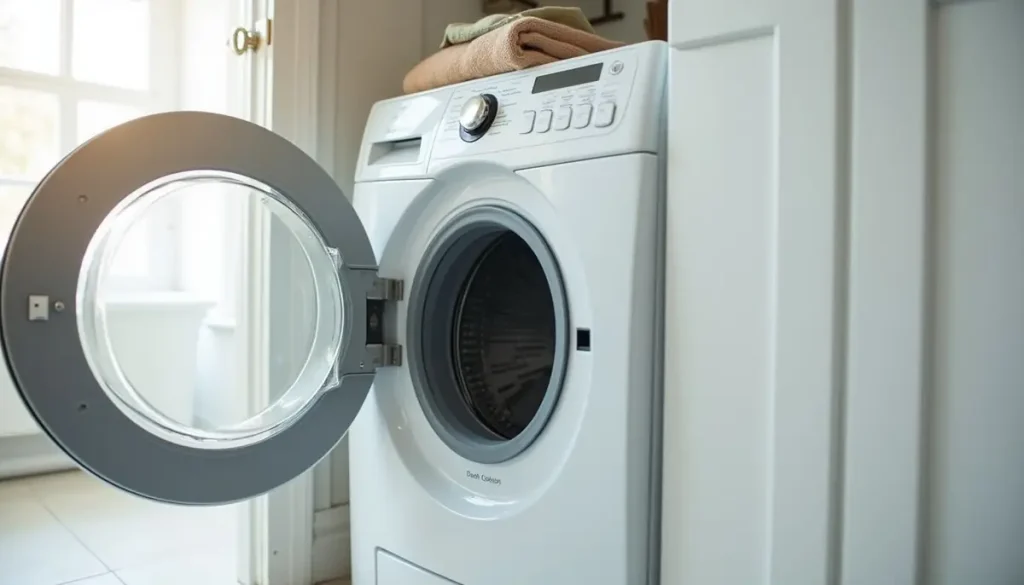
Maggots in a washing machine usually come from one of three places: drain fly larvae in the slime of the drain or standpipe, house fly or blow fly maggots hatched on soiled laundry left damp, or blow fly maggots crawling in from a dead mouse behind the machine. The size and colour of the larva, and where in the machine you find it, tell you which. Each has a different fix, and none of them is pouring bleach down the drain.
What you found, and what it means
| What you see | Where | Likely source | Fix |
|---|---|---|---|
| Thin grey worms, darker at both ends, about 3/8 inch (8 to 10 mm), plus small fuzzy flies on the wall | Door seal fold, drain pump filter, standpipe, laundry sink or floor drain | Drain fly (moth fly) larvae living in biofilm | Scrub the slime out of the seal, filter and drain; run the machine’s cleaning cycle |
| Cream-white maggots, pointed at the head, up to about 1/3 inch (2.5 to 8 mm) | In or on a load of laundry, or in the drum | House fly maggots from food, nappies, pet bedding or soiled cloths left damp | Rewash hot, dry on high, clean the drum and seal |
| Larger white or yellowish maggots, up to 3/4 inch (12 to 18 mm), with a rotten smell | On the floor around or under the machine, moving out from behind it | Blow fly maggots leaving a dead rodent or bird | Pull the machine out and find the carcass |
| Brown, rice-like cases | Under the machine, in the gasket fold or among laundry | Fly pupae: maggots that have finished feeding | Vacuum or wipe up, then trace the source above |
Compiled by The Pest Control Brief from Alabama Cooperative Extension (Drain Flies in the Home, ANR-3235, 2026), UF/IFAS EENY-716 (drain flies) and EENY-502 (common green bottle fly), LSU AgCenter (house fly, Publication 3849) and UC IPM Pest Notes: Flies (Publication 7457).
Why are there maggots in my washing machine?
Because a washer is wet and lined with organic film, and fly larvae need exactly that. A Swiss team that sampled biofilms from 11 washing machines in four countries isolated 94 microbial strains (Gattlen and colleagues, Biofouling, 2010); even the recommended dose of a standard detergent did not fully clean the biofilm off test surfaces. A German study of 13 household machines (Jacksch and colleagues, 2019) found bacteria living in the detergent drawer, sump and door seal.
That film is food for drain fly larvae. Alabama Cooperative Extension says the larvae feed on decaying organic matter, bacteria, fungi and grease in slime, and that they “live in the slimy biofilm on the sides of continuously wet drainpipes and almost anywhere decomposing organic materials are found.” It lists laundry room sink drains and traps among the commonest breeding sites in homes.
The three places to check on the machine
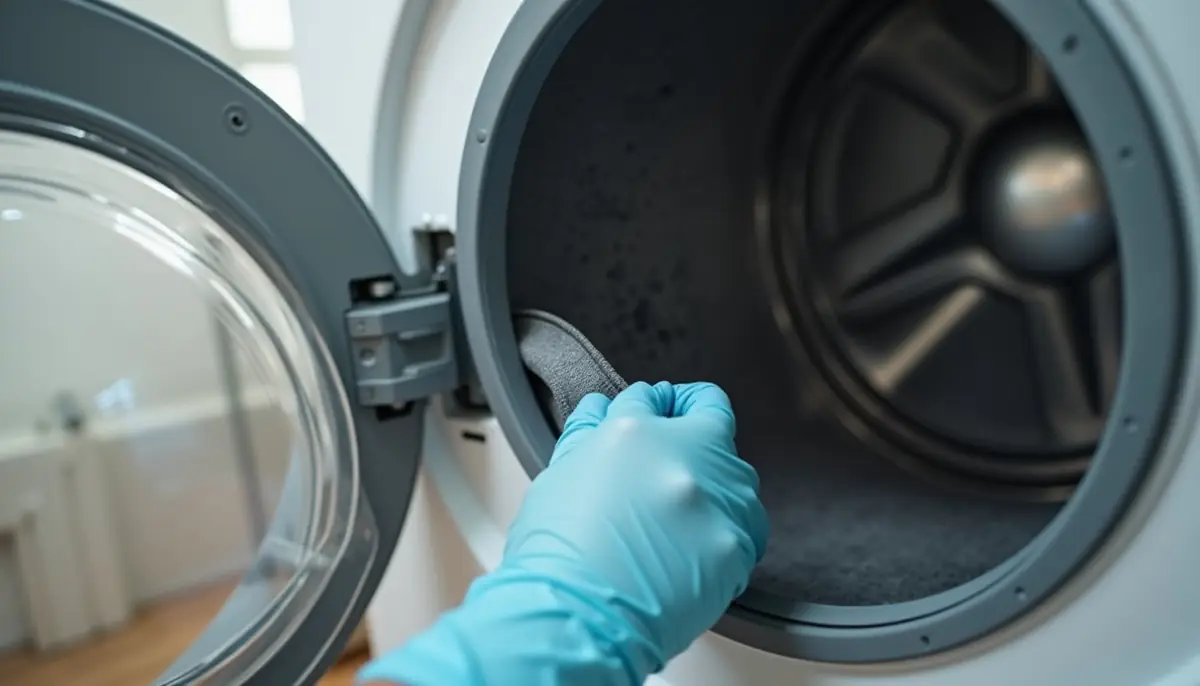
- The door seal (front loaders). Pull back the rubber fold at the bottom. We found no study recording drain fly larvae in a washer seal specifically, but its film of lint and standing water is the wet organic habitat Alabama Extension describes.
- The drain pump filter. Most front loaders have a small hatch at the bottom front where lint and hair collect in a pocket of water. Manuals tell owners to clean it periodically; how often varies by make.
- The standpipe and the drain beyond it. The washer pumps into a vertical pipe behind the machine, which is a drain like any other. Tape a clear plastic bag or a strip of tape over the opening overnight: UF/IFAS advises taping over a drain for 24 hours and checking for flies trapped while trying to emerge.
Small fuzzy flies on the laundry room walls, wings held roof-like, confirm drain flies; our guide to fruit flies, drain flies and fungus gnats tells them from fruit flies and gnats.
Can maggots live in a washing machine?
Drain fly larvae can, in the parts that stay wet: the seal, the filter housing and the drain. Alabama Extension gives their life cycle as 8 to 24 days depending on temperature and humidity, with eggs hatching in about 2 days and the larval stage lasting 8 to 15 days. UF/IFAS gives 9 to 15 days for the larval stage at 70°F (21°C) for Psychoda drain flies.
True maggots, the larvae of house flies and blow flies, do not live in the machine; they hatch on something rotting that went into the drum or sat in the basket. UC IPM says flies lay eggs in “animal feces, carrion or moist organic material”: a soiled nappy, pet bedding, a food-stained tea towel or a damp load forgotten in warm weather. Fly eggs in warm weather hatch in hours: LSU AgCenter gives 8 to 20 hours for house fly eggs, and UF/IFAS gives about 18 hours at 80.6°F for green bottle fly eggs. The same timing explains why maggots appear in a trash can within a day of food going in.
Maggots coming from behind the machine
Maggots crawling out from behind the washer, with a sweet, rotten smell, suggest a dead mouse or rat in the gap or the wall. UF/IFAS notes that once blow fly larvae finish feeding, the third-stage larvae “leave the host or carrion and burrow into the soil or substrate surrounding it,” which on a laundry room floor means wandering in the open. Our guide to finding a dead mouse by its smell explains how to locate the body.
A dead rodent usually means live ones nearby, so the plan in how to get rid of mice is the next step.
Do maggots die in the washing machine?
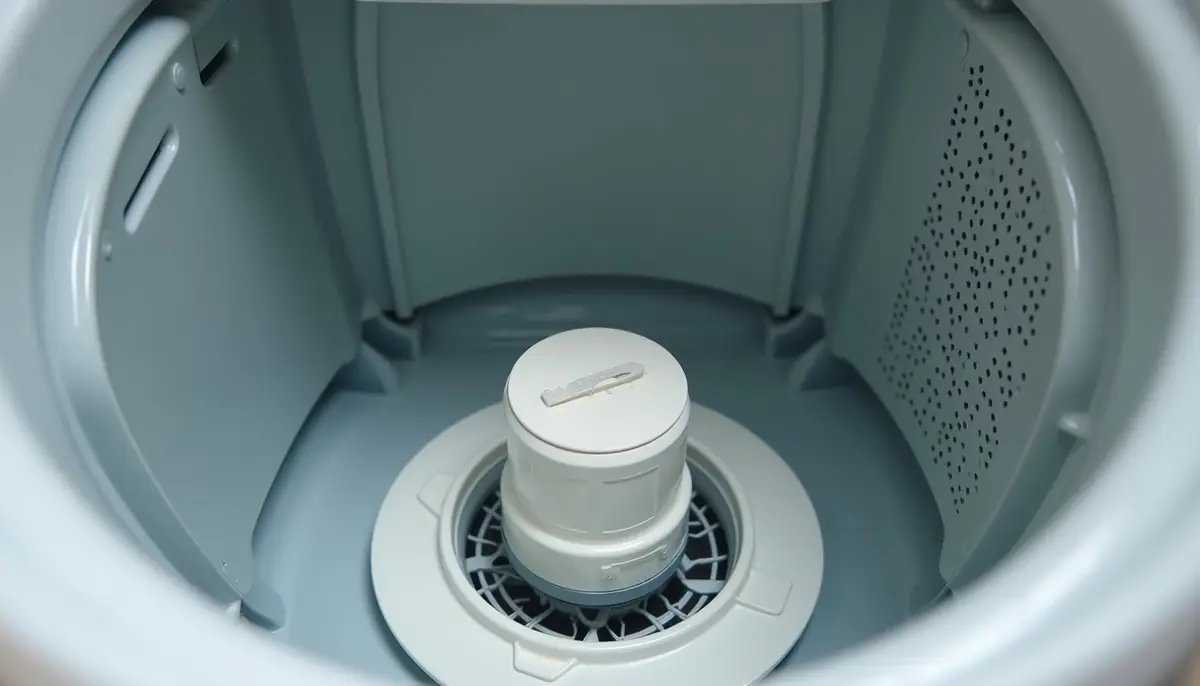
Not reliably in a cool wash. No study has put fly larvae through a home washer, but fly pupae survive drowning well: in University of Illinois tests by Singh and Greenberg (Journal of Medical Entomology, 1994), close to 100 per cent of blow fly pupae in the middle of their development survived a full day underwater, and 25 per cent of three species still produced adults after 4 days submerged. A wash cycle is unlikely to finish them off by water alone.
Heat is what kills insects in laundry: in published tests a 140°F (60°C) wash killed every bed bug life stage (Naylor and Boase, 2010), and ticks on dry clothing died within 6 minutes in a dryer on high (Nelson and colleagues, CDC, 2016). Wash the affected load as hot as its care label allows, then dry it on high.
How to get rid of maggots in a washing machine
- Remove the source first. Rewash any load that sat damp and bin food waste or nappies. For a dead animal, disconnect power and water as the manual describes, then pull the washer out.
- Scrub the door seal. Wipe every fold clean of film and lint with warm soapy water, then leave the door open so the seal dries, as many manuals advise between washes.
- Clean the drain pump filter. Put a shallow tray and towel under the hatch, drain the water as the manual describes, and clear the lint.
- Brush out the standpipe and any laundry sink drain. Alabama Extension’s method is to scrape the biofilm off the inside of the pipe with a stiff brush; an enzymatic drain cleaner reaches further in.
- Run the machine’s cleaning cycle, empty, at the hottest setting the manual allows.
- Watch for two weeks. Drain fly adults live about two weeks with fluids, so a few may linger; our page on how long flies live, by species has the figures.
Bleach and boiling water
Extension services disagree on boiling water. UF/IFAS recommends it after brushing, to flush loosened film. Alabama Extension says bleach, vinegar or boiling water poured down a drain are ineffective because the larvae shelter in slime that is “extremely difficult to wash away,” and that boiling water may damage the pipe. Both agree the brush does the real work. Alabama also warns never to mix ammonia and bleach, which releases a hazardous gas, and never to pour insecticide down a drain.
When flies are about
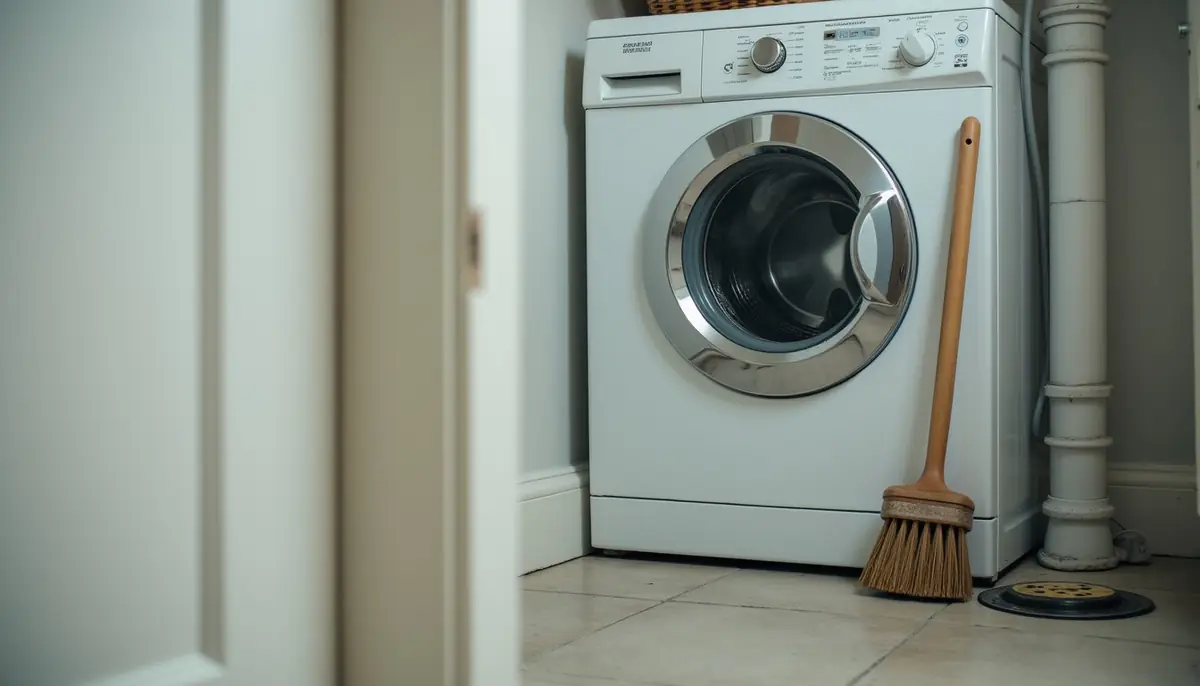
Our analysis of US iNaturalist research-grade records shows drain fly records running above their yearly average from August to December, peaking in September and October (index 152 and 156), with house fly records peaking in October and November (200 and 225) and blow flies from June to November. Records show when people notice these flies, not breeding inside machines. If you are finding small flies all over the house rather than one room, our guide to a sudden swarm of flies in the house covers the three usual causes.
Worms in the washing machine that are not maggots
Thin, legless larvae with a distinct dark head and siphon are drain flies. Hairy, striped larvae on clothing are more likely carpet beetle larvae, which feed on animal fibres such as wool. Our guide to little worms in the house, by where you found them separates them.
Drain flies breed in kitchen drains too, one of the culprits in our guide to bugs in the kitchen sink at night.
A drain fly problem is usually a DIY job. If flies keep coming after the seal, filter and standpipe are clean, check the guide to small flying bugs in the house in case it is another species, then call a plumber: Alabama Extension notes breeding sites can sit in leaking pipes behind walls or under a slab.
Frequently asked questions
How to get rid of maggots in washing machine?
Remove whatever they came from: rewash damp or soiled loads hot and dry them on high, and pull the machine out if you suspect a dead mouse. Then scrub the door seal folds, clean the drain pump filter, brush out the standpipe and run an empty cleaning cycle, leaving the door open afterwards.
Why are there maggots in my washing machine?
Usually because something rotting or soiled sat damp in the drum or basket, such as a nappy, pet bedding or food-stained cloth, and flies laid eggs on it; house fly eggs can hatch in 8 to 20 hours. Thin grey worms in the seal or drain are drain fly larvae feeding on the slimy biofilm that builds up in washers and drains.
Why is there maggots in my washing machine?
Two common causes: drain fly larvae breeding in wet slime in the seal, filter or standpipe, and fly maggots hatched on soiled laundry left damp. Maggots crawling from behind the machine with a rotten smell usually point to a dead rodent, since UF/IFAS notes blow fly larvae leave a carcass once they finish feeding.
Can maggots live in washing machine?
Drain fly larvae can, in parts that stay wet: the door seal, the drain pump filter and the standpipe. Their life cycle runs 8 to 24 days, according to Alabama Extension. House fly and blow fly maggots do not live in the machine itself; they arrive on something rotten in the laundry or crawl in from a dead animal nearby.
Do maggots die in washing machine?
Not reliably in a cool wash. Blow fly pupae survived a full day underwater in a 1994 University of Illinois study, so a rinse alone is unlikely to kill them. Heat works on insects in laundry: wash at the hottest temperature the care label allows, then dry on high, as published laundry tests on bed bugs and ticks found.
Sources
- Alabama Cooperative Extension System (Hu and Turner), Drain Flies in the Home: Identification and Management, ANR-3235, March 2026.
- University of Florida IFAS, Featured Creatures EENY-716: Drain Fly, Psychoda spp. (Griffith and Gillett-Kaufman), 2018.
- University of Florida IFAS, Featured Creatures EENY-502: Common Green Bottle Fly, Lucilia sericata (Anderson and Kaufman).
- LSU AgCenter, Musca domestica, House Fly (McComic and Carlton), Publication 3849.
- University of California Statewide IPM Program, Pest Notes: Flies, Publication 7457 (Gerry).
- Gattlen J, Amberg C, Zinn M, Mauclaire L. Biofilms isolated from washing machines from three continents and their tolerance to a standard detergent. Biofouling 26(8): 873 to 882, 2010.
- Jacksch S and others. Influence of sampling site and other environmental factors on the bacterial community composition of domestic washing machines. Microorganisms 8(1): 30, 2019.
- Singh D, Greenberg B. Survival after submergence in the pupae of five species of blow flies (Diptera: Calliphoridae). Journal of Medical Entomology 31(5): 757 to 759, 1994.
- Naylor RA, Boase CJ. Practical solutions for treating laundry infested with Cimex lectularius. Journal of Economic Entomology 103(1): 136 to 139, 2010.
- Nelson CA and others. The heat is on: killing blacklegged ticks in residential washers and dryers to prevent tickborne diseases. Ticks and Tick-borne Diseases 7(5): 958 to 963, 2016.
- Front-load washer owner’s manuals and manufacturer support pages (drain pump filter and door seal care).
- The Pest Control Brief analysis of iNaturalist research-grade records, pulled October 2026 (b19 to b30 files).