Roaches in Air Vents: Where They Come From and How to Stop It
Roaches in air vents are usually travelling through the duct system, not living in it: large roaches get in through leaky ducts in attics and crawl spaces, while small German cockroaches at a vent are spilling over from a kitchen, bathroom or a neighbour’s unit. The fix is to close the route (screen the register, seal duct leaks with mastic or metal tape, screen attic vents) and bait where the roaches actually breed. Do not spray insecticide into ducts: EPA warns material introduced into an operating duct system can be carried through it and released into other rooms.
Which situation you have decides everything, and the roach itself tells you. Size it against a ruler, note the room and the type of vent, then use this table.
Read the vent: what the roach and the room tell you
| What you see | Likely species | Where it came from | First fix |
|---|---|---|---|
| Large reddish brown roach, 1 1/2 to 2 inches, from a ceiling register, summer or autumn | American or smokybrown cockroach | Attic or crawl space ductwork with gaps at joints or boots; UC IPM says smokybrowns favour the upper parts of buildings and attics | Seal duct leaks, screen attic vents, treat outdoors |
| Dark mahogany roach that flies on warm evenings | Smokybrown cockroach | Under shingles or siding, in trees and shrubs, attics | Trim shrubs and branches back from the house, seal the attic |
| Shiny near black roach, about 1 1/4 inches, at a floor register on the ground floor | Oriental cockroach | Crawl space, drains, damp soil; UC IPM says they stay on ground floors and cannot climb smooth surfaces | Seal floor duct boots, dry the crawl space |
| Small light brown roaches about 1/2 inch with two dark stripes, kitchen or bathroom register | German cockroach | An indoor colony in that room, or in a shared wall in an apartment | Bait the kitchen and bathroom; the vent is an exit, not the nest |
| Small roaches at bathroom exhaust fans in an apartment block | German cockroach | Shared chases and plumbing walls between units | Building-wide treatment through management |
If the size or colour is unclear, our guide to the five US cockroach species at actual size settles it.
The two most common vent visitors are German and American cockroaches, and a 1/2 inch roach is a different problem from a 2 inch one; the side-by-side checklist for telling German from American cockroaches covers the details.
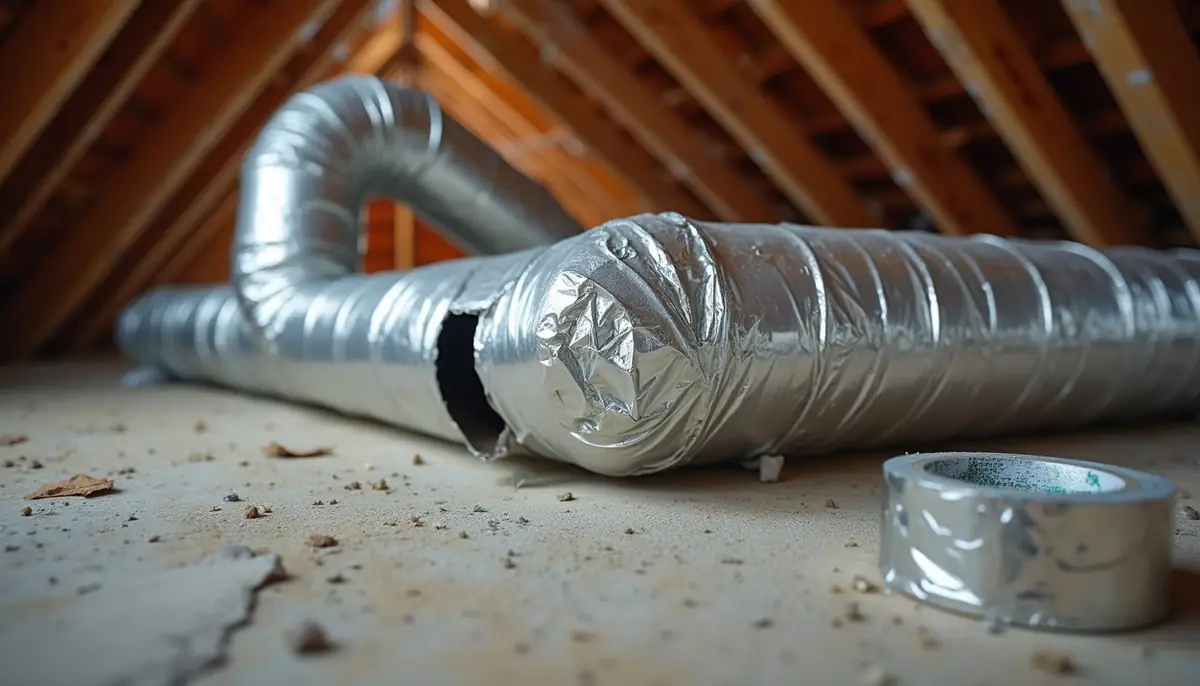
Do roaches live in air vents?
Rarely in the supply ducts themselves. A running system moves dry, conditioned air, and roaches need water. UF/IFAS publication ENY-214, Cockroaches and Their Management, calls water the most important factor in cockroach survival and notes German cockroaches survive only 12 days with food but no water. The same publication says the larger species usually develop in garages, sewers, attics and storerooms, then enter the home from those outside breeding sites.
German cockroaches are different, but not because of ducts. UC IPM’s Pest Note on cockroaches says they favour warm (70 to 75°F), humid areas close to food, water and dark harborage, which is why they live in kitchens and bathrooms. One at a register in those rooms is a sign of a colony nearby, in the cabinet void, behind the fridge or in a wall, using the gap around the register box as one more exit. What brings them there in the first place is laid out in what attracts roaches and why you have them now.
Where large roaches get into the duct system
- Leaky ducts in attics and crawl spaces. ENERGY STAR estimates that in a typical house 20 to 30 per cent of the air moving through the ducts is lost through leaks, holes and poorly connected ducts. Openings big enough to lose that much air are big enough for a roach.
- Return grilles. Returns pull air from the house, and a low return grille is an easy walk-in for a roach foraging at night.
- Floor duct boots over crawl spaces. Where the boot meets the subfloor there can be a gap to the crawl space below, where Oriental and American cockroaches live.
- Attic vents and roof gaps. UF/IFAS advises checking attic vents and screening or sealing large openings around drainage lines and sewer vents, using tightly packed steel wool as a temporary filler.
- Damp equipment areas. UF/IFAS lists condensation pans and pipe condensation among the water sources to eliminate, which applies to air handler drip pans and sweating lines in closets and attics.
Our iNaturalist data shows why the answer to “which roach is in my vents” depends on the state. In Florida and Texas the large Periplaneta species dominate records; in Pennsylvania the Oriental cockroach leads.
How to get rid of cockroaches in air vents?
- Confirm the species and the room. Put sticky traps at the base of the walls beneath the register and in the nearest kitchen or bathroom for two or three nights. UC IPM says roaches are often caught within the first 24 hours and recommends numbering traps to find where most are caught.
- Remove the register and vacuum. Take the cover off, vacuum the boot and the first foot or so of duct with a crevice tool, and wash the grille. UC IPM recommends a HEPA or triple filter vacuum because roach debris can cause allergies.
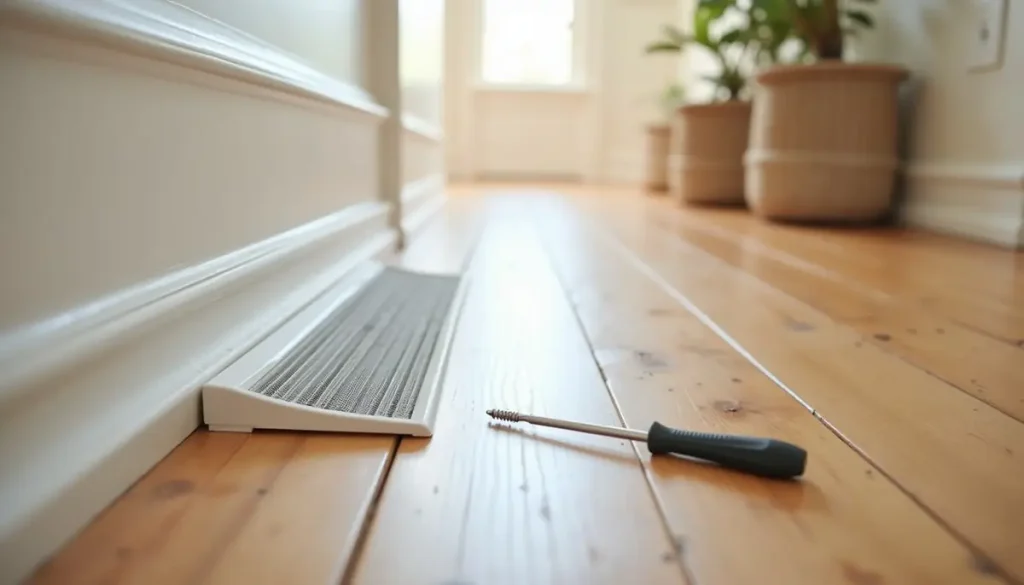
- Screen the opening. Fit fine mesh behind the register face so air passes and insects do not. UF/IFAS notes German cockroaches fit through cracks about 1/16 inch wide, so the mesh must be finer than that and must sit tight to the boot.
- Seal the gap around the boot. Caulk where the register box meets drywall or subfloor; this is the route from wall voids and crawl spaces.
- Seal leaky ducts. ENERGY STAR advises sealing leaks with mastic sealant or metal tape and says never to use duct tape, as it does not last. Attic and crawl space ducts are the ones to check.
- Bait where they breed, not inside the duct. Gel bait and bait stations go in kitchen and bathroom cracks for German cockroaches, and around the outside perimeter, mulch and water meter boxes for outdoor species, following the label. Why gels outperform sprays here is covered in gel bait or spray for roaches.
Why not spray or fog the vents
EPA’s guidance, Should You Have the Air Ducts in Your Home Cleaned?, says material sprayed into an operating duct system may be carried through it and released into other areas of the home. It also reminds readers that a pesticide must be registered for a specific use and that using one in a manner inconsistent with its label violates federal law. UF/IFAS adds that foggers only affect roaches that contact the fog directly, so control is variable.
How to stop roaches in vents?
Stopping them is mostly about the building around the vents. UF/IFAS lists caulking gaps around door and window frames, plumbing and electrical penetrations, adding weather stripping, and pulling mulch back so it extends only 1 foot from the foundation, because large outdoor roaches breed heavily in pine straw mulch and poorly on gravel or bare soil. UC IPM suggests a gravel strip 6 to 12 inches wide around the foundation for the same reason. UC IPM also advises trimming shrubbery around buildings, especially near vents, which matters for smokybrowns: it says they prefer the upper parts of buildings and sometimes take refuge in attics.
In apartments, vents are often a shared route rather than an entry from outdoors. UF/IFAS notes that infestations migrate between apartments via plumbing within common walls, which is why bathroom exhaust fans and kitchen registers on a shared wall see repeat visits. How to prove where they come from, with a dated trap map, is in are roaches coming from my neighbors.
In a rented unit, report vent sightings to management in writing with dates; whose job the treatment is depends on the lease and local law, as covered in cockroaches in your apartment: whose job and what works.
Will AC keep roaches away?
No. Air conditioning does not repel roaches, and a cooled house sits right in the German cockroach’s comfort zone: UC IPM puts its preferred range at 70 to 75°F. The outdoor species are another matter. UC IPM says American cockroaches prefer temperatures above 82°F, and UF/IFAS says outdoor cockroaches do not survive well indoors, often needing nothing more than removal. What they do come in for is water, and the equipment that runs an AC system, drip pans and condensation on cold lines, can supply it if pans overflow or lines sweat into a closet or attic.
Should you get the ducts cleaned?
Possibly, if the infestation was heavy. EPA lists ducts infested with vermin, such as rodents or insects, as one of the conditions where cleaning is worth considering, alongside visible mould and heavy debris. It also says the cause must be fixed first or the problem will likely recur, and that it does not recommend routine cleaning. EPA gives a published estimate of $450 to $1,000 per heating and cooling system. Treatment of the roaches themselves is priced separately, as our roach exterminator cost guide shows.
Why should you never kill a roach?
There is no sound reason not to. The common claim that a dead roach releases a scent that draws others confuses two things: UF/IFAS says the aggregation pheromone that attracts cockroaches is in their feces, which is why it advises scrubbing droppings with hot soapy water. Clean up a dead roach and its droppings near the vent, and treat one sighting as a reason to trap, not to panic.
Frequently asked questions
How do I get roaches out of my car air vents?
Car vents connect to the cabin air intake rather than a building duct system, and roaches in a car are usually breeding in food debris inside the cabin. Vacuum thoroughly, trap for two or three nights, then use a bait whose label lists vehicles; our step-by-step plan for getting rid of roaches in a car without a bomb covers it, including why foggers are the wrong tool.
Can cockroaches come in through the air conditioner?
Through the ductwork it serves, yes, where ducts in an attic or crawl space have leaks or poorly connected joints. ENERGY STAR estimates 20 to 30 per cent of duct air is lost through such gaps in a typical house. Sealing them with mastic or metal tape and screening attic vents closes most of the route.
Are big roaches in the vents palmetto bugs?
Usually. In the Southeast, palmetto bug is a common name for the large outdoor species: UF/IFAS lists American, Australian, brown and smokybrown cockroaches, 1 1/4 to 2 inches long, under that name. Our explainer on what people mean by palmetto bug and water bug matches the name to the species.
Do roaches in vents mean the whole house is infested?
Not with large outdoor species, which UF/IFAS says survive poorly indoors and often need only removal plus exclusion. Small German cockroaches at a vent are different: they point to a breeding colony in that room or a shared wall, which calls for the full plan in how to get rid of roaches by species, often with a licensed professional.
Sources
- University of Florida IFAS Extension, Koehler P.G., Bayer B.E. and Branscome D., Cockroaches and Their Management, ENY-214 (IG082), reviewed 2025.
- University of California Statewide IPM Program, Pest Notes: Cockroaches, Publication 7467, revised 2019.
- US Environmental Protection Agency, Should You Have the Air Ducts in Your Home Cleaned?
- ENERGY STAR (US EPA and Department of Energy), Duct Sealing.
- The Pest Control Brief analysis of iNaturalist research-grade records, pulled October 2026.