What Smells Do Mice Hate? Every Scent Checked Against Studies

Mice most clearly avoid the smell of their predators: rats, cats and a carnivore urine compound called 2-phenylethylamine. In a field trapping study, traps scented with male rat odour caught 3.05 times fewer wild house mice. Plant oils such as peppermint caused avoidance in the laboratory that faded within a week, and cinnamon and clove oils made baits more attractive to wild mice. No smell has been shown to keep mice out of a house.
Most lists of smells mice hate are compiled from other lists. We went back to the studies, ranked every common claim by the strength of the evidence on house mice, Mus musculus, and noted where a claim has never been tested at all.
The scorecard, strongest evidence first
| Smell | Tested on house mice? | What happened | Source | Verdict |
|---|---|---|---|---|
| Male rat odour (synthetic pheromone components) | Yes, wild mice at infested field sites | 3.05 times fewer mice captured; no female mice in rat-scented traps | Varner and colleagues, Scientific Reports, 2020 | Strongest field evidence; not a household product |
| Cat urine and cat body odour | Yes, laboratory mice | Fewer visits to the scented box | Adduci and colleagues, PLOS ONE, 2021 | Real but lab only |
| 2-phenylethylamine (carnivore urine compound) | Yes, laboratory mice | Mice avoided the odour source; removing it from carnivore odour weakened avoidance | Ferrero and colleagues, PNAS, 2011 | Real but lab only |
| Fox odour compound (TMT) | Yes, laboratory mice | Rats reduced visits; mice did not | Adduci and colleagues, 2021 | No effect on mice in that test |
| Ginger, plai, orange and lemongrass oils | Yes, laboratory mice in a maze | Still repellent 7 days after spraying | Chulikhit and colleagues, CMUJ Natural Sciences, 2022 | Promising, never tested in a home |
| Peppermint oil and menthol | Same study | No significant effect after 7 days | Chulikhit and colleagues, 2022 | Short-lived |
| Tea tree and palmarosa oils in bait | Yes, wild mice | Lower preference for treated bait, varying with sex and bait freshness | Blažić and colleagues, Journal of Stored Products Research, 2018 | Food choice only |
| Lavender (linalool) | Inhaled by laboratory mice | Sedation and reduced anxiety, not avoidance | Linck and colleagues, Phytomedicine, 2009 and 2010 | Calms, does not repel |
| Cinnamon and clove oils in bait | Yes, wild mice in two storage buildings | Treated baits were eaten more than plain bait | Jokić and colleagues, Pesticidi i Fitomedicina, 2018 | Attractant, not repellent |
| Ammonia, vinegar, cayenne, bleach | No published test on house mice found | None | Our search of PubMed and extension literature | No evidence |
| Dryer sheets, scented bar soap | No published test found | None | Our search, November 2026 | No evidence |
| Mothballs | Not labelled for mice | NPIC: mothballs are not wildlife repellents | National Pesticide Information Center | Illegal off label and hazardous |
Compiled by The Pest Control Brief from the studies and agencies named in each row.
What smells do mice absolutely hate?
The smell of something that eats them. The best evidence is also the least known. Elizabeth Varner and colleagues at Simon Fraser University ran 157 paired trap replicates at sites infested with wild house mice or brown rats. Trap pairs releasing synthetic male rat pheromone components caught 3.05 times fewer mice than pairs releasing male mouse pheromone components, and not one female mouse entered a rat-scented trap. The authors read this as mice avoiding places that smell of rats, which prey on them.
Cat odour works in the laboratory. Laura Adduci and colleagues put predator-naive laboratory mice in a three-box apparatus in 2021: mice reduced their visits to boxes holding cat body odour and cat urine. A fox odour compound, TMT, made rats freeze and avoid it but did not have the same effect on mice.
The chemistry is known for one compound. Harvard’s David Ferrero and colleagues purified 2-phenylethylamine from bobcat urine in 2011 and showed that rats and mice avoid it, and that stripping it from a carnivore odour weakened the avoidance. Some carnivores produce more than 3,000 times as much of it as the herbivores tested. Our review of which smells rats hate shows how quickly that kind of effect disappears for rats in the field.
Why plant oils fade
The best mouse test of household oils is a 2022 study from Khon Kaen University in Thailand. Researchers sprayed 2 mL of each oil on fabric and ran laboratory mice, 10 to 12 per group, through an eight-arm maze and a light and dark box, once straight after spraying and again a week later. Every oil worked at first. By day seven, peppermint oil and menthol had no significant repellent effect, while ginger, plai, orange and lemongrass oils still did. Our page on whether peppermint oil repels mice covers the study’s limits in detail.
Two things work against any oil outside a test box. The scent evaporates, and mice learn. A 2016 systematic review of 54 publications by Hansen and colleagues found essential oils gave the strongest laboratory effects of any plant compound, yet success was inconsistent across laboratory, enclosure and field studies, which is why so few plant-based rodent repellents are registered.
Lavender is a special case. Its main scent compound, linalool, has been studied as a sedative: mice held in air with 1 or 3 per cent linalool for 60 minutes slept longer under barbiturates, and the 3 per cent dose reduced movement, Brazilian researchers reported in 2009. The same compound is in scented laundry products, which is why our check of whether dryer sheets repel mice found nothing to support that hack either.

Cinnamon and cloves: the smells that drew mice in
Pest company lists often put cinnamon and cloves near the top. The one field study we found with wild house mice points the other way. Goran Jokić and colleagues in Serbia mixed cinnamon or clove essential oil at 0.5, 0.75 and 1 per cent into cereal bait and offered it alongside plain bait in a mill store and in a seed and seedling store. Both oils made the bait significantly more attractive than placebo over the first seven days.
By day 7 in the mill store, mice had eaten 46 per cent of the baits containing 0.75 or 1 per cent cinnamon oil, 35.5 per cent more than plain bait. In the seed store, consumption of those baits was 47 and 51 per cent higher than placebo after 14 days. The authors were testing ways to make rodent bait more appealing, and cinnamon worked best. A sachet of cloves by the back door may be doing a mouse a favour.
Ammonia, vinegar and other strong smells
We found no published test of ammonia, white vinegar, cayenne pepper or bleach as a smell repellent for house mice. The common claim that ammonia mimics predator urine has no study behind it that we could locate; the predator compounds that do work, such as 2-phenylethylamine, are different chemicals. Ammonia also carries a real household hazard: mixed with bleach it forms chloramine gases, the New Jersey Department of Health warns.
So how long do mice hate the smell of vinegar? Nobody has measured it, because nobody has shown they avoid it. None of ammonia, vinegar or capsaicin is on the federal minimum risk pesticide list in 40 CFR 152.25(f), and the plant oils that are on it, such as peppermint, clove and cinnamon oil, can be sold as repellents without EPA checking that they work. Our scorecard of whether mouse repellents work covers the registered products.
Mothballs
Mothballs are registered insecticides for clothes moths in airtight containers, and the National Pesticide Information Center states that mothballs are not wildlife repellents. Scattering them in an attic or crawl space for mice breaks the label and exposes the household to naphthalene or paradichlorobenzene fumes; our guide to whether mothballs are dangerous sets out the health effects.
What smells do mice hate that are safe for dogs and cats?
No smell has evidence strong enough to justify the risk. The ASPCA warned in 2018 that essential oils in their concentrated, 100 per cent form can be dangerous to pets, and that dogs and cats that walk through oils or get them on their coat can become ill. Diluted oils on cotton balls are a lower risk, but they also fade, as the Chulikhit study showed. Snap traps inside covered stations, placed where pets cannot reach, are the safer route.
What will mice not cross?
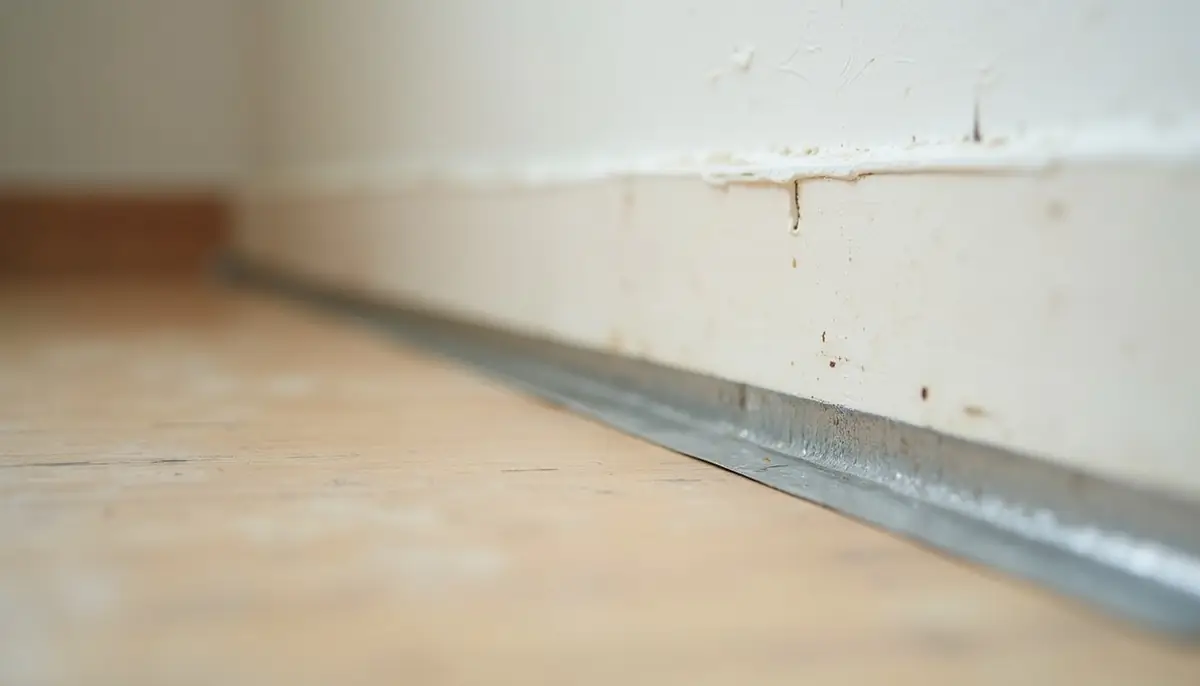
Metal, not smell. UC IPM says house mice squeeze under gaps 1/4 inch tall and through openings 3/8 inch wide, and that plastic screening, rubber, vinyl, expanding foam and wood are ineffective for plugging holes because mice gnaw them. ICWDM advises 1/4 inch wire mesh for openings and stainless steel or copper wool for small gaps. Our comparison of steel wool, copper mesh and other gap fillers covers which last longest.
No smell barrier competes with what pulls a mouse indoors: UC IPM notes outdoor mice frequently enter homes in autumn as nights turn colder, looking for food and shelter. Our breakdown of what attracts mice to a house lists the food and nest sites to remove first.
What home remedy gets rid of mice fast?
A snap trap. UC IPM calls trapping a great first step and advises setting traps close to walls, no more than about 10 feet apart where mice are active, using enough of them to make the trapping period short and decisive. Our guide to trap placement that actually catches mice covers baits and spacing.
Trapping clears the mice already inside; it does not stop the next ones. The full sequence of sealing gaps over 1/4 inch, removing food and then trapping is in our plan for getting rid of mice.
Frequently asked questions
What is a mouse’s worst enemy?
UC IPM notes that some dogs and cats catch and kill mice, and the Varner field study treats brown rats as predators of mice, which wild house mice avoided by smell. UC IPM cautions that cats and dogs rarely control a mouse population, and that predators can make mice more secretive, giving a false impression that numbers have fallen. Our page on what eats mice covers each predator.
What smells do mice hate in the house?
The smells with laboratory evidence, cat odour and the carnivore compound 2-phenylethylamine, are not things people can use indoors. The household oils tested, such as peppermint, worked for days at most in a maze. No scent has been shown to clear mice from a home, so treat smells as a supplement to sealing and trapping.
Do mice hate the smell of lavender?
There is no evidence they avoid it. Lavender’s main compound, linalool, sedated laboratory mice and reduced anxiety-like behaviour when inhaled in studies published in Phytomedicine in 2009 and 2010. Those were concentrated doses in a sealed chamber, so they do not show lavender calms house mice either, but they offer no support for it as a repellent.
Do mice hate the smell of bleach?
We found no study testing bleach as a mouse repellent. Its proper role is disinfection: public health agencies advise soaking droppings and nesting material with 1 part bleach to 9 parts water for 5 minutes before removal. Never combine it with ammonia or vinegar, which releases toxic gases.
Sources
- Varner, E. and others, Brown rats and house mice eavesdrop on each other’s volatile sex pheromone components. Scientific Reports 10: 17701, 2020.
- Adduci, L.B. and others, Avoidance behaviour in laboratory house mice (Mus musculus) and Norway rats (Rattus norvegicus) towards predator odours. PLOS ONE 16(1): e0245441, 2021.
- Ferrero, D.M. and others, Detection and avoidance of a carnivore odor by prey. Proceedings of the National Academy of Sciences 108(27): 11235 to 11240, 2011.
- Chulikhit, Y. and others, The repellent potential of herbal oils alone and in combination in mouse behavioral models (Mus musculus). CMUJ Natural Sciences 21(3): e2022049, 2022.
- Blažić, T. and others, Wild Mus musculus response on two different essential oils with high repellent potential. Journal of Stored Products Research, 2018.
- Jokić, G. and others, Response of wild Mus musculus to baits containing essential oils: I. Cinnamon and clove tested in storage facilities. Pesticidi i Fitomedicina 33(2): 137 to 144, 2018 (Institute of Pesticides and Environmental Protection, Belgrade).
- Hansen, S.C., Stolter, C., Imholt, C. and Jacob, J., Plant secondary metabolites as rodent repellents: a systematic review. Journal of Chemical Ecology 42: 970 to 983, 2016.
- Linck, V.M. and others, Inhaled linalool-induced sedation in mice. Phytomedicine 16(4): 303 to 307, 2009; and Effects of inhaled linalool in anxiety, social interaction and aggressive behavior in mice. Phytomedicine 17: 679 to 683, 2010.
- Quinn, N. and Frye, M., Pest Notes: House Mouse, UC ANR Publication 7483, revised July 2025.
- Internet Center for Wildlife Damage Management, House Mouse Damage Prevention and Control Methods.
- Code of Federal Regulations, 40 CFR 152.25(f), Minimum risk pesticides, Table 1 (2024 edition).
- National Pesticide Information Center, Mothballs.
- New Jersey Department of Health, Hazard Alert: Mixing Bleach with Other Cleaning Products Can Be Deadly.
- Public Health, Seattle and King County, Cleaning rodent-infested vehicles.
- ASPCA, Is the Latest Home Trend Harmful to Your Pets? What You Need to Know, January 2018.