How to Find a Carpenter Ant Nest: A Night-by-Night Method
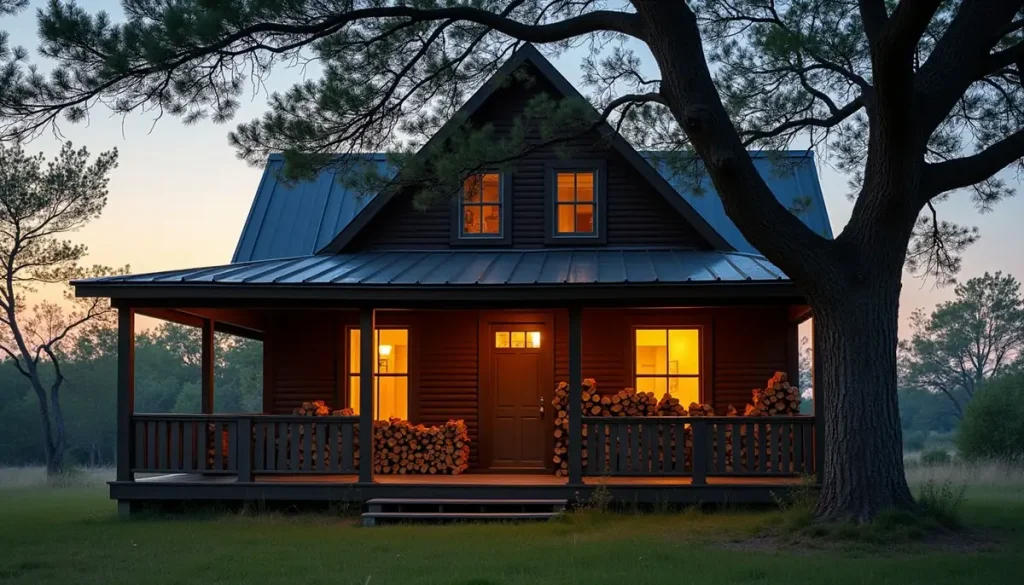
To find a carpenter ant nest, go out after dark with a flashlight, find a trail of workers, and follow the ants carrying food back to where they disappear. Workers leave the nest about 15 minutes after sundown, say Illinois public health officials and UGA Extension. If no trail shows, set out a lure of sugar milk or diced crickets, as UC IPM suggests, then follow the feeders home. Check damp wood, sawdust piles and rustling walls to confirm.
UC IPM says indoor nests are typically satellites of a parent nest outside, so plan on several evenings: one to watch, one to bait, one to listen, plus a daylight pass.
Clues and how far to trust them
| Clue | What it means | Where it points | How sure |
|---|---|---|---|
| Coarse, fibrous sawdust in a cone below a small hole, mixed with dead ants | Ants are pushing excavated wood out of a gallery | The hole directly above it | Strong, the nearest thing to proof |
| Numerous winged ants at windows indoors | Penn State: they probably came from an indoor nest | A mature nest inside the structure | Strong |
| Ants active indoors in midwinter | Penn State: active in winter only if the nest is in a heated part of a building | Inside the heated house | Strong |
| Rustling like crinkling cellophane after tapping | Illinois: disturbed ants in an active colony | That wall, floor or ceiling bay | Strong if repeatable |
| A worker carrying food along a trail at night | A forager heading home | Its destination | Good, if followed to the end |
| A trail along a utility line, cabinet edge or foundation | Nebraska: ants follow edges and, in walls, utility lines | The trail’s two ends | Moderate |
| Damp, soft or stained wood | Penn State: ants seldom infest sound wood under 15 per cent moisture | A likely nest site | Moderate, needs ants or frass |
| A few large workers indoors in summer | Hansen: an occasional stray in summer usually reflects an outside nest | Outdoors | Weak on its own |
Compiled by The Pest Control Brief from Penn State Extension, Nebraska NebGuide G1738, the Illinois Department of Public Health and Hansen’s Washington State University carpenter ant studies. If you are not certain these are carpenter ants, check our identification guide to the ants that get into US homes first.

Before the first night: the daylight pass
Use daylight to shortlist nest sites, so the night work has a target. Nebraska Extension lists the parts of a house most likely to be infested because they are most exposed to moisture: around and under windows, roof eaves, decks and porches. Penn State adds porch pillars, sills, girders, joists, wall studs, door casings and the underside of insulation between joists. Hansen and Akre’s inspection list for Washington homes added plumbing accesses, electrical outlets, light fixtures, central vacuum connections and skylights.
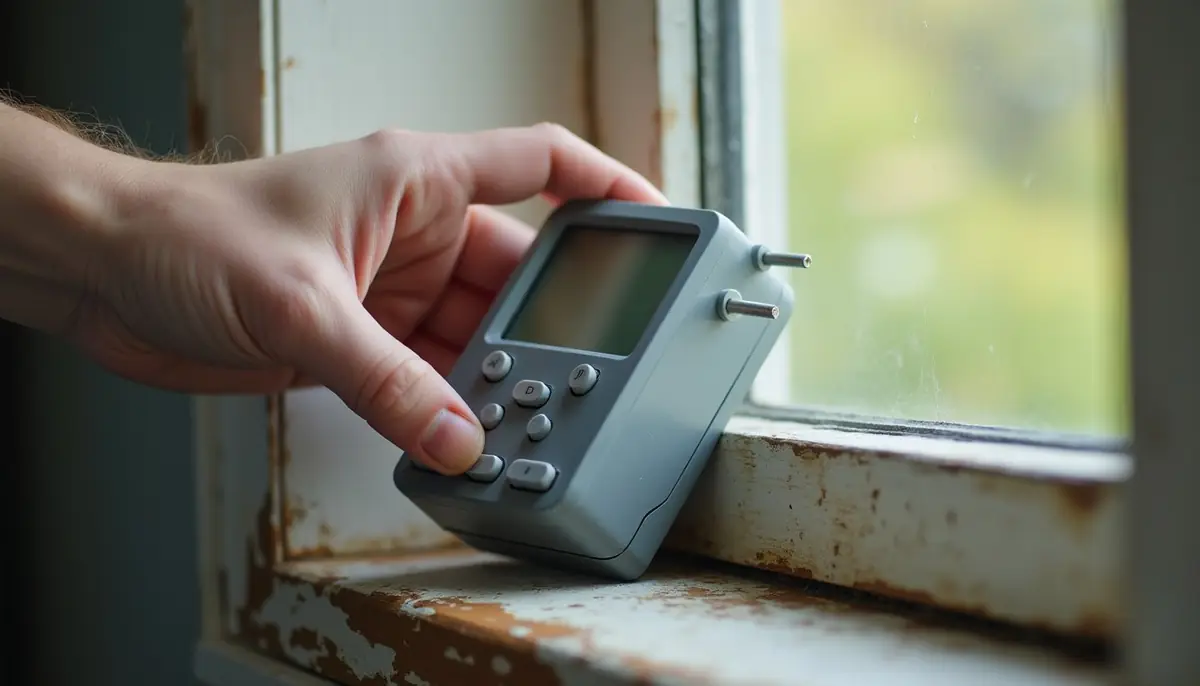
A moisture meter narrows the list quickly. Nebraska calls it “a relatively simple and affordable tool” for locating moisture in hidden areas, and Penn State gives the number to compare against: carpenter ants usually will not infest wood that is sound and below 15 per cent moisture content. Readings well above that in a sill, window frame or roof sheathing mark the spots to watch after dark.
Look for frass at the same time. Nebraska describes it as coarse, sawdust-like material that builds into a cone below the entrance hole, often with soil, dead ants and insect parts mixed in. It will not show inside wall voids. Our guide to reading a carpenter ant sawdust pile separates it from termite pellets and other look-alikes.
Night one: find and follow a trail
Start about 15 to 30 minutes after sunset. The Illinois Department of Public Health and UGA both say workers emerge about 15 minutes after sundown, and UGA advises beginning a night inspection 30 minutes after sunset. Hansen and Akre recorded a sharp rise in foragers leaving western carpenter ant nests at sunset, with foraging peaking between 8 pm and 4 am. Most sightings are still logged in daylight, as our analysis of carpenter ants seen during the day shows.
- Check the likely routes. Outdoors, Nebraska says well-used trails show in lawns, along foundations and sidewalks and in flower beds. Indoors, ants follow the edges of rooms and cabinets.
- Look at contact points. UGA notes foragers often enter by bridging from branches touching roofs and siding. Hansen also found trails on fences, wires entering the house, buried cables, sprinkler lines and tree roots.
- Follow the laden ants. Illinois advises following any ant carrying a bit of food back to the nest. An empty-jawed ant may be heading out to forage.
- Mark where it vanishes. A crack in a window frame or a hole in a soffit is an entry point, not always the nest.
Trails can be long. Penn State says the parent colony is often in a tree, log or waste wood within 100 yards of the house, Nebraska says foragers travel several hundred feet, and Hansen and Akre cite measured trails of 185 metres and 200 metres. A trail that leaves the yard is still worth following.

Night two: bait them and follow the feeders
If no trail appears, make one. UC IPM suggests nontoxic lures of sugar milk (equal parts sugar and milk), or diced crickets or mealworms, then following the workers back to the nest. In Hansen’s Washington inspections, freshly killed crickets placed in several locations drew ants within two to three hours, and the ants carrying bait were tracked to parent or satellite nests.
Put lures where you have seen ants, along suspected trails and beside the damp spots from your daylight pass. UC IPM’s pairing of sugar milk with crickets covers both a sweet and a protein lure, and our guide to what ants eat and why it changes explains why a colony may favour one over the other.
Night three: listen and tap
Active satellite colonies can be heard. Penn State says they can sometimes be located by listening for rustling in walls and ceilings with a stethoscope or an inverted water glass. Illinois describes the sound as like crinkling cellophane, made by disturbed ants clicking their mandibles, and notes that tapping the wood can set it off. Hansen found the sound was heard only when ants were particularly active, and that a series of taps, like drumming fingertips, produced the same response.
Work at night, when the colony is busiest, and tap one stud bay at a time. In attics and crawl spaces, Hansen’s inspectors pulled the edges of insulation away from joists to look for wood fragments, dead ants and live ants beneath.
How to find a carpenter ant nest outside
The parent colony needs constant high humidity for eggs and young larvae, Hansen and Akre write, so it is usually outdoors. UGA’s method for trees: after dark, walk around large trees shining a flashlight up and down the trunk, and look for sawdust-like shavings on the ground at the base. Hansen looked for entrances to the heartwood through an injury, a broken or cut branch, or an area of decay.
Hansen found ants in landscape timbers tunnelling underground and emerging 1 to 4 metres away, and woodpiles often showed nothing until restacked. UGA adds ground nests under old boards, shingles and cardboard.
Parent or satellite: reading what you found
A nest in a warm, dry spot is probably a satellite; one in a damp spot is probably the parent, which is how Hansen’s team classified them. Nebraska says satellites hold workers, larvae and pupae but never eggs, and the queen always stays in the parent colony. Expect more than one: Hansen reported 2 to 25 satellite colonies within individual structures, and 4 to 8 satellites in nearby buildings for an established outdoor nest. Satellites of the western carpenter ant held from 200 to over 12,000 workers.
Indoor activity in midwinter usually means a satellite in a heated part of the house; our guide to carpenter ants in winter and the indoor nest covers tracing one in a cold month.
Winged ants add a timing clue. Penn State says colonies produce 200 to 400 winged ants once they reach about 2,000 to 3,000 workers, and these leave in spring or early summer; our guide to flying ants and when they appear separates them from termite swarmers.
What to do when you find the nest
Treat the nest itself. Nebraska’s guidance is to apply an insecticide dust labelled for wall voids of homes directly into the nest cavity through the entrance hole, never liquid products inside wall voids, which can damage insulation, plasterboard and wiring, and not to dust every exterior void as a substitute for finding the colony. Treat the parent colony too: Penn State warns the ants reappear within days or weeks if either is missed. Product choices and the moisture repair that should follow are in our guide to getting rid of carpenter ants once the nest is found.
How do I get rid of carpenter ants if I can’t find the nest?
Use slow-acting bait on the trail, and expect it to be less reliable than a nest treatment. UC IPM’s method is to attract the ants with a nontoxic food first, then swap in several labelled ant baits and let them choose. Penn State notes baits can work when the trails are found and baits are reapplied as they run out, but that carpenter ants often ignore them. In Hansen’s laboratory work, baiting cut forager numbers sharply in large colonies while the queen and a nucleus of workers survived. Penn State adds that a satellite colony is unlikely to be eliminated without materials applied by professional pest management companies, and our wider guide to getting rid of ants in the house compares the options.
Frequently asked questions
How do I find where carpenter ants are coming from?
Watch after dark, starting about 15 to 30 minutes after sunset, and follow the trail in both directions. Check branches touching the roof or siding, which UGA names as common entry routes, plus wires, fences and utility lines, which Hansen found ants using as trails. Inside walls, Nebraska says carpenter ants follow utility lines.
How many carpenter ants mean infestation?
No extension source gives a count. The pattern matters more: Hansen found an occasional stray in summer usually reflected an outside nest, while Penn State says numerous winged ants at windows, or any activity in winter, point to a nest indoors, once you have ruled out termites with our guide to telling termites from flying ants. Foragers are a small share of a colony, 2 to 3 per cent in one study Hansen cites.
Does the Queen carpenter ant ever leave the nest?
Only once, for her mating flight. Afterwards she sheds her wings, seals herself into a nest site and starts laying eggs, according to Penn State and UC IPM. Nebraska says the queen does not leave to gather food and always stays in the original parent colony, which is why satellite nests contain no eggs.
How do you find a carpenter ant nest in a wall?
Locate the wall section from a trail or a frass pile at a baseboard, then tap stud bays at night and listen for a cellophane-like rustle, using a stethoscope or an inverted glass as Penn State suggests. Check outlets, plumbing access panels and window casings in that wall. Nebraska notes frass will not be visible inside the void.
Sources
- University of Nebraska Extension, Ogg, Ogg, Kamble and Bauer, Carpenter Ant Management, NebGuide G1738, revised 2019.
- Penn State Extension, Jacobs, Carpenter Ants fact sheet.
- University of California Statewide IPM Program, Pest Notes: Carpenter Ants, Publication 7416.
- Illinois Department of Public Health, with University of Illinois Extension, Carpenter Ants.
- University of Georgia Extension, Carpenter Ants, Circular 929, Urban Entomology Pest series.
- Hansen LD and Akre RD, Urban pest management of carpenter ants, Proceedings of the First International Conference on Urban Pests, 1993.
- Hansen LD, Managing carpenter ant populations in urban environments, Proceedings of the Second International Conference on Urban Pests.
- The Pest Control Brief analysis of iNaturalist research-grade records, pulled October 2026.