Bat Removal Cost 2026: Exclusion, Law and Guano Cleanup
Bat removal runs $400 to $1,500, guano cleanup adds $500 to $5,000. Bats cannot lawfully be trapped, and exclusion is banned in maternity season.
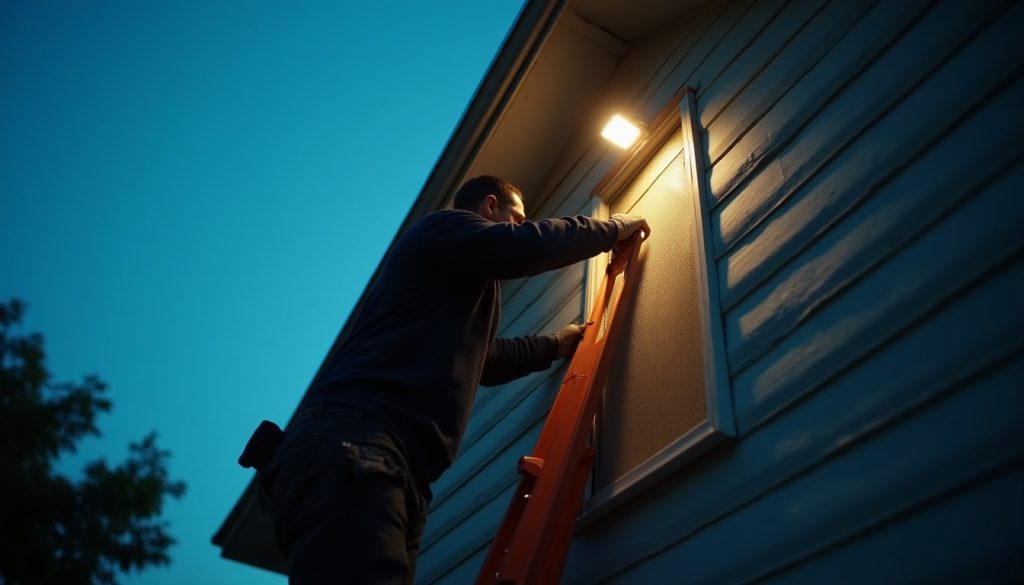
Bat removal costs $400 to $1,500 for most homes, with exclusion at $100 to $400 per entry point and guano cleanup adding $500 to $5,000. Large colonies of 200 or more reach $5,000 to $8,500. Bats cannot lawfully be trapped or killed in most states, and exclusion is prohibited during maternity season, typically May to mid-August.
Bats are the most legally constrained pest in American structural work. The constraint is not a formality: it removes every fast option, dictates when work can happen, and is the main reason quotes look high compared with rodent work.
What bat work costs in 2026
| Service | Cost | Notes |
|---|---|---|
| Typical bat removal | $400 to $1,500 | Depends on colony size and cleanup |
| Exclusion, per entry point | $100 to $400 | One-way devices then sealing |
| Exclusion, whole job | $500 to $2,500 | By colony size, entry count, building complexity |
| Guano cleanup | $500 to $5,000 | Full clean and disinfection, attic to 1,000 sq ft |
| Large colony, 200+ bats | $5,000 to $8,500 | Extensive exclusion plus remediation |
Contractor-reported ranges compiled in 2026, not federal statistics.
Why there is no trapping option
Bats are legally protected in most states and it is unlawful to kill them across much of the country. That removes trapping, poisoning and any lethal approach from the menu, leaving exclusion as the only compliant method: fit one-way devices at entry points so bats can leave and cannot return, confirm the roost is empty, then seal permanently.
This is the structural difference from rodent work, where trapping and rodenticides are available and exclusion is one option among several. Our guide to rodent removal costs covers that comparison, and wildlife removal costs covers squirrels and raccoons where relocation is sometimes permitted.
Maternity season stops the work
Most states prohibit exclusion during maternity season, typically May through mid-August, because flightless pups would be sealed inside to die. That is both inhumane and generally unlawful.
The practical consequences are worth understanding before you call:
- A summer discovery usually means an autumn job. A company that offers to exclude in June in a state that prohibits it is telling you how it operates.
- Interim measures are limited to sealing off living space from the roost rather than removing the colony.
- Booking early matters, because demand concentrates into the permitted window.
- Exact dates vary by state and species, so confirm locally rather than assuming the May to August range.
The cleanup is often the larger number
Guano removal can cost as much as the exclusion itself, at $500 to $5,000 for a full clean and disinfection of an attic up to 1,000 square feet. On a large colony the remediation dominates the quote.
Accumulated guano contaminates insulation and cavity spaces, and removal typically requires containment and protective equipment rather than a shop vacuum. This is why a quote covering exclusion alone is not comparable to one covering the actual condition of the roost. Ask explicitly whether cleanup, insulation replacement and disinfection are included or priced separately.
What to establish before signing
- How many entry points were found, since pricing runs $100 to $400 each.
- Whether the timing is lawful in your state given maternity season.
- Whether cleanup and disinfection are included or quoted separately.
- How the roost is confirmed empty before permanent sealing.
- What warranty covers the exclusion work, and for how long.
- Licensing, since wildlife control is often licensed separately from structural pest control. Our guide to checking a pest control company covers verification.
Frequently asked questions
How much does bat removal cost?
Most homeowners pay $400 to $1,500. Exclusion runs $100 to $400 per entry point or $500 to $2,500 for a whole job, and guano cleanup adds $500 to $5,000. Large colonies of 200 or more bats reach $5,000 to $8,500 once extensive exclusion and remediation are included.
Is it illegal to kill bats?
In much of the United States, yes. Bats are legally protected in most states, which removes trapping and lethal control as options. The compliant method is exclusion: one-way devices that let bats leave without returning, followed by permanent sealing once the roost is confirmed empty.
When can bats be removed?
Outside maternity season, which most states set at roughly May through mid-August, when exclusion is prohibited because flightless pups would be trapped inside. A summer discovery usually means an autumn job. Exact dates vary by state and species, so confirm locally rather than assuming.
Why is bat guano cleanup so expensive?
Because accumulated guano contaminates insulation and cavity spaces, and removal typically requires containment and protective equipment rather than ordinary cleaning. A full clean and disinfection of an attic up to 1,000 square feet runs $500 to $5,000, which on a large colony exceeds the exclusion cost itself.
Sources
- Contractor-reported price ranges compiled by This Old House, Angi, HomeGuide and wildlife control providers, 2026. Sample sizes and methods are not published by those sources.
- State wildlife protection and maternity season guidance as summarised by wildlife control operators, 2026. Requirements vary by state and should be verified locally.