What Do Termites Look Like? Workers, Soldiers and Swarmers
Termites look like small, soft, pale insects with straight antennae and no pinched waist: workers are creamy white to light caramel and about the size of a grain of rice, soldiers have the same pale body with a large amber or orange head and jaws, and swarmers are dark brown to black with four equal wings. Most homeowners never see a worker or soldier, because both stay inside soil, wood and mud tubes. What people actually see is a swarmer, a pile of shed wings, a pencil-width mud tube or, for drywood termites, a little heap of six-sided pellets.
This guide covers every caste of the four termite groups that damage US homes, with sizes from extension entomologists, then shows what termites look like on a house and on wood, which is usually the more useful picture.
Termites by caste and type at a glance
| Type | Worker | Soldier | Swarmer (winged adult) | Where you usually see signs |
|---|---|---|---|---|
| Native subterranean (eastern, western, dark and light southern) | Creamy white to light caramel, soft, blind, about 1/4 in (6 mm) | Pale body, long narrow yellowish to amber head, large jaws, about 1/4 in | Dark brown to nearly black, 3/8 to 1/2 in including wings, flies by day in spring | Mud tubes on foundations, damage lined with soil |
| Formosan subterranean | White to cream, 3 to 4 mm | White body, brownish-orange teardrop-shaped head, 4 to 5 mm; oozes white glue when disturbed | Orange or light amber-brown, hairy wings, 12 to 15 mm, flies after dusk and comes to lights | Mud tubes high on walls, carton nests, swarms at porch lights in May |
| Drywood | No true workers; pale “false workers” do the work | Dark yellow-brown head with forward jaws, about 5/16 in; Cryptotermes soldiers have black, square heads | Light yellow to dark-bodied, 7/16 to 9/16 in | Piles of hard six-sided pellets below tiny kick-out holes |
| Dampwood (Pacific coast) | Caramel coloured, about 1/2 in | Caramel to dark brown, about 3/4 in | About 1 in including wings | Wet, decayed wood near leaks or soil contact |
Sources differ on size. Penn State gives native subterranean workers and soldiers as about a quarter inch, Texas A&M AgriLife gives workers as a quarter to three eighths of an inch, and UF/IFAS measures Formosan workers at 3 to 4 mm. All agree on the shape: no narrow waist.
What worker termites look like
Workers are the termites that eat wood, and they make up the largest share of every colony. UC IPM describes them as wingless, soft-bodied and light caramel in colour; Penn State and the University of Kentucky call them creamy white. They are blind. Oregon State’s description is the one most people recognise once they have seen them: about the size of a grain of rice.
You will not see workers walking across a floor. They avoid light and open air, so they appear only when something breaks into their space: a mud tube snapped open or a damaged board pried up. Ants found in the same places are darker, harder-bodied and have a narrow waist.
What do termites look like to the human eye?
Every caste is visible without magnification. What you cannot see without a hand lens are the features used to name the species, such as wing veins and soldier jaw shape, which is why a specimen beats a description.
What soldier termites look like
Soldiers are workers built for defence. They have the same pale, soft body, but a much larger, darker head and long jaws. UC IPM describes native subterranean soldiers as having light caramel bodies and long, narrow amber heads with no eyes; Penn State calls the head elongated and yellowish.
Soldier numbers help separate the two subterranean groups. UF/IFAS notes that native subterranean colonies are about 1 to 2 per cent soldiers, while Formosan colonies are 10 to 15 per cent soldiers. Break a mud tube and see only a few soldiers, and it is most likely a native species; see many soldiers rush to the breach, and it is more likely Formosan. Formosan soldiers also have a teardrop-shaped orange head and release a white, glue-like fluid when threatened, which native soldiers do not.
What winged termites look like
Swarmers, or alates, are the young kings and queens that leave a mature colony to start new ones, and the only termites most people ever see alive.
- Native subterranean swarmers are dark brown to brownish-black with brownish-grey wings (UC IPM). UF/IFAS describes eastern and dark southern subterranean swarmers as almost black to the naked eye, and light southern swarmers as yellowish brown. Penn State gives them as 3/8 to 1/2 inch long with wings.
- Formosan swarmers are orange or light amber-brown, 12 to 15 mm, with small hairs on the body and wings (UF/IFAS). Mississippi State puts them at about half an inch including the wings.
- Drywood swarmers in Texas are either light yellow with clear wings (Incisitermes snyderi, 7/16 inch, flies at night) or dark-bodied (western drywood termite, 9/16 inch, flies by day).
- Dampwood swarmers are the giants, about an inch long including wings, according to Oregon State.
In every termite the four wings are the same size and shape, and Penn State notes they are nearly twice as long as the body. The wings snap off easily after the flight, so a pile of identical, translucent wings on a sill is often the only trace left. For the side-by-side check against flying ants (antennae, waist and wing length), see our guide to termites vs flying ants; for when each species flies, see termite swarm season.
The swarm calendar shows up in sightings. In our analysis of iNaturalist research-grade records, subterranean termite records reach 661 in April, the highest month of the year, against 69 in July. On the effort-adjusted index the April peak is 195, almost twice the termites’ usual share of what people record. A second rise appears in autumn (207 in November), but the raw count behind it is 213 records, a third of April’s: few people record anything in November, so a modest number of termite finds stands out.
How to tell if it’s a termite?
Use the body first and the evidence second.
- Check the shape. Straight, bead-like antennae, a thick waist with no pinch, and four equal wings mean termite. Elbowed antennae, a narrow waist and a front wing longer than the hind wing mean ant. The University of Kentucky gives the same three tests.
- Check what is around them. Mud tubes, soil-lined galleries or six-sided pellets settle the question faster than the insect does.
- Keep a specimen. Put several, with any loose wings, in a sealed bag or small container. A pest professional or your county extension office can name the species, which decides the treatment.
What bug can be mistaken for a termite?
Winged carpenter ants are the classic mix-up, because both swarm in spring and both are found around wood. UC IPM also lists wood-boring beetles alongside carpenter ants as the insects most often confused with drywood termites in an inspection, mostly because of the damage and the debris they leave. Carpenter bees are blamed for termite damage too, though they look nothing alike: Penn State describes a nearly perfectly round entrance hole about half an inch across, which no termite makes. Our wood damage identification guide walks through how to read the tunnels, holes and debris each one leaves.
There is a reason the confusion runs one way. In our state data, carpenter ants are among the most recorded household insects on iNaturalist while termites barely register: in Florida there are 14,001 carpenter ant records against 62 for native subterranean termites and 80 for Formosan termites. People photograph the large, dark ant walking in the open, not the pale termite hidden in wood.
What do termites look like on a house?
On a house, termites are usually seen as structures, not insects.
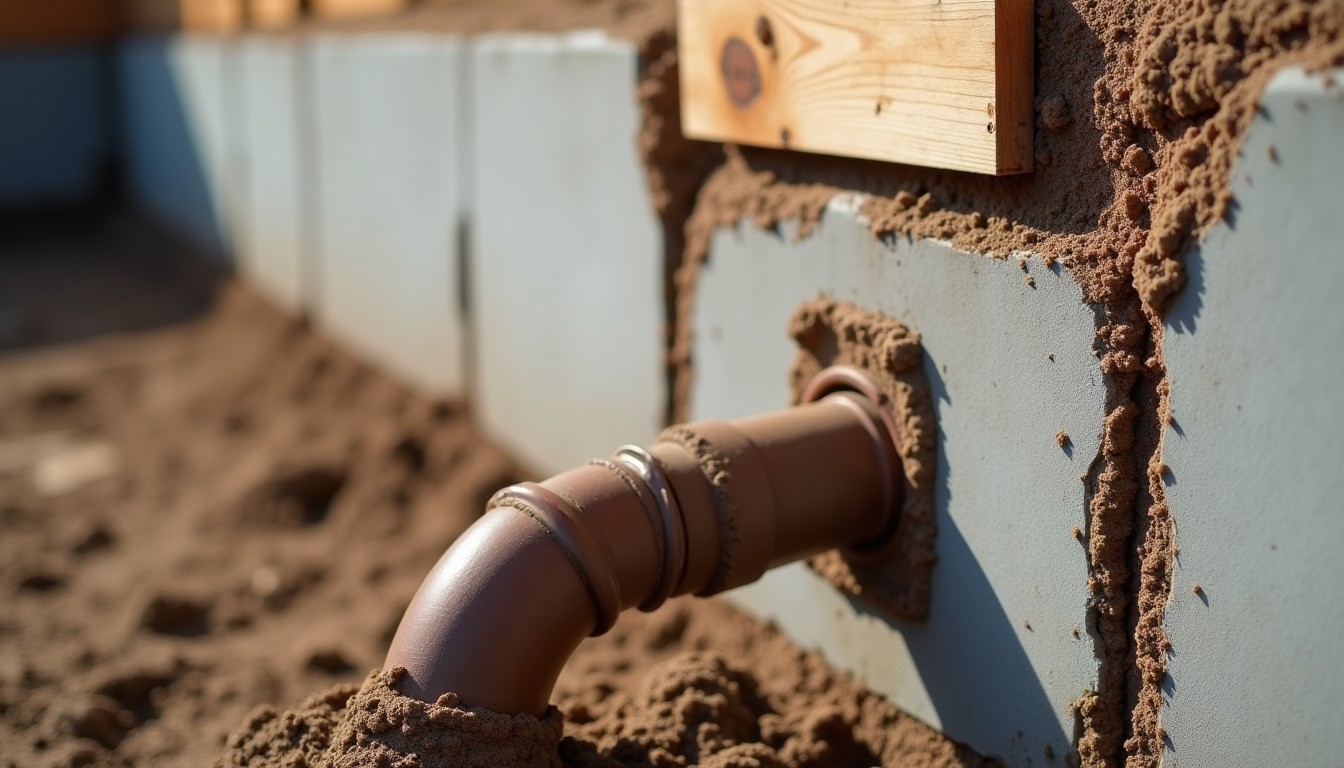
- Mud tubes. Earthen tunnels running up foundation walls, piers, plumbing or sill plates. The University of Kentucky says they are typically about the diameter of a pencil. UC IPM identifies four kinds, including drop tubes that hang from wood back to the soil and swarm tubes built for the flight.
- Tubes or mud streaks high on walls, soffits or ceilings. Mississippi State says these are usually a sign of Formosan termites.
- BB-sized spots of dried mud on drywall. Mississippi State calls these pinholes: termites accidentally break through, then seal the hole with mud. Scrape one and a worker may come to look.
- Sunken, winding lines under paint or wallpaper. Termites eat the paper face of drywall but not the gypsum, often leaving the paint intact.
- Swarmers or wings indoors. Mississippi State and the University of Kentucky both treat swarmers emerging inside, or piles of wings, as a strong sign of an infestation in the building.
To test a mud tube, Mississippi State advises breaking a one-inch section and watching for termites, or for a repair over the next few days. Either result means the tube is active. Destroying tubes does not control termites, which will find another way in.
What do termites look like on wood?
Damage differs by termite group, and the difference is diagnostic.
- Subterranean termites hollow wood along the grain, eating the softer springwood and leaving the harder rings (UC IPM). The University of Kentucky notes the galleries are lined with bits of dried mud or soil, which water damage and carpenter ants do not leave. The surface often stays intact, so the wood looks sound until it is probed and gives way.
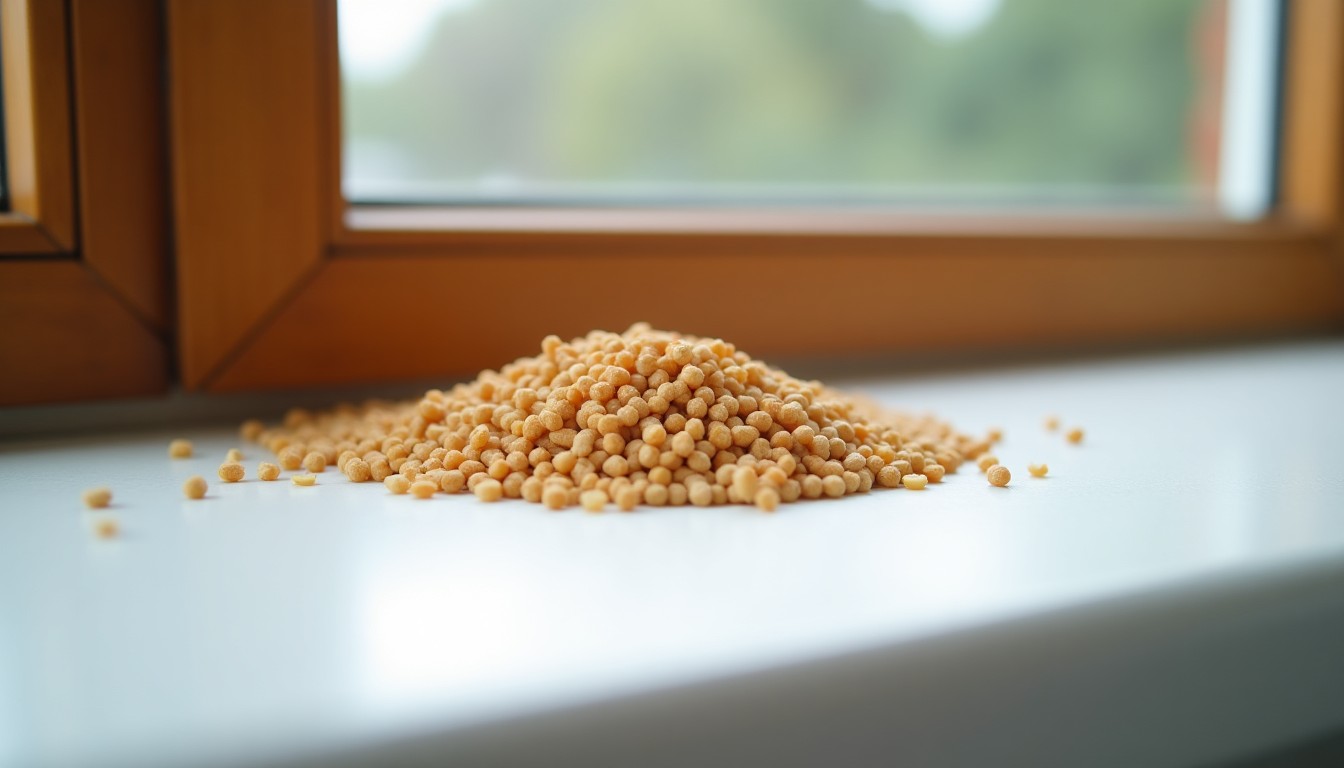
- Drywood termites cut chambers across the grain and push hard fecal pellets out through kick-out holes 1 to 2 mm across (UF/IFAS). Arizona extension describes the pellets as less than 1/25 inch long with rounded ends and six flattened sides, typically light tan with some black ones mixed in. Texas A&M AgriLife notes they are usually the colour of the wood being eaten.
- Dampwood termites make large, open galleries in wood that is already wet. UC IPM describes their pellets as football-shaped and lacking the clear ridges of drywood pellets, and treats their presence as a sign of a moisture problem.
The University of Kentucky notes that wood damaged by moisture or by other insects, such as carpenter ants, does not have this soil-lined appearance. Dirt in the galleries is the subterranean termite signature, and six-sided pellets are the drywood one.
Where each type is found
UF/IFAS records native subterranean termites in every continental state except Alaska, most commonly in the warm, humid Southeast. Formosan termites are largely restricted to the subtropical Southeast. Drywood termites favour warm southern and coastal areas, and dampwood termites are mainly a Pacific coast problem. Our termite zone map shows how this risk is mapped for building codes, and our guide to what attracts termites covers the moisture and wood-to-soil contact that draw them to a house.
What to do once you have seen one
Identification is the step you can do yourself; treatment of a house usually is not. The University of Kentucky calls termite treatment a job for professionals and says do-it-yourself products will seldom eradicate an existing problem. UC IPM agrees that DIY termite pesticides are generally not effective. Kentucky adds that termites damage wood slowly, so taking a week to compare inspections and quotes costs very little.
- Expect a professional termite inspection to confirm activity and the species.
- Subterranean termites are treated with a soil termiticide or a baiting system; see termite treatment cost for typical price ranges.
- Drywood termites may need a whole-structure treatment such as fumigation or heat, or a localised treatment if the colony is small and easy to reach.
- Swarmers that emerge indoors cannot damage wood and die within about a day, according to the University of Kentucky, so a vacuum is enough for the insects themselves.
Frequently asked questions
What kills termites instantly in a house?
Nothing sold for home use ends an infestation instantly. Spraying the termites you can see kills only those few; Mississippi State notes that killing swarmers does nothing to the colony that produced them. For drywood termites, whole-structure fumigation or heat (UC IPM cites wood held at 120°F for at least 33 minutes) treat the whole building at once, but both are professional jobs. Subterranean termites are controlled with soil termiticides or baits, and the University of Kentucky notes baits can take months to work.
Which smell do termites hate?
No smell has been shown to keep termites out of a house. Orange oil (d-limonene) and neem oil have been tried as spot treatments for drywood termites, but UC IPM reports that laboratory and field tests from two universities question the efficacy of d-limonene. Scents and essential oils do not replace an inspection, and any product used against termites should be one labelled for that use and applied as the label directs.
Are white termites and black termites different species?
Usually not. Colour mostly reflects caste. Workers and soldiers are pale because they live in the dark; swarmers of the same colony are dark brown to nearly black. UF/IFAS describes eastern subterranean swarmers as almost black to the naked eye, while its workers are creamy white. Formosan swarmers are the exception that stands out, being orange to light amber-brown.
What do termite droppings look like?
Only drywood termites leave visible droppings. They are hard pellets less than 1/25 inch long with rounded ends and six flattened sides, usually light tan with some black ones mixed in, according to Arizona extension, and they collect in small piles below holes 1 to 2 mm across. Subterranean termites leave no pellet piles; they line their galleries with soil instead. Dampwood pellets are football-shaped without the clear ridges.
If I see termites in a stump in the yard, is my house infested?
Not necessarily. Mississippi State says termites in a stump, log or woodpile 25 feet or more from the foundation are rarely cause for concern, since they are doing their job of recycling dead wood. Swarmers emerging right next to the foundation, or from an attached porch or patio, are a stronger reason for an inspection, according to the University of Kentucky.
Sources
- UF/IFAS Extension, EENY-212 (IN369): Native Subterranean Termites, Reticulitermes flavipes, R. virginicus, R. hageni, Chouvenc, Su and Scheffrahn, revised 2024.
- UF/IFAS Extension, EENY-121 (IN278): Formosan Subterranean Termite, Coptotermes formosanus.
- UF/IFAS Extension, EENY-79 (IN236): West Indian Drywood Termite, Cryptotermes brevis, 2020.
- University of California Statewide IPM Program, Pest Notes: Subterranean and Other Termites (7415) and Drywood Termites (7440).
- Mississippi State University Extension, Signs of Termite Infestation, Blake Layton.
- University of Kentucky Entomology, Entfact-604: Termite Control, Answers for Homeowners, Michael F. Potter, revised 2018.
- Penn State Extension, Eastern Subterranean Termites.
- Texas A&M AgriLife Extension, E-366 Drywood Termites and E-368 Subterranean Termites.
- University of Arizona Cooperative Extension, AZ1232 Drywood Termites, revised 2009.
- Oregon State University Extension, Solve Pest Problems: Termites.
- The Pest Control Brief analysis of iNaturalist research-grade records, pulled October 2026.