Maggots in the Carpet: What They Really Are and Where From
Maggots in a carpet almost always crawled there from something dead or rotting nearby, usually a mouse, rat or bird in a wall, floor void or under furniture, because full-grown fly larvae leave their food to find a dry place to pupate. They cannot live on carpet itself. Vacuum them up, then find and remove the source; Iowa State Extension says both the maggots and the flies are harmless. If the “maggots” are hairy, banded or carrying a case, they are a different larva altogether.
First, is it really a maggot?
A true maggot is a fly larva: legless, smooth, cream to white, pointed at the head end and blunt at the tail. UC IPM describes house fly larvae in exactly those terms. Several carpet larvae that people call maggots are not fly larvae at all, and each points to a different source.
| What it looks like | Length | What it is | Where to look for the source |
|---|---|---|---|
| Smooth, cream-white, legless, pointed head, many at once, rotten smell | 12 to 18 mm (1/2 to 3/4 inch) when full grown | Blow fly maggot | Dead animal in a wall, floor void, under a sofa or behind an appliance |
| Similar but smaller, cream, legless | 7 to 12 mm | House fly maggot | Pet waste, spilled food, a nappy bin or kitchen bin |
| Brown, bristly, tufted with hairs, slow; empty skins nearby | Up to 8 mm (5/16 inch) for black carpet beetle | Carpet beetle larva | Carpet edges, under heavy furniture, lint and pet hair |
| White larva inside a cigar-shaped silk case | Case about 9.5 mm (3/8 inch) | Casemaking clothes moth larva | Wool rugs, stored woollens |
| Tiny, hairy, wormlike, brown head, no legs | No more than 4.8 mm (3/16 inch) | Flea larva | Where pets sleep, at the base of carpet fibres |
| Whitish with a green or pink tinge, walking with legs | About 12.7 mm (1/2 inch) | Indianmeal moth larva | A pantry or pet food store, sometimes rooms away |
Compiled by The Pest Control Brief from UF/IFAS EENY-502 and the UF house fly profile, and UC IPM Pest Notes 7436 (carpet beetles), 7435 (clothes moths), 7419 (fleas) and 7452 (pantry pests).
Why are maggots in carpet?
Because they are leaving, not arriving. The UF/IFAS profile of the common green bottle fly (EENY-502) says that once fully developed, the third-stage larvae “leave the host or carrion and burrow into the soil or substrate surrounding it.” Indoors there is no soil, so they cross whatever floor is in the way. UC IPM says blow fly larvae leave their developmental site to seek out drier and more protected areas for pupation, and older house fly larvae respond positively to light, which is why they turn up in the open middle of a room or near a window rather than in a dark corner.
Iowa State Extension puts the usual cause plainly: blow fly and flesh fly larvae infest an animal carcass for 5 to 10 days before they leave it and wander in search of a dry place to pupate, and their appearance in a house typically indicates an animal has died within the walls or in the attic. A mouse that ate bait and died under the floor, a bird in a chimney or a squirrel in a wall void are the usual suspects.
Other sources that produce carpet maggots
- Something under the carpet. Pet urine or vomit soaked into the pad, or meat juice from a dropped bag of shopping, can feed house fly larvae.
- A bin or nappy pail nearby. House fly maggots from food waste walk off to pupate; our guide to why maggots appear in a trash can covers the bin side.
- A dead rodent behind an appliance. The same wandering happens in laundry rooms, as our page on maggots in a washing machine describes.
Can maggots live in carpet?
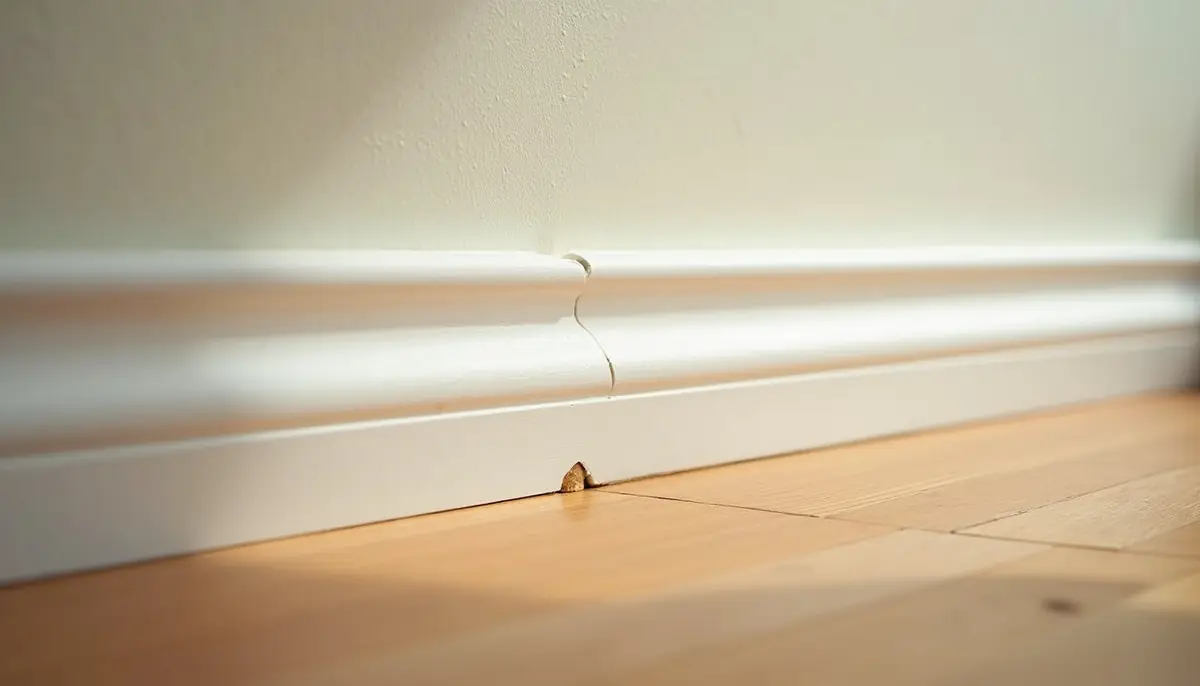
Not for long, and not as a home. Fly larvae need moist decaying food to grow, and a carpet offers none unless something is soaked into it. The maggots you find are already full grown and have stopped feeding. Their next step is to pupate: EENY-502 gives about 10 days as a pupa at 21°C (69.8°F) and 7 days at 27°C (80.6°F), and the pupa is a reddish brown to black capsule 9 to 10 mm long, often wedged under a skirting board or the carpet edge.
That timeline answers the question of how long they last. A dead animal produces maggots for around a week, they wander off and pupate over the following days, and a wave of metallic green or blue flies appears one to two weeks later at the windows. After that, if nothing else died, it stops. Our guide to finding a dead mouse by its smell covers how long the odour lasts and how to locate the body.
How to get rid of maggots in carpet?
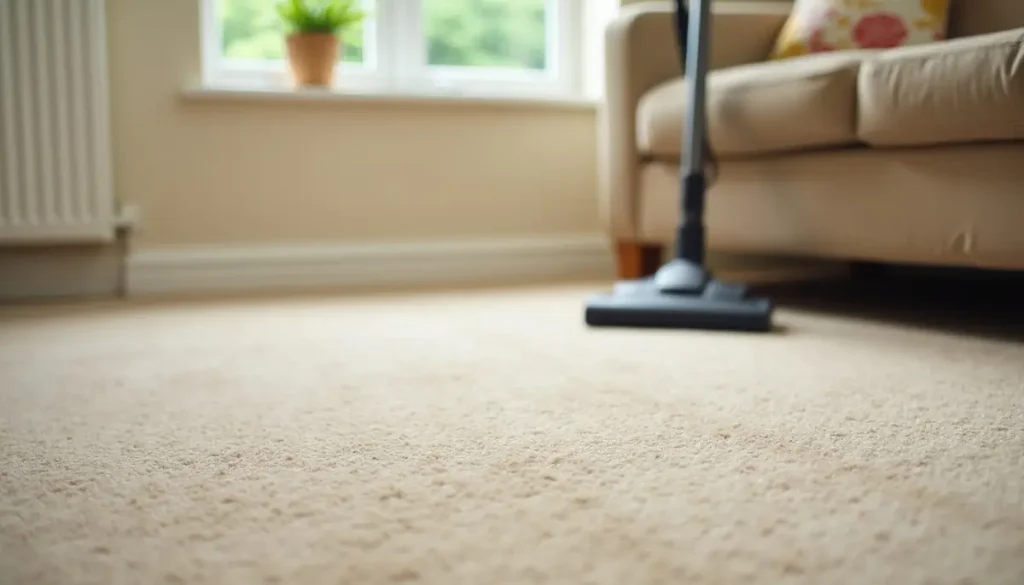
- Vacuum or sweep them up. Iowa State says the only necessary control for flesh fly maggots is to vacuum or sweep them up and discard them. Empty the vacuum into a sealed bag and put it outside the same day.
- Trace the trail. Maggots fan out from the source, so map where you find them. A line along one wall, or a cluster near a heating vent, points to the void behind.
- Find the body. Follow the smell to its strongest point, look under furniture and inside sofa bases, then check behind appliances and in floor and wall voids. Pupae under the skirting are another clue to direction.
- Remove the source. UC IPM states that removal of larval developmental sites is the most efficient means of control. Wear disposable gloves, double bag the carcass and put it in an outside bin. If the body is inside a finished wall or ceiling, a wildlife or pest professional is usually faster; our wildlife removal cost guide shows what that work involves.
- Clean the carpet. Once the source is gone, a hot water extraction clean removes residue and smell from the fibres and pad. If fluid soaked through, the pad under that area usually needs replacing.
- Watch the windows. Some larvae will already have pupated out of reach. Expect adult flies at windows for a week or two; swat them or use a fly trap.
If rodents caused it, deal with the rest of them too, since the dead one rarely moved in alone; the plan for getting rid of mice covers trapping and sealing.
What about salt, bleach or boiling water?
None of the extension sources consulted for this page recommends pouring salt, bleach or boiling water onto carpet, and all three can damage carpet or soak the pad. Insecticide is not needed either: Iowa State and UC IPM both put the weight on removing the larvae and their food source. The maggots on the floor are already leaving and will not survive long in a dry, vacuumed carpet.
What to do if maggots in carpet turn out to be something else
Hairy brown larvae: carpet beetles
UC IPM says carpet beetle larvae leave brown, shell-like, bristly cast skins when they molt, and that those skins plus a lack of webbing are good clues. They eat wool, fur and pet hair rather than rotting food, so the fix is vacuuming along carpet edges and under heavy furniture. Our full guide to carpet beetle larvae and how to clear them covers the rest.
Tiny larvae where the dog sleeps: fleas
UC IPM describes flea larvae as no larger than 3/16 inch, hairy and wormlike, living at the base of carpet fibres in places with at least 75 per cent relative humidity and feeding on adult flea droppings. Seeing them means the pet has adult fleas; our page on how long fleas live in carpet explains the clean-out.
Larvae with legs far from the kitchen: pantry moths
UC IPM notes that in heavy infestations mature Indianmeal moth larvae can be found in parts of the house far from the food source, because they move quite a distance to pupate. Check dry goods, birdseed and pet food; our guide to pantry pests and which ones chew into packets covers the search.
Larvae in a silk tube: clothes moths
Casemaking clothes moth larvae carry a silken case about 3/8 inch long and, UC IPM says, wander away from their food source to find crevices before pupating. Look under wool rugs and in stored woollens, and see how to get rid of clothes moths.

Frequently asked questions
What to do if maggots in carpet?
Vacuum or sweep them up and seal the debris in a bag outside, then look for what they fed on: Iowa State says maggots indoors typically mean an animal died in the walls or attic. Remove the source, clean the carpet, and expect some flies at the windows for one to two weeks.
How long do maggots live in carpet?
Only until they pupate. They arrive full grown and no longer feeding. UF/IFAS gives the green bottle fly about 7 to 10 days as a pupa depending on temperature, after which adult flies emerge. In a vacuumed carpet with no food, any larva that does not find a pupation spot soon dies.
Why am I finding maggots in my carpet but no dead animal?
The body is usually hidden: under floorboards, inside a wall, in a heating duct or under a sofa base. Iowa State says blow fly larvae feed on a carcass for 5 to 10 days, then wander in search of a dry place to pupate, so they can surface several feet from the source. Spilled food or pet mess soaked into the carpet pad is the other common cause.
Are carpet maggots dangerous to people or pets?
Iowa State Extension says both blow fly maggots and the flies are harmless in a home. They do not bite and cannot feed on carpet. Handle a carcass with disposable gloves and wash your hands afterwards; anyone worried about a pet eating maggots or a carcass should ask a vet.
Why maggots in carpet?
Full-grown fly larvae leave the carcass or rotting food they grew in and crawl off to pupate somewhere dry, so they cross carpet on the way. It can happen in winter too: UF/IFAS gives the green bottle fly about three to four days of larval feeding at 68 to 81°F, which a heated house provides.
Sources
- Anderson M, Kaufman PE. Common Green Bottle Fly or Sheep Blow Fly, Lucilia sericata. UF/IFAS Featured Creatures EENY-502 (IN903), revised 2024.
- University of Florida, Department of Entomology and Nematology, House fly, Musca domestica (beneficial arthropods gallery profile).
- Iowa State University Extension and Outreach, Yard and Garden: Blow and Flesh Flies.
- UC Statewide IPM Program, Pest Notes: Flies, Publication 7457.
- UC Statewide IPM Program, Pest Notes: Carpet Beetles, Publication 7436.
- UC Statewide IPM Program, Pest Notes: Clothes Moths, Publication 7435.
- UC Statewide IPM Program, Pest Notes: Fleas, Publication 7419.
- UC Statewide IPM Program, Pest Notes: Pantry Pests, Publication 7452.