A Mouse Ran Over You While You Slept? What It Means

A mouse that ran over you while you slept was almost certainly crossing the bed on its way to food or nesting material, not coming for you, and bites in this situation are rare. UC IPM says house mice forage mostly at night within about 30 feet of their nests, and a bed is just another surface on the route. The realistic risks are contamination of your bedding and a mouse problem in the house, not the touch itself. Wash the bedding hot, check the room for droppings, and start trapping along the bedroom walls tonight.
What happened, how much it matters, and what to do
| What happened | Realistic risk | Next step |
|---|---|---|
| A mouse ran over you or the covers and was gone | Low. No CDC transmission route for hantavirus or rat-bite fever is a mouse briefly walking over skin or a blanket | Wash bedding and clothing in hot water and detergent; CDC adds machine drying on a high setting |
| You found droppings on the sheets or pillow | Moderate. Droppings and urine carry the germs; disturbing them dry is the problem | Do not shake the sheets out. Spray droppings with disinfectant, wait 5 minutes, wipe up, then launder |
| The mouse bit or scratched you | Uncommon, but CDC says rat-bite fever spreads through scratches and bites, and mice carry it | Wash the wound and contact a doctor; tell them a rodent was involved |
| Shredded tissue or fabric near or under the bed | A nest may be close; UC IPM says mice nest in finely shredded paper or other fibrous material | Treat it as a nest: wet it with disinfectant before removing it |
Compiled by The Pest Control Brief from CDC rodent clean-up guidance, CDC rat-bite fever and hantavirus pages, and UC IPM Pest Notes: House Mouse.
Why a mouse would cross a sleeping person
House mice are nibblers. UC IPM says they eat up to 20 per cent of their body weight daily in about 200 small meals each night, and seldom venture more than 30 feet from their nest and food supply. A mouse living in a bedroom wall or under the floor is therefore covering the same small circuit dozens of times a night, and a bed against the wall sits right on it. Crumbs from eating in bed, a pet bowl or snacks in a nightstand pull it across the covers.
Bedding is also nest material. Reproductive females are strongly motivated to nest-build, which is why UC IPM suggests a ball of cotton wool or dental floss as trap bait; loose threads, tissues and fabric stored under a bed do the same job in reverse. What actually attracts mice indoors is food, shelter and nest material, and the full list of things that draw mice into a house applies to bedrooms as much as kitchens.
UC IPM describes house mice as excellent climbers that can run up any rough vertical surface and jump up to 12 inches from the floor onto a flat surface. A bed leg or a valance touching the floor is enough, and how mice climb walls, furniture and bed frames covers which surfaces stop them.
UC IPM notes mice detect movement at least 15 feet away, so a mouse crosses a bed when you have been still for a while and bolts the moment you stir.
When mice are moving
Our analysis of 3,650 timed US research-grade iNaturalist records of house mice shows how lopsided their timetable is. Records made between 9 pm and 6 am are 12.9 per cent of house mouse records but only 6.1 per cent of all US records of anything in those hours, so mice are about twice as likely to turn up in the small hours as an average recorded species. These records show when people notice mice, not true activity, but they agree with UC IPM that house mice are active mostly at night. The dusk and dawn peaks are covered in why mice are nocturnal and what a daytime mouse means.
Will mice mess with me while I sleep?
Not in the sense people fear. None of the UC IPM, ICWDM or CDC guidance we read describes house mice seeking out sleepers. A mouse bites when it is grabbed, cornered or reached for in a trap, so the moment of risk is when you wake and swat at it. Our guide to when mice bite and what a mouse bite can pass on sets out the triage if you do find a mark.
What mice do leave behind is urine and droppings, and that is the part to deal with. ICWDM notes that droppings turn up along runways, in feeding areas and near shelter, so a mouse’s route across a bedroom is often traceable by droppings along the skirting board or behind the bedside table.
The disease question, at a glance
- Hantavirus. CDC lists breathing in contaminated air when cleaning up after rodents, touching contaminated objects and then the nose or mouth, being bitten or scratched, and eating contaminated food. CDC says the most common hantavirus causing pulmonary syndrome in the US is spread by the deer mouse; the indoor house mouse is not on its carrier list. The safe way to handle droppings is in the CDC dropping clean-up protocol and what the hantavirus numbers say.
- Rat-bite fever. CDC says it spreads through scratches, bites, or contact with a rodent’s saliva or pee, and that the rodents carrying it include mice as well as rats. If you have symptoms after rodent contact, CDC advises seeing a healthcare provider immediately.
- LCM (lymphocytic choriomeningitis). UC IPM says it is caught from fresh urine, droppings, saliva or nesting material of infected house mice, and estimates about 5 per cent of US house mice carry it.
None of this is medical advice. If you were bitten or feel unwell after rodent contact, speak to a doctor and mention the mouse.
Tonight and this week
Tonight
- Check the sheets, pillowcases and the floor along the bed for droppings, which are about a quarter of an inch long according to ICWDM.
- If there are droppings, CDC says not to sweep or vacuum them, but to spray them with disinfectant or a bleach solution of 1 part bleach to 9 parts water, let it soak for 5 minutes, and wipe up with paper towels while wearing rubber or plastic gloves.
- Launder bedding and the clothes you slept in with hot water and detergent, then machine dry on a high setting or hang to dry in the sun, as CDC advises.
- Remove all food from the bedroom, including snacks in drawers and pet food.
- Pull the bed a few inches away from the wall and lift any valance or throw off the floor so the bed is no longer part of the wall-side route.
This week
- Set snap traps along the bedroom walls, behind furniture and in corners, never on the bed. UC IPM advises placing traps close to walls so mice pass over the trigger and spacing them no more than about 10 feet apart; how many mouse traps a room or house needs works through the counts.
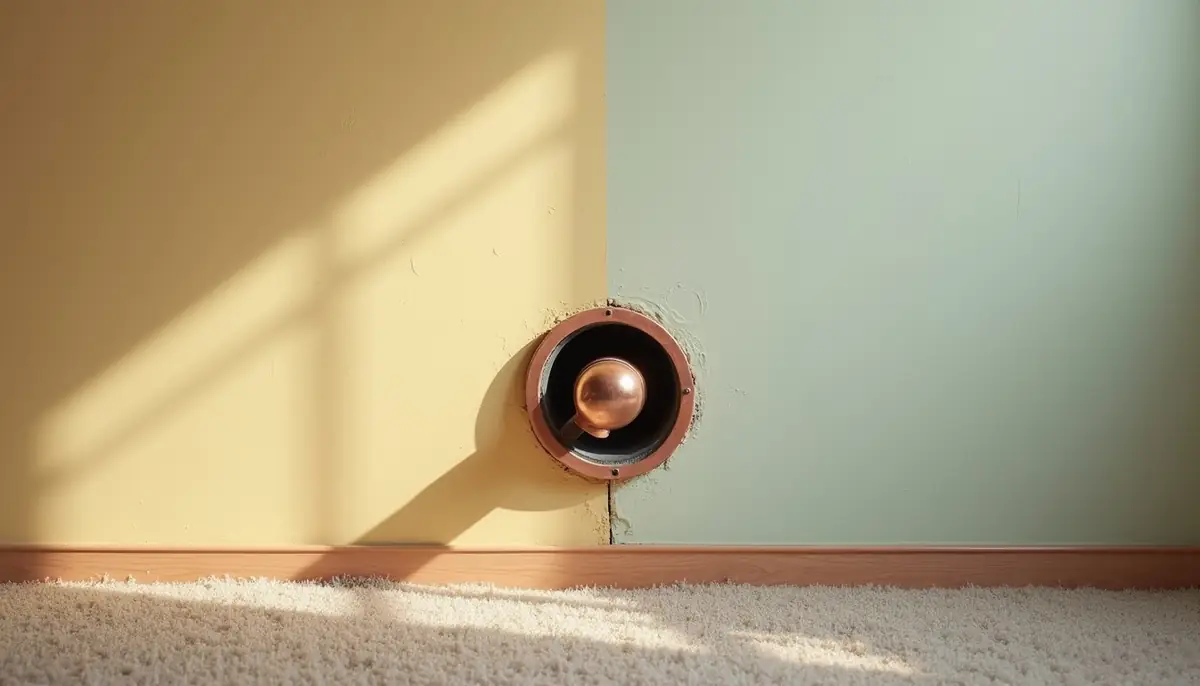
- Look for the way in. UC IPM says house mice can squeeze under gaps a quarter of an inch tall, so check where heating pipes, radiator lines and cables enter the room, gaps under skirting boards and the back of built-in wardrobes. Seal with metal or concrete, not foam.
- A mouse in the bedroom usually means mice elsewhere, and the room-by-room signs of mice in a house help locate the nest.
- Work through the full plan in how to get rid of mice, step by step and in order if more than one room shows activity.
Finding a mouse in the bedroom does not mean a dirty house. UC IPM says sanitation will seldom completely control house mice, because they survive in very small areas on very little food, and they move indoors in autumn as nights cool.
What is the 5 day rule with mice?
It is an informal online rule of thumb: if five days pass with no catches and no new droppings, the mice are gone. We could not trace it to CDC or an extension service. CDC’s own threshold is longer: “If no rodents are captured for a week and there are no new signs of rodents, the rats are gone,” and the same test applies to mice. Our guide to how to tell if mice are really gone recommends a second week with traps moved, because mice can become trap shy.
What keeps mice away while sleeping?
Nothing you can put on the bed. UC IPM says house mice quickly become accustomed to repeated sounds and that there is little evidence sound, magnetic or vibrating devices drive established mice out of buildings. Peppermint oil and other plant scents have weak, inconsistent evidence behind them, as our review of which smells mice hate and what the studies found details. What keeps a mouse off your bed is a bedroom with no food in it, a bed that does not touch the wall or floor, sealed gaps, and traps along the walls.
What is a mouse’s worst enemy?
In the wild, the predators that hunt them. In a house, the answer is less satisfying. UC IPM says some dogs and cats will catch and kill house mice, but that there are few situations in which they sufficiently control rodent populations, and that predators can make rodents more cryptic, giving the false impression the population has fallen. The research behind that is in what eats mice and whether predators control them.
Frequently asked questions
Is it safe to sleep in my room if there is a mouse in it?
For most people, yes. Clear food out of the room, wash the bedding hot, move the bed a few inches off the wall and set traps along the walls before you sleep. If you have a health condition, the LCM virus that UC IPM says about 5 per cent of house mice carry is a reason to ask a doctor and to have someone else handle the clean-up.
Do mice stay away from sleeping humans?
No. A sleeping person is still and quiet, so a foraging mouse treats the bed like any other surface on its route. UC IPM says mice detect movement at least 15 feet away, which is why they bolt the moment you stir. They are not seeking you out; they are travelling between their nest and food, usually within about 30 feet.
Why is there a mouse in my bedroom if there is no food?
Because bedrooms offer shelter and nest material, and the mouse may be passing through. UC IPM says mice nest in finely shredded paper and fibres, and reproductive females are strongly driven to nest-build. A mouse can also live on crumbs too small to notice: UC IPM says house mice do not need to drink water and can survive on limited food in very small areas.
Should I throw my mattress away after a mouse ran over it?
Not for a mouse simply crossing it. CDC’s clean-up guidance covers laundering bedding hot and shampooing upholstered furniture with a commercial disinfectant or steam cleaner; it does not call for discarding furniture. A mattress with a nest inside it or heavy urine staining is a different case.
Sources
- University of California Statewide IPM Program, Pest Notes: House Mouse, UC ANR Publication 7483 (N. M. Quinn).
- Centers for Disease Control and Prevention, How to Clean Up After Rodents (Healthy Pets, rodent control).
- Centers for Disease Control and Prevention, Trap Up rodent control guidance.
- Centers for Disease Control and Prevention, About Rat-Bite Fever.
- Centers for Disease Control and Prevention, Clinician Brief: Hantavirus Pulmonary Syndrome, and About Hantavirus.
- Internet Center for Wildlife Damage Management, House Mice, based on Timm and Howard in Prevention and Control of Wildlife Damage (1994).
- The Pest Control Brief analysis of iNaturalist research-grade records, pulled November 2026.