Roaches in the Refrigerator: Behind It, Under It or Inside?
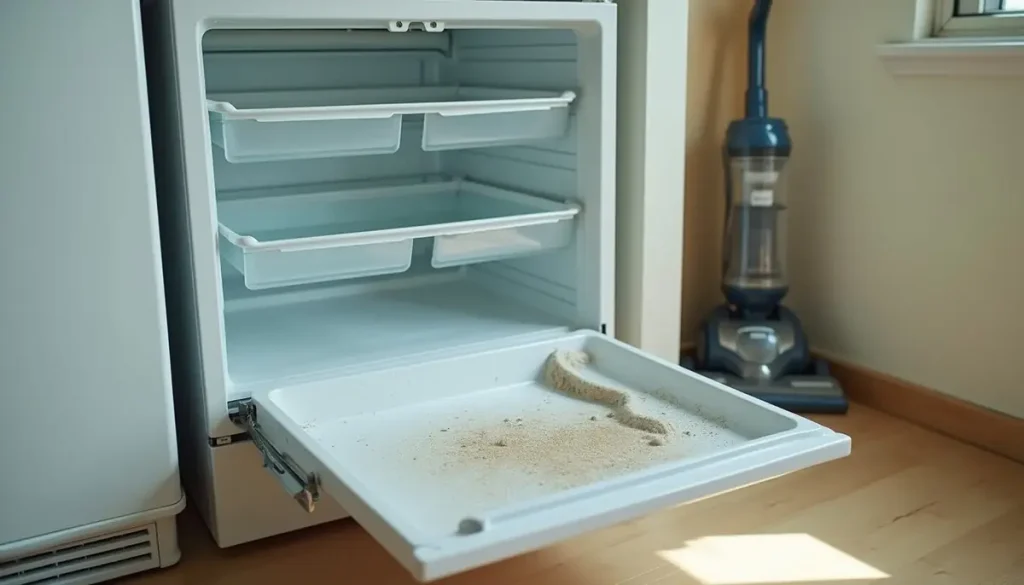
Roaches in a refrigerator are almost always German cockroaches living behind and under it, in the warm machine compartment, the base grille and the door gaskets, not in the cold food compartment. Rutgers Cooperative Extension says the areas around the stove and refrigerator usually hold the most cockroaches in a kitchen. One seen inside the fridge has usually wandered in from those warm spots. Unplug, pull the fridge out, vacuum, then bait around it and monitor.
Where you saw the roach tells you how far the problem goes. Use this before you start pulling the fridge out.
Read the location: behind, under, inside
| Where you saw it | What it usually means | What to do |
|---|---|---|
| Running from behind the fridge when you pull it out | Harbourage on the back panel, in the machine compartment or in the wall gap; Rutgers names the back of the refrigerator as ideal German cockroach harbourage | Unplug, vacuum the back and floor, bait the wall cracks and cabinet sides |
| Under the base grille at the front | Warmth from the compressor and condenser, plus water from a defrost drip pan on models that have one | Remove the grille with the power off, vacuum, dry the pan area |
| In the folds of the door gasket | Food film and a tight crack; torn gaskets give more room | Scrub the gasket with hot soapy water; replace it if torn |
| Inside the fresh food compartment | A wanderer from the warm areas, or one carried in on groceries | Discard uncovered food it touched, wipe shelves, then treat behind and under |
| In the freezer | Very unlikely to be living there; usually dead or carried in | Check packaging, then treat around the appliance |
| Many small roaches by day around the fridge | Often a large, established German cockroach population, crowded out of hiding | Professional treatment; bait alone may be slow |
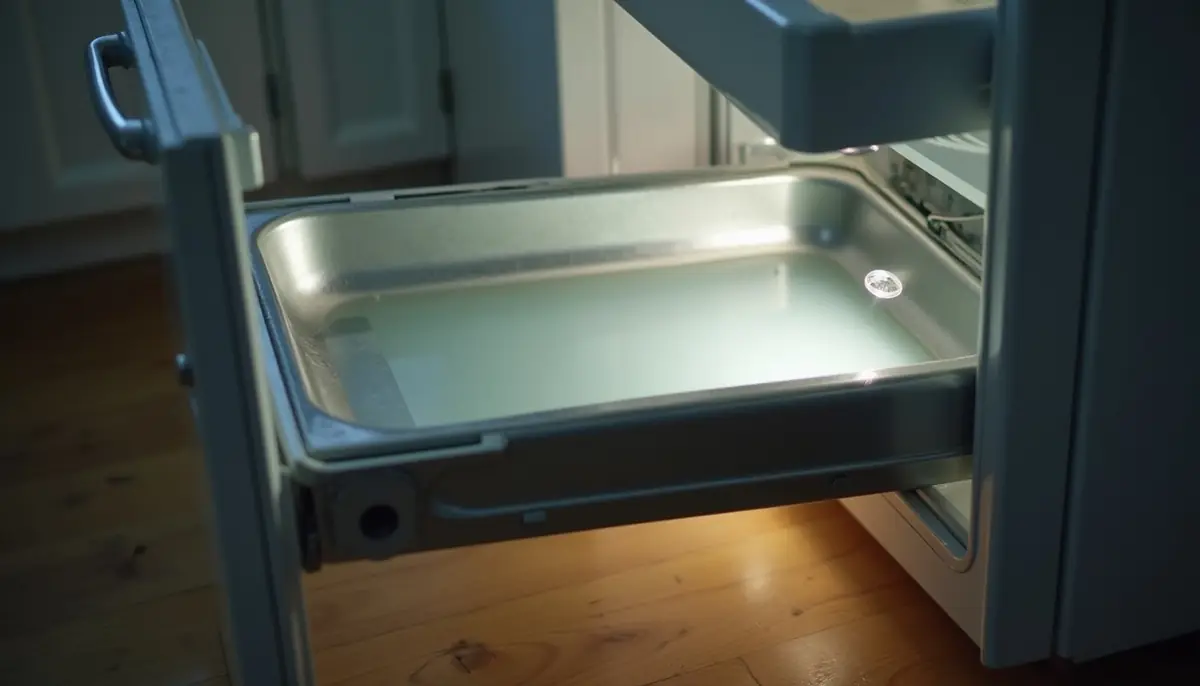
Why am I finding roaches in my refrigerator?
Because a refrigerator is a heater on the outside. The compressor and condenser warm the back and base, and German cockroaches go where it is warm: Rutgers says cold is the major factor limiting their survival, and below 59 °F (15 °C) nymphs stop developing into adults. A 2017 laboratory study by Xu and colleagues found survival and hatching were highest around 31 °C (88 °F). The University of Georgia describes German cockroaches as found mainly in kitchens near and in warm appliances and sources of water.
Water and food complete it. Condensation, a defrost drip pan, a leaking ice maker line and crumbs pushed under the base give them all they need without leaving the appliance footprint. Our guide to what cockroaches eat explains why the grease film and pet food scraps that collect under a fridge are enough.
If you also see them at the dishwasher, the stove or under the sink, the fridge is one hot spot in a kitchen-wide infestation; our page on roaches living in a dishwasher covers the appliance next door.
How long can roaches live inside a refrigerator?
Not long by roach standards, and they rarely try. A refrigerator should be at 40 °F (4 °C) or below and a freezer at 0 °F (minus 18 °C), according to the FDA. In a 1973 laboratory study by Tsuji and Mizuno, no stage of the German cockroach survived 40 days of constant chilling at about 42 °F (5.5 °C), slightly warmer than a properly set fridge. We found no published survival time for German cockroaches at fridge or freezer temperatures specifically, so treat any exact figure you see quoted with caution.
The practical point is that cold slows them before it kills them. A roach in the salad drawer is out of its range and not breeding there. The roaches that matter are a few inches away in the warm machine compartment. Our page on what cold does to cockroaches compares the species.
Small flies in the fridge are a separate question with a similar answer: cold slows them too, as set out in whether fruit flies can live in the fridge.
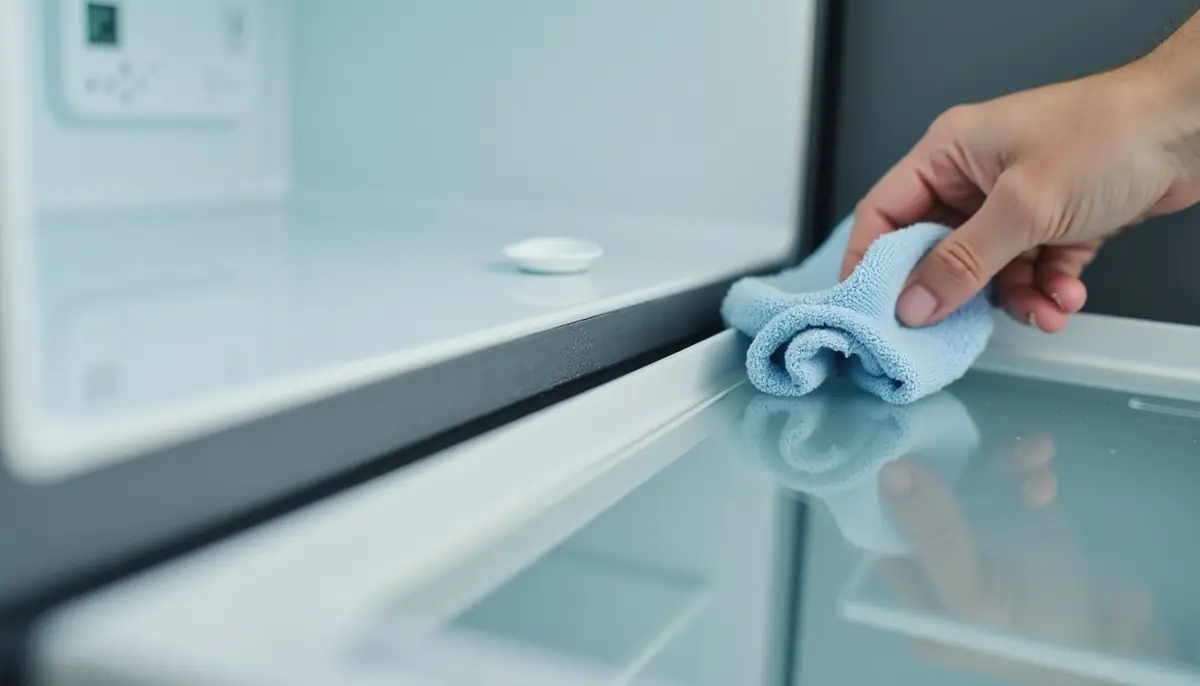
How do I get rid of cockroaches in my fridge?
1. Unplug it and pull it out
GE’s support guidance says to “always unplug the Refrigerator from the power supply before attempting any maintenance or cleaning”, and where condenser coils sit on top, to disconnect power at the breaker. Do this before removing the base grille or vacuuming near the machine compartment. Do not spray water or insecticide into the compartment.
2. Vacuum everything you can reach
Rutgers advises a vacuum cleaner with a HEPA filter to remove live and dead cockroaches, droppings and shed skins. Vacuum the back panel, the coils (GE says most models made since 2001 have a condenser that does not need cleaning, but the floor beneath still does), the floor and the wall behind. Empty the vacuum outside.
3. Remove water and food
Clean and dry the drip pan area, fix any ice maker or water line leak, and scrub the door gaskets with hot soapy water. Virginia Tech Extension advises hot, soapy water for droppings because pheromones in them attract more cockroaches to their runways.
4. Bait around the appliance, not inside it
Rutgers calls bait the most effective formulation, applied as numerous pea-sized dots at hiding places. Place gel in the cracks where the cabinet sides meet the wall, at the floor edges behind the fridge and near the base grille, as the label allows. Never put bait or insecticide inside the food compartments. Virginia Tech warns that aerosols and liquids used around baits may repel cockroaches from them, so do not spray as well; the comparison of gel bait versus spray for roaches explains why.
5. Monitor with sticky traps
Rutgers lists the kitchen floor near the refrigerator and stove, the cabinet under the sink and beside garbage cans among the places to put traps, and says a torch is necessary for inspection. Check the traps after a week: the trap that catches most marks the hot spot to bait more heavily.
6. Push it back and keep the gap clean
Slide the fridge back without crushing the cords or tubing, as GE advises, and repeat the vacuuming and trap check every few weeks until catches stop. Expect bait to take time: UC IPM says an effective bait programme may take seven days or longer to show results, and our page on how long roaches take to die after treatment sets out the timeline.
What about roaches in the refrigerator motor?
Roaches in the machine compartment are a sanitation and allergen problem around wiring, not something to fix with a spray can. Keep liquids out, unplug before cleaning, and have a licensed pest professional apply a dust or bait product labelled for appliance voids if baiting around the outside does not clear them. If wiring or the compressor looks damaged, call an appliance technician.
Is the food safe?
Discard uncovered food a roach has walked on, and wash containers and shelves. In a 1994 Journal of Food Protection study (Kopanic, Sheldon and Wright), cockroaches infected with Salmonella Typhimurium contaminated food and water at every 24 hour sampling, with the most cross-contamination in the first 24 hours; German cockroaches were contaminated half as often as American and Oriental. Purdue researcher Jose Pietri’s lab has since found that Salmonella can replicate in the German cockroach gut. Our summary of what diseases cockroaches carry covers the wider evidence, and anyone with symptoms should see a doctor.
Cockroach droppings and body parts are also allergens. Our review of cockroach allergen and asthma research explains why the vacuuming step matters in homes with children or asthma.
What is a roach’s worst enemy?
For German cockroaches, it is not a predator you can buy. Alabama Cooperative Extension (ANR-2778, 2022) says three egg case parasitoid wasps have been developed as cockroach biocontrol agents, but there is currently no known parasitic wasp for German cockroaches. Their real limits are cold, as above, and the lack of warm, wet, food-rich harbourage. Bait plus sanitation removes both, which is the core of the species-by-species roach control method.
When to call a professional
Call a licensed pest control company if you see German cockroaches in daylight, if sticky traps still catch them after two to three weeks of baiting, or if you live in an apartment where they come through shared walls. Apartment German cockroaches often resist common sprays, so product choice matters; our page on why German cockroach sprays stopped working covers the resistance data.
The same infestation can spread into small appliances such as microwaves and TVs, as described in roaches living inside electronics.
Frequently asked questions
Why am I finding roaches in my refrigerator?
The compressor and condenser keep the back and base of the fridge warm, and condensation, drip pans and crumbs under it supply water and food. German cockroaches, which cannot tolerate cold, gather there; Rutgers says areas around the stove and refrigerator usually hold the most cockroaches in a kitchen. One inside the fridge has usually strayed from those warm spots.
How long can roaches live inside a refrigerator?
No published study gives a survival time at fridge temperature. The closest evidence is a 1973 laboratory study in which no German cockroach survived 40 days at about 42 °F, slightly warmer than a fridge set to the FDA’s 40 °F or below. Cold makes them sluggish quickly, and they do not breed inside the food compartment.
How do I get rid of cockroaches in my fridge?
Unplug the fridge and pull it out, vacuum the back, coils, floor and wall with a HEPA vacuum, clean and dry the drip pan area and gaskets, then place gel bait in cracks around the appliance as the label allows. Use sticky traps to find the hot spot, and never put insecticide inside the food compartments.
What is a roach’s worst enemy?
For German cockroaches, no natural enemy is practical: Alabama Cooperative Extension says there is currently no known parasitic wasp for them, although egg case wasps attack some larger species. Cold is their main natural limit, and removing warm, damp, food-rich harbourage plus baiting is what clears an infestation.
Can roaches survive in the freezer?
They are very unlikely to survive for long at the FDA’s recommended 0 °F. German cockroaches did not survive 40 days at about 42 °F in a 1973 study, and we found no published German cockroach survival time at freezer temperatures. A roach found in a freezer was usually carried in on packaging or wandered in and died.
Sources
- Rutgers Cooperative Extension, German Cockroach, Fact Sheet FS1322, Wang, 2020.
- Suiter, Forschler, Ames and Hoebeke, University of Georgia, Cockroaches fact sheet, 2022.
- Virginia Cooperative Extension, Cockroaches Found in Living Spaces, ENTO-528NP, 2022.
- University of California Statewide IPM Program, Pest Notes: Cockroaches, Publication 7467.
- Alabama Cooperative Extension System, Cockroach Biocontrol: Parasitoids and Parasites, ANR-2778, 2022.
- Tsuji, H. and Mizuno, T., Effects of a low temperature on the survival and development of four species of cockroaches, Medical Entomology and Zoology 23(3): 185 to 194, 1973.
- Xu, Chen, Yang and Zhang, Development: temperature relationship and temperature dependent parameters of German cockroach, Arthropods 6(3): 78 to 85, 2017.
- Kopanic, Sheldon and Wright, Cockroaches as vectors of Salmonella: laboratory and field trials, Journal of Food Protection 57(2): 125 to 132, 1994.
- Purdue University College of Agriculture, Studying how salmonella hitches a ride on cockroaches, July 2025.
- US Food and Drug Administration, Refrigerator Thermometers: Cold Facts about Food Safety.
- GE Appliances, Refrigerator: Cleaning Condenser Coils, support article.