Wasps in the Car: Getting One Out and Finding a Nest
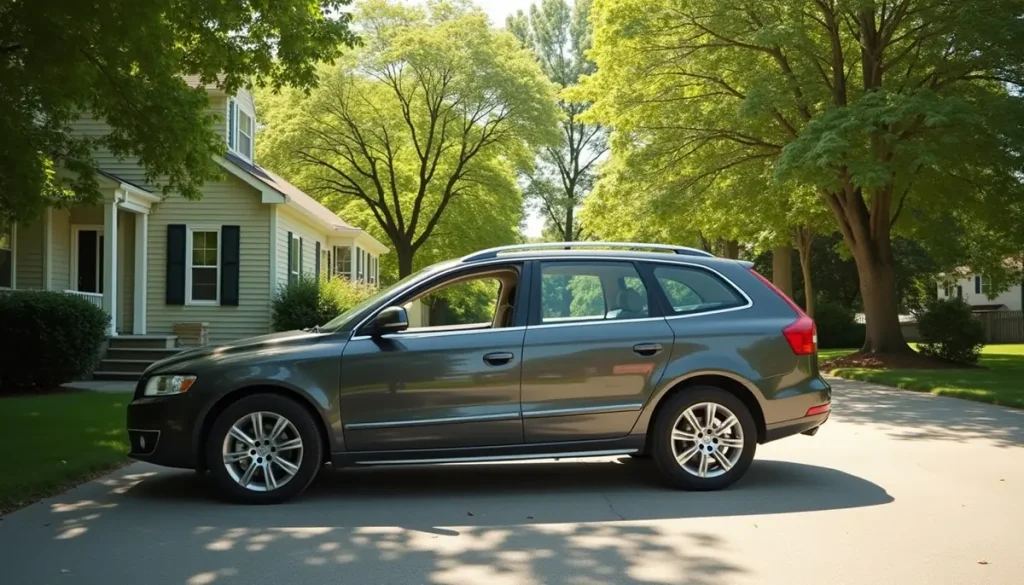
A wasp loose in a moving car is a driving hazard, not a sting emergency: pull over where it is safe, stop, open all the windows and let it fly out. The University of Kentucky gives exactly that advice and warns against swatting. Wasps that keep reappearing in a parked car usually mean a paper wasp nest in a side mirror, door jamb or wheel arch, or mud dauber tubes underneath. Small nests can be removed in the cool of early morning.
Where the wasps are, and what to do
| Where on the car | Likely insect | What to do |
|---|---|---|
| Inside the cabin, one insect, while driving | Any wasp or bee that flew in | Pull over safely, stop, open all windows, wait |
| Inside a side mirror housing | Paper wasps: open grey cells, a stalk | Early morning: knock down a small spring nest, or use a labelled wasp spray from a distance |
| Door jamb, fuel flap, under the boot lid | Paper wasps | Same as the mirror; check before opening |
| Underside of bumper, wheel arch, sills | Mud daubers: hard mud tubes or lumps | Scrape off; these wasps rarely sting |
| Engine bay of a car that sits unused | Mud daubers, paper wasps | Inspect and clear before starting |
| Grille at the base of the windscreen | Paper wasps or debris nests | Check the cabin air intake and filter |
| A hanging cluster of bees on the car | A honey bee swarm resting | Leave it; call a beekeeper if it must move |
| Ground nest under a long-parked car | Yellowjackets | Move nothing; call a professional |
Compiled by The Pest Control Brief from University of Kentucky, University of California IPM, Mississippi State, University of Maryland and Ohio State extension guidance.
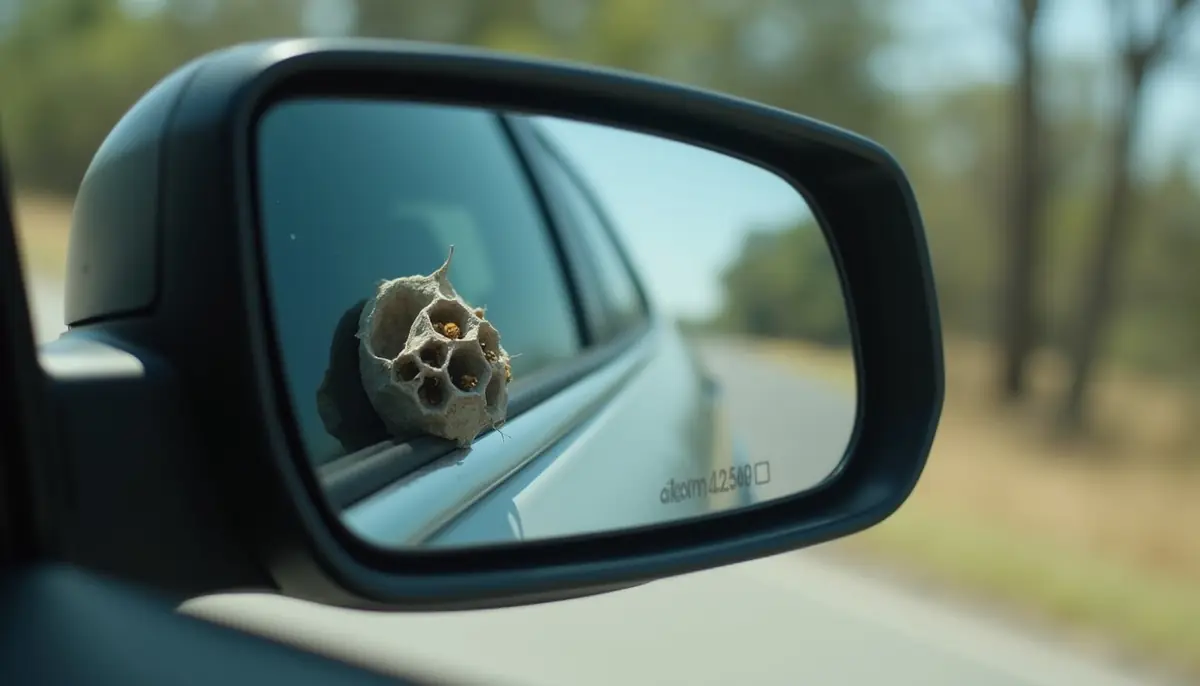
A wasp in the car while you drive
The University of Kentucky’s advice on foraging wasps is direct: if a wasp or bee enters your vehicle, stop the car and open all windows to allow it to escape. It adds that most stings happen when foragers are slapped or trapped against skin, and UC IPM advises not swatting or running if a wasp lands on you. Swatting at the windscreen at speed is the dangerous part, so signal, find a safe place to stop, then deal with the insect.
Most wasps found inside a car are foragers looking for food or an exit. Ohio State notes that in late summer yellowjacket food preferences shift from proteins to sweets, which is why an open drink can or sticky cup holder draws them in. Our page on what attracts wasps in late summer explains the shift month by month. Kentucky also warns to check drink cans before sipping, since a wasp can crawl inside.
How long will a wasp live in a car?
No study has measured it. What is measured is the heat. McLaren, Null and Quinn, writing in Pediatrics in 2005, recorded a parked dark sedan on 16 sunny days with outside temperatures of 72 to 96 °F: the interior rose an average of about 40 °F in an hour, 80 per cent of the rise came in the first 30 minutes, and cracking the windows 1.5 inches made no significant difference. A wasp trapped against a sunny windscreen with no water or sugar is unlikely to last a hot afternoon, but in shade or cool weather it may survive until a window is opened.
Why wasps build in car mirrors
A parked car offers what paper wasps look for. The University of Kentucky says they build umbrella-shaped nests in protected locations such as eaves, gutters and ledges, and inside porch lights, barbecue grills and mailboxes. A mirror housing, the gap behind a fuel flap or the inside lip of a wheel arch is the same kind of dry, sheltered cavity, and a car that stays put for a week or two in spring gives a founding queen time to start.
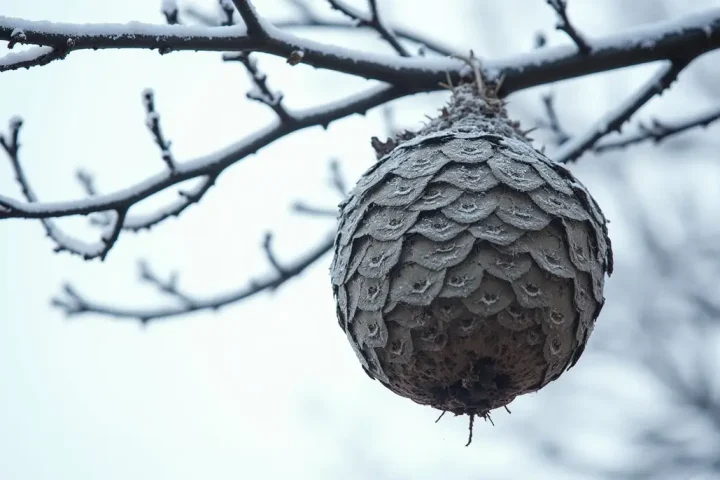
UC IPM describes a paper wasp nest as hanging like an open umbrella from a stalk, rarely bigger than an outstretched hand, with 15 to 200 wasps, and paper wasps as much less defensive than yellowjackets. Our paper wasp guide covers the species and the season from queen to empty nest.
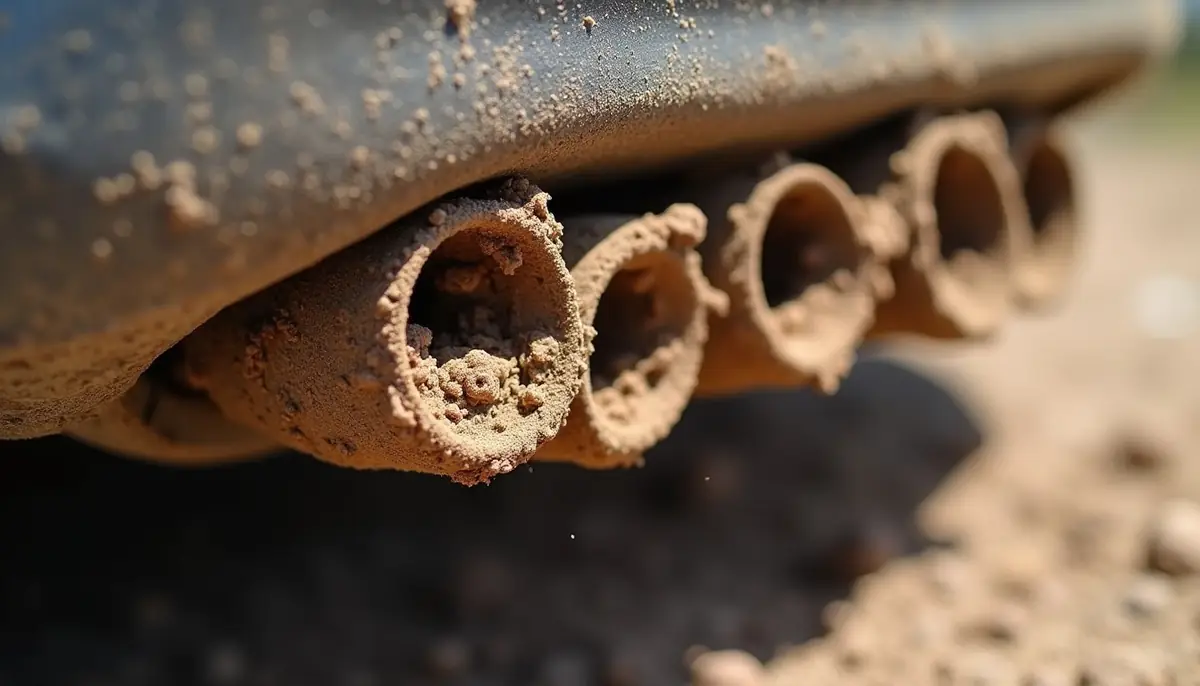
Mud daubers are different, and our guide to harmless mud daubers covers the three species: Mississippi State lists covered areas of automobiles, boats and other equipment among their nest sites, and University of Maryland Extension notes nests plastered inside the motor housings of unused machinery.
What do wasps carry in their mouth?
Usually building material or food. UC IPM says social wasps make paper from wood fibres scraped and mixed with saliva, so a wasp chewing on a fence or trim is gathering nest material. Mud daubers carry pellets of mud, and Mississippi State says they stock each cell with spiders they paralyse with a sting. Ohio State adds that yellowjacket workers chew captured insects or meat to feed the larvae.
Are wasps carnivores, herbivores or omnivores?
Both diets run in one colony. Ohio State explains that adult yellowjackets feed mainly on sugars and carbohydrates such as fruit, nectar and tree sap, while the larvae need protein, so adults hunt insects or scavenge meat, chew it and feed it to the young. That makes the colony omnivorous, and it explains why wasps visit both a picnic’s meat and its soda.
The chart shows when each group is most recorded. The black and yellow mud dauber peaks in July and August at nearly three times its usual share, paper wasps in September and yellowjackets in October. A parked car is most worth checking from late spring, when paper wasp queens found new nests, through August.
Getting a nest off the car
- Work in the early morning. Ohio State advises dawn because wasps are slow and sluggish after a cool night. Do not shine a light into the nest; Ohio State and Clemson both warn that wasps fly toward light.
- Small spring nests can simply be knocked down. UC IPM says knocking down a newly started paper wasp nest early in the season makes the founding female go elsewhere. Close the mirror housing or door first so you are not standing over it.
- For a larger nest, use a product labelled for wasps and hornets. Kentucky notes these sprays reach as far as 20 feet and drop wasps instantly, so stand to the side, never underneath. Wait a few days, then remove the nest. Mississippi State warns some wasp sprays contain petroleum products that stain walls, so spray the nest, not the paintwork, and wash the area afterwards.
- Scrape off mud dauber tubes. Mississippi State advises scraping nests off and using a wet cloth and a spray bottle of water to remove the remaining mud. UC IPM says mud daubers do not defend their nests and rarely sting.
- Never treat the cabin. Our guide to getting ants out of a car explains why foggers and sprays do not belong in a closed cabin.
For nests in a door frame or the mirror wiring, a garage or mechanic may need to remove trim; the University of Kentucky warns that standing directly under a nest during treatment raises the risk of stings. If the nest is large, or you are unsure what it is, our wasp and hornet identification guide separates the defensive species from the mild ones.
Our plan for getting rid of wasps by nest type covers nests on the house and garage, which often supply the wasps that end up in a car parked beside them.
Cars that sit: engines, intakes and swarms
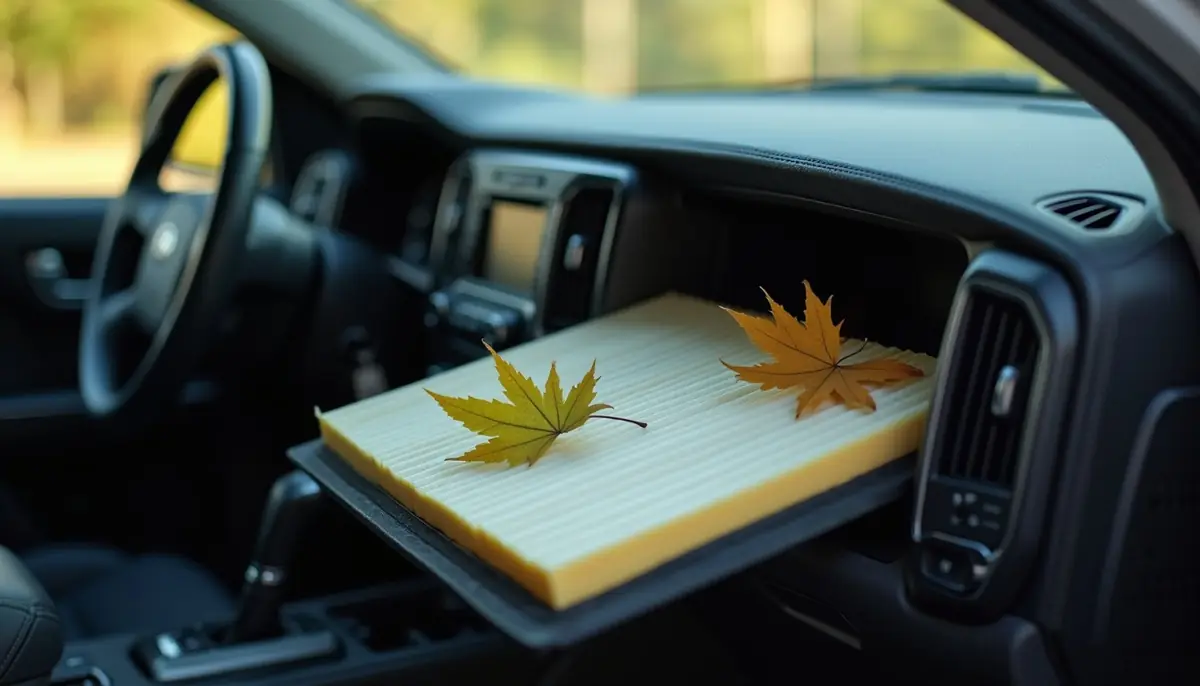
Mississippi State warns that a mud dauber nest built in the wrong place on an infrequently used machine can cause a lot of mechanical damage when that machine is used. Before starting a car, mower or trailer that has stood for weeks in summer, open the bonnet and look for mud on belts, pulleys and around the air intake. Rodents use the same idle months, as our page on mice in cars and wiring damage explains. If insects keep appearing through the dashboard vents, the grille at the base of the windscreen and the cabin air filter behind the glove box are the places to check.
We searched the 15,424 recall campaigns in NHTSA’s post-2010 recall file, downloaded 21 November 2026, for wasp, hornet, mud dauber, bee, yellowjacket, insect and nest. None names a stinging insect as the cause of a defect. The only animal cause in the summaries is spider webs blocking evaporative canister vent lines on Mazda6 and Suzuki Kizashi models, covered in our page on spiders in cars and the vent-line recalls.
Honey bees occasionally use cars too. Mississippi State notes that swarms often land on structures including mailboxes, fences, grills and automobiles and hang for 3 to 5 days while scouts find a cavity; it adds that honey bees have nested in junked automobiles. A swarm is unusually gentle; our page on a bee swarm on your house or car explains who to call if it cannot wait.
Yellowjackets and parked cars
Yellowjackets nest mainly in rodent burrows and wall voids, according to UC IPM, so they rarely build in a car that is driven daily. A car parked for months over a burrow is the exception: colonies reach 1,500 to 15,000 wasps and defend vigorously. Do not drive off over an active ground nest or try to move the car while workers stream around it; our yellow jacket removal guide explains why these colonies are the dangerous case.
And the “summer car” searches?
Many searches for wasps in a summer car refer to My Summer Car, a PC game, rather than a real vehicle. The advice on this page is for real cars.
Frequently asked questions
How do I get rid of wasps in my car?
For a single wasp, stop somewhere safe and open all the windows, as the University of Kentucky advises. For a nest in a mirror, door jamb or wheel arch, work at dawn when wasps are sluggish, knock down a small spring nest, or use a labelled wasp and hornet spray from the side. Scrape off mud dauber tubes.
How long will a wasp live in a car?
No study measures wasp survival in a car. A parked dark sedan in a 2005 Pediatrics study warmed by about 40 °F within an hour on sunny days of 72 to 96 °F, so a trapped wasp in summer sun is unlikely to last long. In shade or cool weather it can survive until a window is opened.
Why are wasps trying to get into my car?
Usually for food or shelter. Ohio State says late-summer yellowjackets switch to sweet foods, so spilled drinks and sticky cup holders attract them. Paper wasps look for dry, protected cavities such as mirror housings and door jambs, the same kind of sheltered spots the University of Kentucky lists, like porch lights and mailboxes.
Will a wasp build a nest in my car?
On a car that sits for a week or more, yes. Paper wasps build in side mirrors, door jambs and wheel arches, and Mississippi State lists covered areas of automobiles among mud dauber nest sites. A car driven every day is rarely used, and yellowjackets nest mainly in ground burrows and wall voids rather than vehicles.
Sources
- University of Kentucky Entomology, ENTFACT-620: Controlling Wasps, Hornets, and Yellowjackets, M. F. Potter, revised 2026.
- University of California Statewide IPM Program, Pest Notes: Yellowjackets and Other Social Wasps, Publication 7450.
- Mississippi State University Extension, Bug’s Eye View: Organ Pipe Mud Dauber, Vol. 6, No. 20, 2020.
- Mississippi State University Extension, Prevention and Treatment of Nuisance Honey Bees Around Your Home.
- University of Maryland Extension, Mud Daubers.
- Ohio State University Extension, Yellowjackets, fact sheet HYG-2075.
- Clemson Cooperative Extension, Home and Garden Information Center, Yellow Jackets fact sheet.
- McLaren C., Null J., Quinn J., Heat stress from enclosed vehicles: moderate ambient temperatures cause significant temperature rise in enclosed vehicles, Pediatrics 116(1): e109 to e112, 2005.
- National Highway Traffic Safety Administration, recall flat file FLAT_RCL_POST_2010, downloaded 21 November 2026.
- The Pest Control Brief analysis of iNaturalist research-grade records, pulled October 2026.