How to Get Rid of Wasps: By Nest Type, Safely
To get rid of wasps, first identify the nest type, then treat it at night with an aerosol labelled for wasps and hornets, and leave yellowjacket nests in the ground or inside walls to a professional or a labelled dust. Small open paper wasp nests are an easy DIY job after dark; never plug the entrance of a nest in a wall, because trapped yellowjackets can come out indoors. Mud daubers rarely need treating at all. If you are allergic to stings, Penn State Extension says do not attempt removal yourself.
Getting rid of wasps safely depends less on the product than on three questions: which wasp, where the nest is, and what month it is. A palm-sized paper wasp nest under a porch rail in June and a yellowjacket colony of thousands inside a wall in September are different jobs. This guide gives the decision for each nest type, the night-time method extension entomologists describe, what to do when you cannot find the nest, the remedies that do not work, and when to leave a nest alone.
How to get rid of wasps: decide by nest type
| What you see | Likely wasp | Colony size | DIY or professional? | Method |
|---|---|---|---|---|
| Open, umbrella-shaped comb, cells visible from below, under eaves or rails | Paper wasps | 15 to 200 (UC IPM) | Usually DIY | Aerosol labelled for wasps and hornets at night, then knock the nest down once dry |
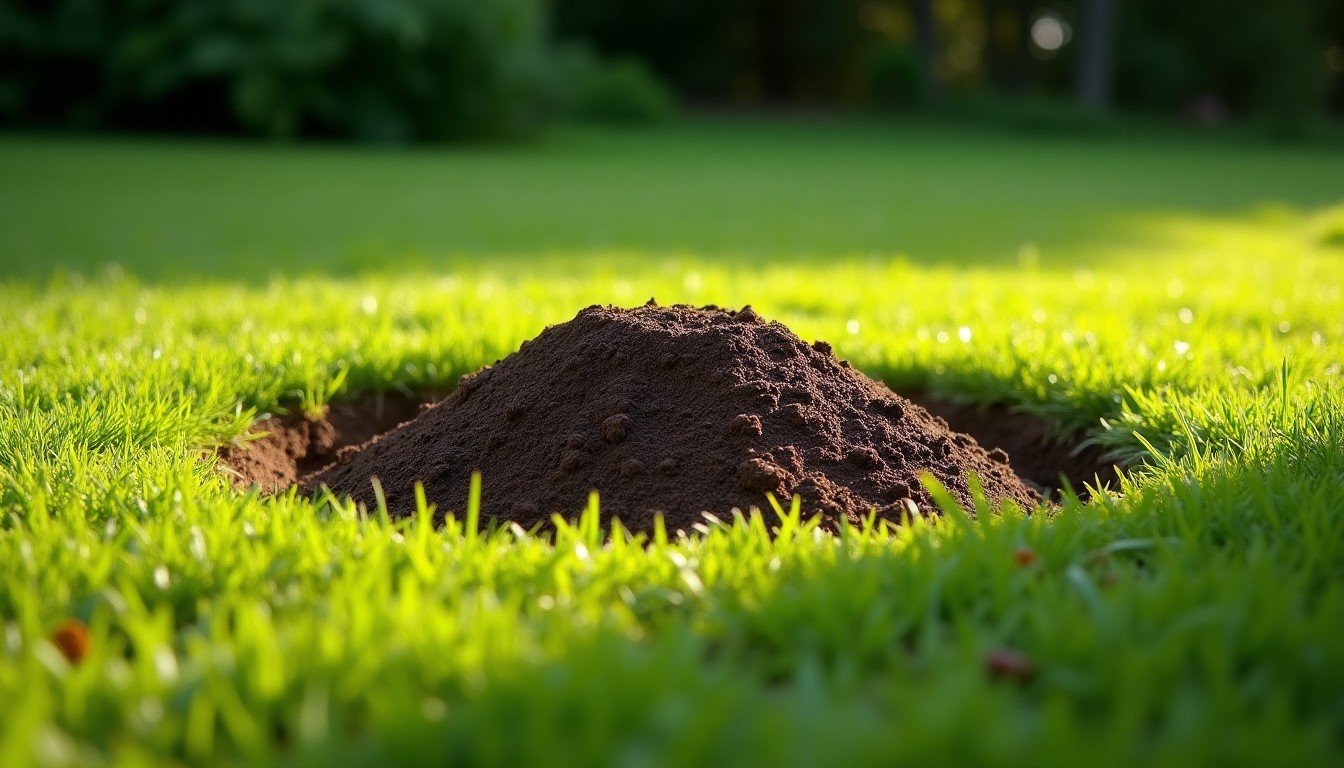
| Small hole in the lawn or bank with wasps flying straight in and out | Yellowjackets | Hundreds to thousands; UC IPM gives 1,500 to 15,000 depending on species | DIY possible with care; professional if near paths or you are allergic | Labelled dust or foam into the entrance at night; do not pour petrol |
| Wasps going in and out of a gap in siding, soffit, brick or a vent | Yellowjackets or European hornets | Hundreds to thousands | Professional advised | Dust into the void; treat or seal any interior opening first; never plug the outside hole on a live nest |
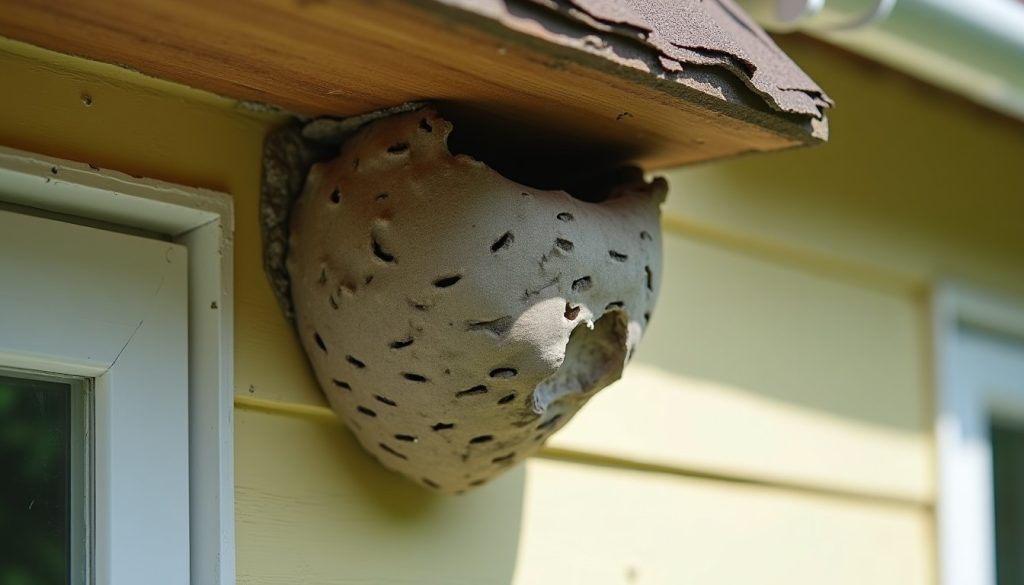
| Grey, football or pear-shaped paper ball with one hole at the bottom, in a tree or on the house | Bald-faced hornets (an aerial yellowjacket) | Large | Small early nests DIY; large ones professional | Soak through the entrance at night with a labelled product, repeat if needed |
| Hard mud tubes or lumps on walls and ceilings | Mud daubers (solitary) | One female | No treatment needed | Scrape off; UC IPM says winter removal needs no spray |
If you are not sure which one you have, our wasp and hornet identification guide starts from the nest, which is usually easier to see than the insect.
When to spray a wasp nest: night, and early in the season
Every extension source we reviewed gives the same timing: plan during the day, treat after dark. Penn State explains why: at night the whole colony is home, less likely to fly, and has trouble seeing. Purdue and NC State say the same.
- Watch first, from 10 to 15 feet away, in daylight, to find the flight path in and out. Penn State advises staying out of that path both when watching and when treating.
- Use a red light, placed away from you. Most stinging insects see red poorly, Penn State notes, and Purdue suggests red cellophane over a torch. Disturbed wasps fly towards light, so do not hold a lit torch or stand near headlights, as NC State warns.
- Keep your distance. Ready-to-use wasp and hornet aerosols spray 15 to 20 feet, according to Penn State. NC State advises spraying into the opening for 5 to 10 seconds, then moving quickly away, and repeating the next evening if needed.
- Plan an escape route. If wasps chase you, walk calmly, quickly and directly away rather than swatting.
One exception: European hornets, unlike most stinging insects, also fly at night and are drawn to lit windows and porch lights, according to NC State. Darkness gives less protection with them.
Season matters as much as time of day
Penn State points out that a colony discovered in May or June may be small enough to ignore but could grow into a problem by August or September, and that dealing with a nest early, while it is small, is safer and easier. UC IPM adds that knocking down a newly started paper wasp nest early in the season usually makes the founding queen go elsewhere. A nest found in autumn is a different decision, covered below.
Our analysis of US iNaturalist research-grade records shows why late summer is when nests become a problem. Paper wasps rise steadily from spring and peak at 174 in September, against a yearly average of 100. Yellowjackets stay below average until July, then surge to 145 in August, 208 in September and 251 in October. UC IPM explains the pattern: colonies are largest late in the season, defensive behaviour increases as they grow and food becomes scarce, and foragers turn into scavengers at picnics and bins. For more on that switch, see what attracts wasps.
How to get rid of a wasp nest, step by step
Protect yourself
Penn State’s guidance is practical: a thick, loose sweatshirt tucked into similar trousers works about as well as a bee suit, because stings can puncture fabric but not reach skin through thick, baggy layers. Tape or tuck cuffs, wear gloves, and protect your eyes, since some yellowjackets can spray venom at the eyes. Then read the insecticide label for its own minimum protective equipment.
Paper wasps and other small exposed nests
- At night, spray a product labelled for wasps and hornets into the nest until it is soaked.
- For a small nest with a paper cover, aim up into the entrance.
- Once the spray has dried, knock the nest down and destroy it, so protected pupae cannot emerge, as Penn State advises.
NC State notes that small nests with only one or a few wasps may simply be knocked down with a broom.
Yellowjackets in the ground
Penn State describes two approaches that work well: puffing a labelled insecticide dust into the entrance in a hit-and-run fashion until the guards get too defensive, or injecting a labelled foam until the hole takes no more. Returning wasps track the dust inside. The nest itself may be several feet from the hole. UC IPM warns that agitated, partly poisoned wasps may still be about the next day. Our guide to yellow jacket removal covers the colony year in more detail.
Nests inside walls, attics and soffits
This is the case where homeowners most often make things worse. Penn State’s instruction is to find any interior entry and seal or treat it before the exterior one, to avoid pushing the whole colony indoors. Plugging the outside hole on a live colony does the opposite: the wasps still need a way out. UC IPM describes yellowjackets enlarging a cavity inside a house until a wet patch becomes a hole in a wall or ceiling. Penn State advises dust over liquids or foams inside structures because of water damage, and suggests opening the void afterwards to remove the nest, since dead insects attract carpet beetles. Purdue says nearly all structural colonies are best left to professionals. For prices, see wasp nest removal cost.
Bald-faced hornets
Their nests have a thick, many-layered, water-repellent envelope. Penn State suggests soaking through the entrance with a labelled liquid concentrate or dust, possibly over several nights, then confirming the colony is dead before knocking the nest down.
How to get rid of wasps when you can’t find the nest
Wasps at a picnic table are not necessarily nesting nearby. Penn State notes that foraging wasps may have found food or water while their nest is far away, and UC IPM says yellowjackets typically forage about a quarter of a mile. Foragers away from the nest are usually not defensive, so the fix is removing what they came for: covered food and drinks, sealed bins, no pet food outside.
If you think there is a nest, watch in daylight for wasps flying repeatedly in and out of one spot; UC IPM says that is probably the nest. For a suspected wall nest, Penn State suggests an infrared camera or laser thermometer to find the warm spot, or listening with a stethoscope for rustling. If you still cannot find it, a licensed professional can, and UC IPM notes that in parts of California the local mosquito and vector control district may help.
How to get rid of wasps in the house
A single wasp indoors can be swatted, vacuumed, or caught under a jar and released outside, NC State says. Several a day, especially near a bathroom fan, light fitting or loft hatch, suggests a nest in the structure; Penn State photographs German yellowjackets coming into a bathroom from an attic nest through an exhaust fan. That is the wall void case above, and a professional job. Paper wasp queens also shelter in attics, chimneys and under siding over winter, according to NC State, which advises properly screened attic vents. A fogger is not a fix for a nest inside the structure.
How to get rid of wasps without killing them
- Leave it. If a nest is away from doors, paths and play areas, Penn State says ignoring it is a legitimate option, and the colony dies off over winter.
- Knock down new nests early. A paper wasp nest with only its founding queen can be knocked down in spring, and UC IPM says she usually moves elsewhere.
- Relocate a brand-new nest. Penn State describes catching the queen in a small jar, moving the nest and fixing it in place elsewhere, then letting her settle back onto it.
- Mud daubers: scrape off the nests; see our guide to mud daubers.
What does not work, or is dangerous
- Fake nests. Penn State says no clear evidence shows decoy nests prevent paper wasps or yellowjackets nesting, and shows a tree with two full-sized bald-faced hornet nests.
- Fire, petrol or kerosene. Penn State calls fire significantly more dangerous than proper methods, and the fuels are more toxic than most suitable insecticides.
- Relying on traps. Traps thin out foragers but do not remove a colony. UC IPM says common lures attract mainly the western yellowjacket; NC State says traps have not shown value in the Southeast, and Purdue does not recommend them for control. UC IPM notes that traps work best as queen traps in late winter to early spring.
- Home-made soap sprays. Widely suggested online as a natural wasp killer; we found no extension testing of them, and Penn State notes that unless a nest is very small, non-insecticidal approaches are often more dangerous than a labelled insecticide because of the sting risk.
- Household products not labelled for wasps. Use a product that lists wasps, hornets or yellowjackets on its label, as both Penn State and UC IPM advise, and follow the label exactly.
Why does WD-40 kill wasps?
We found no extension publication or published study that tests WD-40 on wasps or explains how it might work. It is sold as a lubricant, not as an insecticide with wasps on its label, and the extension guidance we reviewed is consistent: use a product labelled for wasp and hornet nests and follow its directions.
When to call a professional
Call a licensed professional if anyone in the household is allergic to stings, if the nest is inside the house structure, high up, or a large hornet nest, or if it is a yellowjacket nest beside a path or play area. Penn State notes professionals take on the sting risk and carry liability insurance. Seek medical help immediately for symptoms that spread well beyond the sting site, or any difficulty breathing or swallowing, as Penn State advises. UC IPM adds that many stings at once can cause kidney damage needing hospital treatment.
Frequently asked questions
How do you get rid of wasps fast?
For an exposed paper wasp or small hornet nest, spray it at night with an aerosol labelled for wasps and hornets, which Penn State says gives immediate knockdown and reaches 15 to 20 feet. Knock the nest down once the spray has dried. Underground and wall nests cannot be cleared that fast safely: a labelled dust works over a day or two, and wall voids are best left to a professional.
What will keep wasps away?
Removing food and finding nests early. Keep food, drinks, pet food and bins covered, because UC IPM says wasps keep hunting where they found food long after it is gone. Knock down new paper wasp nests in spring while only the queen is present, and screen attic vents. Decoy nests have no clear supporting evidence, according to Penn State, and traps only thin out foraging workers.
Why shouldn’t you kill wasps?
Because most are useful and many nests do no harm. UC IPM says most social wasps eliminate large numbers of pest insects and should be encouraged to nest away from people. Paper wasps feed caterpillars to their young, NC State notes. Colonies die off over winter and old nests are not reused, so a nest well away from doors and paths can usually be left alone.
Should I remove a wasp nest I find in the fall?
Often not. Penn State notes that nests discovered in the fall will soon die naturally, so management may not be necessary, and NC State says old nests are not reused the following year. The exception is a yellowjacket nest beside a door or path, since UC IPM says defensiveness increases late in the season as colonies grow and food becomes scarcer.
Sources
- Penn State Extension, Getting Rid of Paper Wasps, Yellowjackets, and Other Stinging Insects, Jamie Kopco (updated January 2026).
- University of California Statewide IPM Program, Pest Notes: Yellowjackets and Other Social Wasps (Publication 7450).
- Purdue University Extension Entomology, E-44, Social Bees and Wasps.
- NC State Extension, Non-Honey Bee Stinging Insects in North Carolina; European Hornets; Yellowjackets in the Landscape.
- The Pest Control Brief analysis of iNaturalist research-grade records, pulled October 2026.