Wasp Nest Removal Cost 2026: By Species and Location
Wasp nest removal averages $525. Yellow jackets cost the most at $500 to $1,300. Why a wall void nest costs more, and why timing changes the price.
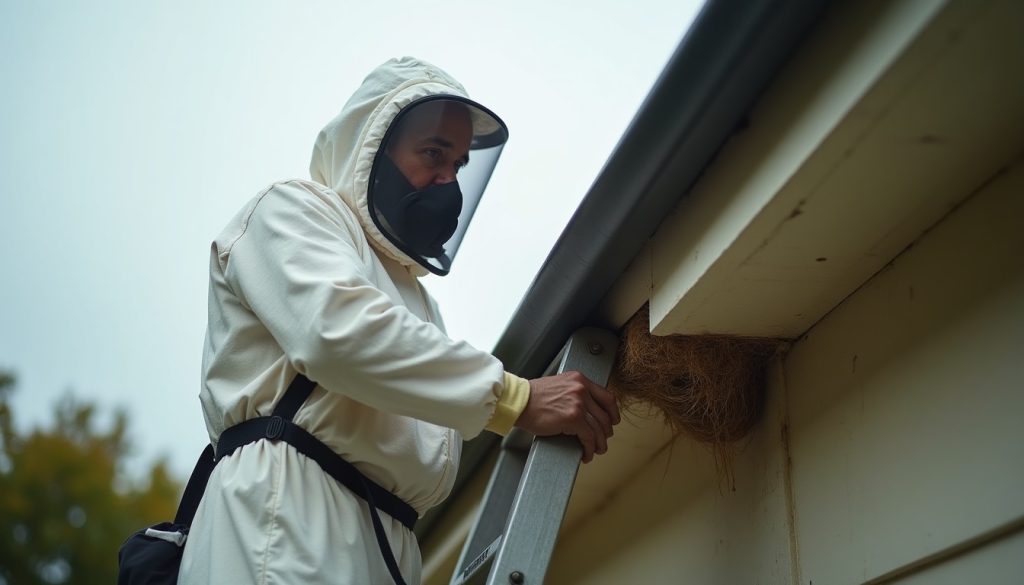
Wasp nest removal costs about $525 on average, with most homeowners paying $300 to $700. A small accessible nest can be $100, while yellow jackets, the most expensive, run $500 to $1,300 because they nest underground and defend aggressively. Location matters as much as species: a nest inside a wall averages about $630 against $275 to $600 for one below the roofline.
Wasp pricing is driven by two things almost no quote explains upfront: which species you have, and how hard the nest is to reach. Both are established during inspection, which is why phone estimates for wasp work are unreliable.
What removal costs by species
| Species | Typical cost | Why |
|---|---|---|
| Mud daubers | Around $300 | Solitary, non-aggressive, accessible nests |
| Paper wasps | Around $400 | Visible umbrella nests, moderate defence |
| Hornets | $300 to $475 | Larger colonies, stronger defence |
| Bald-faced hornets | Around $625 | Large aerial nests, often high in trees |
| Yellow jackets | $500 to $1,300 | Underground nests, highly aggressive, large colonies |
What removal costs by location
| Nest location | Cost | Complication |
|---|---|---|
| Outdoors, below roofline | $275 to $600 | Easy access, minimal cleanup |
| Chimney | $400 to $550 | Access depends on flue design |
| Inside a wall void | Around $630 | Requires drilling and treatment into cavity |
| Small accessible nest | From $100 | Early-season, low colony count |
| Large or high nest | Up to $1,300 | Height access equipment, mature colony |
Contractor-reported ranges compiled by home services marketplaces in 2026. No federal price index exists for pest control services.
Why a wall void nest costs more than one on a soffit
A visible nest is treated and removed directly. A nest inside a wall cannot be removed without opening the wall, so the standard approach is to treat the cavity through a drilled access point and leave the nest in place.
That creates a problem specific to this job. A treated nest left inside a wall still contains dead insects and, in the case of large yellow jacket colonies, comb. In warm conditions that can attract secondary pests such as carpet beetles. Ask whether the company recommends removal of the material and whether that is included, because it usually is not.
Never seal the entry point of an active wall nest. Wasps blocked from their usual exit frequently chew through into interior living space, which turns an outdoor problem into an indoor one.
Why yellow jackets are the expensive case
Yellow jackets nest underground or in dense cavities, so the entrance may be the only visible sign of a colony that is substantially larger than it appears. Colonies grow through the season and are at their largest and most defensive in late summer.
The technician is dealing with an aggressive species, an unseen nest volume, and often a ground-level location near where people walk. That combination means protective equipment, careful timing and more time on site. Given payroll is 36% of industry revenue, longer and more hazardous jobs price accordingly.
Timing changes the price
- Early season, spring. A founding queen and a small nest. This is the cheapest point to treat, sometimes near $100.
- Mid season, early summer. Colony building. Costs sit in the middle of the ranges above.
- Late season, late summer to early autumn. Peak colony size and peak aggression, which is when most people call and when prices are highest.
- After first frost. Most colonies die off naturally in cold-winter regions, and nests are not reused the following year. Treating a dying nest in late autumn is often unnecessary.
The practical implication is that a nest noticed in May is much cheaper to deal with than the same nest in September.
Frequently asked questions
How much does it cost to remove a wasp nest?
Removal averages about $525, with most homeowners paying $300 to $700. Small accessible nests can be as low as $100. Yellow jackets are the most expensive at $500 to $1,300 because they nest underground and defend aggressively. A nest inside a wall averages around $630 due to cavity access.
Why is yellow jacket removal so expensive?
Yellow jackets nest underground or in cavities, so the visible entrance conceals a colony that may be far larger than it looks, and they defend aggressively. Colonies peak in late summer when most people call. The combination of an unseen nest, a hazardous species and a ground-level location means more time on site and full protective equipment.
Should I remove a wasp nest myself?
A small, early-season, easily reached nest is sometimes managed with retail products. Underground yellow jacket nests, nests inside walls, nests at height and any situation involving allergy risk warrant a professional. Never seal the entry of an active wall nest, since blocked wasps often chew through into interior living space.
Do wasps reuse nests the following year?
In cold-winter regions most colonies die off after the first hard frost and the nest is not reused, with new queens starting fresh nests in spring. This means treating a nest in late autumn is frequently unnecessary. Removing old nest material can still be sensible where it might attract secondary pests.
Sources
- Contractor-reported price ranges compiled by HomeGuide, Angi, This Old House, Lawn Love and Today’s Homeowner, 2026. Sample sizes and methods are not published by those sources.
- U.S. Census Bureau, Statistics of U.S. Businesses 2022, NAICS 561710, for payroll share of revenue.