Paper Wasps: Stings, Nests Under Eaves, When to Leave Them
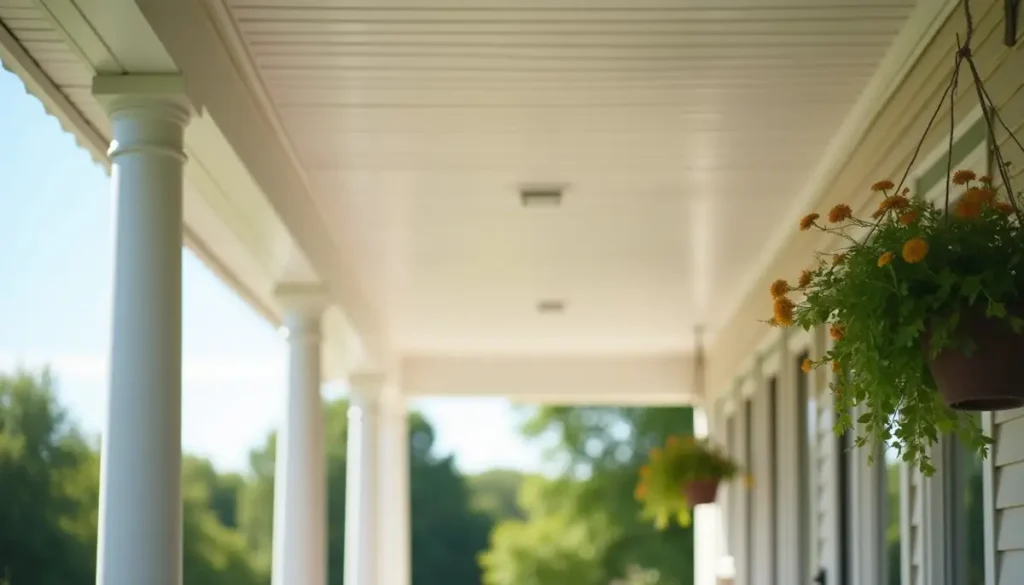
A paper wasp is a slender, long-legged social wasp (genus Polistes) that builds an open, umbrella-shaped paper comb under eaves, rails and other overhangs, with the cells visible from below and no paper covering. Most are about 16 to 25 mm long (five-eighths of an inch to an inch) and fly with their hind legs dangling. They sting when the nest is disturbed but rarely otherwise, and they feed their young on caterpillars. A nest in a low-traffic spot can usually be left until it is abandoned in late autumn.
Paper wasps are the wasps most people meet first: the comb on the porch ceiling, the nest inside the grill lid, the slow wasp on a window in February. They are also the easiest stinging insect to live alongside, once you know which nests matter.
Paper wasp at a glance
| Paper wasp (Polistes) | Yellowjacket (Vespula) | |
|---|---|---|
| Body shape | Slender, with a distinct thin waist and long legs | Compact and blunt, waist barely visible, short legs |
| In flight | Long hind legs trail below the body | Legs held close to the body |
| Antennae | European paper wasp: orange tipped | All black |
| Nest | One open comb on a stalk, cells visible from below, no envelope | Enclosed in a grey paper envelope, often underground or in a wall |
| Colony at peak | 15 to 200 wasps (UC IPM); “a few dozen” (Cornell) | 1,500 to 15,000, depending on species (UC IPM) |
| At picnics | No; they hunt live insects for their young | Yes, late-summer scavengers of meat, sweets and rubbish |
| Defensiveness | Rarely sting away from the nest | Defend the nest vigorously, more so as the season goes on |
| Usual verdict | Leave it unless it is near a door or path | Ground or wall nests near people are a job for care or a professional |
Compiled by The Pest Control Brief from UC IPM Pest Notes 7450, Cornell NYS IPM, Penn State Extension and Colorado State University Extension fact sheet 5.611.
A grey paper ball, or no visible nest at all, means it is not a paper wasp: see our wasp and hornet identification guide.
What is a paper wasp?
Paper wasps are social wasps in the family Vespidae, the same family as yellowjackets and hornets. The Missouri Department of Conservation counts about 24 Polistes species north of Mexico; UF/IFAS gives 17. Most homeowners meet four groups.
Which paper wasp is it?
| Wasp | Look | Where it is common | Note |
|---|---|---|---|
| European paper wasp (Polistes dominula) | Black with bright yellow, orange-tipped antennae; 19 to 22 mm | Northern half of the US and the West | Invasive; often mistaken for a yellowjacket |
| Northern or golden paper wasp (P. fuscatus) | Dark brown with lighter brown, coppery or yellow marks; about 19 to 22 mm | North and East, rural sites in the West | Native; displaced by the European species in parts of the Northeast and Michigan |
| Guinea paper wasp (P. exclamans) | Small, brown and yellow | One of Mississippi’s three most common paper wasps | Nests under eaves; often miscalled a yellowjacket |
| Red wasps (P. carolina, P. perplexus, P. metricus, P. annularis) | Rust red to dark red, black wings; P. carolina forewing 15 to 20.5 mm | East and south-central US, New York to Florida, west to eastern Texas for P. carolina | “Red wasp” means different species in different regions |
Compiled by The Pest Control Brief from Cornell NYS IPM, Penn State Extension, Colorado State University Extension 5.611, Mississippi State University Extension (Bug’s Eye View, vol. 5 no. 18) and UF/IFAS EENY640.
Queens are only slightly larger than workers, according to Colorado State and Minnesota Extension, and yellowjackets overlap in length, so judge by shape, legs and nest rather than size.
The European paper wasp: the one on most northern houses
The European paper wasp was first reported in North America around Boston in 1978, Penn State records, and has spread coast to coast. Colorado State dates the first Utah record to 1995 and the first Colorado record to August 2001, and notes it usually becomes common within a few years of arriving.
Penn State lists light fittings, bird boxes, gas grills, motor homes and boats among its nest sites, and says hidden nests raise the sting risk because people disturb a nest they did not know was there.
Our iNaturalist analysis shows a lopsided distribution. Utah leads with 27.13 records per 10,000 observations of anything, then Idaho (25.52) and Colorado (18.35). Florida has 3 records in total, Texas 10, Louisiana and Oklahoma 1 each. That fits Penn State’s note that the species is less common in the Southeast and Great Plains. On a Gulf Coast porch, a paper wasp is far more likely to be a native species.

Are paper wasps aggressive?
Usually not. UC IPM says paper wasps are much less defensive than yellowjackets and rarely sting people unless their nest is near a door, window or other busy spot. Colorado State rates the European paper wasp as less likely to sting than most yellowjackets and bumble bees, with stings almost exclusively when a nest is accidentally disturbed. Cornell describes a warning sign: paper wasps often fly into an intruder near the nest without stinging. If a wasp bumps you near the eaves, step back.
Sources do disagree on one species. Mississippi State Extension says Carolina paper wasps can be especially aggressive; UF/IFAS says the same species is not particularly aggressive and typically stings only when threatened. Treat any red wasp nest over a doorway with the same care as any other.
Do paper wasps sting?
Yes. Only females sting, because the stinger is a modified egg-laying tube, Cornell explains, and they can sting repeatedly. Penn State says a European paper wasp sting is no more or less painful or dangerous than any other paper wasp sting, and that stings in otherwise healthy adults should resolve without medical intervention.
On the published pain scale used by entomologist Justin Schmidt, anchored at 2 for a honey bee sting, five of the seven Polistes species rated in his 2019 study scored 3, including Polistes annularis, one of the species Mississippi State calls red wasps. Three yellowjacket species and the bald-faced hornet scored 2. It rates immediate, perceived pain, not danger.
The medical risk is allergy, not the wasp. The CDC notes that people allergic to venom may have anaphylaxis, a severe and potentially life-threatening reaction, and that someone should stay with a person after a sting to watch for one. UC IPM also warns that many stings at once can damage the kidneys. Trouble breathing, spreading swelling or many stings need a doctor or emergency care. Our bite and sting identification guide explains what a mark can tell you.
What do paper wasps eat?
Caterpillars, mostly. UF/IFAS lists corn earworms, armyworms and tobacco hornworms among their prey; Colorado State adds cabbageworms, tent caterpillars and sawfly larvae, and calls the European paper wasp one of the most important natural controls of garden insects. Adults feed themselves on nectar, fruit juice and aphid honeydew.
Two caveats. Colorado State reports European paper wasps damaging ripe cherries on the Western Slope. And a 2020 study in central Kentucky pollinator gardens, published in Scientific Reports, watched 120 encounters between European paper wasps and monarch caterpillars on milkweed: most second to fourth instar caterpillars were killed. Penn State says native paper wasps feed only on caterpillars, but UF/IFAS lists cicadas and beetle larvae as prey of the native red wasp.
Paper wasp season, from queen to empty nest
In most of the US a colony lasts one season. Mated queens overwinter and start nests alone in spring: usually in April, says the Missouri Department of Conservation, and as early as the first half of March in Colorado. The queen lays one egg per cell and feeds the larvae herself until the first workers emerge. Colorado State gives 3 to 4 weeks from egg to adult; Penn State says as little as 40 days under good conditions, so expect roughly a month to six weeks.
Workers then take over. Males and new queens appear in mid to late summer, and the colony dies in the freezing weather of late autumn. UF/IFAS notes that in subtropical areas some colonies last more than one season.
In the iNaturalist record the invasive species runs on a tighter calendar. European paper wasp records peak in August at 266 on our index, more than two and a half times their usual share, and fall to 34 by November. The native Guinea paper wasp stays near or above average from March to November, when it peaks at 160.
How big do paper wasp nests get?
Small, by wasp standards. UC IPM says paper wasp nests rarely exceed the size of an outstretched hand. Colorado State describes a European paper wasp nest with several dozen wasps and a hundred or more cells by autumn. UF/IFAS describes moderate colonies, yielding hundreds of offspring over a season in the most successful nests, and Mississippi State notes that red wasp nests tend to be larger than Guinea wasp nests.
Do paper wasps reuse nests?
No. The Missouri Department of Conservation says nests are begun from scratch each spring and very rarely reused, and Minnesota Extension says simply that nests are not reused. Colorado State adds that a new nest is sometimes built at the same site the next year. An old comb in winter is empty and can be scraped off.
Why are there paper wasps in my house?
Almost always because a mated queen chose your house to spend the winter. Penn State lists behind siding, wall voids and attics among overwintering sites, and Minnesota Extension says paper wasps may enter homes looking for winter shelter. Colorado State is clear that wintertime wasps indoors do not mean an active nest, and a warm day in February can wake them, the Missouri Department of Conservation notes. Sealing the way in matters more than the odd wasp: see our guide to what attracts wasps.
How to get rid of paper wasps?
First decide whether the nest needs to go. If it is not likely to be disturbed, Colorado State says it is usually best to leave it until it is abandoned at the end of the season; UC IPM says paper wasp nests should not need treatment unless they are near people.
| Situation | What extension sources advise |
|---|---|
| Spring, a single queen on a nest the size of a coin | Knock it down with a broom; the queen will likely start elsewhere (UF/IFAS, UC IPM) |
| Summer nest away from doors, paths and play areas | Leave it; remove the empty nest after hard frosts (Colorado State) |
| Summer nest over a door, in a grill or on a play set | Treat at night with an aerosol labelled for wasps and hornets, then remove the nest and hose the spot (Colorado State, Penn State) |
| Wasps going into a gap in a soffit or eave | A labelled insecticidal dust applied to the opening (Penn State); professional if you cannot reach it safely |
| Anyone in the household allergic to stings | Do not do it yourself; have someone else or a professional deal with it |
Compiled by The Pest Control Brief from UC IPM Pest Notes 7450, UF/IFAS EENY640, Penn State Extension and Colorado State University Extension 5.611.
Night is the time because the whole colony is home and wasps fly poorly in the dark; Penn State notes the sprays shoot up to 20 feet. Colorado State adds two steps most people skip: remove the nest after treatment, because larvae in capped cells usually survive the spray and emerge later, and wash the spot with a jet of water to remove colony odours that draw returning wasps. Follow the label; UF/IFAS warns against using aerosol sprays near open flames, and our guide to getting rid of wasps safely walks through each nest type step by step.
Do paper wasp traps work?
No. Colorado State states there are no traps or lures for the European paper wasp: retail wasp traps baited with fruit juice, meat or heptyl butyrate are built for yellowjackets and do not attract it.
Prevention and living with them
Penn State recommends repairing holes in walls, caulking cracks in soffits and eaves, and screening vents. Check grills and light fittings in spring, when a nest is one queen and a few cells. If you want paper wasps for caterpillar control, Colorado State describes a simple wooden nest box at least 4 by 4 by 4 inches, open at the bottom and mounted on a post. For nests that are high, inside a structure or near an allergic person, compare quotes in our wasp nest removal cost guide.
Frequently asked questions
Are paper wasps dangerous?
To most people, no more than any stinging insect. UC IPM says they rarely sting unless the nest is near a door or busy area, and Penn State says a sting should resolve without treatment in healthy adults. The real danger is venom allergy, which the CDC says can cause life-threatening anaphylaxis, and many stings at once. Anyone with a known allergy should not remove a nest themselves.
What does a paper wasp nest look like?
A single grey or tan comb of hexagonal paper cells hanging from one short stalk, like an upside-down umbrella, with open cells facing down and no outer covering. White larvae are often visible in the cells from below. Nests sit under eaves, rails, decks and other overhangs, and UC IPM says they rarely grow larger than an outstretched hand. The colony abandons it by late autumn.
What is the difference between a paper wasp and a yellow jacket?
Paper wasps are slender with a thin waist and fly with long legs dangling; yellowjackets are compact, with short legs held tight. Paper wasp nests are open combs; yellowjacket nests are wrapped in paper and usually hidden in the ground or a wall, with colonies in the thousands rather than dozens.
Where do paper wasps live?
Throughout the United States, in natural habitats and on buildings: fences, porches, window frames, attic rafters and eaves, according to UF/IFAS. The invasive European paper wasp prefers enclosed spots such as pipes, grills, light fittings and bird boxes, and is far more common in the North and West than in the Gulf states. In winter only mated queens survive, sheltering under bark, behind siding or in attics.
Sources
- University of California Statewide IPM Program, Pest Notes: Yellowjackets and Other Social Wasps, Publication 7450.
- Colorado State University Extension, European Paper Wasp, fact sheet 5.611.
- Penn State Extension, European Paper Wasp (M. J. Skvarla), updated January 2026.
- Cornell University, New York State Integrated Pest Management, Paper Wasps.
- UF/IFAS Extension, Paper Wasp, Red Wasp, Polistes carolina, EENY640 (2015, reviewed 2021).
- UF/IFAS Department of Entomology and Nematology, Beneficial Arthropods: Paper Wasps (2007).
- University of Minnesota Extension, What insect is this? Paper wasps.
- Missouri Department of Conservation, Field Guide: Paper Wasps.
- Mississippi State University Extension, Bug’s Eye View: Red, Wasp Nest, vol. 5 no. 18 (2019).
- Schmidt, J. O. Pain and Lethality Induced by Insect Stings: An Exploratory and Correlational Study. Toxins 11(7): 427, 2019.
- Baker, A. M. and Potter, D. A. Invasive paper wasp turns urban pollinator gardens into ecological traps for monarch butterfly larvae. Scientific Reports 10: 9553, 2020.
- CDC, National Institute for Occupational Safety and Health, Insects and Scorpions at Work.
- The Pest Control Brief analysis of iNaturalist research-grade records, pulled October 2026.