European Hornets: Night Flyers, Bark Stripping, Nests in Walls
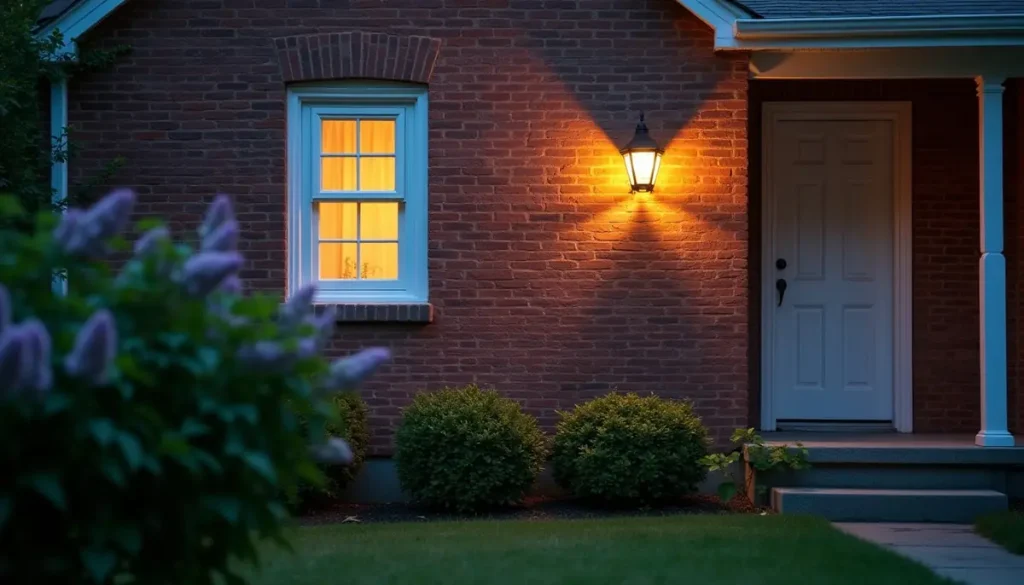
The European hornet (Vespa crabro) is the only true hornet established in the United States: a reddish brown and yellow wasp about an inch long, introduced from Europe in the 1840s and now common across the eastern states. It flies at night and comes to lit windows, strips bark from lilac, birch and other shrubs in late summer, and nests in hollow trees and sometimes in wall voids. It is not especially aggressive away from its nest, and its sting is about as painful as a honey bee’s.
Most people meet a European hornet as a large, loud insect thudding against a lit window after dark. That night habit, plus its size, is why so many are mistaken for the northern giant hornet.
European hornet vs other hornets
| European hornet | Bald-faced hornet | Northern giant hornet | Yellow-legged hornet | |
|---|---|---|---|---|
| Really a hornet? | Yes, Vespa | No, an aerial yellowjacket (Dolichovespula) | Yes, Vespa | Yes, Vespa |
| Length | Workers about 25 mm (1 inch); queens to about 35 mm | 13 to 20 mm | Up to 2 inches (about 50 mm) | Early workers about 15 mm; queens 20 to 32 mm |
| Colours | Reddish brown head and thorax, yellow abdomen with brown teardrop marks | Black with ivory white face markings | Large yellow or orange head, dark and yellow banded body | Mostly black, yellow face, black legs with yellow feet |
| Nest | Paper nest hidden in a hollow tree or wall void; no exposed nest | Grey football shaped paper nest in shrubs, trees or under eaves | Cavities; all four US nests were found in Whatcom County, Washington | Large egg shaped nests, often high in tall trees |
| Flies at night | Yes, comes to lights | No | Not noted in state guidance | Not noted in state guidance |
| US status | Established across the East since the 1840s | Native | Declared eradicated from the US, December 2024 | Found in Georgia and South Carolina since 2023; under eradication |
Compiled by The Pest Control Brief from Penn State Extension (European, bald-faced and yellow-legged hornet fact sheets), UGA Extension Circular 1354, the Washington Invasive Species Council, the Washington State Department of Agriculture and the Georgia Department of Agriculture.
The bald-faced hornet is the one most often called a hornet, and Penn State is plain that it is not a true hornet but an aerial yellowjacket; we cover it alongside the others in our wasp and hornet identification guide. If you are worried you have seen a giant hornet, our giant hornet identification guide explains why the suspect specimens labs receive are usually European hornets.

What is a European hornet?
It is a social wasp native to Europe and Asia. Penn State dates the first US report to 1840 and describes it as now widespread in the eastern states, including all of Pennsylvania. UGA calls it the largest hornet in Georgia, where it is particularly common.
How big is a European hornet?
Workers are up to about an inch (25 mm) long and queens reach about 1.3 inches (35 mm), according to Penn State; Kentucky gives 1 to 1.5 inches for adults. The head is reddish and yellow, the thorax reddish brown, and the abdomen brown at the front and mostly yellow behind, with brown teardrop shaped marks. Virginia Tech adds reddish orange wings and notes it is stouter and hairier than the cicada killer.
Where European hornets nest
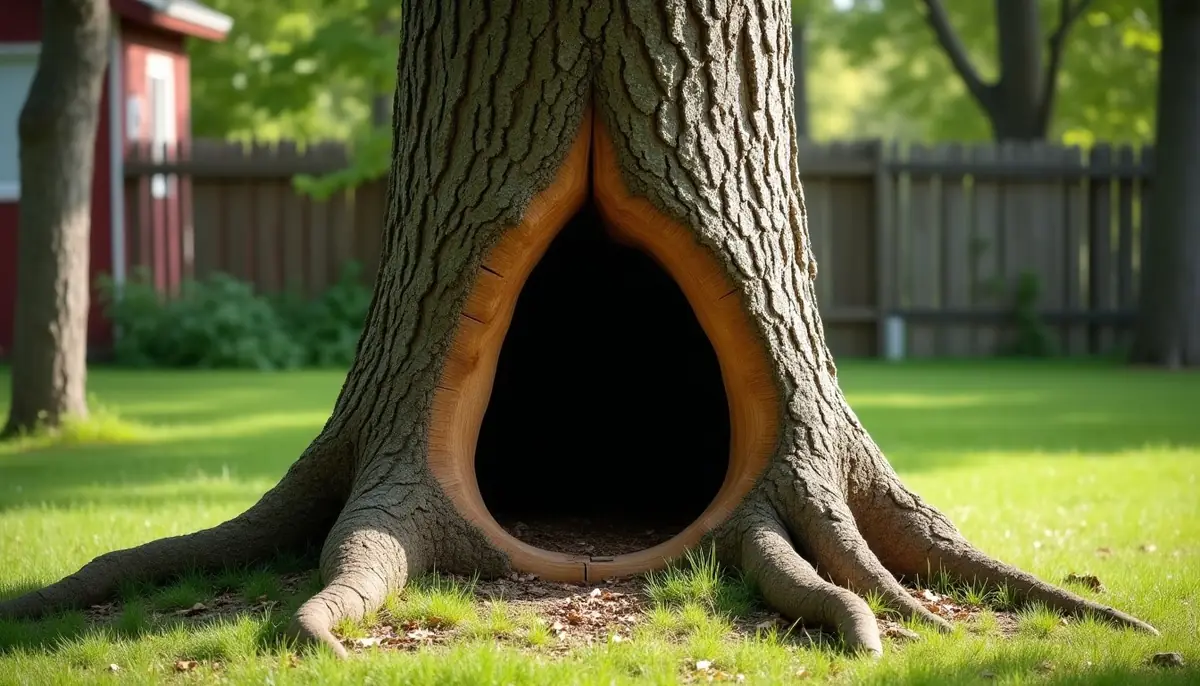
The nest is the key to the whole problem. European hornets build a grey paper nest in a protected, dark cavity: most often a hollow tree, but also hollow posts, barns, sheds, porches, attics and house wall voids, especially near woods. Penn State notes that ground nests are occasionally reported. Unlike the bald-faced hornet, they do not hang an exposed nest, so you usually see the hornets, not the nest.
Colonies are annual. Kentucky says queens emerge around late April or early May there, new queens and some males appear by July, and the original queen and workers die in autumn. Only mated new queens survive the winter, under fallen bark or in wall voids according to Penn State, and UGA notes that each spring the queen builds a new nest rather than reusing the old one.
How big does a nest get?
| Source | Workers at peak | Nest detail |
|---|---|---|
| Penn State Extension | 200 to 400 in mid September; large nests about 1,000 | Most nests 1,500 to 3,000 cells |
| UGA Extension, Circular 1354 | About 800 to 1,000 in a mature nest | Grows to six to eight combs by autumn |
| Virginia Tech, ENTO-576NP | 800 to 1,000 in the southern US; Virginia nests much smaller | Southern nests 2 to 3 feet long, 6 to 8 combs |
| University of Kentucky, ENT-600 | A few hundred plus the queen | Usually in tree hollows |
| For comparison: eastern yellowjacket | 3,000 to 5,000 individuals | Over 10,000 cells (Penn State) |
| For comparison: bald-faced hornet | 100 to 400 workers | Exposed grey football shaped nest (Penn State) |
Compiled by The Pest Control Brief from the named extension publications. The sources disagree by a factor of two to four on worker numbers, which partly reflects region: Virginia Tech says southern nests grow much larger than Virginia’s.
What do European hornets eat?
For most of the season they are predators. Penn State lists grasshoppers, flies and yellowjackets among their prey; UGA says they do not aggressively attack bees. In autumn they switch towards sugar, which brings them to fallen apples and pears.
Bark stripping on lilac, birch and other shrubs
The damage people notice is bark stripping. Workers chew bark off twigs and stems to feed on the sap, and UGA says the girdling kills the branch beyond the wound; they occasionally strip bark for nest fibre too. Damage is worst in autumn, when worker numbers peak. Penn State singles out lilac; Kentucky names lilac, rhododendron and birch; UGA lists boxwood, birch, dogwood, ligustrum, lilac, rhododendron, poplar, viburnum and willow. A lilac with fresh, pale, girdled twigs in September and large hornets working it points to a colony in the area.
Why are European hornets attracted to light?
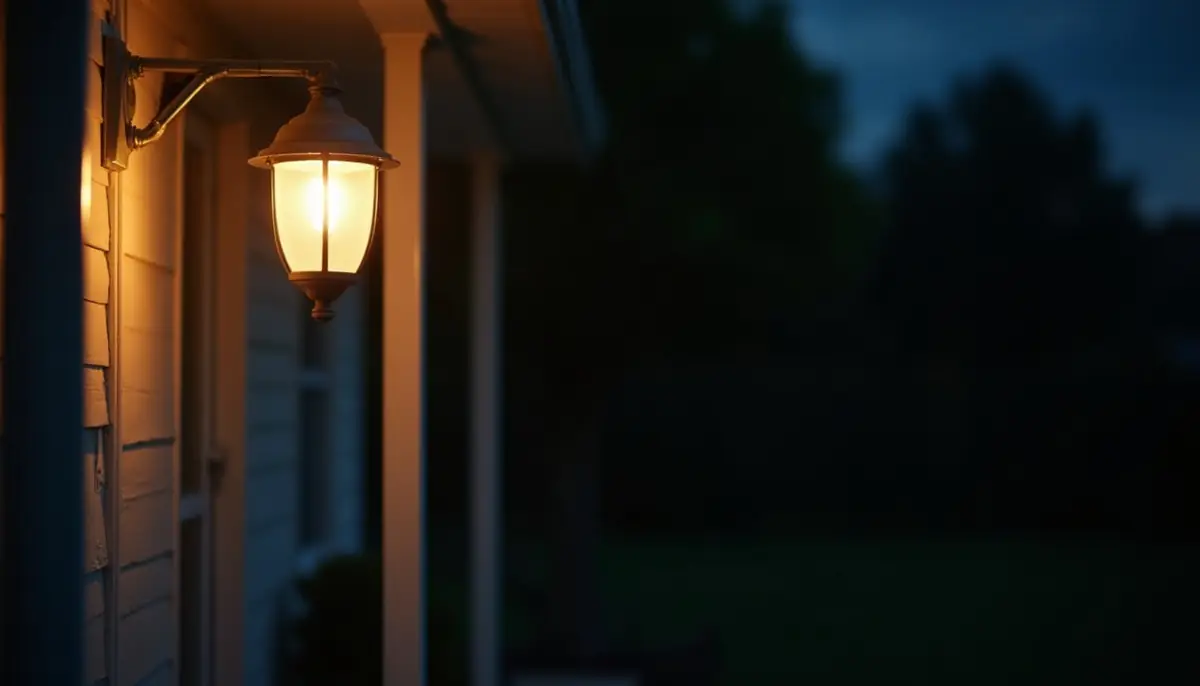
European hornets forage after dark, which almost no other wasp here does: Penn State calls it the only nocturnal wasp in Pennsylvania. Virginia Tech says they are drawn to bright light at night and sometimes fly into screens and window glass with an audible impact. Extension sources describe the attraction without explaining it; many night flying insects share it, as we cover in why moths are attracted to light. The practical point is that porch and window lights draw hornets towards doors, so turning lights off in late summer and autumn is Penn State’s first recommendation.
Our data: when and where European hornets are seen
We analysed iNaturalist research grade records of the European hornet: 19,781 US records. Its share of all observations is tiny in winter, rises to a small peak in May (an index of 100), when overwintered queens are founding nests, then climbs steeply to its highest in September (312) and October (306), three times its yearly average. That matches Penn State’s mid September colony peak.
It peaks later than bald-faced hornets (August and September) and with yellowjackets (October).
By state, Virginia, Maryland and Delaware record the most European hornets relative to everything people log there, followed by North Carolina, New Jersey, Kentucky and Tennessee. The species is effectively absent from western records: Washington, Oregon, Colorado and many other western states have zero research grade records, and California and Texas one each. That matches the Washington State Department of Agriculture’s statement that European hornets have not been detected in Washington, and it is why a large hornet photographed in the Pacific Northwest is worth reporting.
Are European hornets aggressive?
Not usually. Virginia Tech and UGA both describe them as not especially aggressive unless defending the nest, and Kentucky says they are most defensive when the nest is threatened. A single hornet at a window or on a lilac is foraging. The risk is at the nest: mowing, trimming or knocking near it.
Do European hornets sting?
Yes. The stinger is smooth, so, unlike a honey bee, one hornet can sting more than once. Penn State describes the sting as about as painful as a honey bee sting and says the pain usually resolves within one to a few hours. UGA notes that stings can cause severe allergic reactions in some people that need medical attention.
How venomous is a European hornet?
Less than its size suggests. Venom lethality is measured as an LD50, the dose per kilogram that kills half of the test animals, so a higher number means a weaker venom. A 2013 paper in the Journal of Venomous Animals and Toxins including Tropical Diseases summarises published rodent values of 8.7 to 10.9 mg/kg for Vespa crabro, against 4.1 to 6.1 mg/kg for the northern giant hornet; Schmidt and colleagues’ 1986 mouse study in Toxicon found 1.6 mg/kg for the Philippine hornet Vespa luctuosa, the most lethal wasp venom then known.
For people, the practical risks are allergy and multiple stings rather than the potency of one sting. CDC counted 1,109 US deaths from hornet, wasp and bee stings combined between 2000 and 2017, an average of 62 a year, with about 80 per cent among males. Anyone with signs of a severe allergic reaction after a sting needs emergency care, and people with a known sting allergy should follow their doctor’s plan.
Are European hornets dangerous or beneficial?
Both, depending on where the nest is. A nest in a hollow tree at the edge of a property preys on flies, grasshoppers and yellowjackets and dies out after the first hard frosts. A nest in a wall void beside a door or in an attic is a sting risk worth dealing with.
Are European hornets invasive in the US?
They are non-native: introduced from Europe and established in the eastern US for more than 180 years. Extension services treat them as an established species, and none of the state or federal hornet programmes we found targets them. The hornets regulators are actively fighting are the yellow-legged hornet, found near Savannah, Georgia in August 2023, and the northern giant hornet, which the Washington State Department of Agriculture and USDA declared eradicated from the US in December 2024 after four nests were removed in Whatcom County in 2020 and 2021.
How to get rid of European hornets
| Situation | What extension sources advise |
|---|---|
| One hornet at a lit window or porch light at night | Turn off or reduce outdoor lights in late summer and autumn; no treatment needed |
| A hornet indoors | Capture and release it or kill it, then seal gaps in siding, around windows and where pipes enter (Penn State) |
| Nest in a tree or building well away from people | Leave it; the first hard frost or two ends the colony (Penn State, Kentucky) |
| Hornets stripping bark from shrubs | Cover the shrub with mesh netting; do not spray the shrub itself (Penn State); find the nest |
| Hornets feeding on fallen fruit | Pick up fallen apples and pears promptly |
| Nest in a wall void, attic or close to a door | Strongly consider a pest control professional (Kentucky, UGA); never block the outside entrance, or hornets may chew through into the living space (Penn State, UGA) |
| A very large hornet in Washington State, or a black hornet with yellow feet in Georgia or South Carolina | Photograph it from a safe distance and report it to the state department of agriculture |
Compiled by The Pest Control Brief from Penn State Extension, University of Kentucky ENT-600, UGA Circular 1354 and state agriculture departments.
If you treat a nest yourself, Kentucky’s guidance is that you must be able to see the entrance, because treating the outside of the nest does nothing. Work at night, when the hornets are in the nest, use a product labelled for wasps and hornets and follow the label, and wear long sleeves, gloves and long trousers tucked into socks. A wall void nest is the classic case for a professional. Our guides to yellowjacket removal and wasp nest removal cost cover what a treatment involves and what it usually costs.
Frequently asked questions
Will European hornets sting you?
They can, but they rarely sting away from the nest. Extension entomologists at Virginia Tech and UGA describe European hornets as not especially aggressive unless the nest is threatened. Most stings happen when someone disturbs a nest in a wall, tree or shrub, or grabs a hornet. The stinger is smooth, so one hornet can sting repeatedly, and Penn State compares the pain to a honey bee sting.
What do I do if I see a European hornet?
Usually nothing. A hornet at a window or porch light at night is foraging; turning off outdoor lights reduces visits. If one is indoors, capture and release it or kill it, then seal gaps around windows and siding. If you see many hornets entering one spot on a wall or in a tree, you have found a nest: leave it if it is out of the way, or call a professional if it is near a door or living space.
How venomous is a European hornet?
Its venom is weaker than that of most other hornets tested. Published rodent LD50 values for the European hornet are 8.7 to 10.9 mg/kg, against 4.1 to 6.1 mg/kg for the northern giant hornet and 1.6 mg/kg for the Philippine hornet; a higher figure means a weaker venom. For people, the real danger is allergy or many stings at once, not the potency of one sting.
Are European hornets invasive in the US?
European hornets are non-native, introduced from Europe in the 1840s, but they have been established across the eastern United States for more than 180 years and are not under any eradication programme. The hornets US agencies are targeting are the yellow-legged hornet in Georgia and South Carolina and the northern giant hornet, which was declared eradicated from Washington State in December 2024.
Should I kill a European hornet?
Not unless it is indoors or its nest is a real sting risk. European hornets prey on flies, grasshoppers and yellowjackets, and an out of the way nest dies by itself after the first hard frosts, when only mated queens survive. Deal with the nest only when it is in or against the house, or beside paths people use.
Sources
- Penn State Extension, European Hornet, updated 2024; Baldfaced Hornet; Eastern Yellowjacket; Yellow-Legged Hornet, M.J. Skvarla, updated 2026.
- University of Kentucky Entomology, ENTFACT-600: European Hornet in Kentucky, J.L. Larson, revised 2026.
- UGA Cooperative Extension, Circular 1354: European Hornet, the Largest Hornet in Georgia, S.V. Joseph, 2025.
- Virginia Cooperative Extension, European Hornet, ENTO-576NP (2911-1422), E. Day and T.A. Dellinger, 2023.
- Washington State Department of Agriculture, Hornets program pages, northern giant hornet eradication, 2024.
- Washington Invasive Species Council, Northern Giant Hornet species page.
- Georgia Department of Agriculture, Yellow-Legged Hornet program page.
- Nadolski J. Effects of the European hornet (Vespa crabro Linnaeus 1761) crude venom on its own species. Journal of Venomous Animals and Toxins including Tropical Diseases 19:4, 2013.
- Schmidt JO, Yamane S, Matsuura M, Starr CK. Hornet venoms: lethalities and lethal capacities. Toxicon, 1986.
- CDC, MMWR QuickStats: Number of Deaths from Hornet, Wasp, and Bee Stings, United States, 2000 to 2017. MMWR 68(29), 2019.
- The Pest Control Brief analysis of iNaturalist research-grade records, pulled October 2026.