Ants in Your Car: Why They Move In and How to Get Them Out
Ants in your car usually walked aboard from a tree, trail or nest where you parked, or followed food residue: move the car, vacuum, wipe trails with soapy water, and bait outside the cabin rather than spraying or fogging inside. Stranded foragers usually thin out within days once the source is gone. Ants still turning up after about 10 days, or ants carrying white brood, point to a nest in a door, trunk or engine bay.
Which of these five is your car?
| What you see | Likely cause | First move |
|---|---|---|
| A line of ants to a cup holder, seat crack or snack wrapper | Foragers on a scent trail to sugar or grease | Remove the food, vacuum, wipe the trail with soapy water |
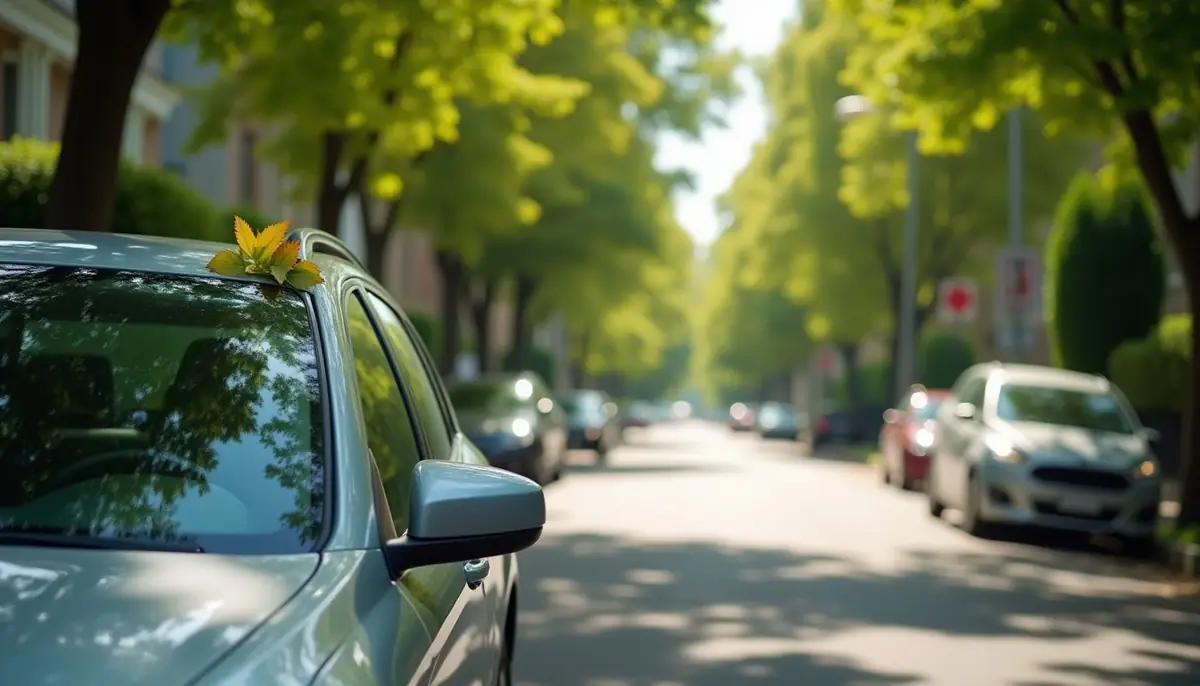
| Ants on the roof, hood or mirrors after parking under a tree; sticky film on the paint | Branches touching the car, or honeydew dripping from aphids or soft scales overhead | Wash the car and park clear of the branches |
| Ants coming up one tyre or several, from one spot on the ground | Parked on a trail or beside a nest | Move the car, then bait that spot |
| Ants carrying white grains, or a steady supply after cleaning | Colony moving in: door void, trunk or under the hood | Search the voids, bait where you park, book a professional if it persists |
| Huge numbers of fast, erratic, reddish brown ants in a Gulf state; electrical faults | Possibly tawny crazy ants | Get them identified, tell your mechanic, call a licensed professional |
This table is compiled by The Pest Control Brief from UC IPM Pest Notes 7411, Hsu and colleagues 2024, Mississippi State University Extension and LSU AgCenter.
Food is not the whole explanation
Crumbs explain a thin trail to a dropped fry: UC IPM lists sugar, syrup, honey, fruit juice, fats and meat as what household ants seek. They do not explain a spotless car covered in ants.
The only study we could find that profiles this directly is Hsu and colleagues, published in Ecological Entomology in 2024. They collected 52 reports on cars and scooters in Taiwan between 2017 and 2023, counting only groups of at least 20 ants. It is one country and self-reported, so US species will differ, but it runs against the usual advice:
- Speed: 30 of the 52 cases happened within a day of parking, though some cars had sat for over a month.
- Where: 22 cases were under the hood or in the trunk. Only 10 were in the cabin, and half of those were ghost ants.
- Whole colonies: at least 3 cases included queens and another 8 included brood.
- Food: in most of the cases where workers moved brood and queens, the authors found no evidence of food on the vehicle, and they read this as a colonisation attempt rather than foraging.
- Route: a large portion of records involved leaves and twigs touching the car. Arboreal or semi-arboreal species dominated, with the black cocoa ant alone about 60 per cent of cases.
So check what your car was touching before you tear the seats out. A car that collects ants at one parking space has a parking problem, and cleaning alone will not fix it. No comparable US survey turned up, so identify your species locally: our ant identification guide covers the waist check, and the small “sugar ants” covers the coconut smell test. Tiny pale ones in a warm state may be ghost ants.
The cleanout, in order
- Move the car first. Park on bare pavement, away from branches, hedges and visible trails.
- Take out everything loose: mats, child seats, bags, boxes and the trunk liner. Check them outdoors.
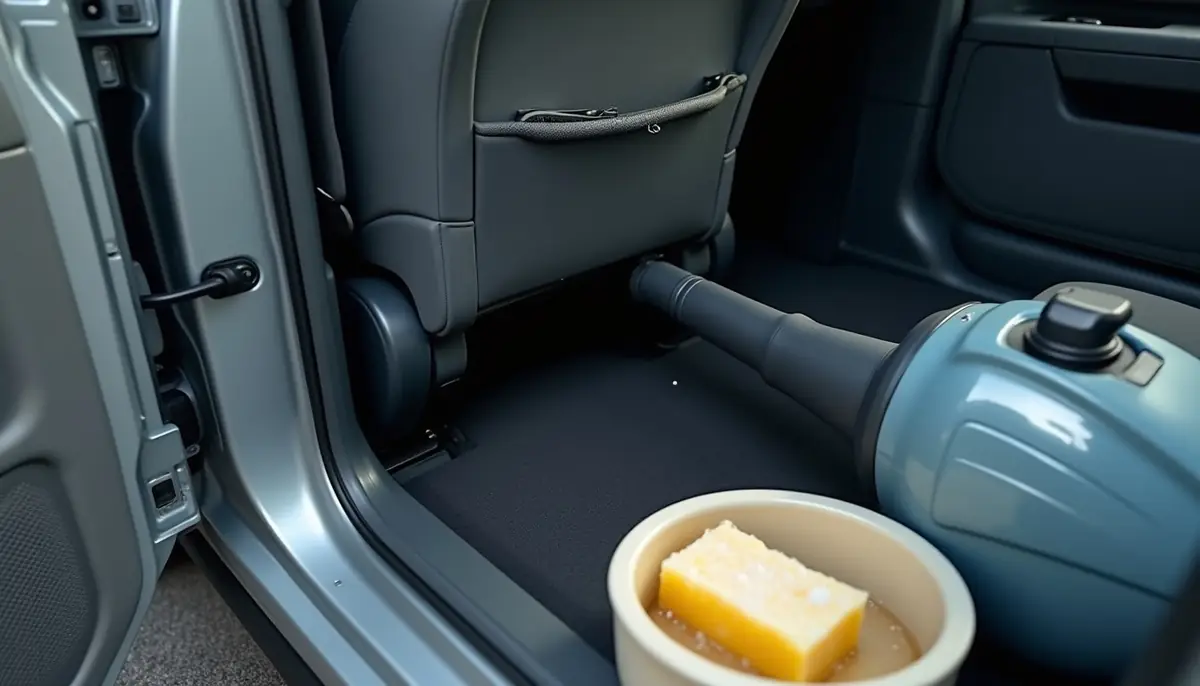
- Vacuum seat seams, rails and door pockets. UC IPM says vacuuming or sponging trails with soapy water may be as effective as a spray for temporarily removing foragers.
- Wipe every hard surface they walked on with soapy water. This removes the scent trail that recruits the next wave. Scrub dried soda from cup holders.
- Wash the outside, including wheel arches and under the sills, if the car has been under a tree. Honeydew is sugary excrement from aphids and scales. We found no trial of car washing, so this removes an attractant rather than a tested cure.
- Search the voids if ants persist: door seals, the spare wheel well, under the trunk floor and the engine bay. Hsu’s authors point to the crevices vehicles offer as nest sites.
- Bait outside the cabin. Put stations on the trail or at the nest where you park, 10 to 20 feet apart along a building’s edge if the trail runs there. UC IPM warns that baits used indoors can attract ants in, and the same reasoning applies to a car. Keep them from pets and children.
- Recheck at about 2 days and again at 10. UC IPM says it can take 5 to 10 days to see fewer ants on bait, and to refresh stations and stop spraying meanwhile.
Those recheck days are our rule of thumb from the published survival and bait figures, not a tested protocol. Ants still rising at day 10 mean the source has not been found. Our guide to borax for ants covers bait strength: UC IPM notes that 0.5 to 1 per cent liquid borate has more impact on the colony than prepackaged stations at 5.4 per cent, which kill foragers but do less against a big infestation.
What not to use in a closed cabin
- Foggers. EPA says foggers should not be used in small, enclosed places such as closets and cabinets because the product may explode, and a typical 6 oz can treats up to 25 by 25 feet. A car has electrical ignition sources and a fraction of that space. Foggers are not a fix here.
- Room sprays on seats and vents. UC IPM says pesticide sprays give only temporary control and may not be safe indoors. Follow the label.
- Sprays alongside bait. UC IPM says not to use any insecticide sprays while using baits, and University of Kentucky notes that spraying only the ants you see usually fails because they are a small part of the colony.
- Home remedies, with one caveat. UC IPM records that soap products such as window cleaner kill ants on contact without residual toxicity, and that peppermint, rosemary, clove, orange and thyme oil products have excellent contact activity but limited residual. These remove what you can see, not a colony. Our review of whether vinegar kills ants covers the most common kitchen remedy.
Would ants die in a hot parked car?
Sometimes, depending on where they are.
| Condition | Figure | Source |
|---|---|---|
| Cabin air, sunny 72 F day, after 1 hour | 117 F (47 C) | McLaren, Null and Quinn 2005 |
| Average cabin rise across 72 to 96 F days, 1 hour | 40 F; windows cracked 1.5 inches made no significant difference | McLaren 2005 |
| Cabin air, earlier studies on days above 86 F | 134 to 154 F (57 to 68 C) | Cited in McLaren 2005 |
| Argentine ant stops responding (CTmax, small lab project) | 51.5 C (125 F) | Miao and colleagues 2018 |
| Argentine ant lethal temperature (same project) | 54.2 C (130 F) | Miao 2018 |
| Fire ant workers cut off from the colony, no water, no sugar | All dead in 2 days | Wang and colleagues 2013 |
| Same, water only | 8 days | Wang 2013 |
| Same, sugar water (main experiment, three ant species) | Almost 30 days | Wang 2013 |
Compiled by The Pest Control Brief from the named sources. The limits come from an undergraduate project and the survival figures from a preprint testing isolation rather than starvation, so read them as indicative.
On a hot, sunny day cabin air can pass the Argentine ant’s lethal figure; on a mild one it may not. McLaren measured cabin air in a dark sedan, and we found no measurements from door cavities or wheel wells, where a colony would sit, and no test of a parked car as ant control. Parking in full sun may thin exposed ants, but it is not a treatment. Never leave children or pets in the car.
The Taiwan record found more cases in spring and summer than in autumn and winter. In our iNaturalist analysis, odorous house ants peak at an index of 153 from March to May and fall to 48 in December. These are outdoor sightings, not car infestations. UC IPM adds that ants move suddenly when food runs out or when weather turns dry, hot or flooded, which is the likeliest explanation for ants in a car after rain.
Crazy ants and the electrical question
The exception to ants being a mere nuisance is the tawny crazy ant, which LSU AgCenter describes as reddish brown, about 1/8 inch long, in the millions, and running erratically. Mississippi State’s Blake Layton lists “automotive problems” among the costly electrical failures owners report, and attributes them to accumulations of dead ants inside equipment.
That record is real but thin: neither source gives a count or repair history for vehicles. Texas A&M documents fire ants nesting in electrical housings and importing soil that causes corrosion, but in outdoor boxes and traffic signals, not cars. If a fault coincides with ants in crazy ant territory, tell your mechanic and read our crazy ants guide before spending on sprays. Layton says these ants are extremely difficult to eliminate from a landscape once established, so this is a job for a licensed professional.
Frequently asked questions
How to get rid of ants in car?
Move the car away from trees and trails, remove loose items, vacuum seams and wipe every trail with soapy water. Wash the outside if it was under a tree. Put bait stations on the trail where you park, not inside the cabin, and allow 5 to 10 days for numbers to fall, as UC IPM advises. Do not use foggers.
Why are there ants in my car?
Usually food residue, or the place you parked. Ants climb aboard via branches touching the car or from a nest or trail beneath it. In a 2024 study of 52 cases in Taiwan, 30 happened within a day of parking, and in most of the cases where workers moved brood and queens, no food was found on the vehicle.
How long can ants survive in a car?
Stranded workers likely last days to a few weeks. In one lab preprint, fire ant workers cut off from their colony all died within 2 days without water or sugar, 8 days with water only, and almost 30 days in a sugar water experiment. A colony with queens and an outside food supply can stay far longer.
Can ants damage a car?
Most species are a nuisance rather than a mechanical risk. The documented concern is tawny crazy ants: Mississippi State Extension lists automotive problems among the electrical failures reported by owners, caused by dead ants building up in equipment. It gives no repair counts, so ask a mechanic to check any fault rather than assuming ants caused it.
Should I kill carpenter ants in my house?
Killing the ones you see will not solve it. NC State Extension advises against spraying where you see them, since it only sends them elsewhere, and notes the nest could be as many as 300 feet from foraging ants. Trace them first to learn whether they nest indoors. Our guide to getting rid of carpenter ants covers next steps.
Sources
- Hsu, Hsu, Lee, Lin, Ho and Yang, Free ride without raising a thumb: a citizen science project reveals the pattern of active ant hitchhiking on vehicles and its ecological implications, Ecological Entomology, 2024.
- University of California IPM, Pest Notes: Ants, Publication 7411.
- US Environmental Protection Agency, Safety Precautions for Total Release Foggers.
- University of Kentucky Entomology, ENTFACT-619, Ant Control for Householders.
- NC State Extension, Biology and Control of Carpenter Ants.
- Mississippi State University Extension, Bug’s Eye View, Tawny Crazy Ants, Vol. 3, No. 23, 2017 (Blake Layton).
- LSU AgCenter, Tawny Crazy Ants (Dennis R. Ring).
- Texas A&M AgriLife Extension, Management Options of Fire Ants for Electrical Equipment and Utility Housings, FAPFS011.
- McLaren, Null and Quinn, Heat Stress From Enclosed Vehicles, Pediatrics 116(1), 2005.
- Miao, Batiuk, Casillas and Erickson, Comparing Maximum Critical Temperatures and Lethal Temperatures of Pogonomyrmex californicus and Linepithema humile, W.M. Keck Science Introductory Biology Projects, Claremont, 2018.
- Wang, Xu, Di and Roehner, How does group interaction and its severance affect life expectancy?, arXiv preprint 1304.2935, 2013.
- The Pest Control Brief analysis of iNaturalist research-grade records, pulled October 2026.