Roaches in the Attic: Which Species, and How They Get Up There
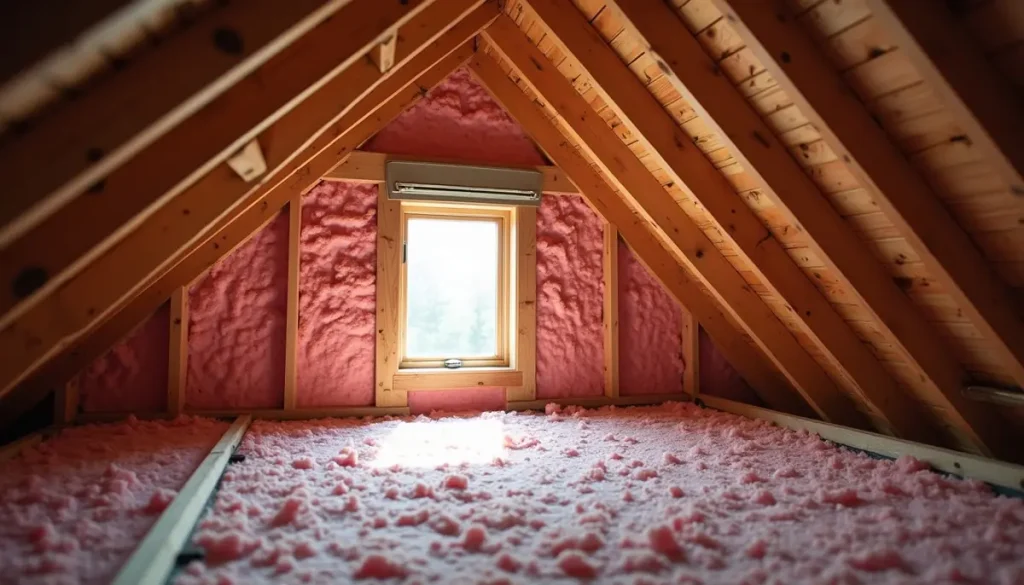
A roach in the attic is almost always a smokybrown cockroach, a large dark outdoor species that lives in tree holes, gutters and humid roof voids and walks or flies in from the roofline. The University of Georgia lists attics among its usual homes, while it says the American cockroach is rarely, if ever, found in attics, and German cockroaches stay in kitchens. So the fix is outside and overhead: trim branches, clear gutters, screen vents, dry the attic and bait, not fog.
Name the roach first: each species points to a different route in. Measure it or note the colour and wings, then use this table.
Which roach is in the attic: sign, species and route in
| What you see | Most likely species | How it usually got up there |
|---|---|---|
| Shiny, uniformly dark mahogany roach, 1 to 1.5 in (25 to 38 mm), wings reaching the tip of the body | Smokybrown cockroach | Overhanging branches, debris-filled gutters, soffits and eaves, a leaky roof |
| Tiny dark nymphs, about 1/8 to 3/16 in, with a white band across the back and white antenna tips | Smokybrown cockroach, first instars | An egg case hatched nearby; UGA says these nymphs are not very mobile |
| Dark capsule 0.4 to 0.6 in long on a rafter or in insulation | Smokybrown egg case (about 26 eggs each, per the University of Tennessee) | Females are breeding in the attic, not just passing through |
| Reddish brown roach about 2 in (50 mm) with light coloured edges on the shield behind the head | American cockroach | Rare in attics; more often a stray from sewers, drains or a crawl space |
| Almost black roach 1 to 1.25 in with short wings or none | Oriental cockroach | Unlikely: UC IPM lists cool, damp places such as garages, basements and drains |
| Small tan roach about 1/2 in (13 to 16 mm) with two dark stripes behind the head | German cockroach | Not an attic species; check the kitchen and bathroom first |
If your roach was small, tan and striped, look in the kitchen instead: UGA calls the German cockroach an obligate indoor pest found mainly near warm appliances and water. The roach control method for each species differs enough that getting the name right first saves months.
Why are cockroaches in my attic?
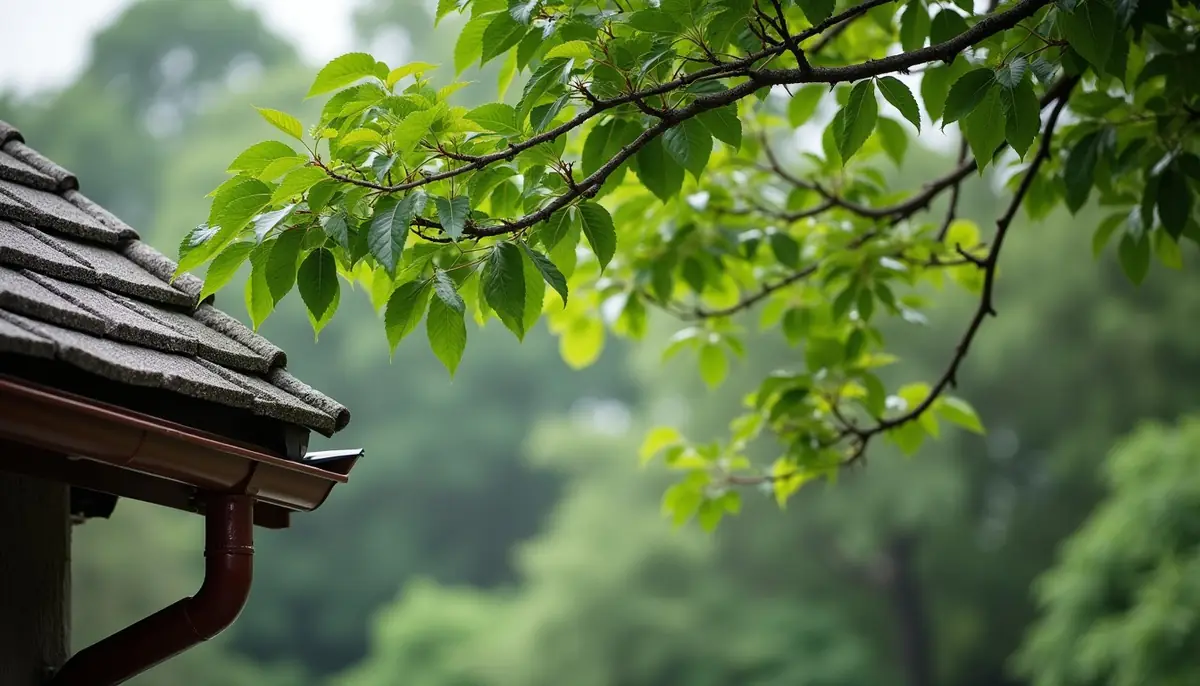
Because the attic copies their natural home. Smokybrown cockroaches lose water through their outer cuticle more readily than many other cockroaches, according to Karen Vail of the University of Tennessee, so they live where air is humid and still: tree holes, mulch and, by extension, block walls, soffits and attic eaves away from airflow. Texas A&M AgriLife says the species requires high humidity for survival and is commonly found in attics or near fireplaces once inside, and that it can be attracted by a leaky roof.
The routes in are mostly at roof height:
- Branches touching the roof. Clemson’s Home and Garden Information Center advises pruning tree limbs and shrubs so they do not touch the house; the University of Tennessee summary of integrated control trials used a one foot gap.
- Gutters. Clemson lists gutters around roofs among smokybrown habitats, and Vail names debris-filled gutters as a common sighting spot.
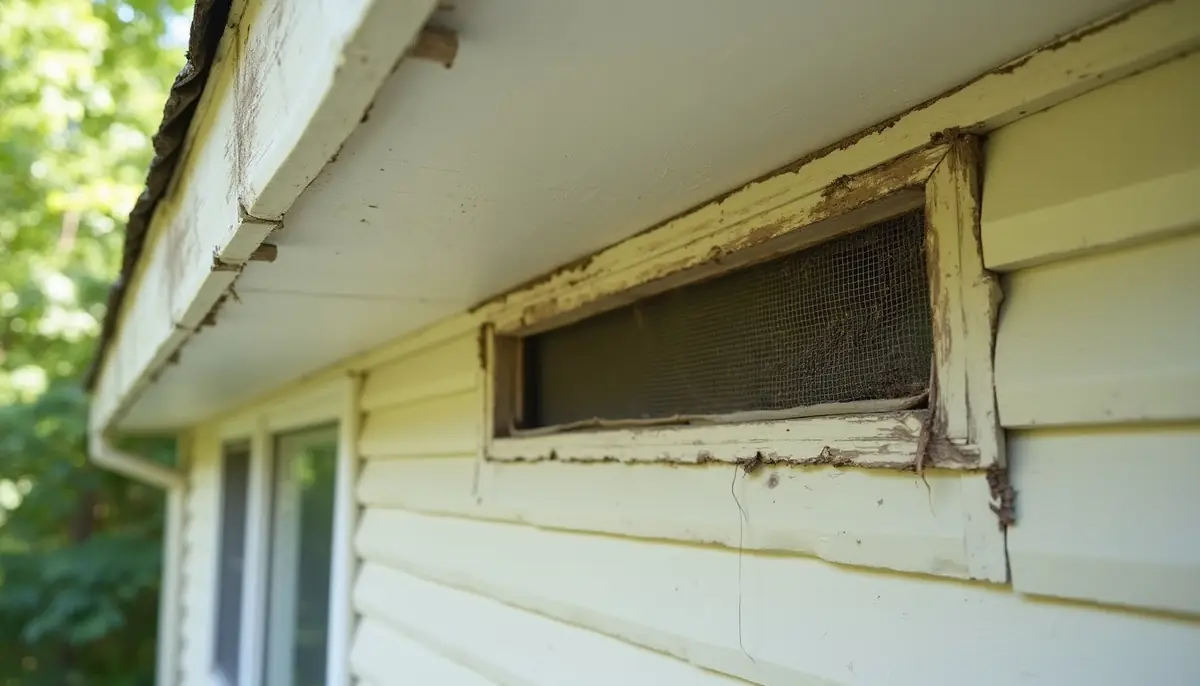
- Soffit, ridge and gable vents. UGA advises that all foundation and attic vents be adequately screened, sealed and working.
- Lights. The University of Florida says the smokybrown readily enters structures through lit openings, and both sexes have full wings; our page on which cockroach species actually fly covers how far they go.
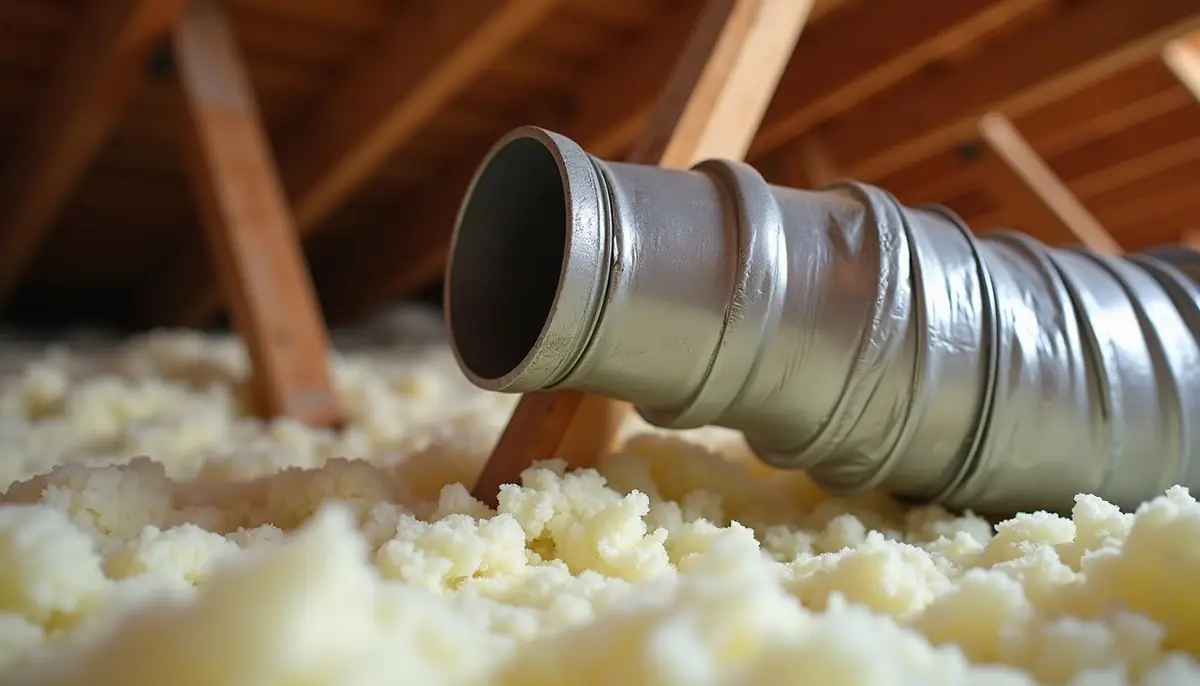
Attics also hold the water these roaches need. A bathroom fan that dumps into the insulation instead of outdoors adds moisture right where they shelter, and model codes forbid it: section M1501.1 of the International Residential Code (2018 edition) says air “shall not be exhausted into an attic, soffit, ridge vent or crawl space”. Local adoption varies, so ask your building department what applies in your area.
Is it normal to have roaches in the attic?
In the South, yes. UGA calls the smokybrown the most common cockroach in suburban Southern neighbourhoods with mature hardwood trees, and says older, brick-exterior homes with heavy deciduous tree cover, clutter and pets are at higher risk, according to the Tennessee summary. The species was not recorded in Tennessee in a 1991 catalogue, yet Vail reports pest professionals in Chattanooga describing an increase over the five to eight years before 2022, so the area it covers is still widening.
Further north the answer changes: our October 2026 iNaturalist pull holds just 5 research-grade smokybrown records from Pennsylvania, against 1,292 from Texas. For a large dark roach in a northern attic, our guide to whether an American cockroach indoors is a visitor or an infestation is the better starting point there.
Is one roach overhead an infestation?
Not on its own. Egg cases, shed skins, or several nymphs with white bands mean they are breeding there. Smokybrowns also stay close to where they live: in one Florida study cited by Vail, 70 per cent of marked roaches were recaptured in the same area over 10 to 21 days. One adult on the landing is often a stray; the checklist for what one cockroach sighting means helps you decide.
When attic roaches are active
You will rarely see them in daylight. In our analysis of iNaturalist records, smokybrown sightings between 9 pm and midnight ran at 7.7 times the share of that slot in all US records, and fell to about half their usual share between noon and 6 pm. The American cockroach shows the same night pattern. Records show when people notice roaches, not a measured activity clock, but they match UGA’s description of night active species.
So inspect after dark with a torch. Walk the attic edge along the eaves, look under insulation near soffit vents and at the top plates, and check around any roof penetration, plumbing vent or fan duct. Rustling in the insulation can also be mice or squirrels; the signs of mice in the attic, such as droppings and gnawed wiring, look nothing like roach evidence.
How to get rid of roaches in your attic
Do the work in this order. In a 1995 Auburn University study (Smith and colleagues, Journal of Economic Entomology), as summarised by the University of Tennessee, clearing ground cover and trimming limbs a foot back from the house, plus outdoor spray, granular bait and gel bait at vent grates and ledges, beat a perimeter spray alone and lasted 60 days instead of 30. It also cut indoor numbers.
- Cut the bridge. Trim every branch that touches or overhangs the roof, and pull mulch, ivy and leaf litter back from the walls. UGA advises keeping ground covers at least 1.5 feet from the foundation.
- Clean and fix the gutters so they drain away from the house and no longer hold wet debris.
- Close the openings. Replace torn soffit and gable vent screens and seal gaps around roof penetrations. Do not block attic ventilation; screen it.
- Dry the attic. Fix roof leaks and make sure bathroom and kitchen fans discharge outdoors.
- Bait where they live. UGA recommends gel bait in many pea-sized dabs or broadcast granular bait for smokybrowns, and warns that adults may be too big for small bait stations. Follow the label for where the product may go; many are not labelled for attic insulation.
- Leave void dusting to a licensed professional. UC IPM says boric acid and desiccant dusts can go inside hollow walls and last a long time if they stay dry. Blowing dust around an attic needs the right product, equipment and respiratory protection.
Expect results to take time: UC IPM says an effective bait programme may take seven days or longer. Our comparison of gel bait versus spray for roaches explains why bait reaches the hidden roaches that a spray misses.
Why a bug bomb in the attic is wasted
Total release foggers are often ineffective because they do not reach the cracks where cockroaches hide, UC IPM says, and they can scatter roaches into other areas. In a 2019 North Carolina State University study of 30 infested homes (DeVries and colleagues, BMC Public Health), foggers did not reduce cockroach numbers while gel baits did, and kitchen surface pesticide residues rose a median 85 times. Our report on illnesses linked to bug bombs covers the safety side.
Other bugs people find in attics
“Water bug” and “palmetto bug” in an attic almost always mean one of the big roaches above, usually the smokybrown in the Southeast; the page on what palmetto bug and water bug really mean sorts out the names.
Brown marmorated stink bugs are different: Penn State Extension says they seek overwintering sites on warm autumn days, can reach wall voids and attics, and will not reproduce inside, so the fix is sealing before they arrive, as in our guide to stink bugs and other fall invaders.
Roaches in the garage below usually share the attic’s causes; see why roaches end up in the garage.
Where attic ducts leak, roaches can also reach ceiling registers, and the steps for roaches coming out of air vents apply.
When to call a professional
Call a licensed pest control company if you find egg cases or nymphs overhead, if roaches keep appearing indoors after trimming and sealing, or if the attic needs dust treatment. Smokybrowns tolerate cold better than American or German cockroaches: in a 1973 laboratory study by Tsuji and Mizuno, older smokybrown nymphs survived 90 days at about 42 °F (5.5 °C) after a spell at 59 °F (15 °C), while no stage of the other two survived 40 days. An attic population can therefore come through a mild winter.
Frequently asked questions
Is it normal to have roaches in the attic?
In the Southeast it is common. The University of Georgia calls the smokybrown cockroach the most common cockroach in Southern suburbs with mature hardwood trees, and lists attics among its usual homes alongside tree holes and crawl spaces. It is not a sign of a dirty house. In northern states smokybrowns are rare, so identify the roach before assuming.
How to get rid of roaches in your attic?
Remove the bridge and the water first: trim branches back from the roof, clean gutters, screen soffit and gable vents, fix roof leaks and vent bathroom fans outdoors. Then use gel or granular bait as the label allows around eaves and entry points. University research found this integrated approach lasted twice as long as a perimeter spray alone. Skip foggers.
Why should you never kill a roach?
There is no good reason not to. The idea that a dead roach draws others misplaces the attractant: Virginia Tech Extension says the aggregation pheromones are in cockroach droppings and advises removing droppings with hot, soapy water. Killing one attic roach does nothing to the population living in the eaves, so treat the sighting as a reason to inspect.
Why are cockroaches in my attic?
Smokybrown cockroaches lose body water quickly and need humid, still air, so attic eaves, soffits and damp insulation suit them. They arrive from trees, gutters and the roof, often across touching branches, and leaky roofs or bathroom fans venting into the attic make it wetter. American and German cockroaches are rarely the attic species.
Sources
- Suiter, Forschler, Ames and Hoebeke, University of Georgia, Cockroaches fact sheet, 2022.
- Vail, K., University of Tennessee Entomology and Plant Pathology, The Smokybrown Cockroach, E&PP Info #841, Insec(tc)ure Vol. 3 Issue 10/11, October 2022.
- Smith, Appel, Mack, Keever and Benson, Comparative effectiveness of an integrated pest management system and an insecticidal perimeter spray for control of smokybrown cockroaches, Journal of Economic Entomology 88: 907 to 917, 1995 (as summarised by the University of Tennessee).
- Virginia Cooperative Extension, Cockroaches Found in Living Spaces, ENTO-528NP, 2022.
- Penn State Extension, Brown Marmorated Stink Bug.
- Texas A&M AgriLife Extension, Urban and Structural Entomology, Smoky-brown cockroach.
- University of Florida, Department of Entomology and Nematology, Smokybrown cockroach, Periplaneta fuliginosa, image gallery text.
- Clemson Cooperative Extension Home and Garden Information Center, Cockroach (Roach) Control, Factsheet HGIC 2449.
- University of California Statewide IPM Program, Pest Notes: Cockroaches, Publication 7467.
- Rutgers Cooperative Extension, German Cockroach, Fact Sheet FS1322, Wang, 2020.
- Tsuji, H. and Mizuno, T., Effects of a low temperature on the survival and development of four species of cockroaches, Medical Entomology and Zoology 23(3): 185 to 194, 1973.
- DeVries, Santangelo, Crissman, Mick and Schal, Exposure risks and ineffectiveness of total release foggers (TRFs) used for cockroach control in residential settings, BMC Public Health 19: 96, 2019.
- International Code Council, International Residential Code 2018, Section M1501.1 Outdoor discharge (as adopted in the Seattle Residential Code, Chapter 15).
- The Pest Control Brief analysis of iNaturalist research-grade records, pulled October 2026 (b19 to b30 files) and November 2026 (b35/b36 hour files).