What Kills Wasps With Household Products? What the Studies Show
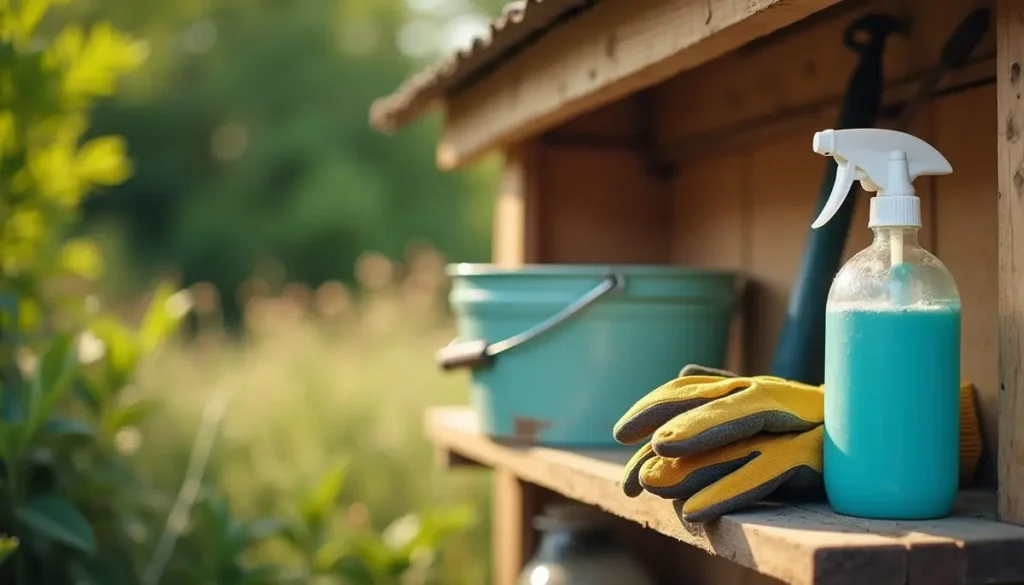
Plain dish soap in water is the only household product with real evidence against wasps, and it only kills a wasp it drowns or thoroughly soaks; it does not destroy a nest. Windex, Lysol, vinegar, hairspray and WD-40 have no published tests on wasps and none is labelled for them. Peppermint and clove oils repel wasps in field trials but do not kill them. For a nest, extension entomologists point to a product labelled for wasps and hornets, applied at night, or a professional.
Household products ranked by the evidence
| Product | What it does to a wasp | Evidence | Main risk |
|---|---|---|---|
| Dish soap in water (trap) | Breaks surface tension so trapped wasps sink and drown | Good: drowning traps in UC IPM, Ohio State and Clemson guidance | Sweet baits also catch honey bees |
| Dish soap spray on a single wasp | Can kill if the wasp is fully wetted; no effect once dry | Weak: no published test on wasps; Colorado State says soap sprays generally do not affect large adult flying insects | Stings while you chase it |
| Soapy water poured into a nest | Kills the wasps it reaches | None: no extension or peer-reviewed test found | Defending workers, multiple stings |
| Peppermint, clove, lemongrass oils | Repel; do not kill | Moderate: 17 of 21 oils repelled wasps at baited traps (Zhang et al. 2013) | False confidence near a nest |
| Sugar-water bottle trap | Catches foragers | Mixed: catches wasps but rarely reduces a colony (University of Kentucky) | Oregon State warns sugary baits attract bees |
| Windex, Lysol, multi-surface cleaners | Unknown | None: no published test; Colorado State says cleaning products should not be used as pesticides | Off-label use of a registered product |
| Vinegar, baking soda | Unknown | None found | Wasted time near an active nest |
| Hairspray | Unknown as a killer | Ohio State lists hairspray fragrances as a yellowjacket attractant | May draw more wasps |
| WD-40 | Unknown | None: sold as a lubricant, not labelled for wasps | Off-label, aerosol near your face |
| Gasoline, a garden hose | Seldom kills the colony | University of Kentucky calls these folk remedies seldom successful | Multiple stings |
Compiled by The Pest Control Brief from University of California IPM, Ohio State University, Clemson, Colorado State, Kansas State, Oregon State and University of Kentucky extension publications and Zhang, Schneidmiller and Hoover (2013).
Soapy water: what it really does
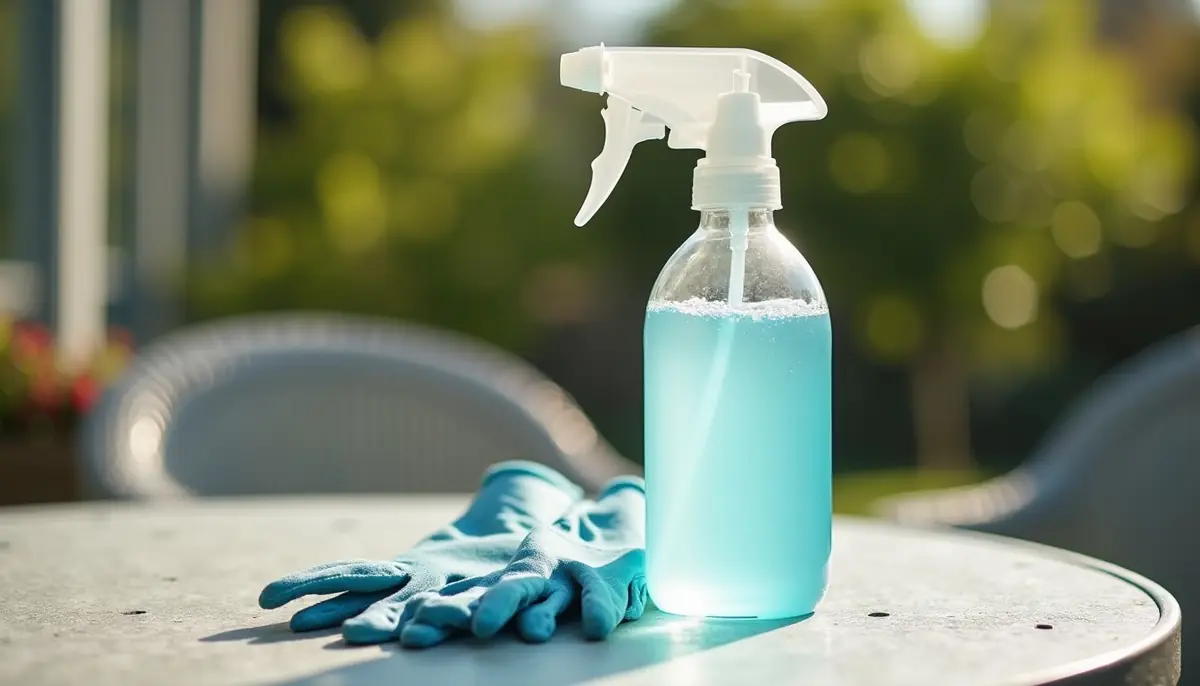
Soap works on insects as a wetting agent. Clemson’s yellowjacket fact sheet says detergent in a trap’s water “eliminates surface tension causing the yellowjackets to sink.” Ohio State’s homemade trap uses a 2-liter soda bottle with 2 inches of water and a few drops of dish soap; workers exhaust themselves looking for the exit, then drown. That is the best documented household use of soap against wasps, and it is a trap, not a spray.
As a spray, the picture is weaker. Colorado State Extension says soaps and detergents act strictly as contact insecticides with no residual effect, that sprays must thoroughly cover the target, and that large adult flying insects with stronger exoskeletons, naming lady beetles and bees, are generally not affected. Kansas State entomologist Raymond Cloyd adds that dish liquids may work on soft-bodied insects at 1 or 2 per cent, with less predictable results than registered insecticidal soaps. A wasp hit squarely with a heavy stream of soapy water can go down because it cannot fly wet; a light mist usually just makes it angry.
Poured into a ground nest, soapy water reaches the wasps at the entrance, not comb that UC IPM notes can sit quite a distance from the visible hole. Our page on whether Dawn dish soap kills fleas covers the same surfactant chemistry on a far smaller, softer insect.
How fast does soapy water kill wasps?
No extension service or published study gives a time for wasps, so any number online is anecdote. On a sprayed wasp it depends on how fully it is soaked, and once the spray dries there is no further effect.
Cleaners: Windex, Lysol and the spray bottle under the sink
There is no published test of Windex, Lysol or a multi-surface cleaner on wasps; anecdotes of wasps dropping after a direct stream fit a wetting effect, not anything in the cleaner. Colorado State is blunt: home remedies made from household liquid soaps or cleaning products should not be used as pesticides. EPA notes every pesticide label carries the line “It is a violation of Federal law to use this product in a manner inconsistent with its labeling,” and a wasp killer is a product whose label lists wasps, hornets or yellowjackets.
Vinegar, baking soda and hairspray
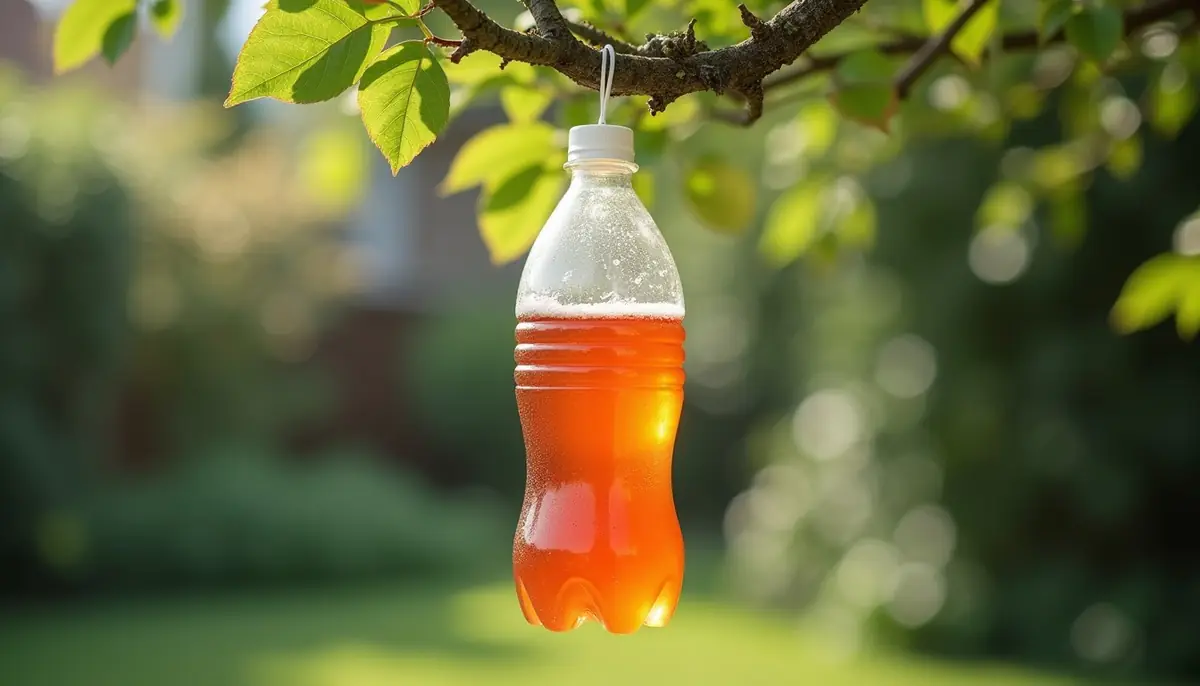
We found no extension publication or study testing vinegar or baking soda as a wasp killer. Hairspray is worse than useless as a deterrent: Ohio State lists floral perfumes, hairspray fragrances and bright flowery clothing among the things that attract yellowjackets, alongside sweet drinks. If wasps keep finding you, our guide to what attracts wasps through the season covers the food and nest-site triggers.
WD-40 is the other perennial suggestion. It is sold as a lubricant and is not labelled for wasps; our full plan for getting rid of wasps by nest type explains why we found no study supporting it either.
Peppermint and other essential oils: repellents, not killers
The one solid study here is Zhang, Schneidmiller and Hoover (2013) in Pest Management Science. Working with attractant-baited traps, they found 17 of 21 essential oils significantly repelled yellowjackets, mainly the western yellowjacket Vespula pensylvanica, and paper wasps, mainly the European paper wasp Polistes dominula. The list included clove, pennyroyal, lemongrass, spearmint, rosemary, geranium, citronella and peppermint. Two blends, clove, geranium and lemongrass, with or without rosemary, blocked attraction completely. The authors worked for a trap manufacturer, and the trial measured whether wasps approached a lure, not whether oil kills them or keeps a nest away from a house.
So oil near a table may cut forager visits but will not clear a nest; our guide on keeping yellow jackets away from food rates each repellent for outdoor meals.
Sugar-water bottle traps: why they catch the wrong insects
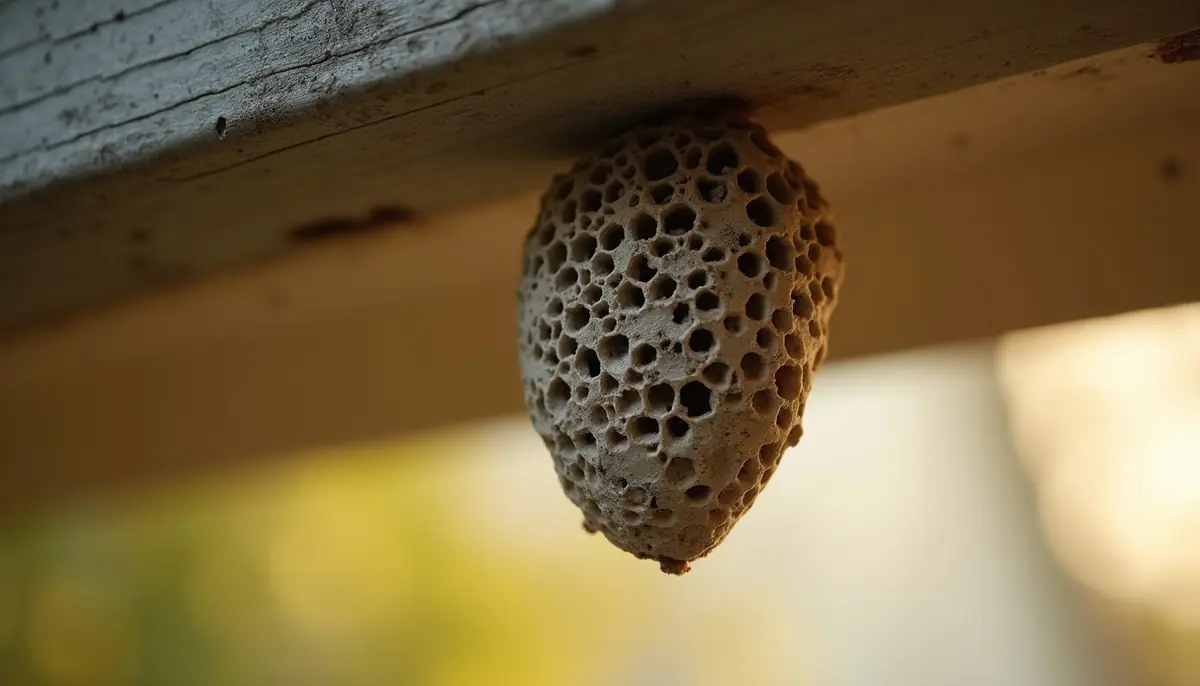
Bait choice decides what a bottle trap catches. Oregon State Extension advises that anyone building a trap should avoid sugary attractants because they could attract bees; heptyl butyrate or meat attracts yellowjackets and not honey bees. Clemson reports raw bologna as a successful yellowjacket bait that does not attract beneficial insects.
Even well-baited traps rarely fix the problem. The University of Kentucky notes that late-season nests often contain thousands of wasps, so trapping seldom produces a noticeable decline, and traps set near a patio can draw more wasps than they catch. UC IPM says common lures attract mainly the western yellowjacket and work best as queen traps in late winter and early spring.
Yellowjacket records peak in October at 2.5 times their usual share of iNaturalist records, and paper wasps in September, when colonies are largest and foragers turn to sweet foods.
What does kill a wasp nest
Extension advice converges on three approaches, used as the label directs:
- Wasp and hornet aerosols for exposed nests. The University of Kentucky notes these can be sprayed as far as 20 feet and make wasps drop instantly, so never stand directly under the nest. Wait a few days, then knock the nest down. Our paper wasp guide covers when an umbrella nest under the eaves can simply be left.
- Insecticide dusts such as cyfluthrin or deltamethrin products, puffed into a ground or wall nest entrance with a bulb or bellows duster. Kentucky says dusts penetrate farther than sprays and spread through the colony.
- Knocking down a new paper wasp nest in spring, when only the founding queen is present. UC IPM says this makes her move elsewhere.
Timing matters more than product. Clemson advises applying insecticide late in the evening or at night, when foragers are home; Ohio State prefers early dawn, when wasps are sluggish from the cool night. Both warn against pointing a flashlight at the entrance, because wasps fly toward light.
And for hornets?
No household product suits a bald-faced hornet nest: Kentucky describes hundreds of extremely aggressive wasps, often high in trees, and says it is often best to call a professional. Our wasp and hornet identification guide tells you which insect you are facing first.
Remedies that make things worse
The University of Kentucky says folk remedies such as dousing nests with gasoline or a garden hose are seldom successful and can result in multiple stings. Sealing the entrance of a nest behind siding is another mistake: Kentucky warns the wasps may chew inward and emerge indoors, the situation covered in our page on yellow jackets in a wall.
Sting risk is the reason to stop and think. Kentucky cites about 225,000 emergency room visits and as many as 100 deaths a year in the US from reactions to wasp and hornet stings, and estimates that about two million people, roughly 1 per cent of the population, are hypersensitive to the venom. Anyone with a known allergy should leave nest treatment to someone else. Our yellow jacket removal guide explains why late-season colonies defend so hard.
When a professional is the cheaper option
Call a professional when the nest is a yellowjacket ground or wall nest, a hornet nest, needs a ladder, or anyone in the house is allergic. Published marketplace estimates compiled on our wasp nest removal cost page put paper wasp removal at around $400 and yellow jackets at $500 to $1,300, with small early-season nests from $100.
Frequently asked questions
Does Dawn dish soap really kill wasps?
Dish soap kills wasps mainly by drowning them. In a trap, a few drops break the water’s surface tension so wasps sink, as Clemson and Ohio State describe. Sprayed on a flying wasp, it works only if the wasp is fully soaked; Colorado State says soap sprays generally do not affect large adult flying insects and have no effect once dry.
Is there a household cleaner that kills wasps?
No household cleaner has been tested or labelled for wasps. A heavy stream of any liquid may ground a wasp briefly by wetting it. Colorado State Extension says household soaps and cleaning products should not be used as pesticides, and EPA states that using a registered product inconsistently with its label violates federal law.
Will Windex kill a wasp if I spray it?
There is no published test of Windex on wasps. People who report success are usually describing a wasp knocked down by a direct, soaking stream, which any heavy spray of liquid can do. It is not labelled for insects, has no lasting effect, and spraying near a nest invites stings from defending workers.
Will Lysol cleaner kill a wasp?
Lysol Disinfectant Spray is registered with EPA as an antimicrobial, EPA Reg. No. 777-99, and its label claims cover bacteria, viruses and fungi, not insects. No study tests it on wasps. Using it as an insecticide is a use inconsistent with its label, which EPA says is a violation of federal law.
What will kill wasps instantly?
A wasp and hornet aerosol labelled for nests is the product extension sources describe as dropping wasps instantly, sprayed from up to 20 feet according to the University of Kentucky. Treat at night or dawn, do not stand under the nest, and do not shine a light at the entrance.
Sources
- University of Kentucky Entomology, ENTFACT-620: Controlling Wasps, Hornets, and Yellowjackets, M. F. Potter, revised 2026.
- University of California Statewide IPM Program, Pest Notes: Yellowjackets and Other Social Wasps, Publication 7450.
- Ohio State University Extension, Yellowjackets, fact sheet HYG-2075.
- Clemson Cooperative Extension, Home and Garden Information Center, Yellow Jackets fact sheet.
- Colorado State University Extension, Insect Control: Insecticidal Soap.
- Kansas State University, R. Cloyd, Fundamentals of Using Soaps as Insecticides, 2020.
- Oregon State University Extension, EM 9211: Protecting Honey Bees From Yellowjacket Wasps.
- Zhang Q.H., Schneidmiller R.G., Hoover D.R., Essential oils and their compositions as spatial repellents for pestiferous social wasps, Pest Management Science 69(4): 542 to 552, 2013.
- US Environmental Protection Agency, Introduction to Pesticide Labels; Pesticide Product Label System, EPA Reg. No. 777-99.
- The Pest Control Brief analysis of iNaturalist research-grade records, pulled October 2026.