House Cricket or Camel Cricket? The Silent One Explained
If the cricket in your basement is humpbacked, wingless and silent, it is a camel cricket, and in a continental survey 88 per cent of US households that submitted an identifiable specimen had the Asian greenhouse species rather than a native one. It is silent because it is wingless: cricket song is made by rubbing wings together. Extension guidance on treating them indoors is unusually blunt, describing floor treatments as a last resort of limited benefit.
Two very different insects get called crickets in a house. One chirps, has wings and can live indoors permanently. The other is a hunched, long-legged, silent thing that appears in basements and garages and startles people considerably more than it should.
Telling them apart
| House cricket | Camel cricket | |
|---|---|---|
| Length | 19 to 22 mm | 13 to 33 mm |
| Wings | Present, held flat over the back | None as an adult |
| Sound | Chirps, to attract females or as an alarm | Silent, with no sound-producing organs |
| Shape | Conventional cricket profile | Humpbacked, with very long antennae and back legs, often called spider crickets |
| Colour | Light yellowish brown with three dark bands on the head | Light tan to dark brown, often mottled |
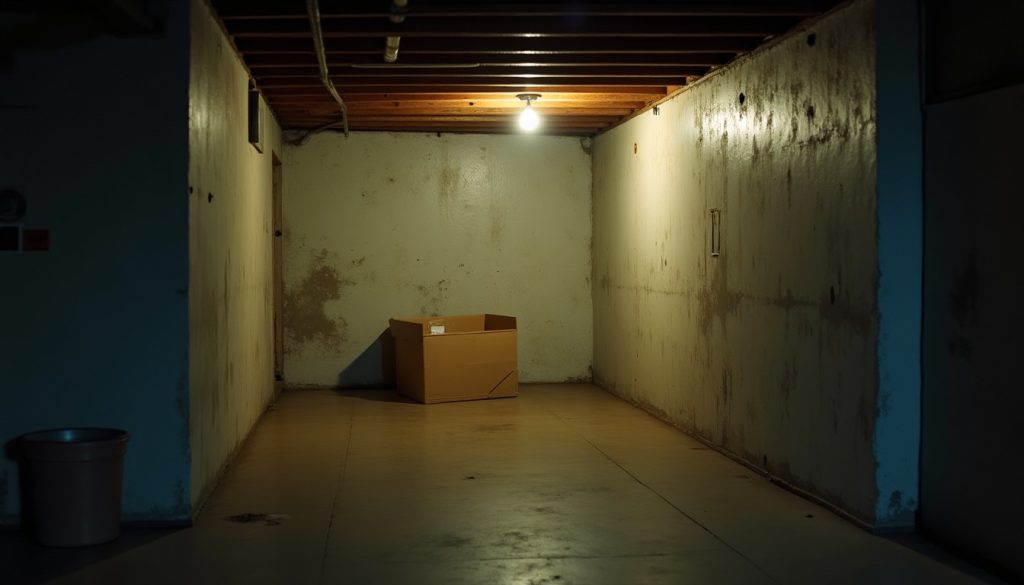
| Where | Warm moist areas anywhere in the building; can complete its life cycle indoors | Dark and damp: basements, crawl spaces, garages, occasionally attics |
The wings and the silence are the same fact. Crickets sing by stridulation, rubbing one wing against the other, so an insect with no wings has nothing to rub. If it is silent and hunched, you have a camel cricket.

Whose crickets are they?
A 2014 citizen-science study run from North Carolina State University asked households across the country to report and submit camel crickets. Of 163 households that sent an identifiable photograph or specimen, 88 per cent had the Asian genus rather than the native one, and of those identifiable to species, 94 per cent were the greenhouse camel cricket. Reports came from 39 states and the District of Columbia, and detection was four times more likely east of Colorado than west of it: 28 per cent against 7 per cent.
Yard trapping in Raleigh found 158 camel crickets across ten urban yards, all of them the introduced species, with abundance falling the further traps sat from the house.
One correction worth making, because it has propagated widely. Press coverage of that study reported that more than 90 per cent of respondents had the Asian species. The paper does not say that: 88 per cent is a genus-level result across households, and the 94 per cent figure is a species-level result within the identifiable subset. The authors also declined to claim that the introduced species is displacing native ones, saying only that it is possible.
Do they actually damage anything?
Very little. Extension sources note that chewing damage can occur on fabrics including wool, silk, nylon, rayon, cotton and linen, and that furs and rubber may be nibbled, but the qualifier is the important part: unless dozens of crickets are in the home, damage is usually so minor it goes unnoticed. House crickets favour items soiled with food, drink or perspiration, leaving roughened areas where they have pulled at fibres.
They do not bite people, carry disease indoors or damage the structure. Iowa State describes camel crickets as of little economic importance except as a nuisance in buildings, especially basements.
A note on a claim you will see everywhere: that camel crickets eat paper, cardboard, wood and each other. We could not source that to any extension or peer-reviewed publication, only to commercial content, so we are not repeating it as fact.
Is treatment worth buying?
Mostly not, and the extension position is unusually direct about it. Iowa State states that treating indoor floor areas is a last resort of limited benefit. Maryland advises that chemical control should only be used alongside permanent structural repairs and sanitation. Clemson considers treatment warranted only where a large infestation is present.
What is recommended instead:
- Vacuum them up and dispose of the bag outside. For accidental invaders this is the whole answer.
- Dry the space. A dehumidifier or improved ventilation in a damp basement removes the condition that keeps them there.
- Seal at floor level: foundation cracks, gaps around basement windows, pipe and wire penetrations, and the gap under a garage door.
- Move harbourage back from the wall: mulch, woodpiles, stones and boards lying on damp soil.
- Use sticky boards at entry points to monitor and catch, which also tells you where they are getting in.
- Reduce or change outdoor lighting near doors, which draws house crickets in particular.
Persistent numbers in a basement indicate a moisture problem that outlasts any treatment, and that broader issue is covered in moisture pests and what they indicate. The other damp-corner animal people find alongside them, and mistake for an insect, is in woodlice and sowbugs. Sealing technique is in pest-proofing your home, and telling an accidental invader from a resident population is covered in early signs of infestation.
Frequently asked questions
What is the difference between a house cricket and a camel cricket?
House crickets are 19 to 22 mm, have wings, chirp, and are light yellowish brown with three dark bands on the head. Camel crickets are 13 to 33 mm, wingless, silent, humpbacked with very long antennae and hind legs, and stay in dark damp places such as basements and crawl spaces.
Do camel crickets chirp?
No. They have no sound-producing organs. Crickets chirp by rubbing their wings together, and camel crickets have no wings as adults, so they are silent.
Are camel crickets dangerous, and do they bite?
No. They do not bite people, do not sting and do not transmit disease indoors. They are a nuisance rather than a hazard, which is why extension guidance treats them as an accidental invader rather than a pest requiring treatment.
Why do I have camel crickets in my basement?
Because the space is dark and damp. They require cool, moist conditions and wander in from adjacent damp areas outside. Heavy numbers generally indicate an unresolved moisture problem rather than an infestation in the usual sense.
Do camel crickets damage clothes?
Rarely to any noticeable degree. Chewing damage can occur on wool, silk, cotton, linen and synthetic fabrics, but extension guidance notes that unless dozens of crickets are present the damage is usually so minor it goes unnoticed.
Are camel crickets an invasive species?
The ones in most US houses are. In a continental citizen-science survey, 88 per cent of households submitting an identifiable specimen had the Asian genus rather than a native one, and the great majority of those identified to species were the greenhouse camel cricket.
Does a dehumidifier get rid of camel crickets?
It addresses the condition that supports them, which is the recommended approach. Extension guidance prioritises drying the space, sealing entry points and removing harbourage, and treats indoor chemical treatment as a last resort of limited benefit.
Should I pay for a cricket treatment?
Usually not for camel crickets. Iowa State describes treating indoor floor areas as a last resort of limited benefit, and Maryland recommends chemical control only alongside structural repairs and sanitation. Vacuuming, dehumidifying and sealing do the real work.
Sources
- Epps MJ, Menninger HL, LaSala N and Dunn RR, Too big to be noticed: cryptic invasion of Asian camel crickets in North American houses. PeerJ 2:e523, 2014. doi.org
- University of Maryland Extension, Crickets, updated 2023. extension.umd.edu
- Iowa State University Extension, Camel Crickets. iastate.edu
- Clemson Cooperative Extension, House and Field Crickets. hgic.clemson.edu
- NC State Extension, camel crickets. content.ces.ncsu.edu