Bugs in the House in Winter: Where They Come From
Bugs in the house in winter come from one of two places: overwintering insects that crept into the walls and attic in autumn and wake on warm, sunny days, or insects that live and breed indoors all year and that winter cannot touch. Asian lady beetles, stink bugs, boxelder bugs, cluster flies and western conifer seed bugs are the first group; they do not reproduce indoors and are a nuisance rather than a threat. German cockroaches, pantry pests, carpet beetles, bed bugs, fungus gnats and booklice are the second, and they are the only ones that can multiply in your home while it is cold outside.
That split is the most useful thing to know about any insect you find indoors between November and March. It tells you whether the problem will fade by itself in spring or grow until someone deals with it, and whether the answer is a vacuum cleaner or a proper treatment.
Which group is it?
| Insect | Group | Why you see it in winter | Breeds indoors? | First step |
|---|---|---|---|---|
| Asian lady beetle | Overwinterer | Wakes on warm days in late winter and early spring | No | Vacuum |
| Brown marmorated stink bug | Overwinterer | Emerges from walls and attics into rooms | No | Vacuum, ideally a dedicated one |
| Boxelder bug | Overwinterer | Active on sunny winter days | No | Vacuum with a hose |
| Cluster fly | Overwinterer | Gathers at windows on warm winter days | No | Vacuum or swat |
| Western conifer seed bug | Overwinterer | Low numbers emerge all winter | No | Remove by hand or vacuum |
| German cockroach | Indoor breeder | Lives only indoors, year round | Yes, rapidly | Baits; usually a professional |
| Pantry moths and beetles | Indoor breeder | Living in stored dry food | Yes | Find and discard the infested food |
| Carpet beetles | Indoor breeder | Larvae feed on wool, fur, lint and dead insects | Yes | Find the larvae’s food source |
| Bed bugs | Indoor breeder | Feed on people, unaffected by the season | Yes | A professional |
| Fungus gnats | Indoor breeder | Breeding in damp houseplant soil | Yes | Let the soil dry |
| Booklice | Indoor breeder | Feeding on mould in damp spots | Yes | Lower the humidity |
Group one: the overwinterers
These insects spend summer outdoors and look for a sheltered place to wait out the cold in autumn. A wall void, attic or window frame qualifies. They enter in September, October and November, sit largely dormant, and then a warm, sunny spell wakes some of them, and they wander into rooms rather than back outside. The ones you find in January are the same individuals that moved in during the autumn, not a new generation.
The Pest Control Brief analysis of iNaturalist research-grade records, pulled October 2026, shows the autumn rush that sets up every winter problem. Brown marmorated stink bug records peak at an index of 240 in October, boxelder bugs at 231 in October and 212 in November, and Asian lady beetles at 176 in November. Cluster flies peak twice, at 184 in March and 183 in November, the moments they leave and seek shelter. An index of 200 means the insect is twice its usual share of everything people record that month. These are mostly outdoor sightings on sunny walls, not counts of insects inside homes.
Asian lady beetles
The orange, often spotted beetles crawling on windows and ceilings in winter are usually the multicoloured Asian lady beetle, about a quarter of an inch long. University of Kentucky entomologists note that swarms fly to buildings from September through November, heaviest on sunny days after a cool spell, and become active again as temperatures warm in late winter and early spring. Kentucky is explicit that unlike fleas and cockroaches they do not reproduce indoors: those appearing in late winter and early spring are the same individuals that entered the previous autumn. They can leave a yellowish stain and an acrid odour and occasionally give a pinprick bite. More in our Asian lady beetle guide.
Stink bugs
The brown, shield-shaped bug, about 17 mm long, is the brown marmorated stink bug. Penn State Extension notes adults begin looking for overwintering sites from September through October, and that the stink bug will not reproduce inside structures or cause damage. Its defensive odour can trigger allergic reactions in some sensitive people, and crushing it against skin can cause dermatitis in a small percentage of people, so handling them bare-handed is best avoided.
Boxelder bugs
Black with red lines, boxelder bugs congregate on the outsides of homes on sunny days in September and October, then move indoors. University of Wisconsin entomologists note they remain in attics and wall voids until spring and, although they do not breed indoors, some may be active on sunny days in winter. Their waste can occasionally stain. Our boxelder bug guide covers the host trees that drive local numbers.
Cluster flies
Sluggish grey flies at upper windows on a warm winter day are cluster flies. Their larvae develop inside earthworms outdoors, and Penn State is clear they are not reproducing in the house; they crawl out of wall voids and attics in a confused attempt to get back outside. Our guide to flies in the house all of a sudden separates them from the other two causes of a sudden fly problem.
Western conifer seed bugs
A long brown bug about 3/4 inch (19 mm) long, with leaf-like flattening on its hind legs, is usually the western conifer seed bug. Penn State notes it feeds on conifer seeds in summer and overwinters in protected places including homes. Throughout the winter low numbers may emerge indoors, while large numbers may appear on warm autumn and spring days. It does not generally bite people.
Vacuum, do not crush, and do not spray
For every overwinterer, extension guidance converges on the same three points.
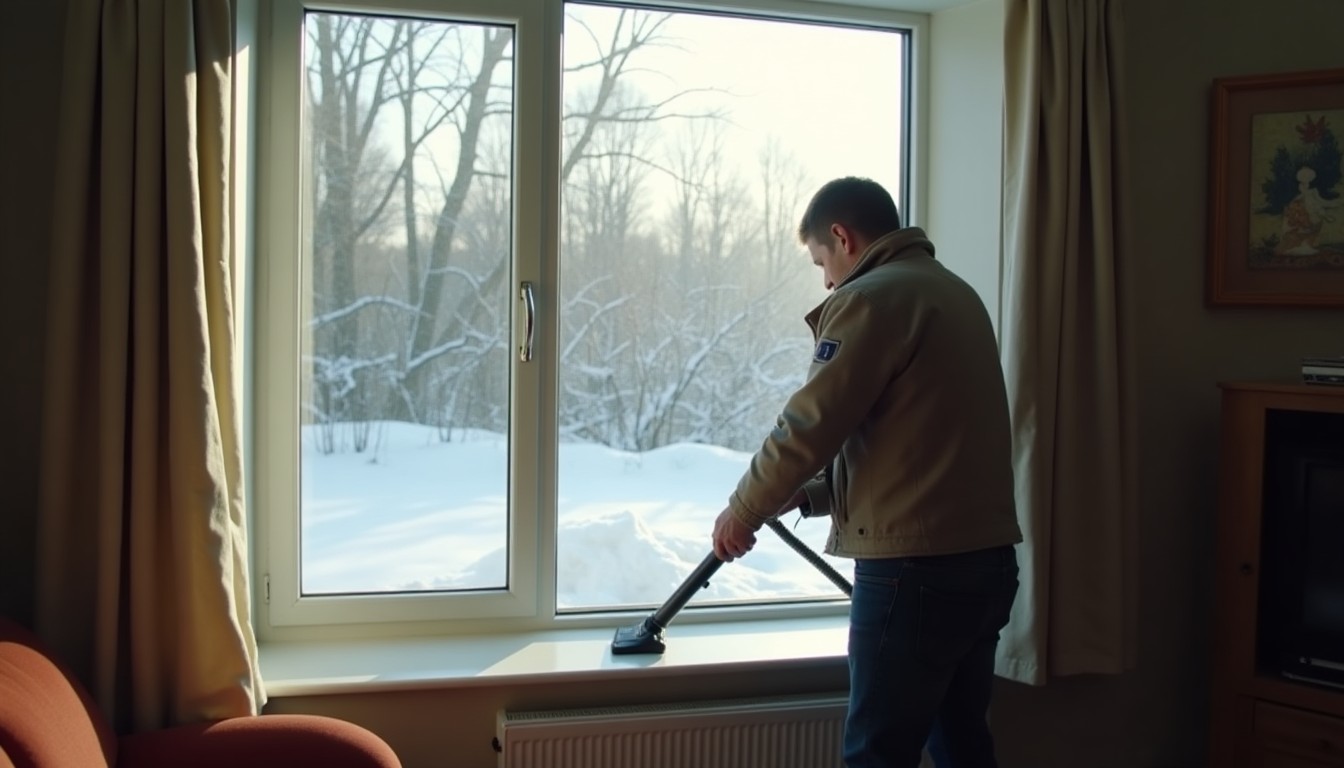
- Vacuum them up. Kentucky calls a vacuum the easiest way to remove lady beetles indoors and notes a broom is more likely to cause staining. Wisconsin recommends a hose attachment for boxelder bugs to avoid staining fabric, and emptying the vacuum immediately or the bugs can crawl out. Penn State warns that a vacuum used on stink bugs may hold their smell for a while.
- Do not crush them. Crushing stink bugs releases their odour, and lady beetles disturbed or crushed release an acrid, yellowish fluid that stains walls and fabric.
- Do not spray or fog indoors. Kentucky states that foggers, bug bombs and sprays are generally not recommended for lady beetles indoors and tend to be ineffective and leave residues. Penn State notes that pyrethrum foggers kill the stink bugs and cluster flies in the open but will not stop more emerging from the walls, and that killing large numbers inside wall voids can leave dead insects for carpet beetles to feed on.
The real fix is sealing the gaps before they arrive, which means late summer, not winter. Kentucky notes that barrier treatments in late winter or early spring are ineffective because the beetles got in the previous autumn. Our guide to stink bugs and other fall invaders covers the exclusion work and when to book it, and our seasonal pest calendar shows where that window falls in the year.
Group two: the ones winter cannot touch
These insects live inside heated buildings, so the season outdoors makes little difference to them. Unlike the overwinterers, they feed and reproduce indoors, so numbers will not fade by themselves in spring.
German cockroaches
University of Kentucky entomologists describe the German cockroach as by far the most common cockroach infesting homes, a pest that thrives with humans but does not occur outdoors. A single mated female can produce thousands of offspring in less than a year, and they favour warmth, moisture and food in kitchens and bathrooms. A German cockroach in winter is not a stray that wandered in from the cold. Baits work better than sprays for most households, but established infestations, especially in apartments, usually justify a professional; see our German cockroach treatment guide.
Pantry pests
Moths on the kitchen ceiling and small beetles in flour or cereal are breeding in stored food. UC IPM notes the Indian meal moth takes about six to eight weeks from egg to adult and that insecticides are not recommended for any of the pantry pests. The fix is finding and discarding infested packages and storing dry goods in sealed containers; our pantry pests guide covers the clean-out.
Carpet beetles
Tiny round beetles at a window, about 1/10 to 1/8 inch long, are often adult carpet beetles. UC IPM notes the adults feed on pollen and are attracted to light, so indoors they are usually found on window sills, and that adults typically appear in spring or early summer. The damage is done by the hairy larvae, which feed on wool, silk, leather, fur, pet hair, lint and dead insects in dark, undisturbed places. Dead insects matter here: a wall full of dead lady beetles or cluster flies is carpet beetle food, which is one more reason not to kill overwinterers in the voids. See our guide to carpet beetle treatment.
Bed bugs
Bed bugs live where people sleep and feed on them in any season. Kentucky extension notes that under favourable conditions of 70 to 80°F with a ready supply of blood they can mature in as little as a month and produce multiple generations a year, and that efforts to rid a dwelling of them by raising or lowering the thermostat will be unsuccessful. Adults are 5 to 7 mm, about the size of an apple seed, according to the EPA. Bed bugs are a job for a professional; anyone with bites they are worried about should speak to a doctor.
Fungus gnats
Small black flies around houseplants and windows in winter are usually fungus gnats breeding in damp potting soil. UC IPM notes a generation can be produced in about 17 days depending on temperature, and that adults do not bite. Letting the soil dry between waterings is the main fix; our houseplant pests guide covers the rest.
Booklice
Very small pale insects, 1/25 to 1/13 inch long according to Utah State University Extension, on damp books, cardboard boxes or around sweating pipes, are usually booklice. They feed on mould and are an indicator of moisture problems rather than a pest in their own right. Utah State’s main recommendation is to reduce the relative humidity in the trouble areas.
For insects that live indoors, the iNaturalist pattern means something different. German cockroach records reach an index of 171 in January and 184 in November, Indian meal moth 134 in November and 125 in January, and carpet and hide beetles peak at 317 in March, when adults fly to windows. A winter rise for an indoor species does not mean it breeds more in winter; it means people notice and photograph it more when little else is about. These are records of sightings, not infestation rates.
Matching what you are seeing
- Beetles in the house in winter: orange and spotted, Asian lady beetles; tiny, round and patterned at windows, carpet beetles; in flour or cereal, pantry beetles.
- Small bugs: pale and tiny near damp paper, booklice; in dry food, pantry pests; brown and fast in the kitchen or bathroom, German cockroaches.
- Flying bugs: slow grey flies at windows, cluster flies; tiny black flies near plants, fungus gnats; moths in the kitchen, pantry moths. Lady beetles and stink bugs also fly on warm days.
- Stink bugs and lady bugs: overwinterers from the autumn. Annoying, harmless to the house, and best vacuumed.
Which ones need a professional?
The overwinterers rarely need one in winter. There is little a treatment can do once they are in the walls, and the useful professional work, sealing and exterior treatment, belongs in late summer. A heavy, recurring problem every year is a good reason to book that work ahead of time.
The indoor breeders are different. German cockroaches and bed bugs usually justify professional treatment, and the earlier the better. Pantry pests, fungus gnats and booklice are normally solved by removing the food, the wet soil or the damp. If you use any insecticide, follow the label exactly, and do not set off foggers for any of these insects.
Frequently asked questions
Why are there bugs in my house in winter?
Either they moved in during autumn to spend the winter in your walls and attic, or they live indoors all year. Lady beetles, stink bugs, boxelder bugs and cluster flies are the first kind and wake on warm, sunny days. German cockroaches, pantry pests, carpet beetles, bed bugs, fungus gnats and booklice are the second kind, and only they can breed in the house while it is cold.
Do stink bugs and lady bugs lay eggs in the house?
No. Penn State Extension states that the brown marmorated stink bug will not reproduce inside structures, and University of Kentucky entomologists state that Asian lady beetles do not reproduce indoors. The beetles you see in late winter and early spring are the same ones that entered the previous autumn. Numbers fall as they leave or die off in spring.
Should I spray bugs I find inside in winter?
Not the overwinterers. Kentucky extension states that foggers, bug bombs and sprays are generally not recommended for lady beetles indoors, and Penn State notes that foggers do not stop more stink bugs or cluster flies emerging from wall voids. Vacuum them instead. Indoor breeders such as German cockroaches and bed bugs need a targeted treatment, often from a professional.
Why do I see ladybugs on sunny winter days?
Asian lady beetles spend winter in wall voids, attics and window frames. Kentucky extension notes they become active again as temperatures warm in late winter and early spring, and a sunny day is enough to bring some out. They are heading for light and a way outside, not breeding. Vacuum them rather than crushing, which stains.
Which winter bugs are a real problem?
The ones that breed indoors. German cockroaches can produce thousands of offspring in less than a year, and bed bugs can produce several generations a year at room temperature; both usually need professional treatment. Carpet beetles and pantry pests damage belongings and food. The overwintering invaders are a nuisance: they do not breed, bite rarely and do not damage the structure.
Sources
- University of Kentucky Entomology, ENTFACT-416: Asian Lady Beetle Infestation of Structures, Potter, Bessin and Townsend, revised 2026.
- Penn State Extension, Brown Marmorated Stink Bug, Steve Jacobs.
- Penn State Extension, Western Conifer Seed Bug, Jacobs 2002, revised Skvarla 2023.
- Penn State Extension, Cluster Flies, Steve Jacobs, revised 2014.
- University of Wisconsin Horticulture, Boxelder Bugs, XHT1100, Hoffman and Pellitteri, revised 2010.
- University of Kentucky Entomology, Cockroach Elimination in Homes and Apartments.
- University of Kentucky Entomology, ENTFACT-636: Bed Bugs.
- US Environmental Protection Agency, Bed Bugs Appearance and Life Cycle, 2026.
- University of California Statewide IPM Program, Pest Notes: Carpet Beetles; Pantry Pests; Fungus Gnats (Publication 7448).
- Utah State University Extension, Booklice and Psocids.
- The Pest Control Brief analysis of iNaturalist research-grade records, pulled October 2026.